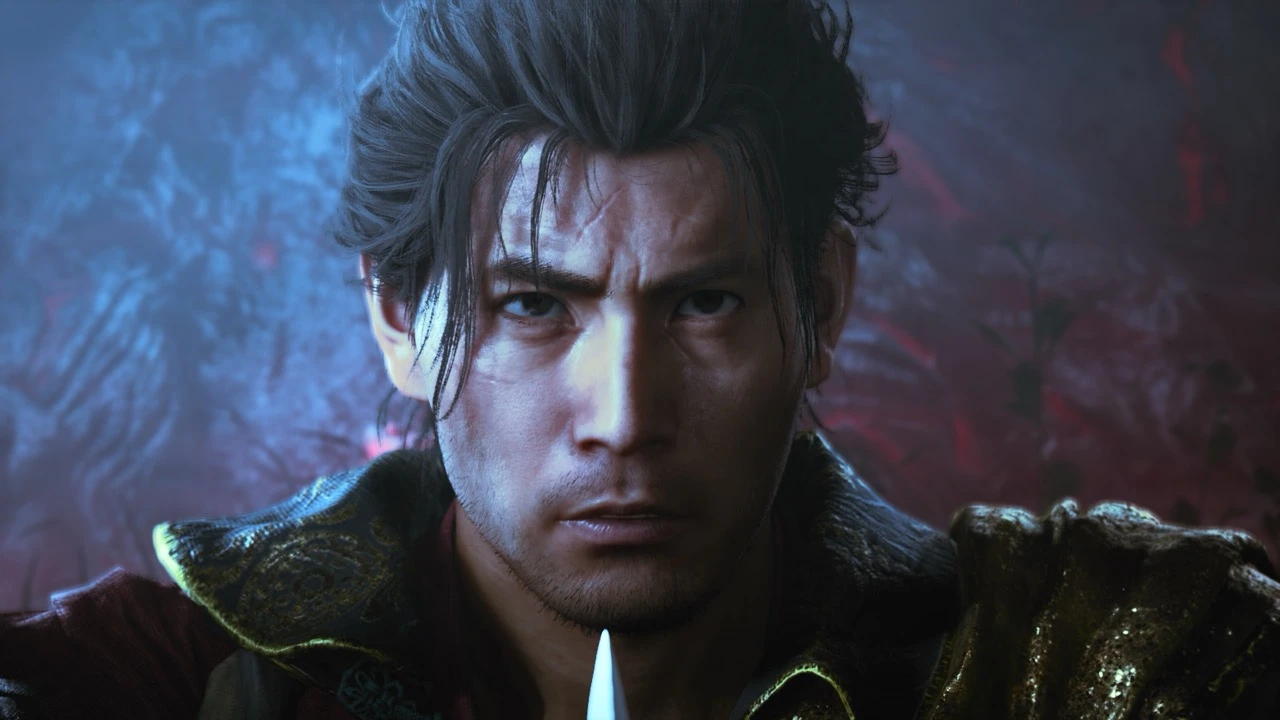
Onimusha: Way of the Sword is a masterful revival with a fantastic cast, spectacular presentation, and some of the most satisfying sword combat ever made
Capcom has been on a generational run. It has delivered excellent remakes such as Resident Evil 4, fantastic new entries including Resident Evil 7 and Village, the masterpiece that is Resident Evil Requiem, and bold new experiences such as Pragmata. Somehow, the studio keeps finding another gear.
Onimusha: Way of the Sword brings one of Capcom's dormant series back into that incredible run, and what a revival it is. Before going any further, I should say that I have no experience with the original games. I knew they had a reputation for being tough, but I came into this adventure without nostalgia or expectations about what a modern Onimusha should be. It did not matter. Way of the Sword is just kinda perfect.
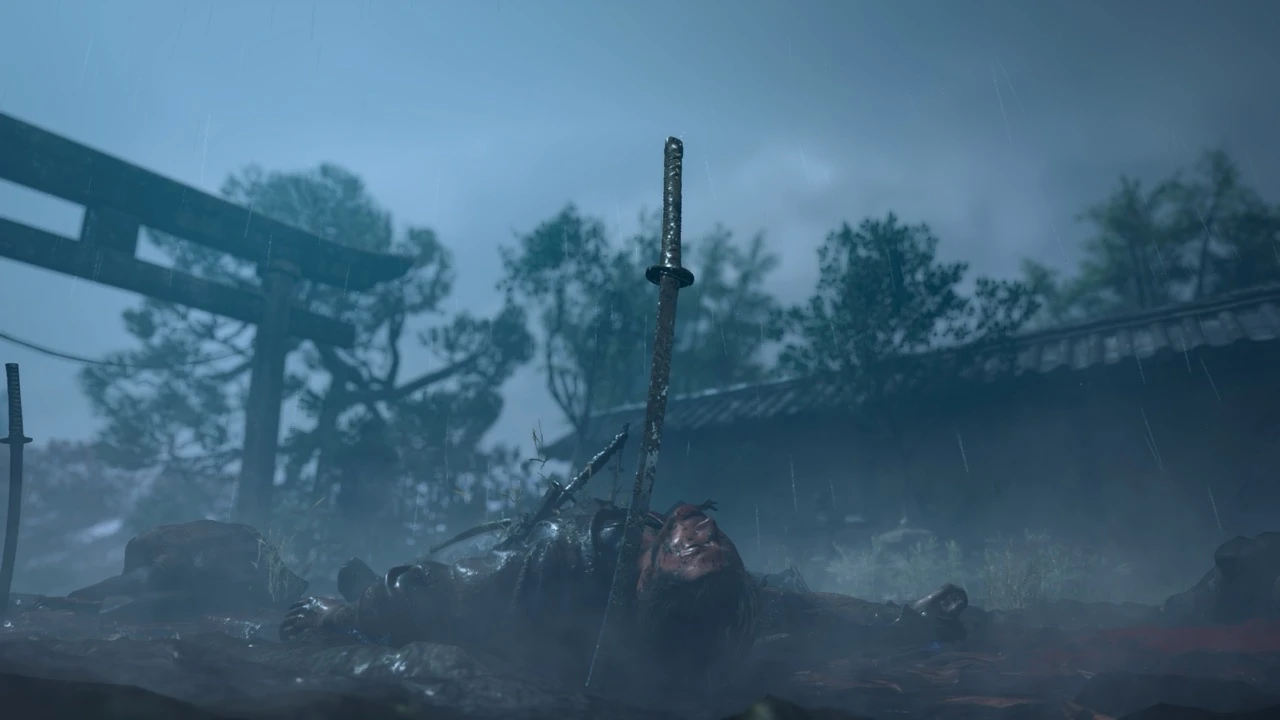
A swordsman worth following
Miyamoto Musashi is one of the coolest game protagonists in recent memory. Capcom has somehow created a lovable, stoic goofball who can channel the physical comedy of a Jackie Chan character, the swagger of Jack Sparrow, and the absolute conviction of Zoro from One Piece. He wants to become the greatest swordsman in the world, and everything about how he carries himself tells you he already believes he is.
The opening cutscene is one of my favorite introductions to a protagonist. It is cool, funny, and perfectly captures Musashi before the story starts pulling at the weaknesses beneath all that confidence.
Musashi's dream comes to a sudden stop when he is killed by the demonic Genma. On the road to hell, he encounters a mysterious Man in White, later revealed to be the legendary samurai hero Yoshitsune. He forces an Oni Gauntlet onto Musashi and brings him back to life. The gauntlet absorbs souls, and the more it consumes, the stronger its wearer becomes. When Musashi returns to the Genma that killed him, he tears through them in seconds.
That power sounds like a gift, but Musashi hates it. Strength he did not earn clashes with everything he believes about the way of the sword. It gets worse when he learns that the gauntlet can absorb human souls too. His rival, Ganryu Sasaki, wears one of his own and has no problem murdering people to feed it. The contrast between them gives the supernatural conflict a deeply personal edge. Both want to be the best, but only one still cares what becoming the best costs.
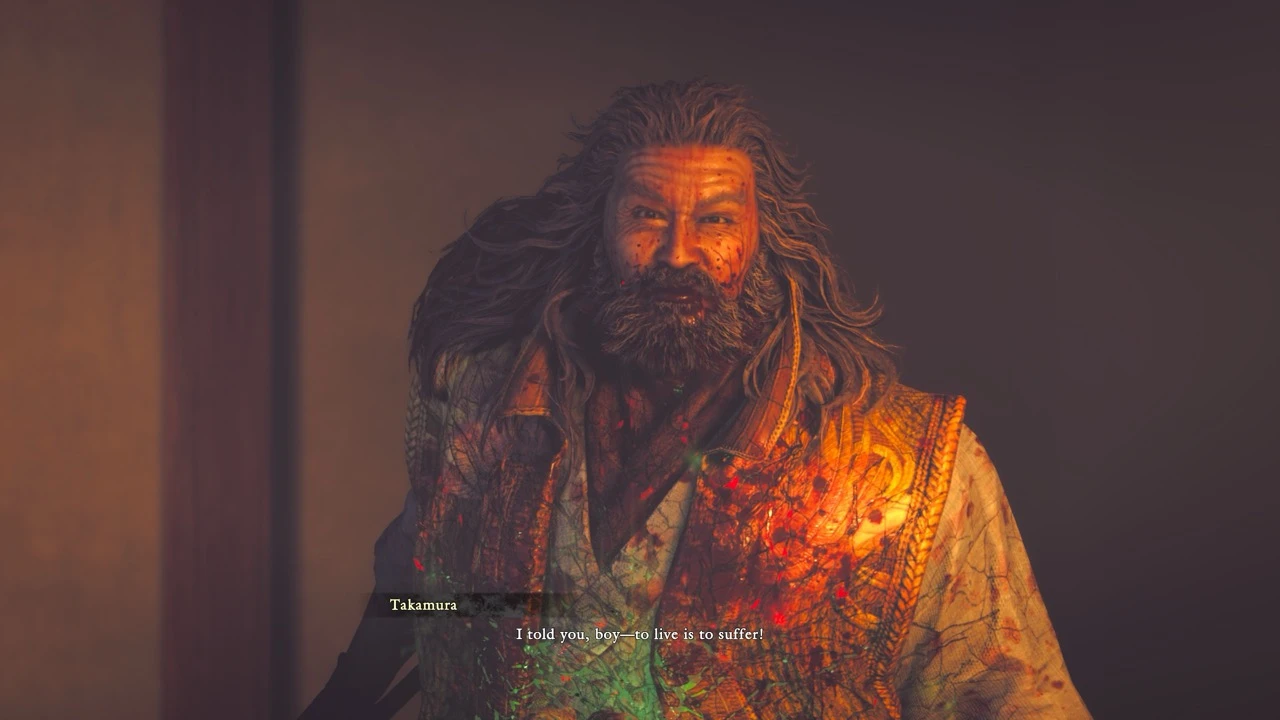
Yoshitsune has conquered everything in hell and now wants to escape, paint the living world red, and burn whatever is left. Takamura, an Onimusha who has guarded the Oni Gate for 700 years, cannot leave his post without exposing it. He sends Musashi into Kyoto to cleanse the malice drawing more Genma into the world.
The larger plot is exciting, but Musashi's character arc is what makes it special. His relationships peel away the arrogance without sanding down the humor or confidence that make him so entertaining. Ganryu reflects the path he could take if ambition consumed everything else. Shizuka, the Oni spirit trapped within the gauntlet and casually nicknamed Gauntlet Lady, becomes the emotional heart of the story.
Shizuka has a tragic connection to Yoshitsune, and her bond with Musashi grows through every conversation and cutscene. I do not want to spoil the details because the payoff is too good. There is a moment before one boss fight when she tells Musashi to tear his opponent apart, and the direction, delivery, and history behind those words sent shivers down my spine. All that restrained pain finally reaches the surface, and Musashi is more than happy to oblige.
Another scene has Musashi falter and come dangerously close to doing something he would regret forever. The way it resolves is incredible. The framing, performances, facial animation, physical comedy, and dramatic timing are immaculate. I could talk about the story for hours, but discovering where these characters go is one of the best parts of the game.
The way of the sword
The combat may be the finest sword fighting I have ever played. It is smooth, gory, weighty, and supremely satisfying. Musashi has one-handed and two-handed attacks, combos, dodges, blocks, parries, deflects, guard breaks, and the devastating Issen counter. None of those ideas are new on their own. How they feel together puts Onimusha on another level.
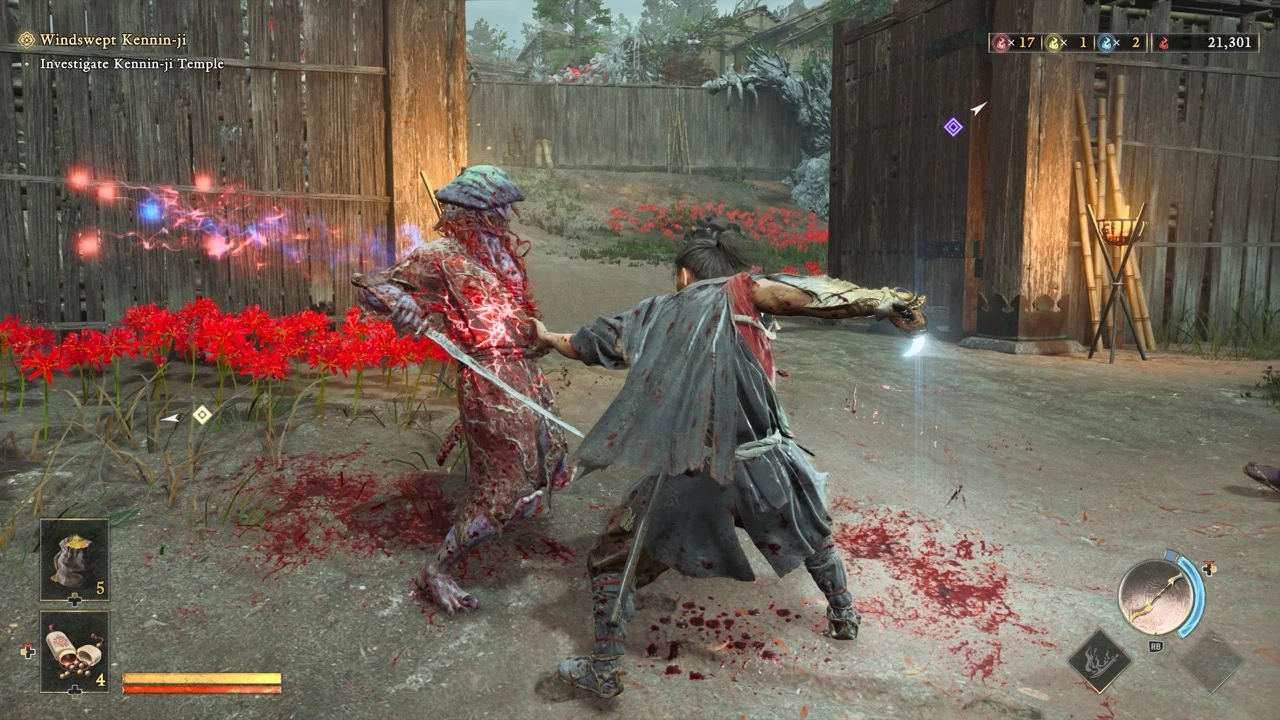
Every slash carries weight. Steel clashes with a sharp crack, sparks burst across the screen, and Musashi visibly braces against an incoming weapon. You can block nearly any attack while you have stamina, but good timing turns defense into something more exciting. Parries work from any angle, and the animation smoothly redirects the strike instead of snapping both fighters into a canned pose.
Clash and parry enough and Musashi's sword ignites, increasing his attack power and speed. The brief slow-motion shot of his blade sliding against an enemy weapon before the flames erupt is glorious every single time. You can also deflect by blocking and pressing the correct button at the right moment, draining enemy stamina and creating an opening for a brutal break attack.
Then there is Issen. Press an attack button at the instant an enemy strikes and Musashi seems to blink through them before delivering a huge counterattack. The timing demands skill, but landing it feels unlike anything else. Pulling one off against a boss feels like taking control of the duel for one perfect second.
The physicality is what separates this from similar games. Blades of Fire also built its identity around deliberate, directional weapon combat, but its sluggish responses often kept me from finding a consistent rhythm. Onimusha is heavy without feeling slow. Musashi has momentum, yet the controls remain sharp enough that failure almost always feels like mine.
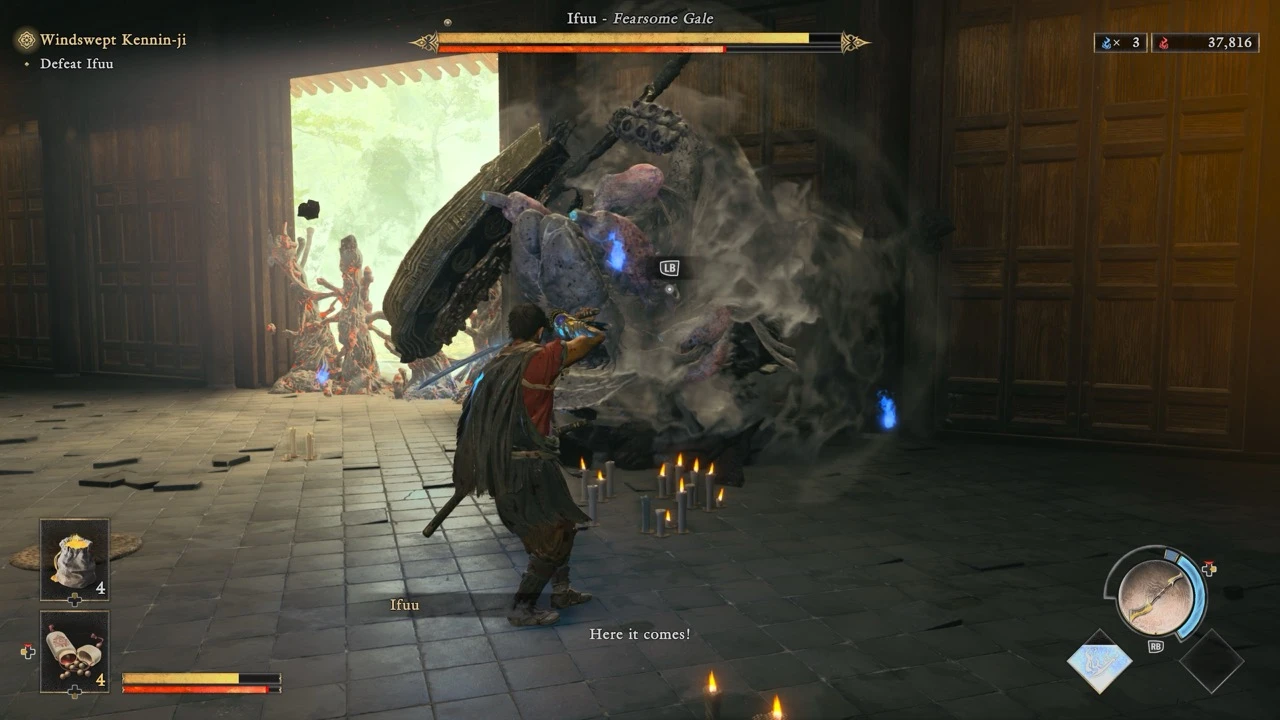
You can land one or two attacks and dodge away, but Onimusha comes alive when you stay in front of an enemy. Constant clashes, perfect parries, quick deflects, and a last-second Issen make every duel feel like a violent conversation. Being aggressive is often safer than surrendering the initiative, provided you can read what is coming next.
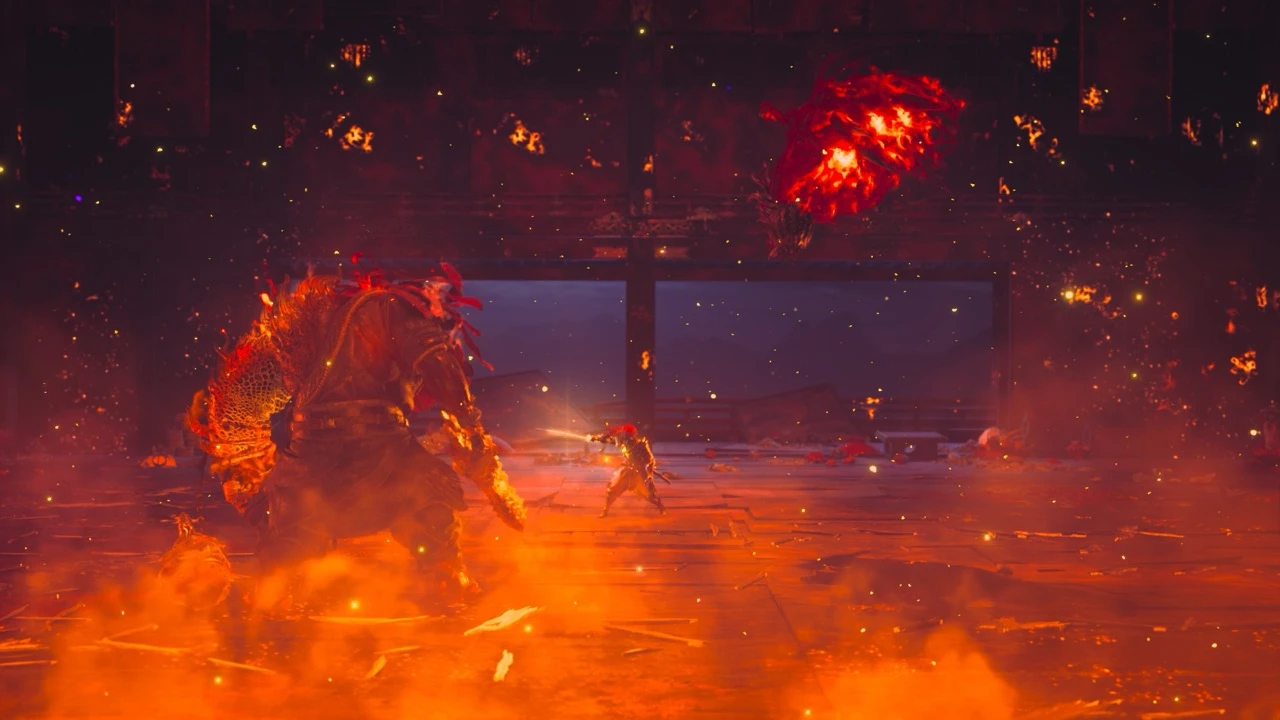
The bosses push that system to its limit. Their introductory cutscenes, arenas, visual effects, and folklore-inspired designs are spectacular. Lose focus and they can absolutely destroy you, even on normal difficulty. Blocking may keep Musashi alive, but dismantling a boss with parries and deflects creates a real sense of accomplishment.
I was punished plenty. The final boss was so intense that my mid-30s fingers could not keep up, and I eventually finished the fight on Story difficulty. I appreciate that the option exists, but Capcom has also included a smart middle ground for anyone who wants help without handing control to the game. Action prompts can tell you whether an incoming strike should be blocked, countered with the correct attack button, or dodged. You still need to execute the input at the right time. It teaches the language of combat without playing for you.
Armaments, upgrades, and flaming tornadoes
Musashi also collects Oni Armaments, special weapons powered by blue souls. Each occupies a different tactical role, from large area attacks and ranged shots to huge stamina damage against a single target. They operate almost like cooldown abilities, but because they draw from a shared resource, deciding when to use one remains important.
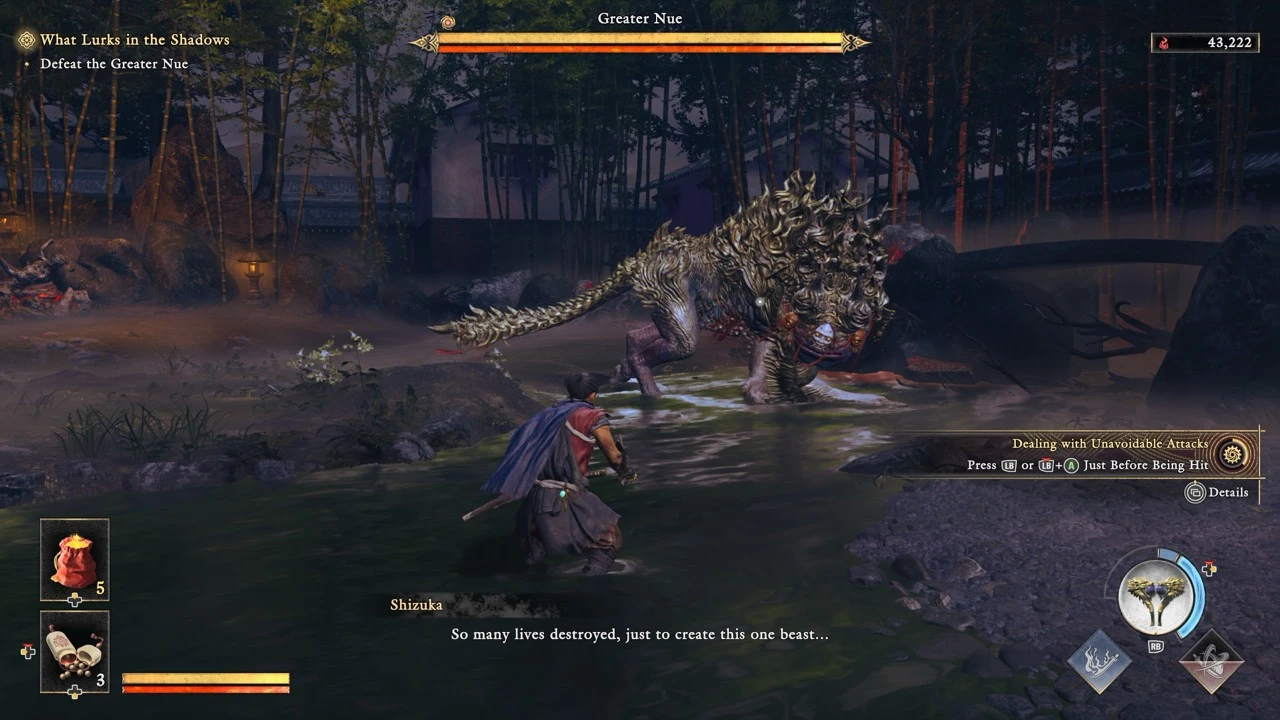
My favorites were a spinning double-ended weapon and a pair of hammers. The first generates a tornado that tears through groups. Use it near fire or a burning brazier and it becomes a flaming tornado, because apparently it was not already cool enough. The hammers take a huge chunk from a boss's stamina bar and move the fight closer to that sweet break attack.
The bow is useful for ranged threats and surprisingly funny. Landing a headshot on a Genma archer feels great, then the enemy often tumbles into a conveniently placed pile of wooden boxes like the end of a slapstick routine. That blend of violence and comedy gives Onimusha personality without undermining the danger.
Progression is clean. A traditional skill system sits alongside separate upgrades for Musashi's clothing, sword, and gauntlet. Those equipment paths use different materials, so improving one never means sacrificing another. New skills also have a noticeable impact instead of disappearing into a stat screen.
A beautiful Kyoto with too much repetition
Kyoto works as a compact, open-ended hub where you seal rifts, fight roaming Genma, rescue civilians, find lost lion dogs, collect materials, and pick up side quests. Main missions then carry Musashi into more linear locations, including temples and other spectacular areas that usually end with an incredible boss.
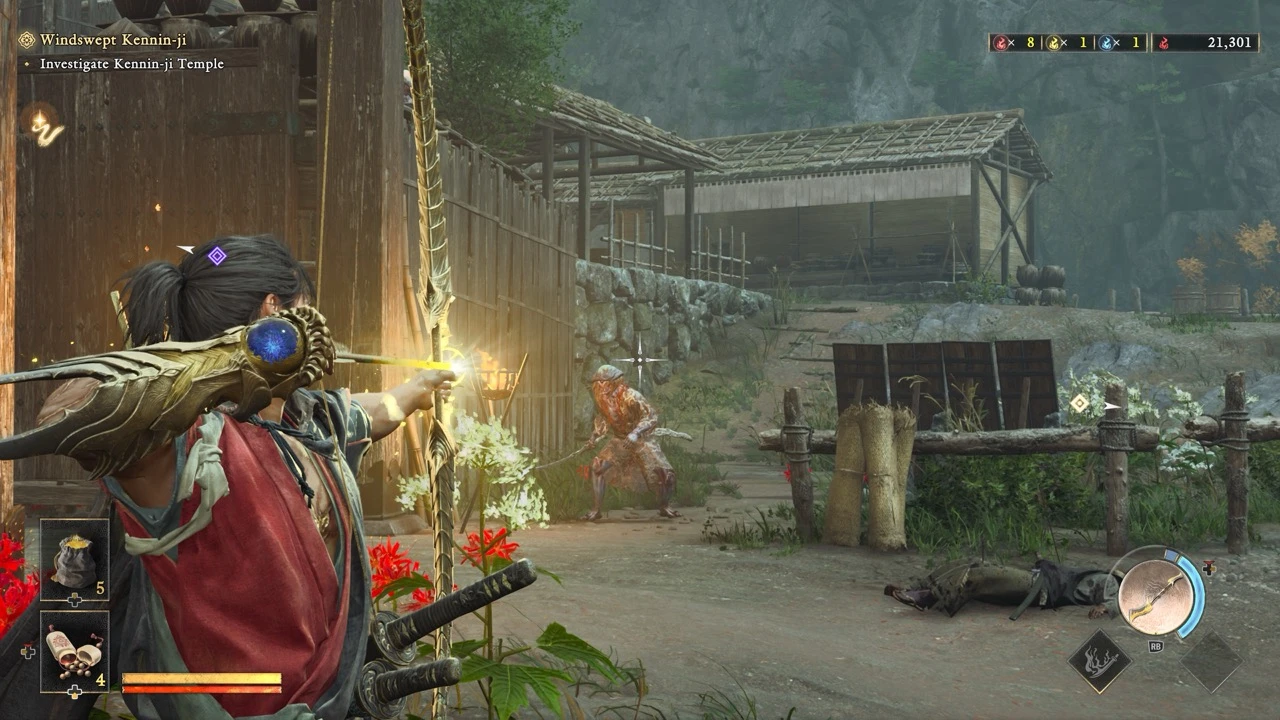
This structure gives the adventure room to breathe, but it is also where the few cracks appear. Kyoto's streets begin to look very similar, and its recurring activities can become repetitive. Random events often involve rescuing the same few people, while sealing another rift or hunting another lost lion dog eventually feels like clearing icons rather than discovering something new.
The best approach is to revisit Kyoto after each main mission, when a manageable batch of new activities appears. Leave everything until later and the repetition piles up. The boss reuse has a similar problem. Two in particular, which I proudly named "the goat dude" and "demon Batman", return far too often when I just want to move forward. The final stretch also includes a small boss gauntlet, but those deliberate rematches with early bosses bothered me much less than meeting the same mid-game threats again and again.
Presentation rarely misses. Musashi and the supporting cast look fantastic, with expressive faces, detailed clothing, and animation that gives every character a distinct presence. Kyoto and the surrounding regions are packed with grime, dust, period detail, and beautiful scenery. The folklore-inspired Genma feel grotesque, theatrical, and completely at home here.
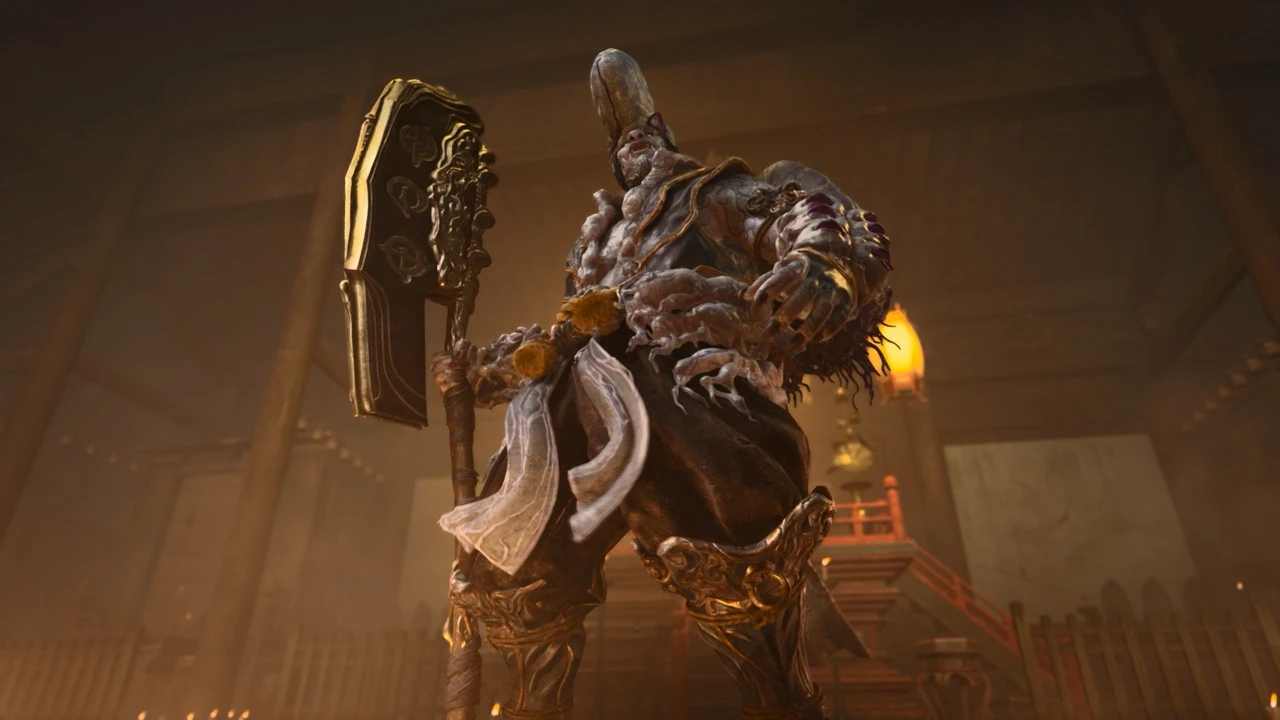
On Xbox Series X, the game looks stunning and feels responsive where it matters most. Visual effects fill the screen during busy fights without making incoming attacks difficult to read. That clarity is vital in a game built around split-second reactions. Sword sparks, blood, fire, and elaborate boss attacks all remain readable even when the action becomes chaotic.
The English voice acting is excellent, but the Japanese performance is on another level. Every bit of Musashi's swagger, Shizuka's pain, and the wider cast's personality comes through with remarkable force. Combined with the superb cinematic direction, it makes this feel like a lavish samurai movie that I get to control between scenes.
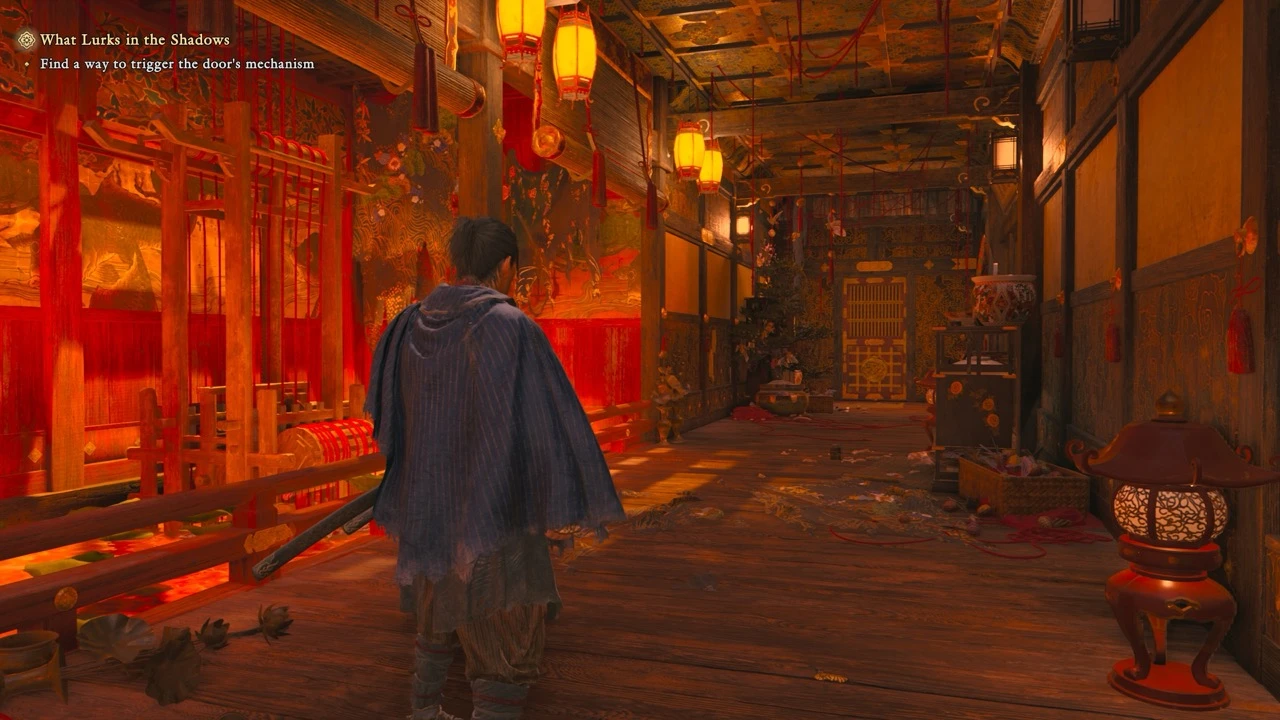
Onimusha: Way of the Sword has repetitive side activities, an overused pair of bosses, and a hub that could have benefited from greater visual variety. Those problems are real, but they barely dent what Capcom has accomplished. The cast is unforgettable, the story delivers huge emotional payoffs, the presentation is immaculate, and the combat is simply extraordinary.
This is how you revive a dormant series. Capcom did not rely on nostalgia or imitate every modern action game around it. It found an identity in the physical clash of swords, then built a funny, bloody, surprisingly heartfelt adventure around that foundation. I started with no history with Onimusha and finished convinced that Way of the Sword belongs beside Capcom's very best work. Thanks for reading!