Gears of War: E-Day brought back my love for its world, even as its familiar combat tested my patience
The original Gears of War was the first Xbox 360 game I played and finished. I played it at this arcade-type place, paying for time on a console, and spent around $30 getting through the campaign. Everyone else was playing Pro Evolution Soccer. I was the guy paying to sit there and finish single-player games. No regrets whatsoever.
I still remember how ridiculous it looked on that 720p LCD television. The weight of the characters, the violence, the way you slammed into cover. I had never experienced anything quite like it. Gears of War: E-Day briefly put that same stupid grin on my face. Then, somewhere along its roughly 15-hour campaign, the grin faded. The presentation kept blowing me away, but I started wanting the firefights to finish so I could see what came next.
That is the strange position I find myself in with E-Day. So much of it is exceptional, yet the thing you spend most of your time doing left me tired. It is still Gears, for better and worse. I understand why a prequel would hold tightly to that identity. I just wanted its combat encounters to surprise me as often as everything surrounding them did.
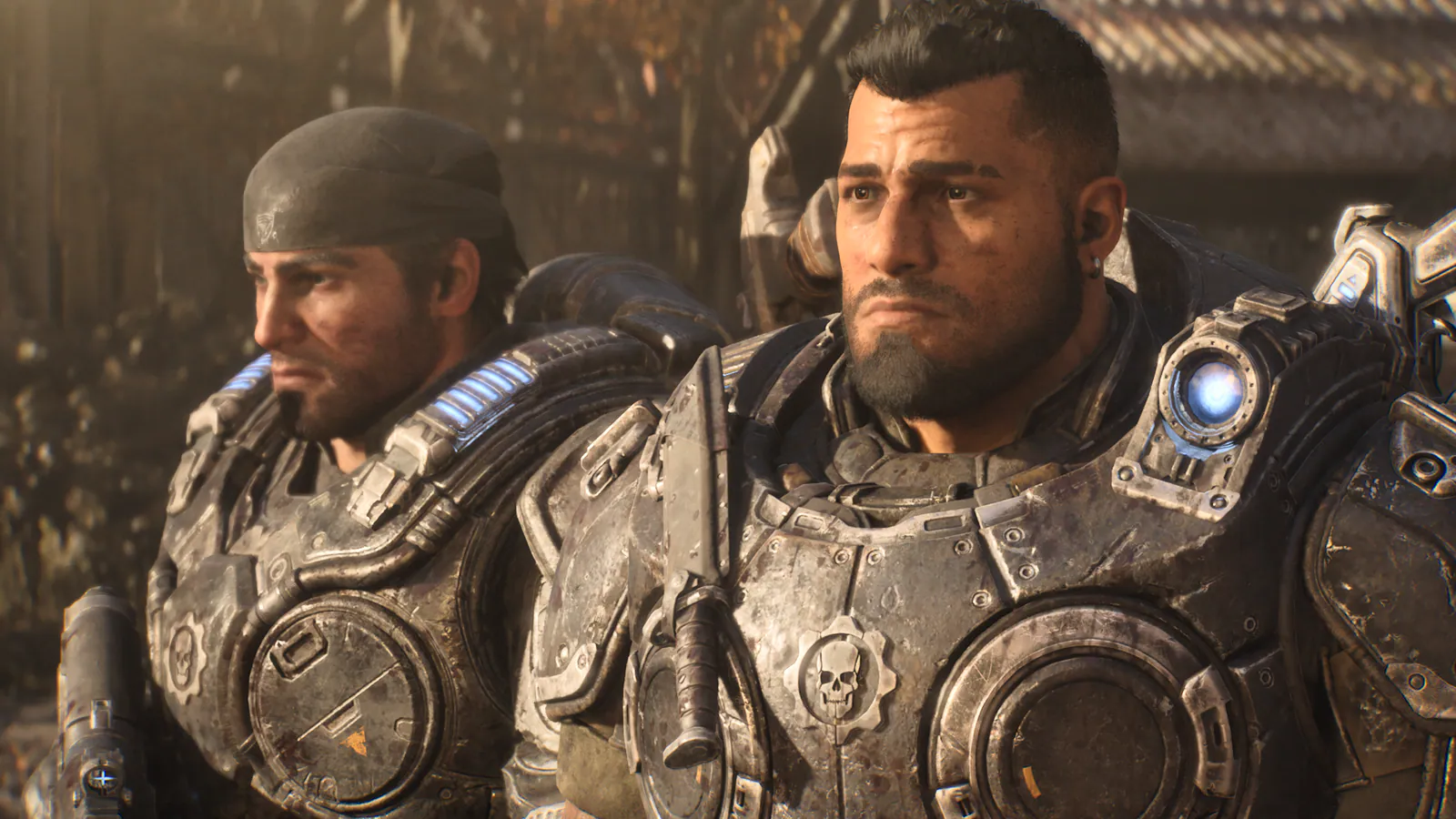
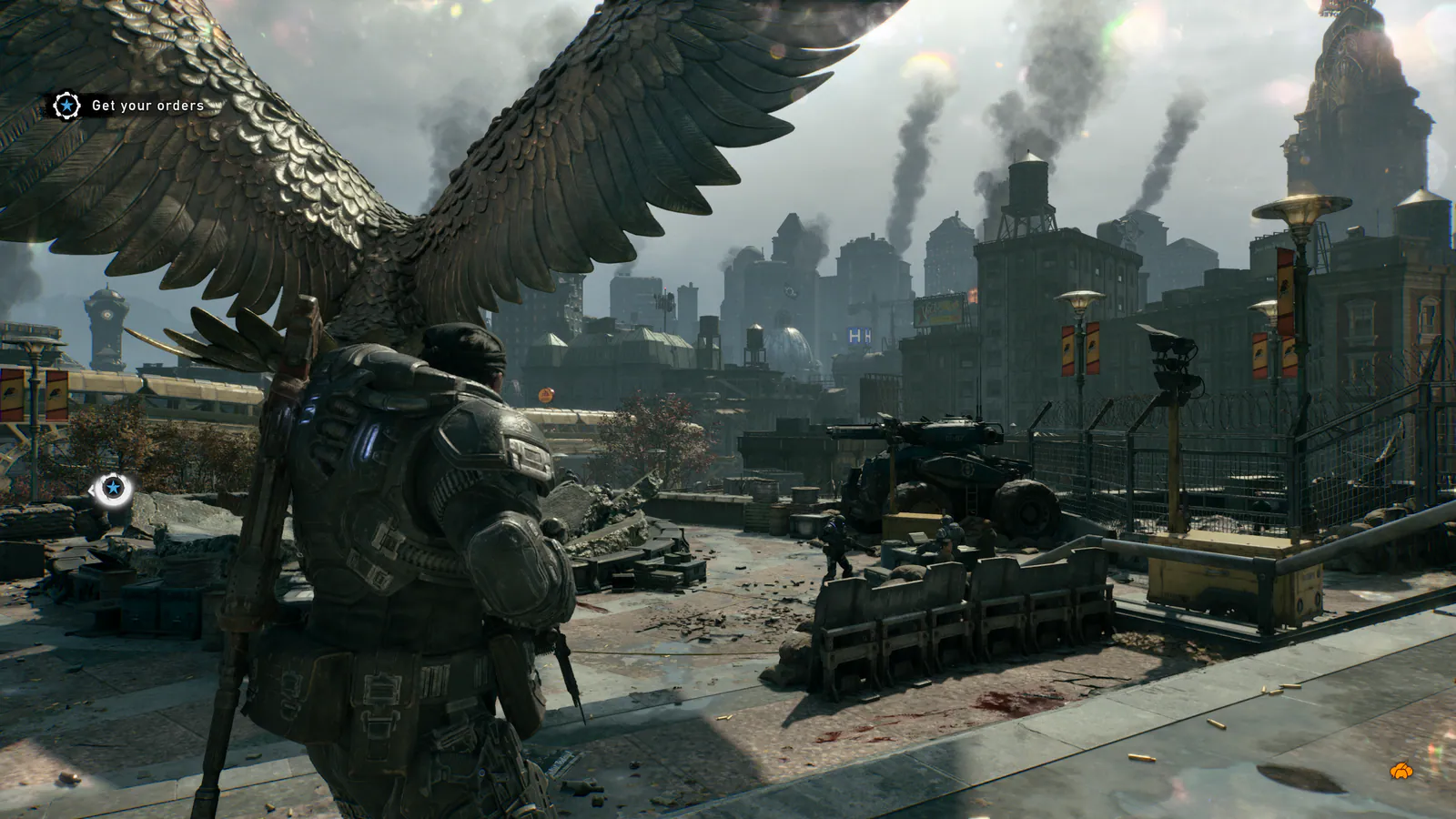
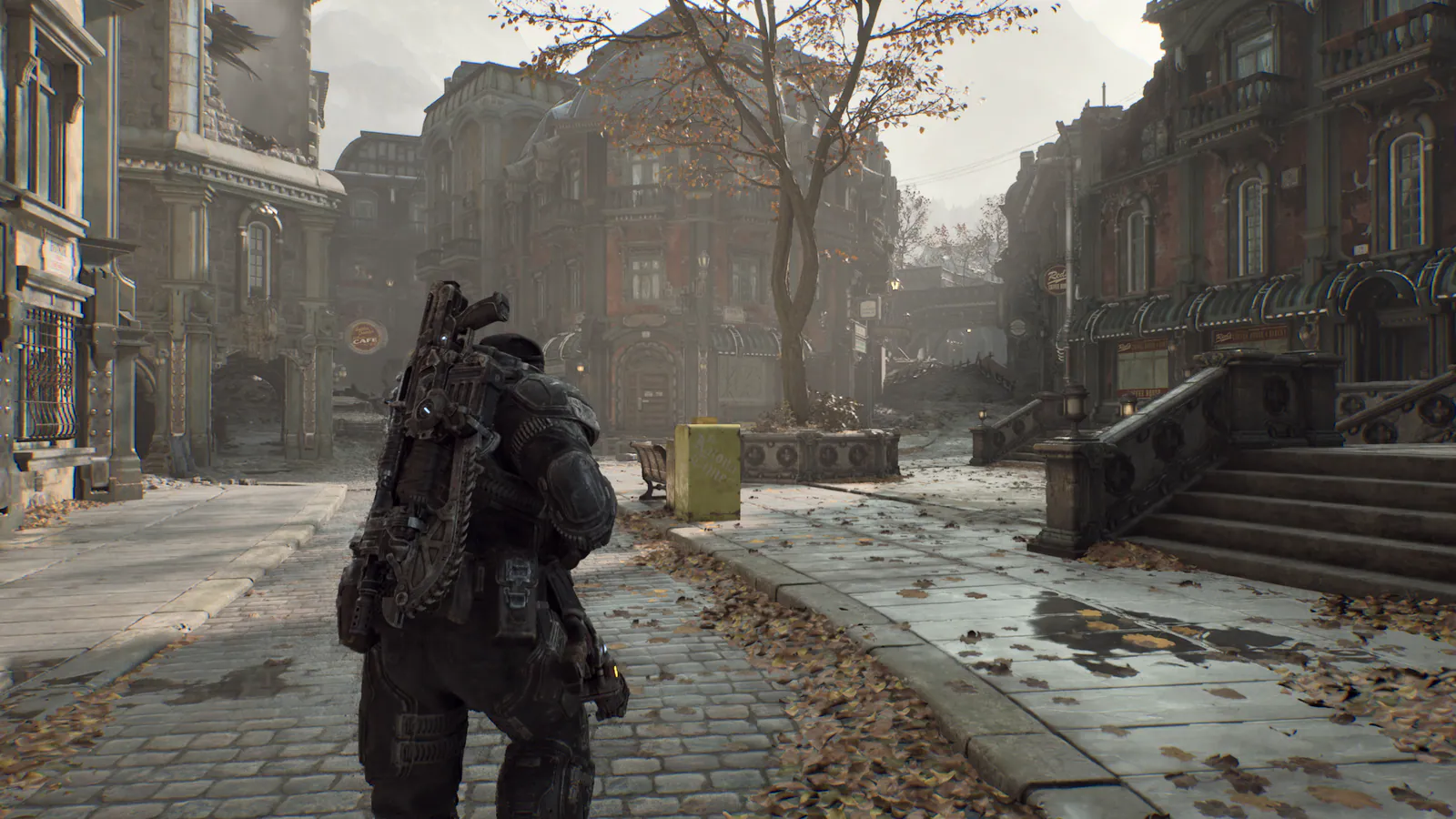
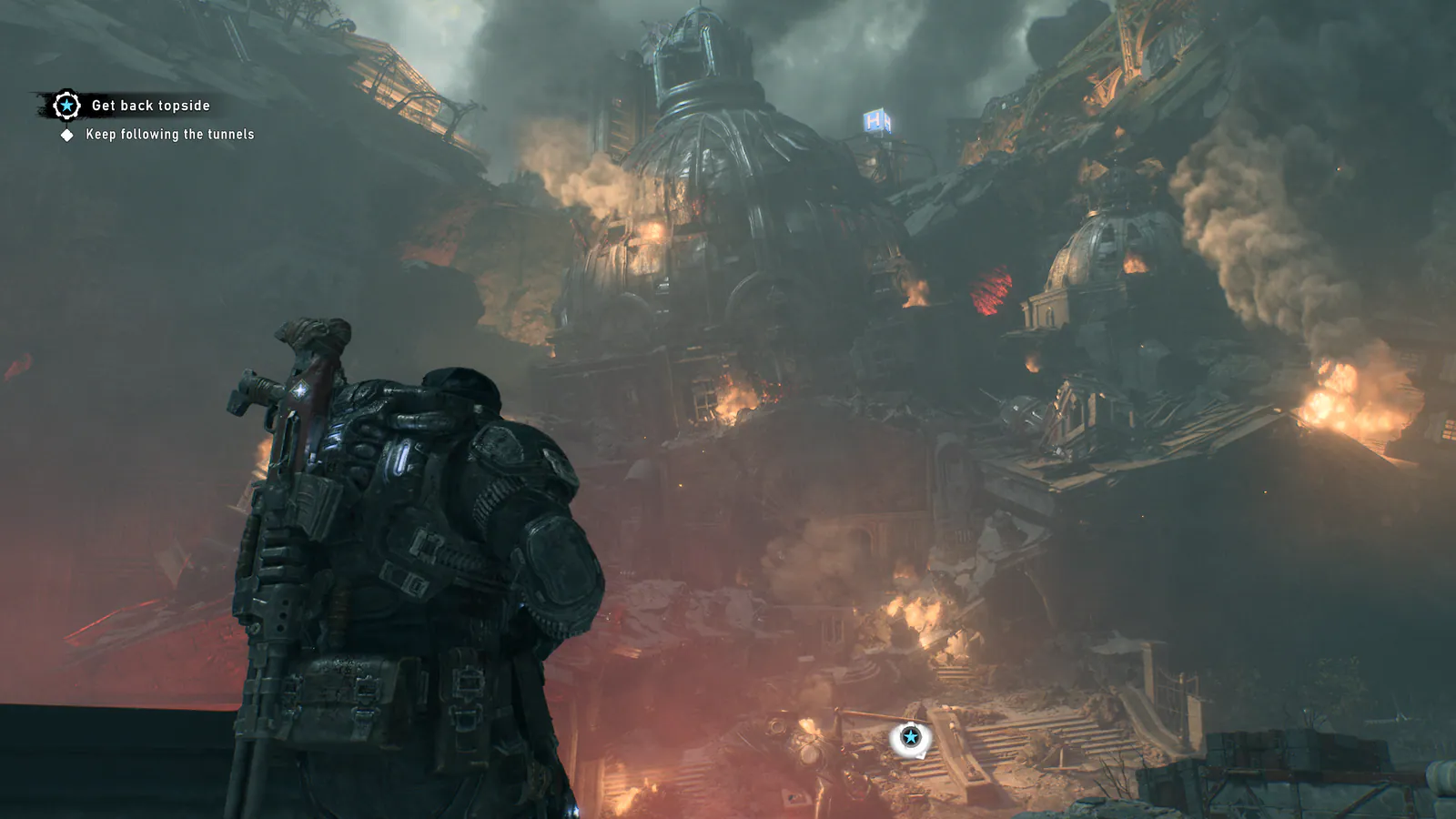
Taking place during the opening catastrophe of the Locust war, E-Day follows Marcus and Dom as Kalona falls apart around them. This is a gorgeous city of gothic and art deco architecture, and watching it become rubble over three days is horrible in the best possible way. You see a place being destroyed while people are still trying to understand what is happening around them.
The premise has an urgency I really like. What the hell are these things? Can we stop them? Should we even be trying, or should we save whoever we can and get out? The atrocities, the panic, and the Locust's hatred give the setting real menace. You already know this war will continue, so the story's power comes from experiencing its first wounds. There is no neat solution waiting at the end of these three days.
Marcus and Dom are joined by Mags and Reyes, and the squad works well together. The idea that adding women somehow makes this less recognizably Gears is nonsense. Marcus still sounds furious at the existence of everything around him, growling through conversations and dropping f-bombs with absolute commitment. The performances sell these people as exhausted soldiers trying to keep moving through something beyond their understanding.
I especially liked the quieter exchanges, both in cutscenes and while walking toward the next objective. They let some humanity through all that armor. Fear, grief, and affection matter more when the characters usually look capable of punching through a building. I wanted more of those moments, more time with the people underneath the walking tanks. They gave me a stronger reason to care than another spectacular explosion could.
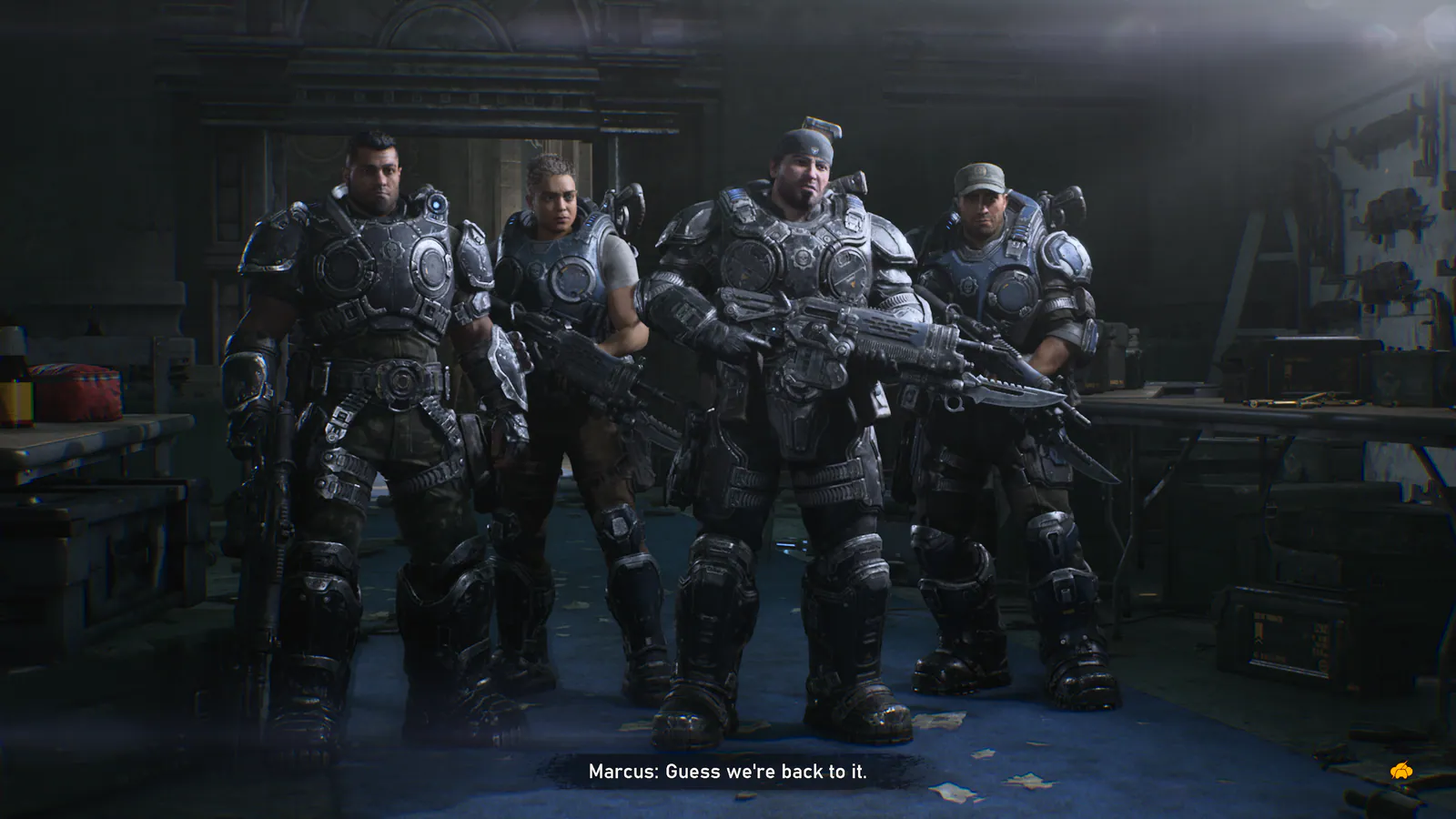
Mission design moves between familiar linear objectives and larger spaces where you can explore. Sometimes you need to lower a bridge, raise a bridge, or apparently reconsider the previous decision about the bridge... yeah there's a lot of bridge stuff here for some reason. Sometimes you are trying to get out of a massive Locust tunnel. The wider stretches of Kalona provide welcome breathing room, letting you search for collectibles, discover hard cases with weapon and armor mods, and help civilians through optional missions.
I love the little chime that tells you a collectible is nearby. It encourages a quick look around without making every room an exhausting search. These open areas build on the broader exploration Gears 5 experimented with, while keeping the campaign from becoming a full open-world checklist. The side objectives still tend to involve shooting more Locust, which limits their appeal when the shooting is already wearing thin, but having room to wander helps the pacing.
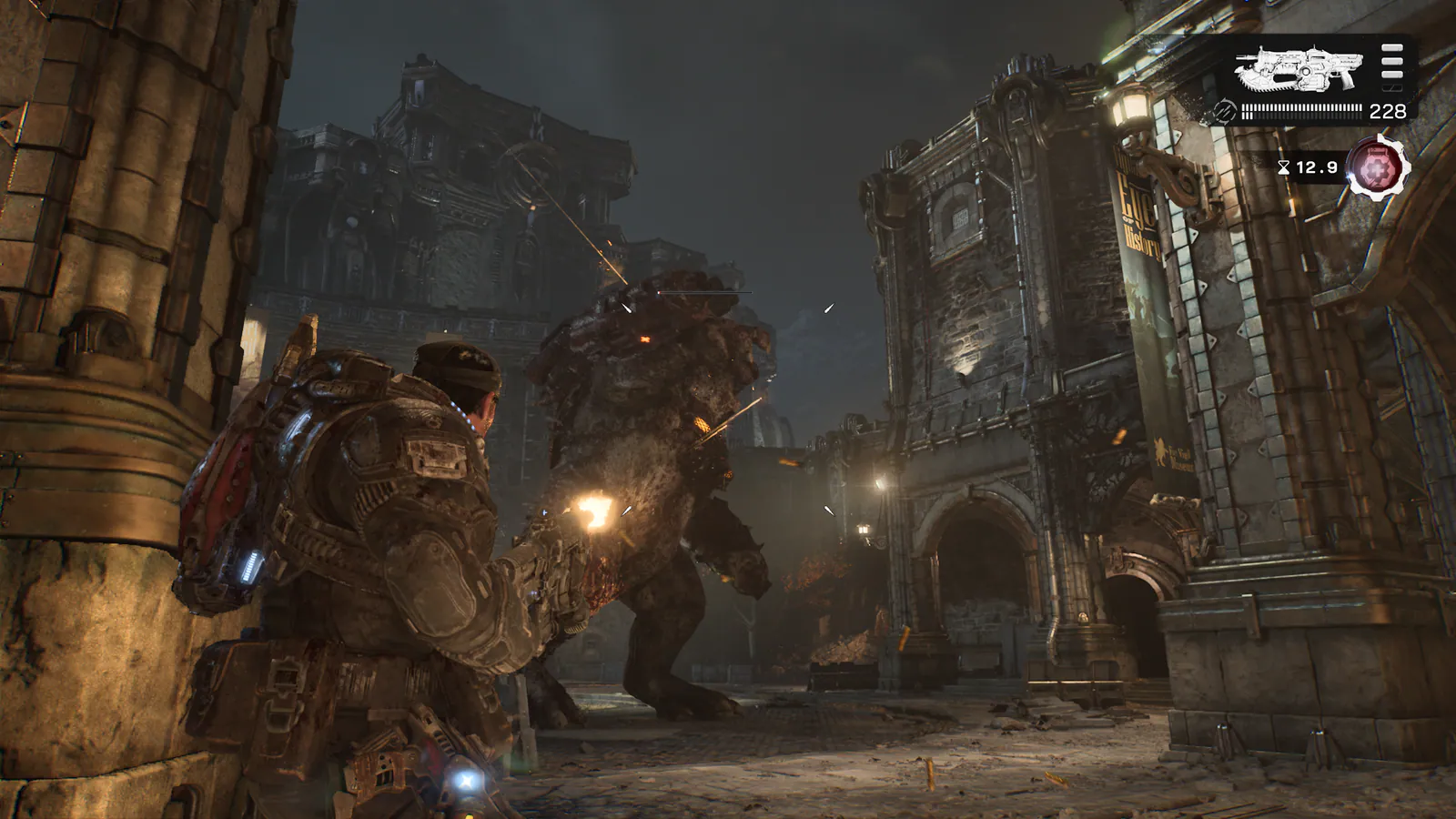
And that brings me to my biggest problem. The guns sound fantastic and feel crunchy, punchy, and heavy. Active reload still gives an ordinary action a satisfying little burst of tension. But individual enemies still absorb so much ammunition that those strengths start working against the rhythm. When a basic grunt seems to need an entire magazine, and larger enemies swallow sustained fire like nothing is happening, I stop feeling powerful and start feeling impatient.
Too many encounters settled into the same routine for me. Duck behind cover, pop out, pour bullets into something, duck back down, active reload, repeat. The movement has more flexibility, including jumping and lower cover to work with, but that did not solve my frustration with how long fights lasted. My issue was how often an encounter continued after I felt I had already seen everything interesting it was going to offer.
I kept thinking about the FLESH system in Dead Island 2. Imagine seeing a Locust's body progressively torn apart wherever your bullets landed. E-Day certainly has gore, and enemies can end up spectacularly destroyed. What I missed was that continuous, visible deterioration while something is still standing. It would give those long streams of Lancer fire a more satisfying result before the eventual kill. Alternatively, enemies could simply take fewer bullets.
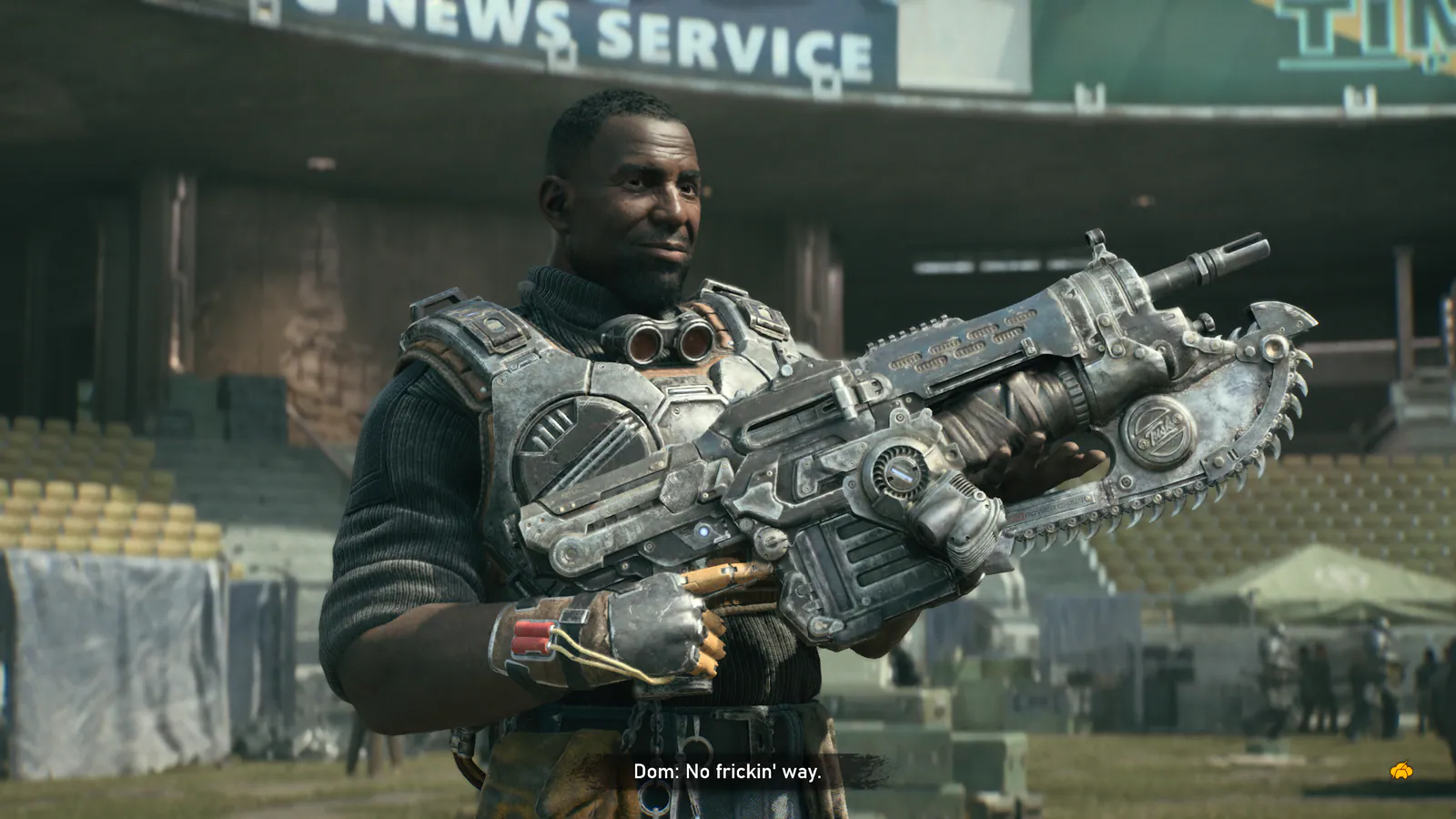
There are plenty of weapons, but my own loadout settled down fairly quickly. Once the chainsaw Lancer arrived, complete with a cool bit of origin-story business, it stayed with me. The other slot initially went to the Longshot for distant enemies or a grenade launcher when I wanted something less subtle. Then I got the Torque Bow, and that was more or less the end of my experimentation.
The Torque Bow remains one of my favorite weapons in games. Turning an enemy into red mist with one well-placed shot is exactly the immediate payoff I wanted elsewhere. For around half the campaign, I leaned on it and the Lancer. That was partly my own choice, obviously, but I wanted the encounters to give me stronger reasons to change. A big arsenal only goes so far when two familiar answers keep feeling sufficient.
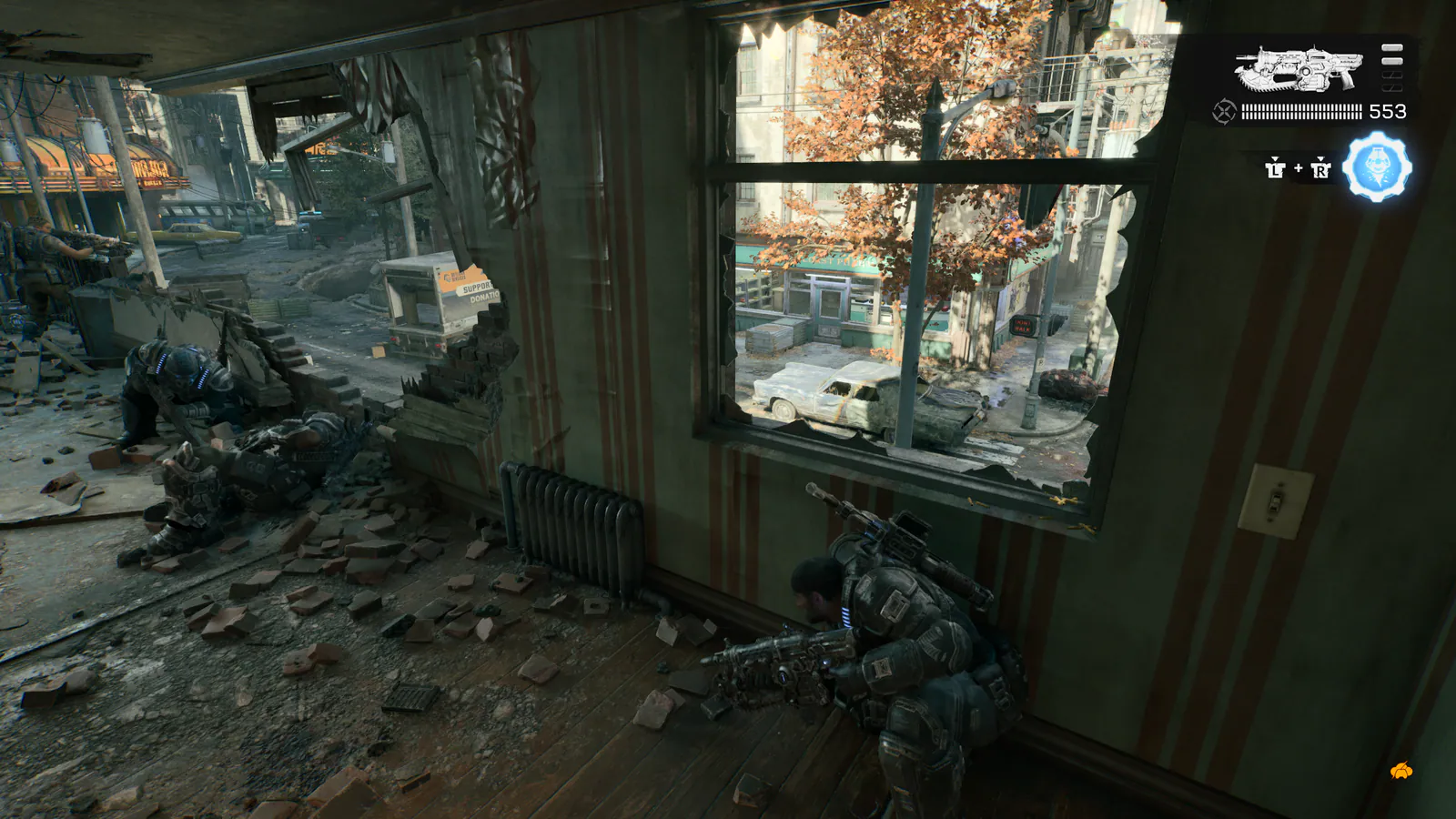
Visually, though, E-Day is the best-looking game I have played on my Series X. The achievement goes far beyond expensive character models. Faces, animation, armor, weapons, materials, streets, and cluttered interiors all feel like they belong in the same meticulously constructed world. Lighting and framing repeatedly made me pause just to appreciate the scene. The detail holds up while you are moving through it, too, rather than only when the camera picks a flattering angle.
Kalona's destruction makes that work even more impressive. Its buildings and streets carry the damage as the story progresses, giving the catastrophe a physical history you can read in the environment. A beautiful city becomes somewhere increasingly broken and hostile. That transformation helps sell the scale of Emergence Day more effectively than dialogue explaining how terrible everything is. You have seen what these places looked like. You know what is being lost.
The sound design, music, and voice performances complete the picture. Weapons have enormous presence, the set pieces land with blockbuster force, and the acting gives the quieter scenes room to breathe. Performance felt smooth during my time on Series X, which made the sheer density of the presentation even more impressive. The Coalition has brought all these pieces together with remarkable care. Even when I was bored of fighting, I wanted to keep looking and listening.
Outside the campaign, Horde offers more cooperative Locust killing, while Versus could probably get away with renaming itself Gnasher Simulator. If that particular shotgun dance is your thing, there is a very familiar appeal here. For me, neither mode changes my feelings about the central combat loop. More Gears is an easy sell to someone still hungry for it. I reached the credits ready for a break.
I have always had this idea for a smaller Gears survival horror game, something with the vulnerability and human focus of The Last of Us. You play as a soldier's son or daughter in their early twenties, or perhaps his elderly father. Just an ordinary person trying to catch up with him because he forgot something you need to give him. He and his squad are moving toward their objective, and you follow roughly a day behind, through whatever they left in their wake.
Being an ordinary person is your built-in debuff. You do not have the armor, training, or strength of a Gear, which gives the whole thing a reason to slow down. And the Locust you encounter could be wounded survivors of the squad's battles, giving them a debuff too. Something a Gear left for dead might still be a terrifying obstacle for you. I love the idea of picking through the aftermath of someone else's action game, where getting past one injured enemy becomes an encounter worth remembering. E-Day's ruined streets and quieter moments made me want that game even more.
Gears of War: E-Day is an extraordinary production and a powerful return to a world I have loved since that arcade. Its characters, atmosphere, and collapsing city stayed with me, even when its combat outlasted my enthusiasm. Fans who still love that rhythm will find plenty to celebrate. I came away wishing it had pushed further, but also deeply impressed by how much care went into bringing this nightmare to life. Thanks for reading!