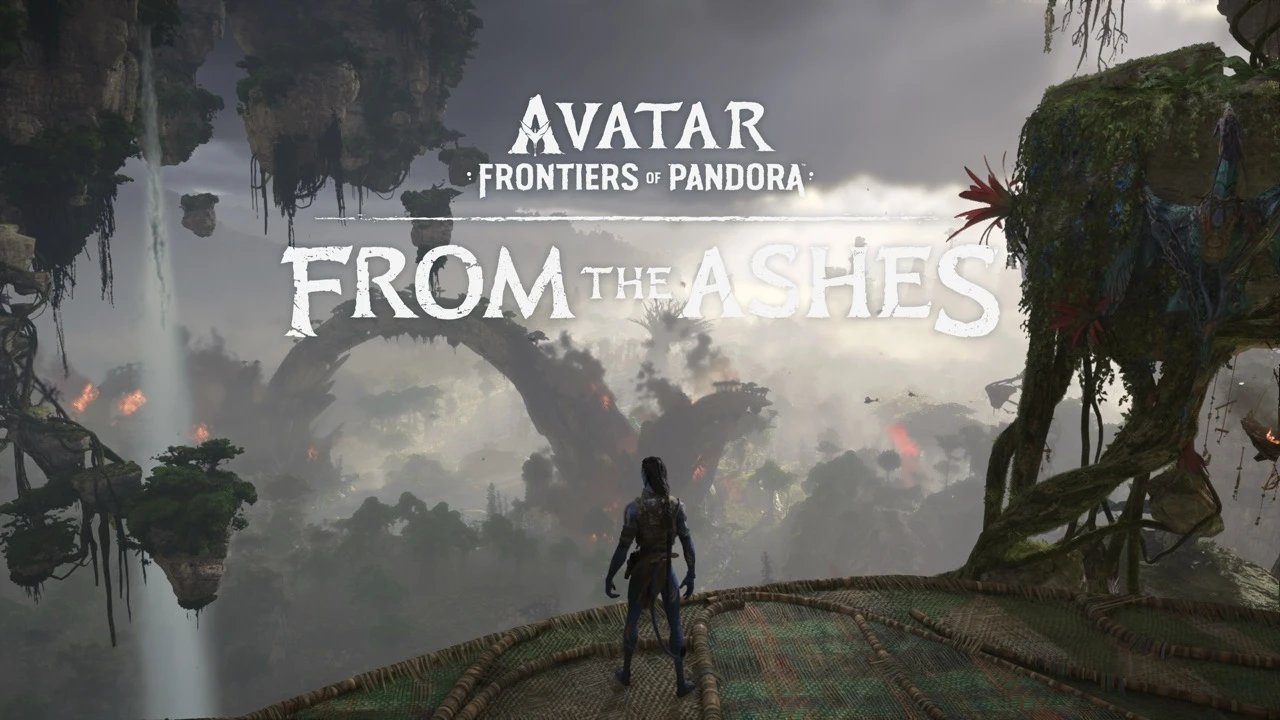
Is Avatar: From the Ashes worth playing?
Avatar: Frontiers of Pandora’s From the Ashes expansion won me over on Xbox Series X. So’lek gives the story a stronger center, the progression is less grindy, and third-person play makes combat and traversal feel much better. It is worth a look if those were the things that put you off the base game.
When I reviewed Avatar: Frontiers of Pandora last year, my feelings were mixed. On one hand, Ubisoft Massive had built one of the most impressive open worlds I've seen in years. Pandora felt vast, alive, and genuinely alien, a place you could get lost in just by walking through it. On the other hand, the game constantly tripped over itself. The story never really landed, the characters felt flat, and the heavy-handed level gating forced you into hours of hunting and scavenging just to see the next main mission. It felt like unnecessary friction layered on top of a world that already worked on its own. The decision to lock the entire experience to first person also felt strange, especially in a game where movement, scale, and character presence matter so much.
From The Ashes is where a lot of those problems finally start to disappear.
This expansion does more than just add new content. It reshapes how Frontiers of Pandora feels to play and, in many ways, how it should have felt from the beginning. It delivers a focused story with an actual protagonist, strips away most of the forced progression padding, and benefits massively from the addition of a third-person camera that was quietly patched into the base game before the DLC launched. That camera option was barely talked about when it arrived, but From The Ashes ends up being the best possible way to experience just how transformative that change really is.
Ubisoft confirms that From the Ashes requires the base game. Buying the expansion separately does not include Frontiers of Pandora.
So’lek’s story and the Ash People
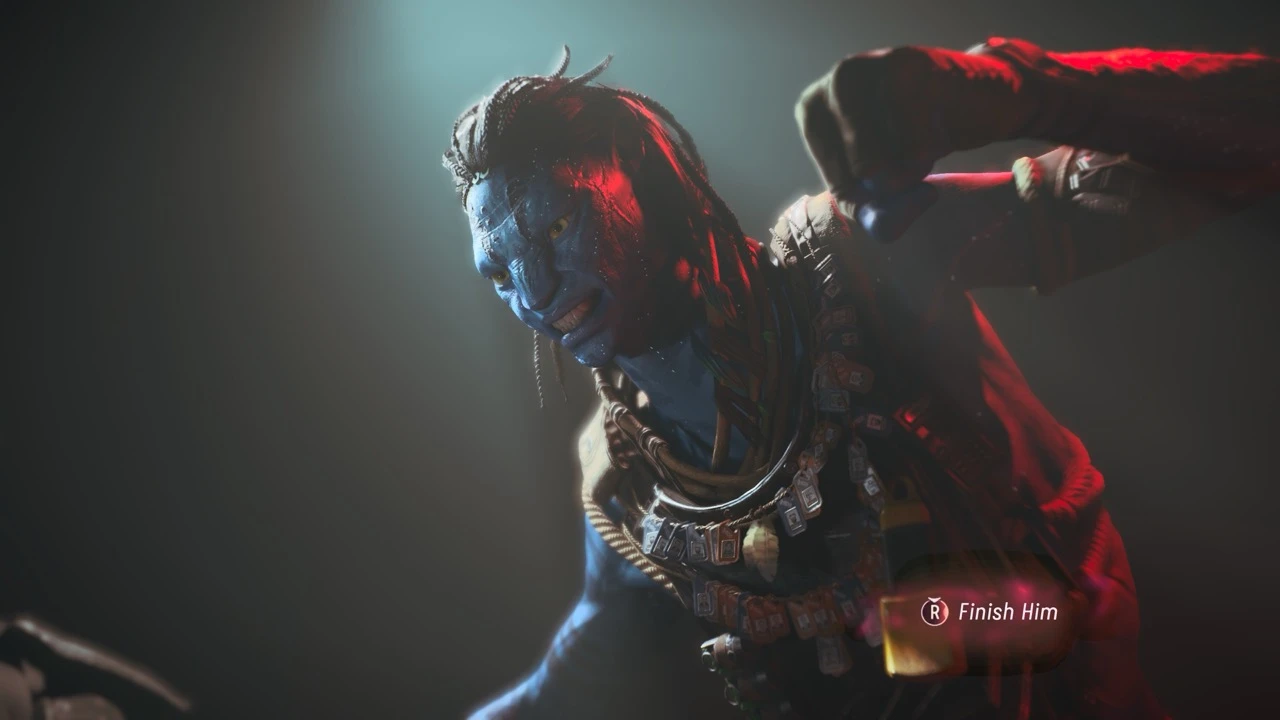
Instead of playing as a custom-made Sarentu, you step into the role of So'lek. He is a character who appeared in the base game, but never had the space to fully develop. Here, he finally becomes the center of the story, and the difference is immediate. So'lek is not meant to be a stand-in for the player. He is not “your” Na'vi. He is a native warrior with a tragic past, shaped by loss, violence, and years of fighting the RDA. He has become something closer to a mercenary or bounty hunter, collecting the dog tags of RDA soldiers he has killed as a grim record of survival rather than a power fantasy.
That alone makes the story easier to engage with. So'lek feels like a real person in this world, someone with motivations and scars, not just a camera moving through a pretty environment. His personality, his weariness, and his anger give weight to the events unfolding around him in a way the base game's protagonist never quite managed.
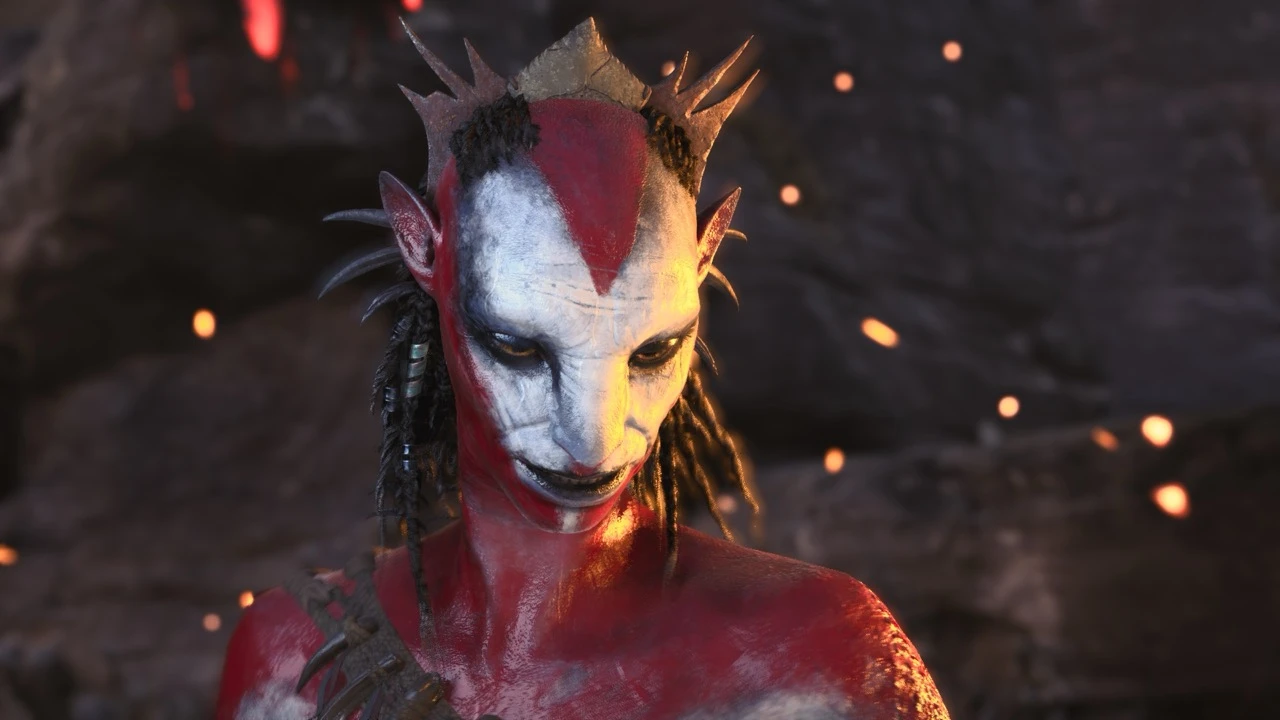
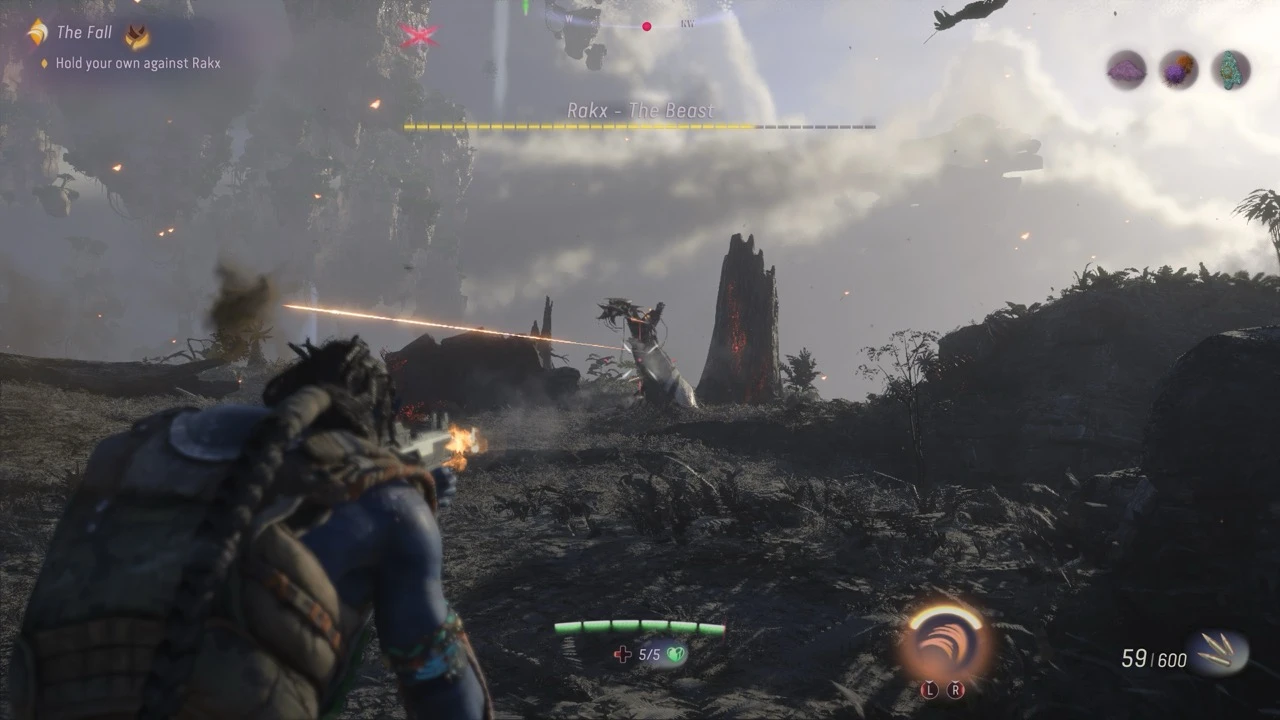
From The Ashes is set during a particularly dark moment for Pandora. The RDA has formed an alliance with the Mangkwan, also known as the Ash People, a faction introduced in the third Avatar film, which by the way, I absolutely loved and think it's the best Avatar film yet. These are Na'vi who have embraced fire and destruction, burning the land and hunting the Sarentu alongside the RDA. Large parts of the map are scarred by flames, smoke hangs in the air, and the tone is noticeably heavier than before. The story takes place partly in the familiar Kinglor Forest region and partly in a brand-new area called The Ravines, which brings a desolate devoid of trees terrain yet still quite striking.
While the overall premise works well, the villains themselves are a weak spot. You face three main Mangkwan Warbond leaders and one RDA officer, but outside of their boss encounters, they are largely forgettable. Their personalities barely register, and it is hard to remember anything about them once the fight is over. This is disappointing, especially when compared to the much stronger antagonists seen in the films.
That said, the boss fights themselves are excellent. Each of the three main Ash People encounters feels distinct, tense, and mechanically interesting. They stand out as some of the best moments in the entire game, even if the narrative build-up around them is thin. Unfortunately, the smaller named underlings you encounter throughout the world blur together quickly. These fights usually boil down to dumping bullets into tougher enemies until you can execute them, and they rarely leave an impression.
Less grind and better progression
One of the biggest improvements over the base game is how progression is handled. The suffocating level gating is largely gone. You are no longer forced to hunt specific animals, craft particular gear tiers, or grind side content just to unlock the next story mission. Instead, progression feels natural and respectful of your time. You can focus on the main narrative without constantly being told you are underleveled or missing some arbitrary requirement.
Optional content still exists, including clearing RDA facilities and smaller enemy camps, but this time it truly is optional. You can clear a major outpost and then tackle several nearby mini-camps, destroying generators, antennas, and other familiar objectives. It can still get repetitive, and after a while you have seen everything these activities have to offer. The crucial difference is that you are not forced into them. Unlike the base game, where this kind of padding was mandatory, From The Ashes lets you walk away without penalty.
Weapon upgrades also return, but they are far less grindy. Materials are easier to find, upgrades are clearer, and improvements actually feel meaningful. You can tell when a weapon has been enhanced, whether through damage output or handling, and you rarely feel like you are stuck doing busywork just to stay viable.
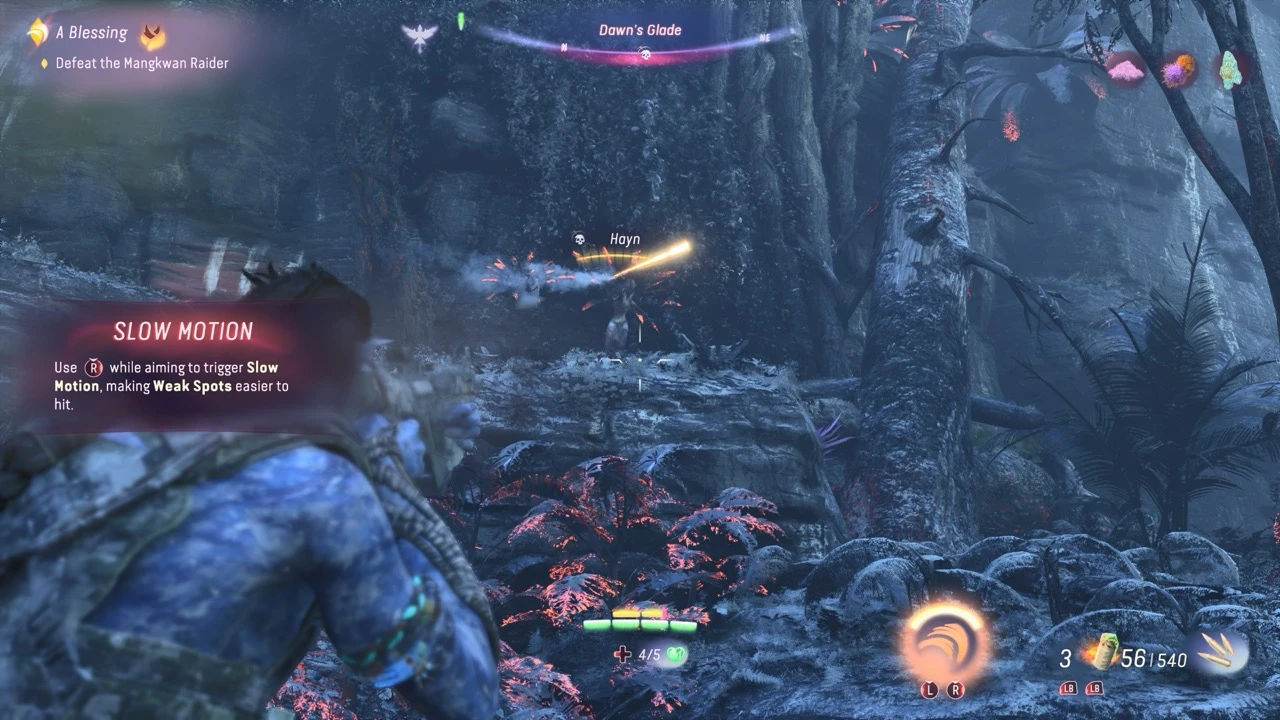
So'lek also comes with his own skill tree, which leans into his more aggressive, battle-hardened nature. The standout ability is a frenzy-like mode that lets him temporarily become an absolute killing machine. It fits the character perfectly and feels powerful without completely breaking the game's balance. The rest of the skills focus on improving combat flow, survivability, and mobility, reinforcing the idea that So'lek is not just another Na'vi fighter but a force shaped by years of conflict.
Third-person combat and Xbox Series X performance
All of this is elevated dramatically by the third-person camera option. While this feature technically arrived in a patch before the DLC launched, From The Ashes feels like the moment where it truly clicks. Playing in third person completely transforms the experience. Movement feels better, combat is easier to read, and the world makes more sense when you can actually see your character interacting with it. So'lek himself looks fantastic, with armor and gear that give him a strong, almost Jake Sully-like presence.
Once you experience Frontiers of Pandora this way, it is hard to imagine going back. The third-person view makes traversal more fluid, helps during chaotic firefights, and adds a sense of physicality that was missing in first person. It genuinely feels like this option should have been there from the start.
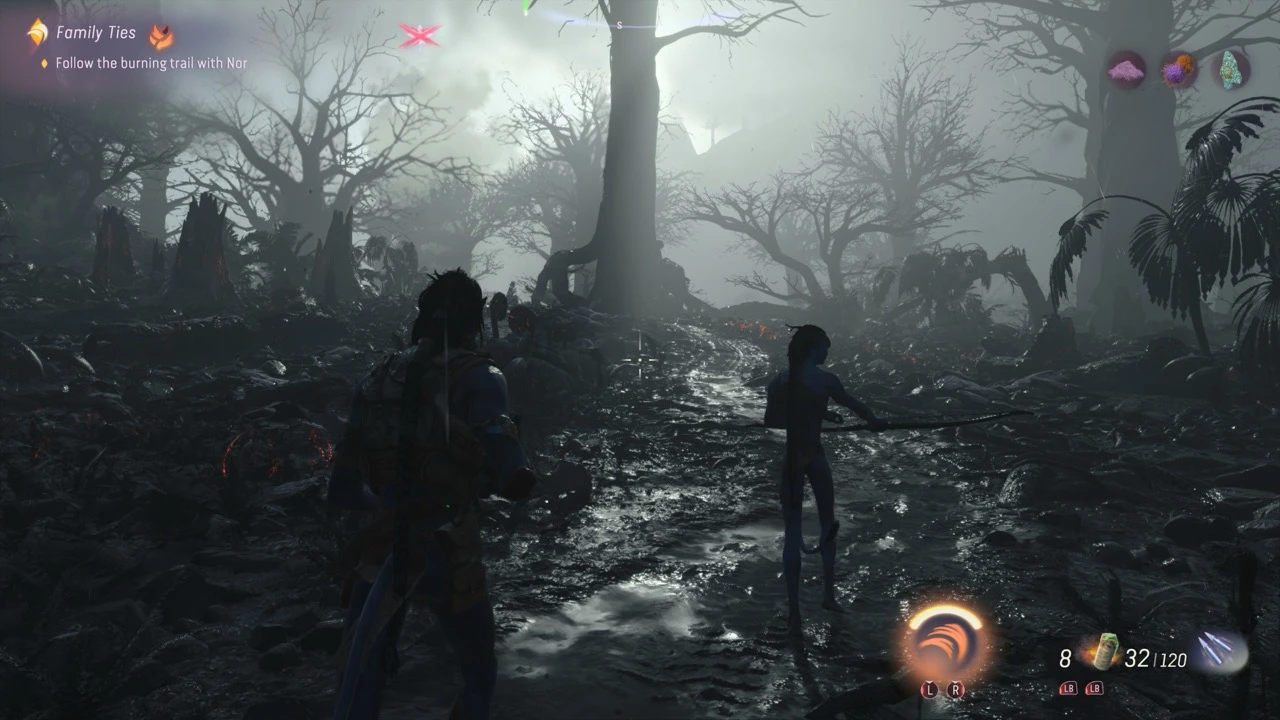
Not everything has been fixed, though. Navigation can still be frustrating. Waypoints often default to vague prompts like “Inside Search Area,” leaving you to comb through large zones without much guidance. This is especially noticeable in massive underground RDA facilities, which are often designed like sprawling mazes. Being told an objective is a few hundred meters away does not help much when the real challenge is figuring out how to reach it.
Visually, From The Ashes is striking, but not always in a traditionally beautiful way. Because of its focus on fire and destruction, large parts of the world are covered in smoke, ash, and rain. Pandora does not always look as vibrant as it did in the base game, and sometimes that iconic beauty is replaced by something harsher and more oppressive. Thematically, it makes sense, the Ash People are literally burning the world, but it does mean the game is not constantly showing off its most colorful side.
There was a genuinely funny moment that happened when I was playing when my mom glanced at the screen and asked, “What's this game with all this fire and ash?”, she had no idea how on point she was. In a way, that perfectly sums up the DLC's visual identity. This is Pandora under siege, not the pristine paradise players first fell in love with.
There are still moments where Pandora shines through, where the smoke clears and you are reminded why this world is so special. Performance on the Xbox Series X is solid throughout, with smooth gameplay and no major technical issues getting in the way.
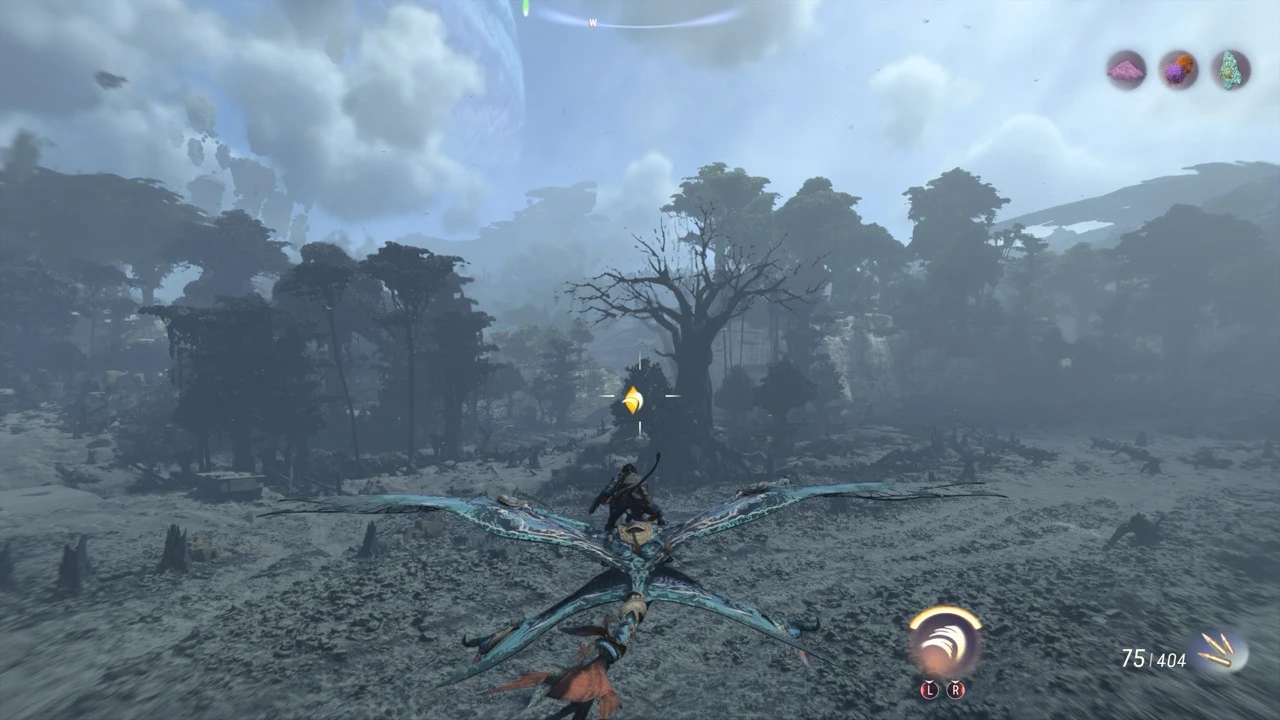
After about 18 hours, From The Ashes left me with a clear impression. This is a better version of Avatar: Frontiers of Pandora. It improves the story, gives you a protagonist worth caring about, removes most of the unnecessary padding, and fully benefits from a third-person camera that changes everything. It also fits a familiar Ubisoft pattern, launching rough and then quietly becoming much better over time, often at a lower price.
If the base game disappointed you, this DLC is worth a second look. If you never played Frontiers of Pandora at all, From The Ashes offers a more focused story within that world, though you still need access to the base game. It finally feels like the game many of us hoped for the first time around.
Read our original Frontiers of Pandora review for more on what worked and what frustrated me in the base game.