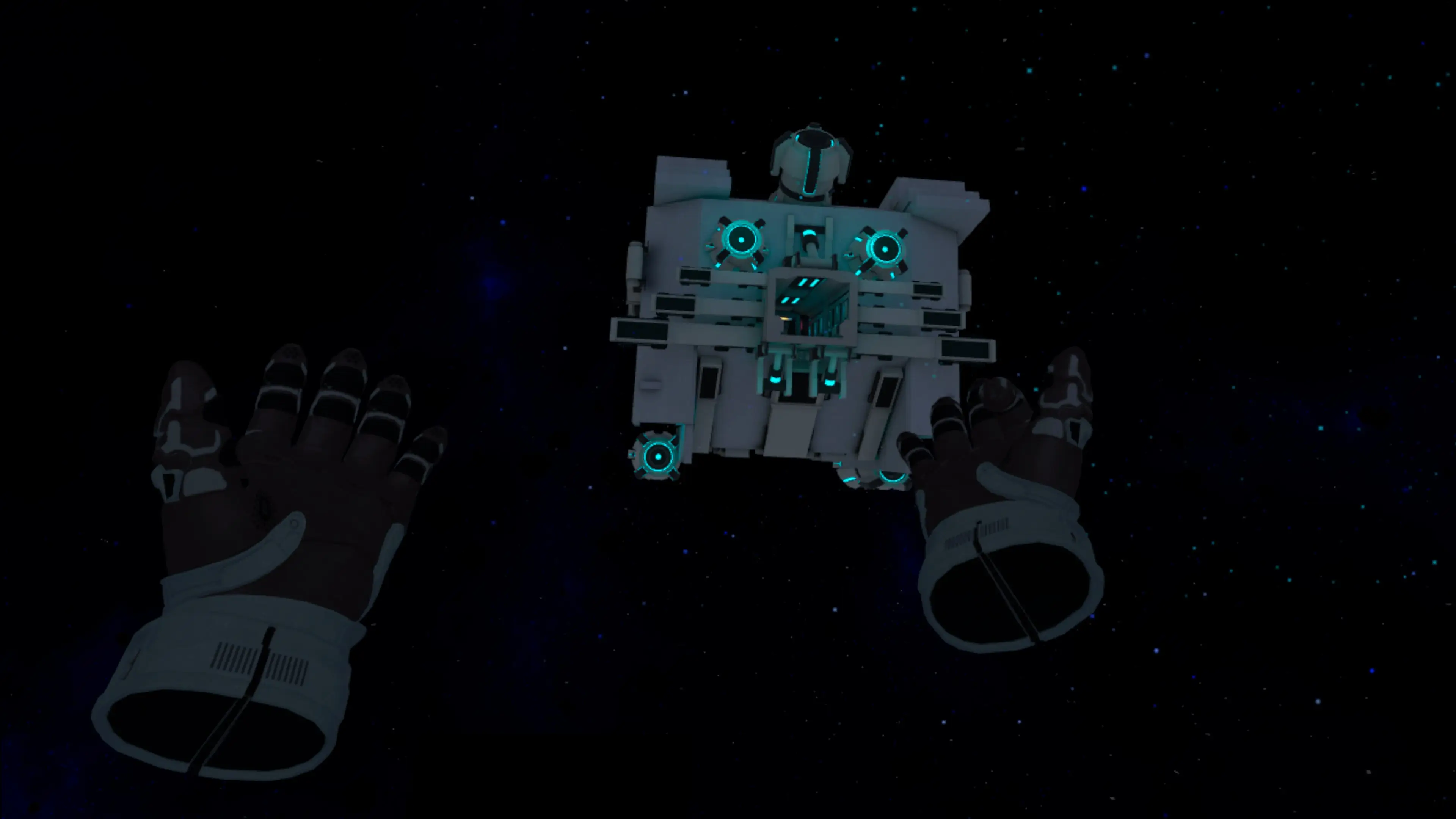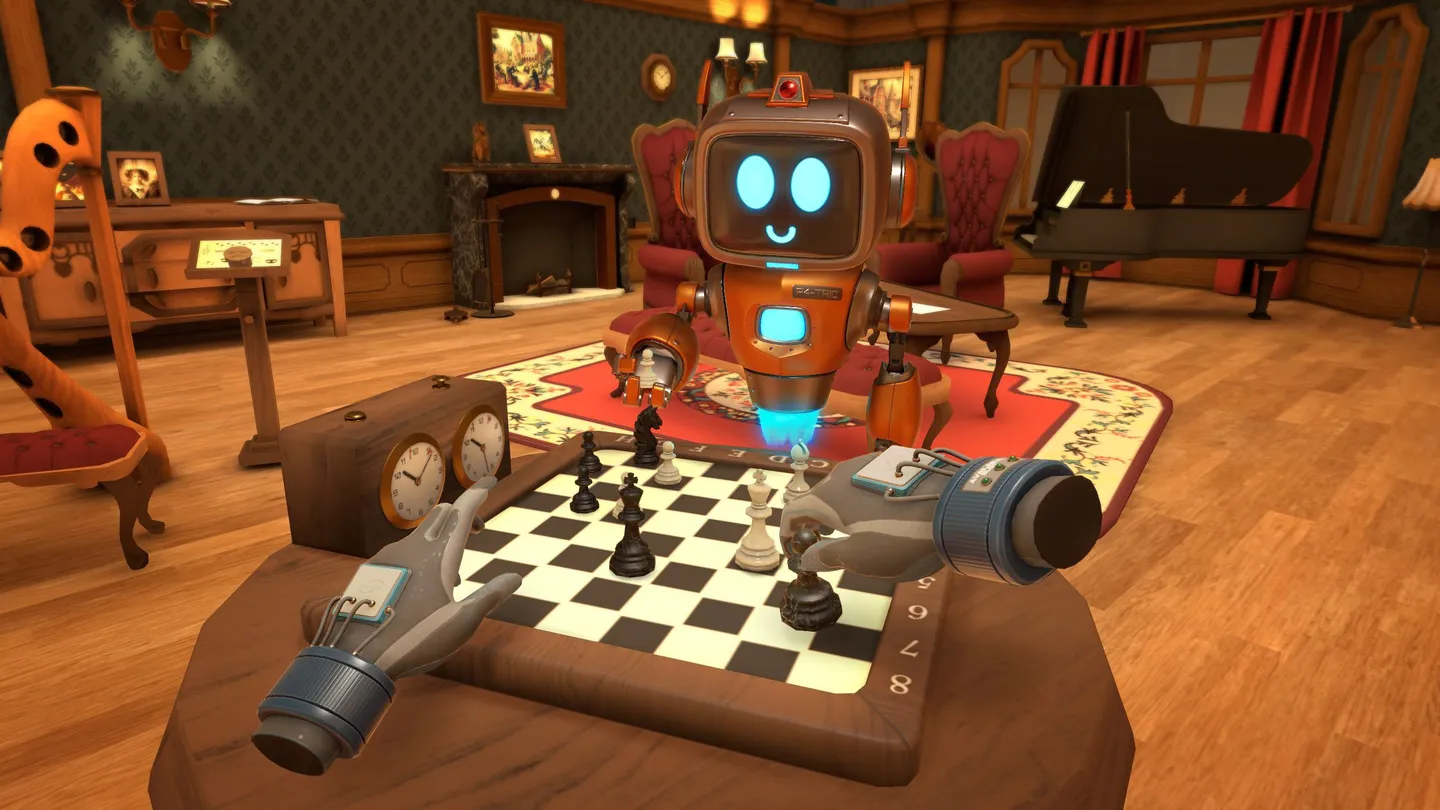
Cinescape VR is a stylish VR puzzle adventure set inside iconic movie sets, held back by baffling interaction choices and frustrating puzzle flow that undermine what should have been a great escape-room experience
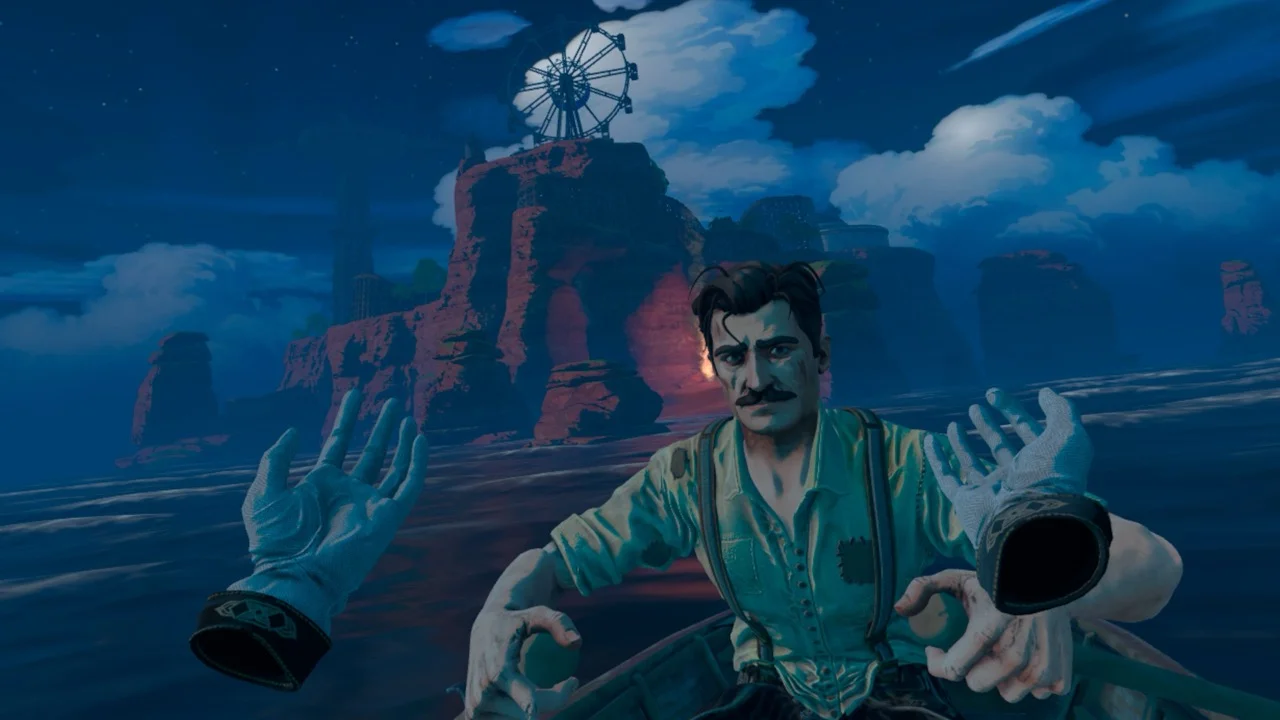
This is one of those games that hurts a bit to write about, because on paper, Cinescape VR should absolutely be my thing. A VR puzzle adventure set inside elaborate movie sets, mixing escape-room style challenges with a narrative about restoring a mysterious Codex, that sounds like a slam dunk. Add to that the fact that it looks genuinely nice on Quest 3, with themed environments that clearly had time and care put into them, and I went in expecting to have a great time.
Unfortunately, after several hours with it, I walked away more frustrated than satisfied. Not because the idea is bad, but because a handful of very specific design decisions drag the entire experience down. These are not tiny nitpicks either, they are foundational choices that affect how the game feels minute to minute. As it stands now, Cinescape VR ends up being a game I actively struggled to enjoy, and one I would honestly recommend avoiding until some serious changes are made.
The story is straightforward but effective. You are dropped into a cinematic multiverse of sorts, jumping between classic film-inspired sets, with the goal of repairing and restoring the Codex. This artifact is essentially the glue holding these worlds together, and each level represents a different genre or era of filmmaking.

There is a small robot companion that follows you around, acting as a loose guide and narrative anchor. It does not talk much, but its presence gives the game a sense of continuity, and in theory it helps nudge you toward your next objective. The story is not deep, but it does not need to be. It exists to justify the shifting environments and the puzzle-driven structure, and in that sense it works fine.
Where things start to wobble is not in the story itself, but in how the game communicates what you are supposed to do within that story. That becomes a recurring issue.
The first noticeable friction point is movement. Instead of allowing free locomotion, Cinescape VR limits you to teleporting between predefined hotspots. You pinch, drag slightly, and snap to the next position. On its own, this is not a dealbreaker. Plenty of VR puzzle games restrict movement to keep players focused and prevent sequence breaks.
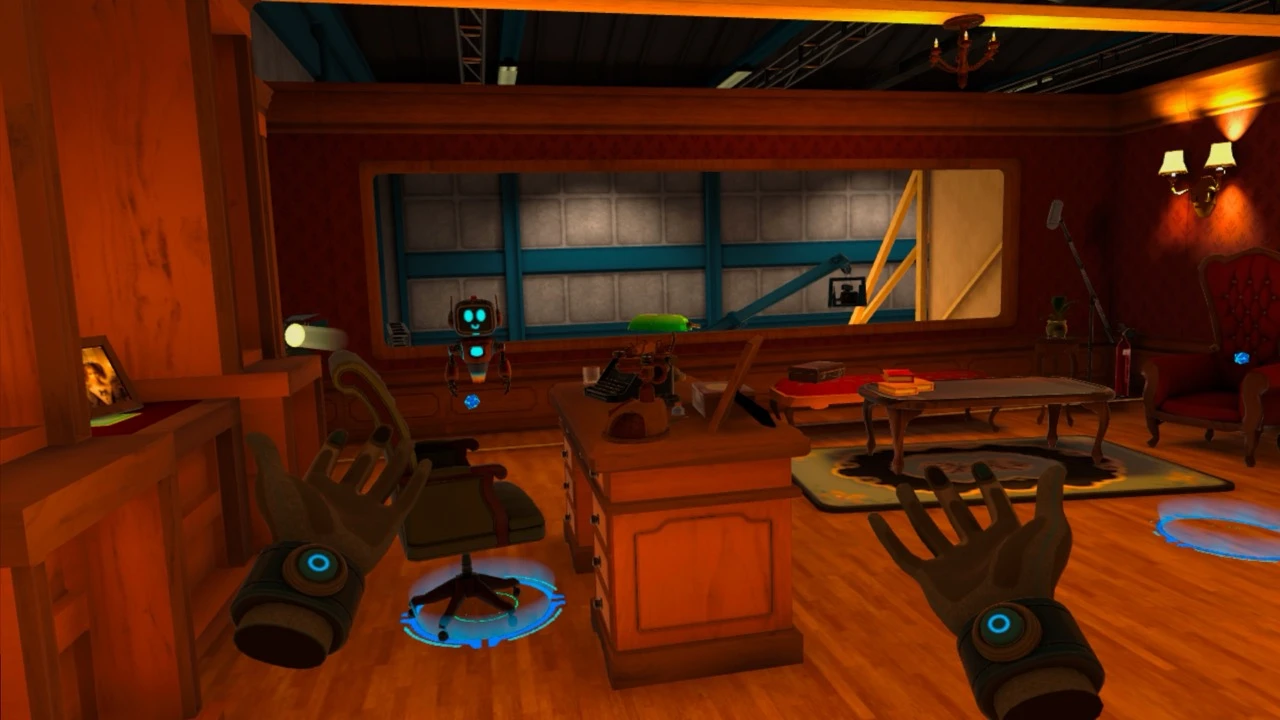
Still, it feels like a missed opportunity here. The movie sets look good. They are detailed, atmospheric, and clearly meant to be looked at. Being unable to freely walk around them makes the environments feel more like backdrops than places. You are constantly aware that you are being guided from puzzle node to puzzle node, rather than exploring a space organically.
I can understand the reasoning. The developers clearly want to control puzzle flow and prevent players from getting lost. The problem is that this restrictive movement system becomes a much bigger issue once it is combined with the game's biggest and most baffling choice.
Cinescape VR is hand tracking only. No controller support, at all. This is where the experience really starts to fall apart.
Teleporting, grabbing objects, interacting with mechanisms, everything is done through pinching and gesturing. On paper, this might sound immersive. In practice, it is a constant source of frustration. The same pinch gesture used to teleport is also used to grab objects, and the game frequently misinterprets what you are trying to do.
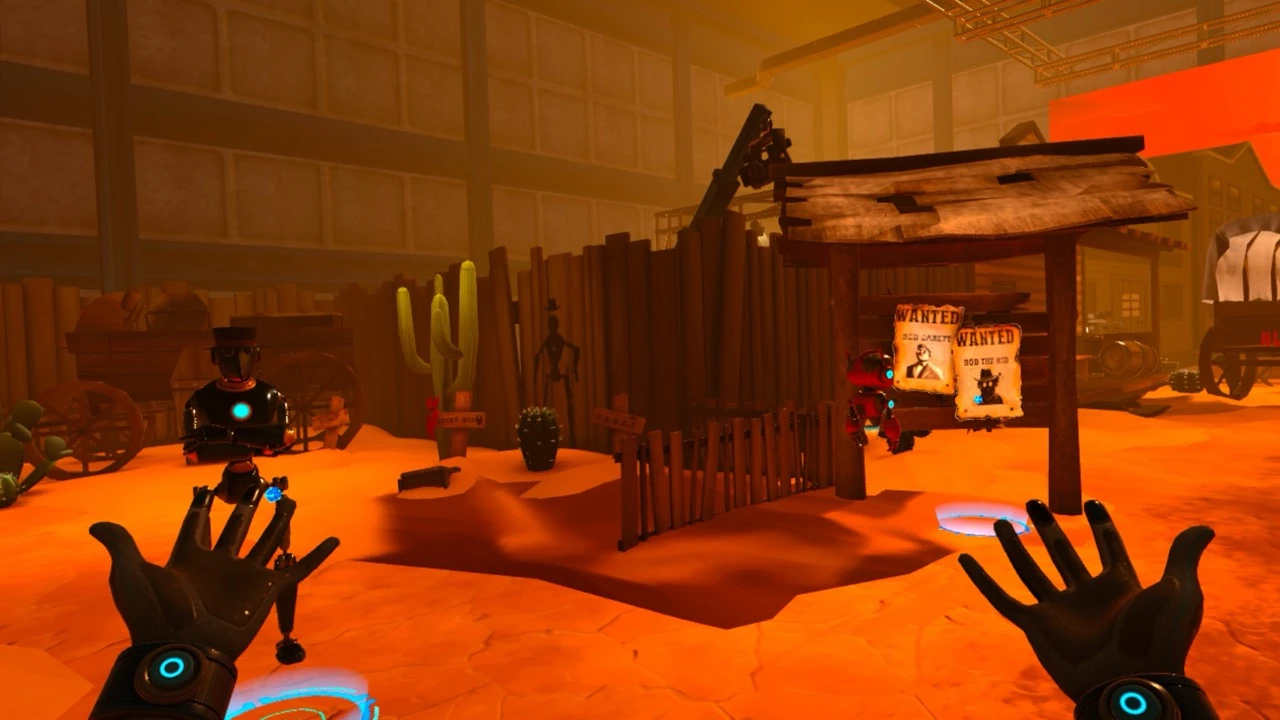
You reach out to pick something up, the game thinks you pinched a hotspot, and suddenly you teleport instead. This happens over and over again, and it never stops being annoying. It breaks flow, breaks immersion, and makes even simple interactions feel clumsy.
Object handling itself never feels good. There is no force pull, so if you drop something, you often have to physically crouch in real life to retrieve it, assuming you can even reach it. There are no height adjustment options, which makes this worse. If an object falls slightly out of reach, tough luck.
Later in the game, things get even messier. You gain the ability to transform fake props into real ones, like touching a paper statue and turning it into solid stone. This is a cool idea, but interacting with these transformed objects is still awkward. Eventually you are asked to use guns, firing magical particles to trigger transformations. Holding and aiming a revolver with one hand, while cocking it with your other hand, is genuinely awful. It never feels precise, never feels natural, and quickly becomes exhausting.
To make matters worse, the Meta system menu does not work properly while the game is running. You cannot reliably recenter your view, and you cannot capture footage. Even basic system-level interactions seem broken. Controller support should have been there from day one, and it is honestly baffling that it was not.
The puzzles themselves are a mixed bag. Individually, many of them make sense. Once you solve them, you can usually see the logic. The problem is how poorly the game communicates puzzle order and dependencies.
In the second level, a western-themed set, this becomes painfully obvious. Several puzzles need to be solved in a specific order for other elements to even appear. The game never clearly tells you this. I moved between puzzles freely, assuming I could tackle them in any order, like in a typical escape room.
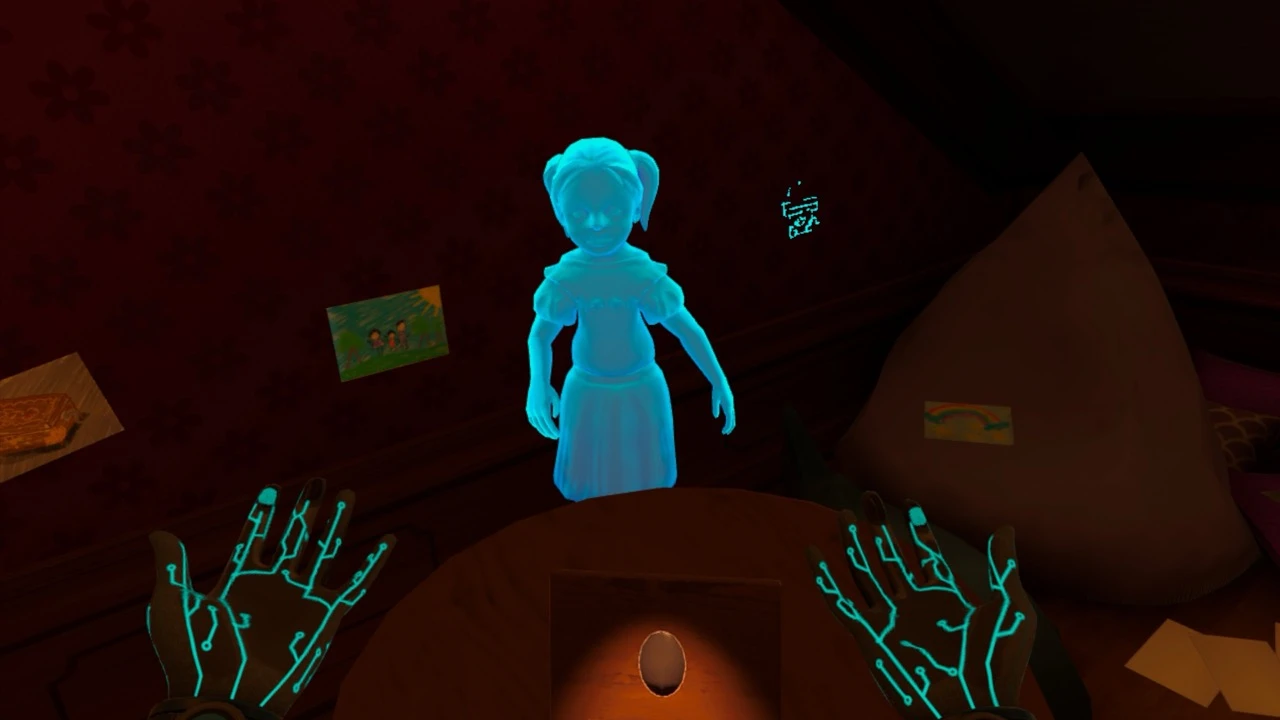
At one point, I prepared a cocktail by mixing various liquids, which felt correct. I then needed to give it to a robot character. There were glasses on the bar, none of them worked. I tried handing her the shaker, pouring near her, everything I could think of. Nothing worked. I stood there confused for about twenty minutes, with no hint system, no feedback, nothing.
Eventually, I solved a completely different puzzle involving a telegram, which itself controlled terribly with hand tracking. Only after that did I return to the saloon, where a new glass had magically appeared on the table next to the robot, along with other elements that simply were not there before. That was the missing step.
This is not good puzzle design. A good escape room makes you feel clever. It guides you subtly so that when you solve something, you feel like you figured it out yourself. Here, the game withholds critical pieces until you unknowingly check off invisible prerequisites. The result is confusion, not satisfaction.
By the time I reached the pirate-themed third level, my patience was already thin. Having learned from the previous level, I followed the robot more closely, assuming it marked the correct puzzle path. I encountered a crane puzzle with missing components. I found the hook, but attaching it to the crane was a nightmare.
The crane would not stay in position, would not move where I needed it to, and would not reliably interact with the hook. I spent close to thirty minutes fighting the controls rather than solving the puzzle. At that point, I quit the game.
Not because the puzzle was hard, but because the interface made it unbearable.
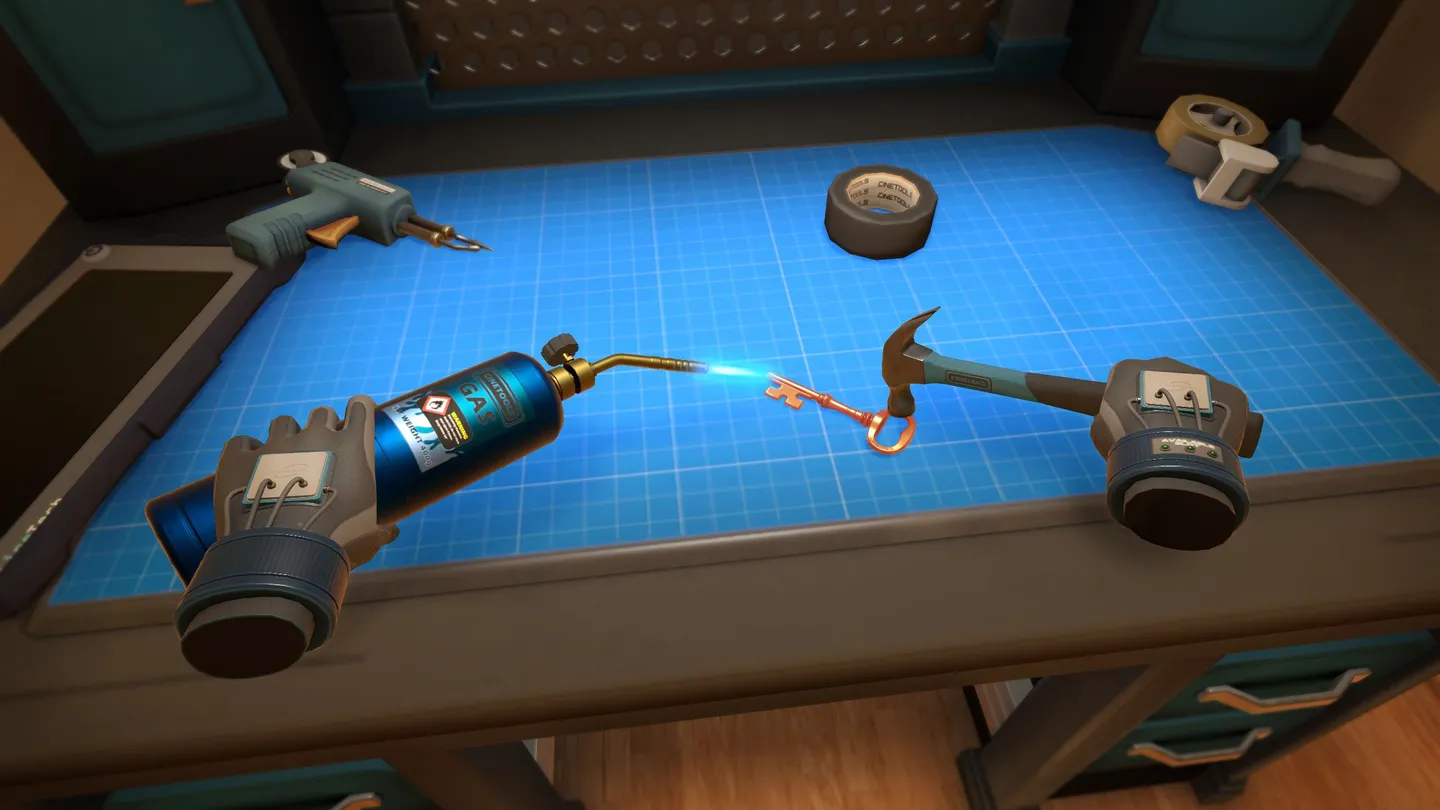
Cinescape VR is a game I really wanted to love. The premise is strong, the presentation is appealing, and the idea of exploring movie sets through VR puzzles is genuinely cool. But the execution is deeply flawed.
Hand tracking only controls, hotspot-based movement, unclear puzzle sequencing, and the complete lack of a hint system combine into an experience that feels hostile to the player. Instead of feeling clever, you feel confused. Instead of feeling immersed, you feel like you are fighting the game.
Unless the developers massively overhaul the interaction model and rethink how puzzles are introduced and communicated, this is one to stay away from. Right now, Cinescape VR is not just disappointing, it is actively frustrating, and that is the worst thing a puzzle game can be. Thanks for reading!