Catana: Red Flowers is a bold VR experiment that blends high-speed katana combat with restaurant management, fun in isolation, but never quite coming together as a unified whole
Catana: Red Flowers is the kind of game that immediately makes you curious. Not because it is doing something small or safe, but because it feels like two completely different games stitched together with a lot of confidence. One moment you are sprinting across neon soaked levels, wall running, grappling through the air and slicing enemies apart in a single hit. The next moment you are back at a restaurant, cooking meals, pouring drinks, managing customers and upgrading the place to make more money. It is strange, ambitious, and honestly pretty charming in its own way.
After spending a solid amount of time with it on Quest 3, I came away feeling torn. There is a lot here to like, and both halves of the game work surprisingly well on their own. The problem is that they rarely talk to each other in a meaningful way. What you end up with is not a broken experience, but a disjointed one that feels like it could have been something truly special with a stronger connective thread.
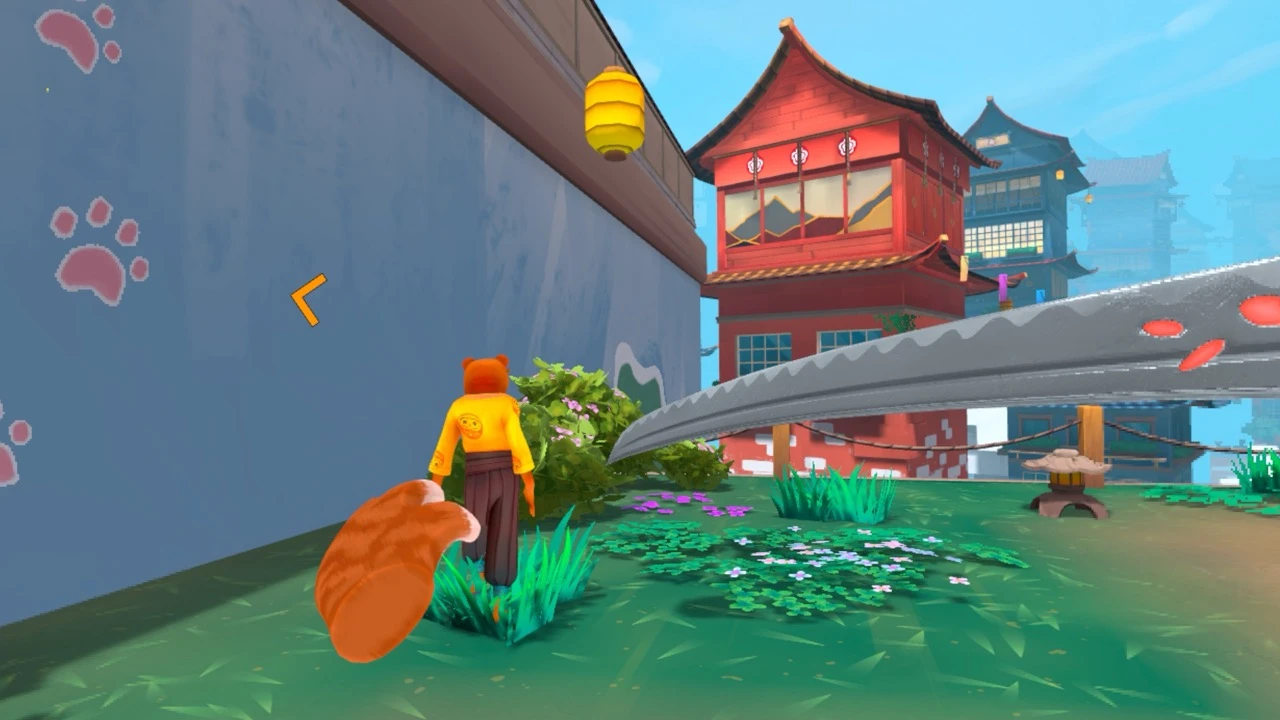
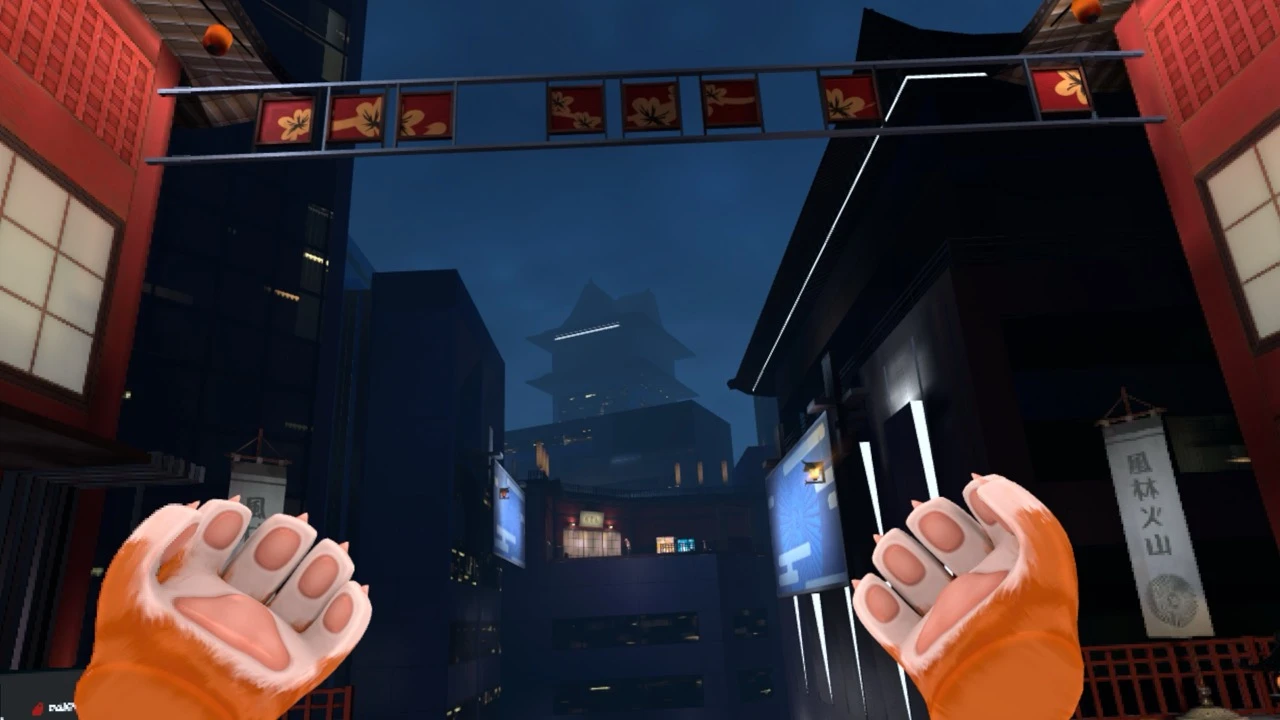
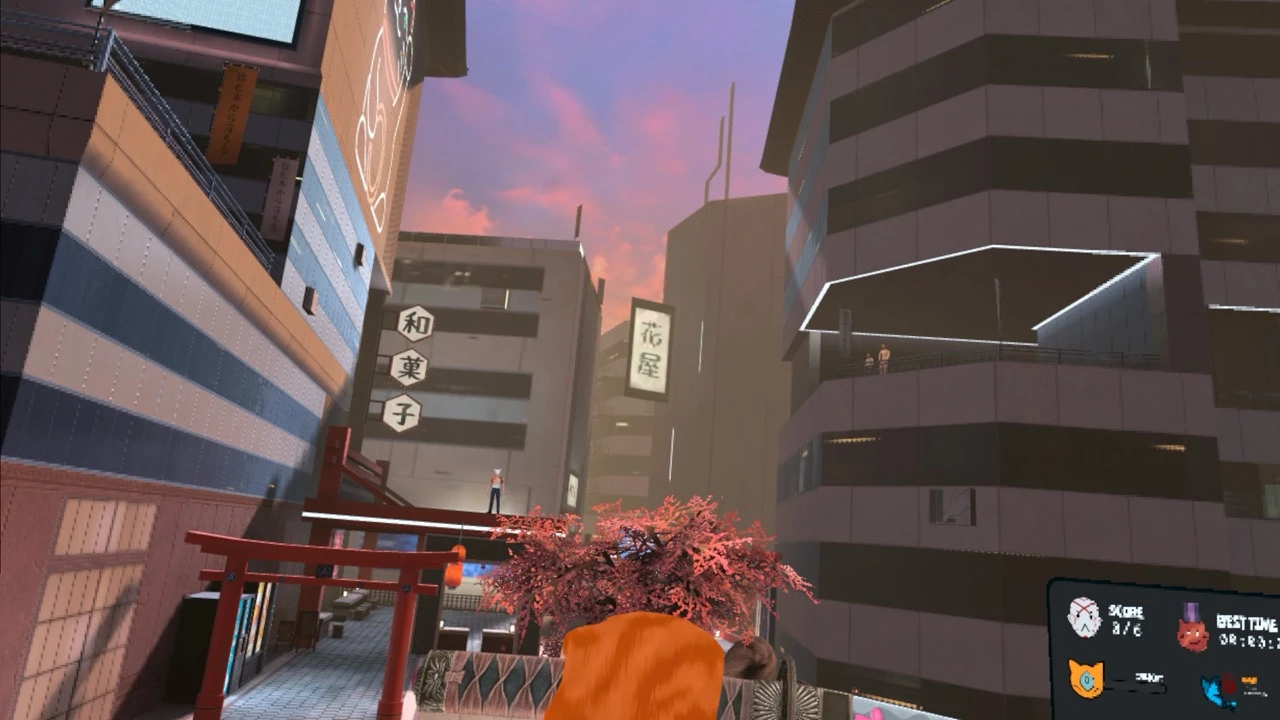
The action side of Catana: Red Flowers is clearly the headline act. This is very much a Ghostrunner style experience translated into VR, and that comparison comes naturally once you get a feel for the movement. You are fast, fragile, and deadly. Enemies go down in one clean slice, but you do too if you make a mistake. The levels are designed around momentum, asking you to chain together running, jumping, dashing, wall running and grappling in a smooth flow.
When everything clicks, it feels fantastic. There is a real sense of speed here that works well in VR without being overwhelming. You are constantly making split second decisions about where to move next and which enemy to take out first. The katana combat is simple but effective, relying on clean swings and good positioning rather than complex combos. Parrying and timing your strikes correctly feels rewarding, especially when you clear a room without breaking your rhythm.
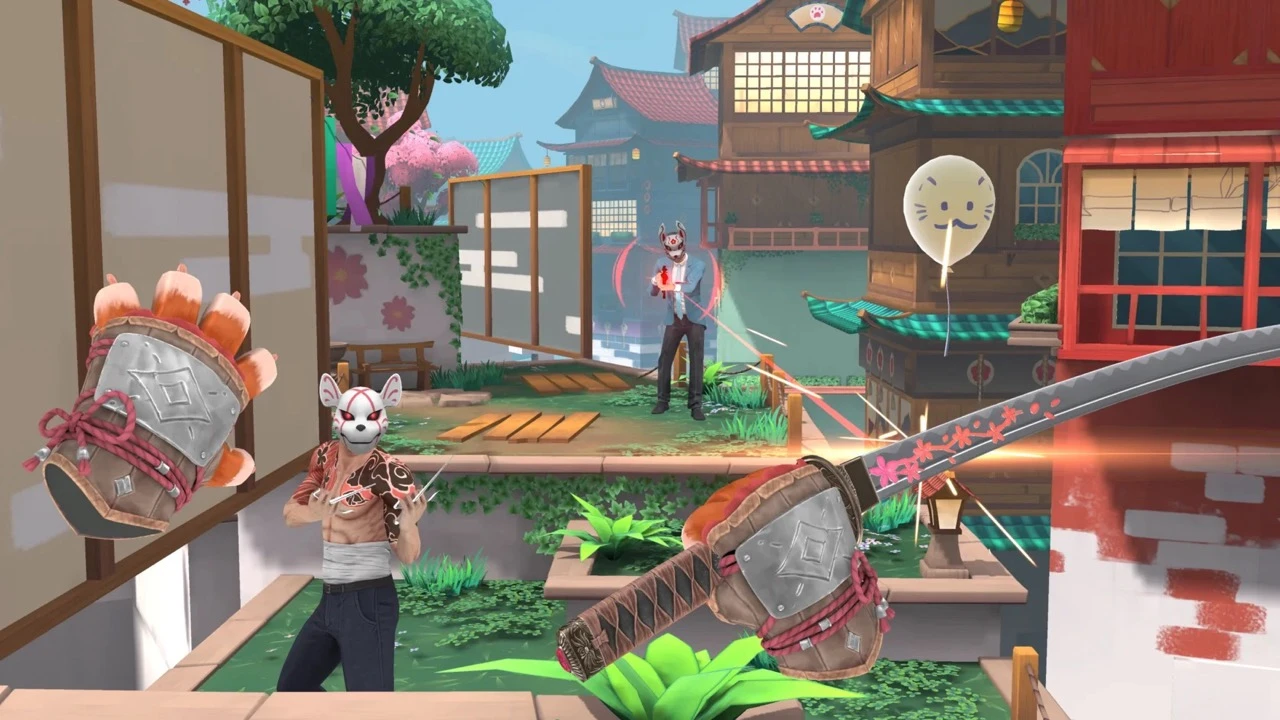
The enemies themselves are stylized like human Yakuza members and it's a little bit weird cause you're a ninja cat. What's evene weirder is that you can dismember them in gruesome ways... again, you are a cat.
Level design is generally solid. The stages are built to encourage forward momentum, with clearly readable paths and plenty of verticality. You are rarely standing still, and the best moments come when you trust the movement system and just go for it. Mess up, and you are back at the start almost instantly, which keeps frustration low and encourages experimentation.
Then there is the other half of the game, the restaurant management side. This is where things take a sharp turn in tone and pacing. Between action runs, you can return to your restaurant where you cook dishes, pour drinks, serve customers and manage upgrades. It is surprisingly hands on, making good use of VR interactions. Chopping ingredients, flipping food, grabbing plates and dealing with impatient customers feels tactile and playful.
There is a real sense of urgency here as the restaurant gets busier. You unlock new recipes, tools and upgrades that add complexity to the workflow. Juggling multiple orders while keeping customers happy can get hectic in a fun way. It is not as deep as a full blown management sim, but it does enough to stay engaging and give you a reason to care about improving the space.
Visually and physically, the restaurant area is a highlight. It is full of personality, populated by all sorts of weird humanoid creatures. There is a drunken grandpa character who feels like he exists purely for chaos, and the physics system lets you mess around in ways that are genuinely funny. Slapping customers, grappling them, or straight up yeeting them across the room never really gets old. It is a TikTok clip farm in the best sense, and you can tell the developers had fun leaning into the absurdity.
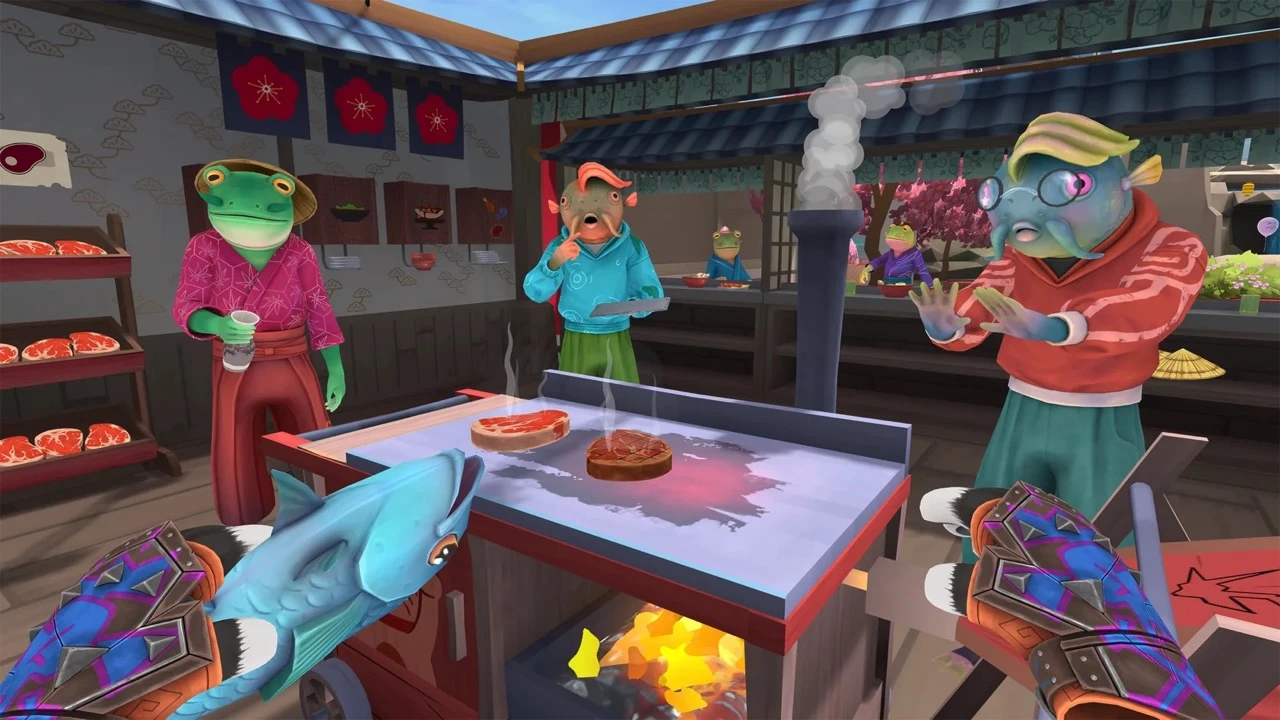
The issue is not that either half of the game is bad. It is that they feel oddly disconnected. There is no strong narrative or mechanical reason for why these two experiences exist together. You go out, slice through enemies, then come back and run a restaurant, but the loop never fully closes. You are not bringing back ingredients from your runs. You are not cooking meals based on what you collect in the action levels. Progress in one mode barely informs the other in any meaningful way.
This is where the comparison to games like Dave The Diver becomes unavoidable. That game nails the balance between two very different gameplay styles by making them feed into each other. You dive, you collect fish, and then you serve those exact fish in your restaurant. The story, the mechanics and the progression all reinforce that loop. In Catana: Red Flowers, that link just is not there.
It feels like a missed opportunity, especially given the game’s own world. During combat runs, maybe you could slice through humanoid animal enemies and move through environments that could easily support collecting ingredients. Back at the restaurant, you are surrounded by fish people and other strange creatures. The idea of slashing through levels, collecting ingredients, and then cooking them back at the restaurant feels like it would make perfect sense. Instead, the two halves exist side by side without really acknowledging each other.
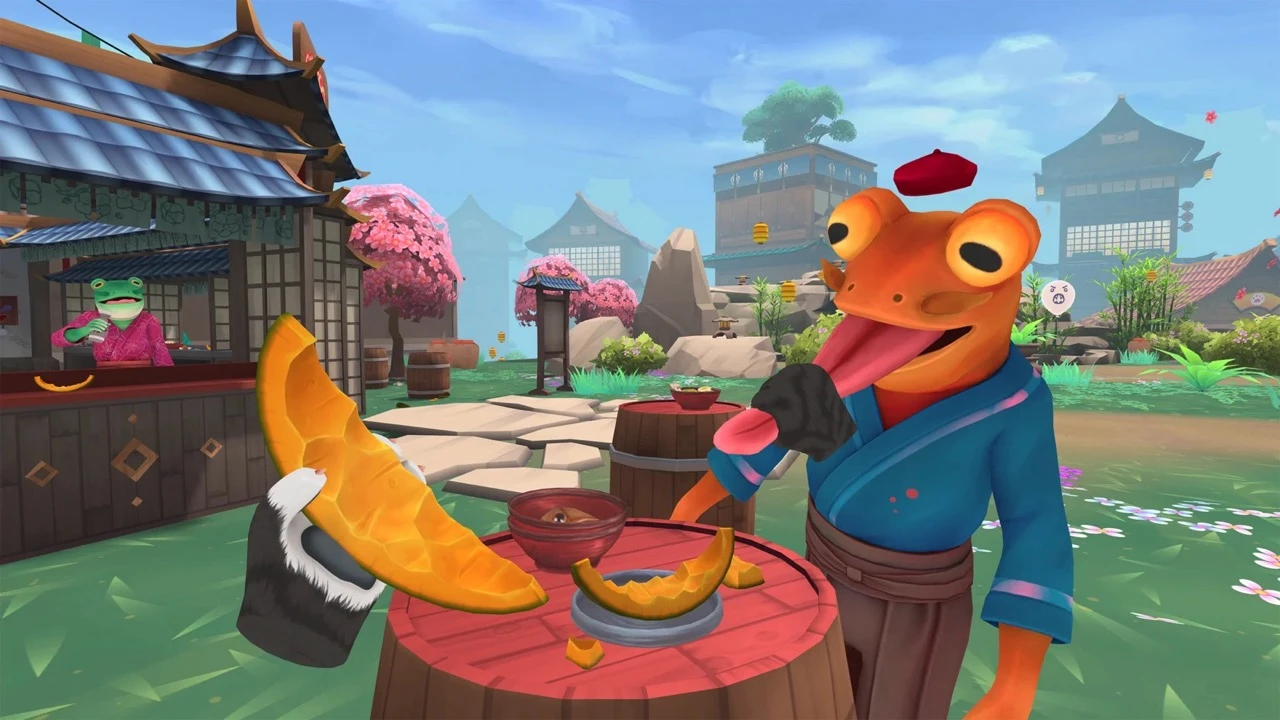
That said, taken individually, both sides are enjoyable. The combat is fast, stylish and satisfying, especially if you enjoy high skill ceiling movement based games. The restaurant management is chaotic fun, with enough depth to stay interesting and plenty of room for emergent comedy thanks to the physics system. It just never becomes more than the sum of its parts.
Presentation wise, Catana: Red Flowers looks great on Quest 3. The art style is vibrant and colorful, with strong use of lighting and bold character designs. Performance is solid, which is crucial given how fast the game wants you to move. The audio does a good job supporting both the intense action and the more relaxed, goofy restaurant moments without feeling jarring.
I was left feeling satisfied but also slightly disappointed. Not because the game failed, but because it came so close to being something truly unique for VR. You can see the ambition in every system, and you can feel how much care went into making each half fun. It just never fully commits to tying them together.
Even with those criticisms, I still recommend giving Catana: Red Flowers a whirl. It is a genuinely fun VR game with a strong sense of style and personality. If you like fast paced action and you enjoy hands on VR interactions, there is a lot here to enjoy. Just go in knowing that you are essentially getting two games in one, rather than one perfectly unified experience. Thanks for reading!