Pirates VR: Jolly Roger is a visually promising pirate adventure on Meta Quest 3 that struggles with unclear design, weak combat, and frustrating puzzles, leaving a lot of potential unrealized
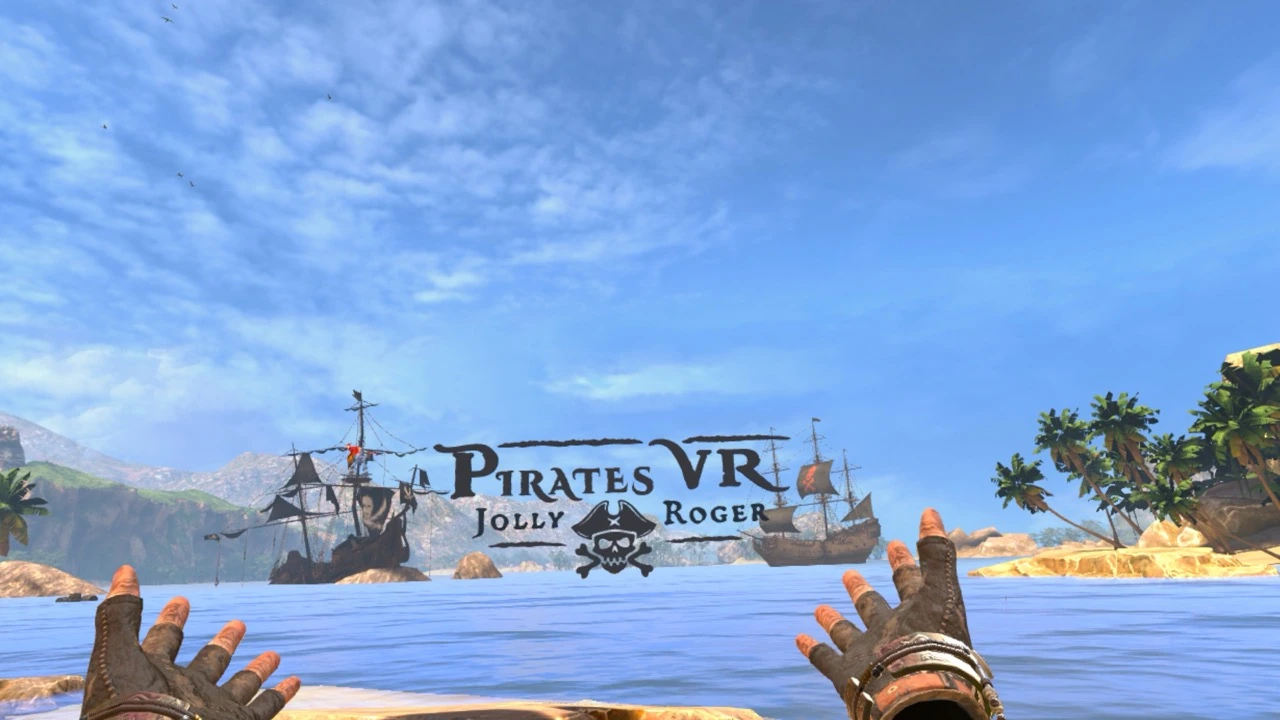
Pirates VR: Jolly Roger is one of those games I really wanted to like. On paper, it sounds like an easy win, a pirate themed VR adventure, light exploration, puzzles, combat, all running natively on Quest 3. And to be fair, the game does make a solid first impression. The opening moments on the beach are genuinely nice to look at. Sunlight bouncing off the water, sandy shores, lush vegetation, it is one of those moments where you think, okay, this could be something special, especially for a standalone headset. Unfortunately, that opening stretch ends up being the high point, and from there things slowly but steadily fall apart.
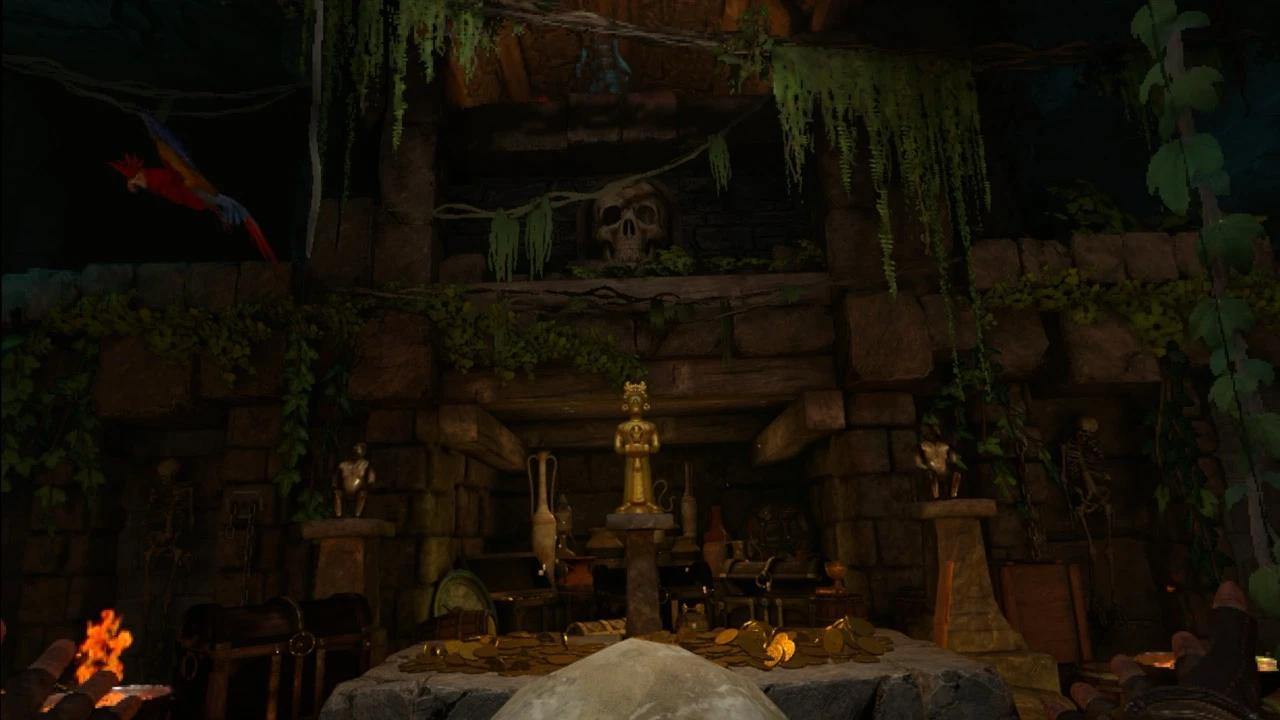
The story is about as barebones as it gets. You play as a nameless captain who wakes up in a cave on a mysterious island. There is some vague setup about finding Davy Jones’ treasure, and that is basically it. There is no real character development, no meaningful twists, and no sense of progression beyond moving from one area to the next. Your only companion is a parrot that occasionally throws out a quip or two, but instead of adding charm, it mostly becomes annoying. It does not guide you, it does not offer helpful hints when you are stuck, and it certainly does not carry the narrative in any meaningful way. If you are hoping for a pirate tale with atmosphere, intrigue, or even a bit of humor that lands, you will not find it here.
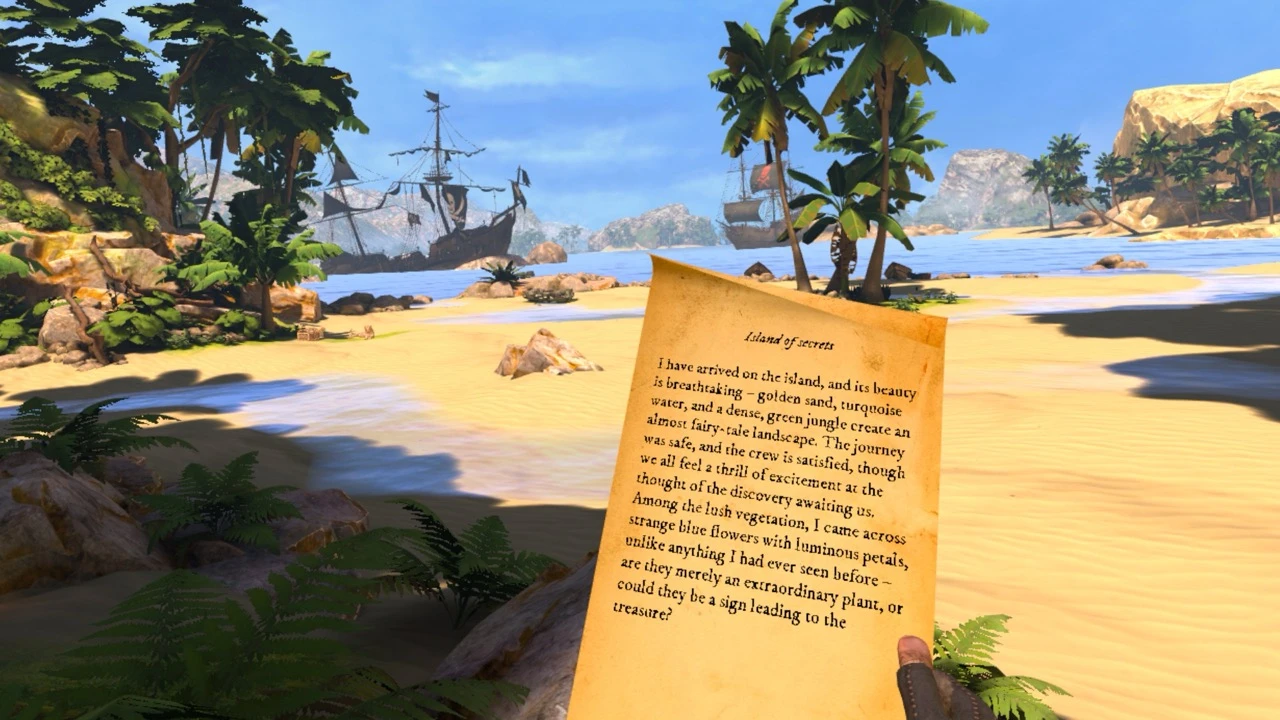
Gameplay is where things really start to struggle. Pirates VR: Jolly Roger tries to combine exploration, climbing, puzzle solving, and combat into a single experience, but none of these elements feel properly thought through. The biggest issue by far is the complete lack of onboarding. The game does a very poor job of teaching you how its mechanics work, especially when it comes to puzzles. There are no waypoints, no journal, no objective screen, and no clear indication of what you should be doing next. In theory, that could encourage exploration and discovery. In practice, it mostly leads to confusion and frustration.
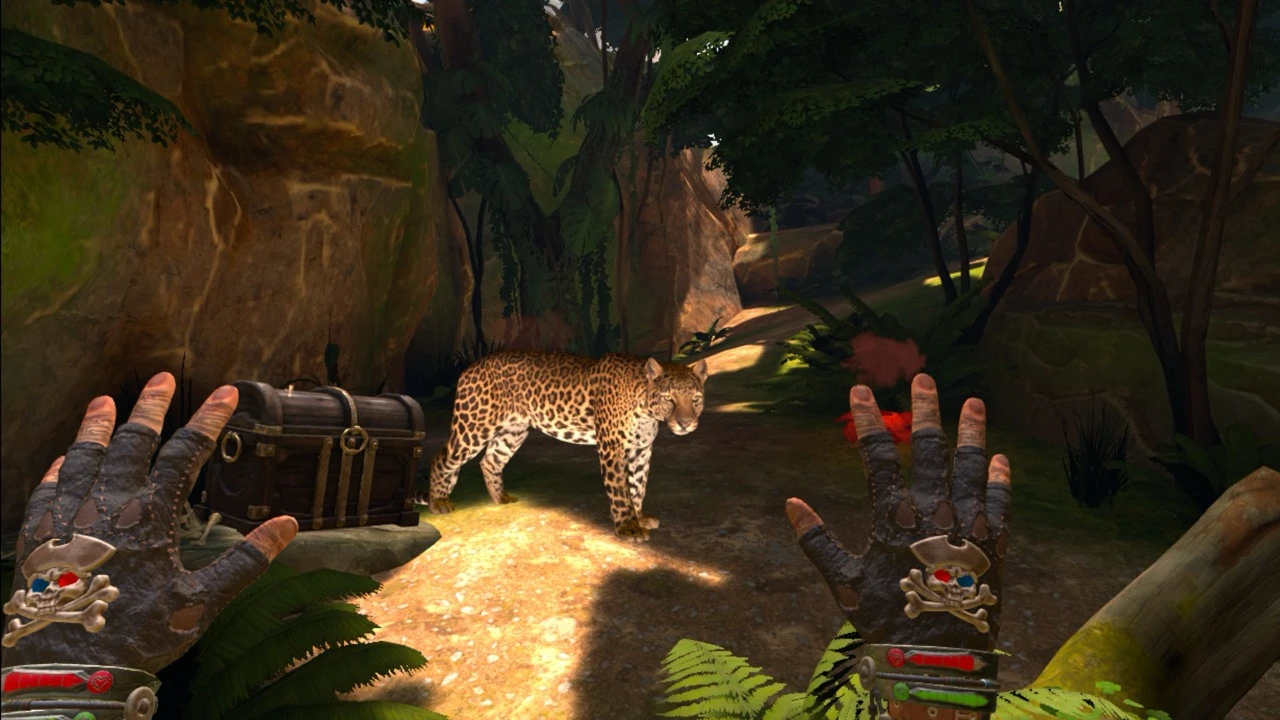
Early on, you follow the parrot up a mountain path and eventually find a stick. The game takes time to show you how to store it in your bag, which feels strange since you have already been picking up apples and gold along the way. Just a few steps back, there are boulders blocking a path. Naturally, you might think the stick is meant to be used as a lever to move them. I spent several minutes trying exactly that, wiggling my arm, pushing, experimenting, nothing. Eventually, I had to look it up. The actual solution is to use the stick on a completely different boulder, which then clears a zipline that takes you back down to where you came from. What? That falling boulder scares away a tiger, which was guarding another stick. Yes, really.
At this point, you might reasonably assume you are meant to combine items, maybe turn the stick into a pickaxe to break the rocks. That would make sense. But then comes another leap in logic. The pickaxe head is hidden underwater in the ocean, surrounded by poisonous algae, with only a tiny safe gap to swim through. There is no visual hint, no environmental storytelling, no nudge from the parrot, nothing. You are simply expected to stumble upon it or brute force your way through trial and error. This pattern repeats throughout the game.
One of the later puzzles is a perfect example of why the design falls flat. You are asked to place vases on altars, but the game never tells you the order. The solution is hidden in the candles placed around the altars, which indicate the correct sequence. The problem is that the game never teaches you to read the environment this way beforehand. There are no simpler puzzles earlier on that would subconsciously train you to look for these kinds of clues. As a result, you end up guessing, failing, and eventually either getting lucky or looking it up. That is not satisfying puzzle design, it is just opaque.
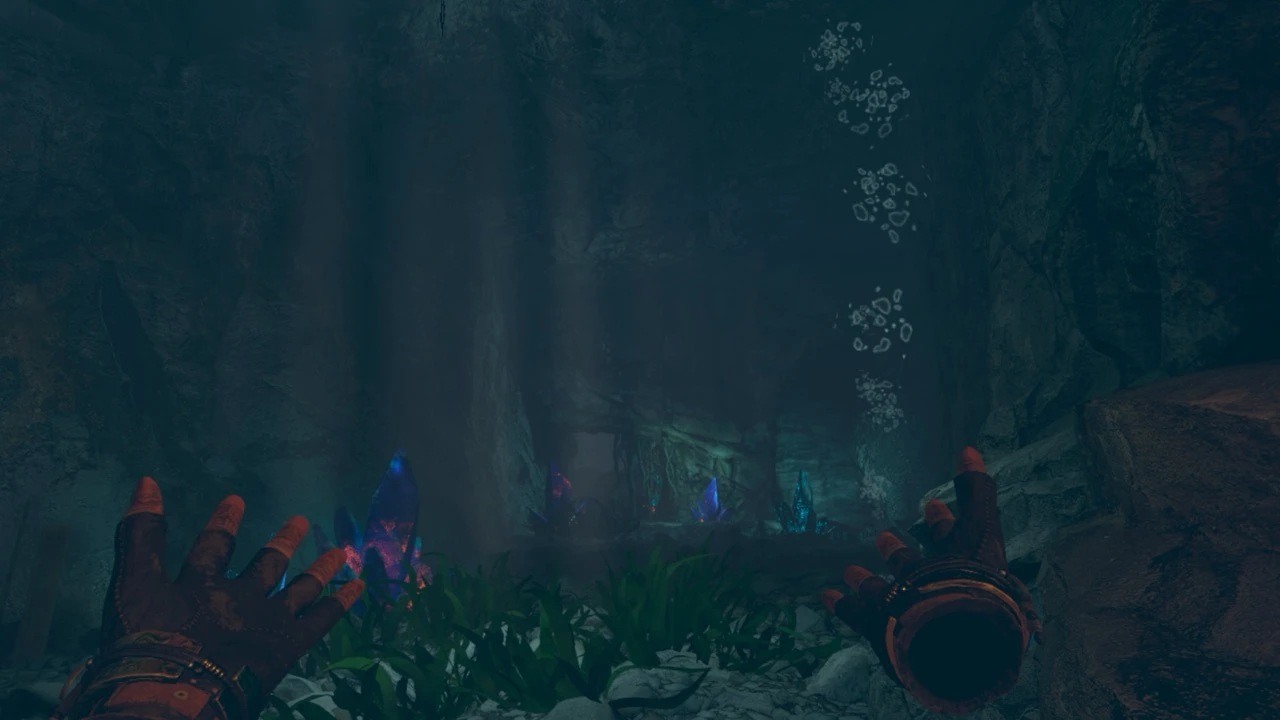
Combat does not fare much better. For most of the game, your main tool is a lantern that you can charge to fire glowing projectiles, which I can only describe as magical glimmering farts. These are used to defeat the many skeleton enemies you'll come across. The lantern constantly needs oil, which you have to refill through a slow animation, breaking the flow of what little combat there is. Later, you get a flintlock pistol, which allows you to headshot skeletons, and that is about as deep as it gets.
Near the very end, the game finally introduces a second gun and lets you use swords dropped by enemies. But even here, the swords are single use only... in a pirate game. Let that sink in. You never get a proper pirate cutlass as a core weapon. Even stranger, the game lets you use a sword in the menu as a a menu selector. So you do not get to wield a sword in combat for most of the game, but you do wave one around to click UI buttons? It feels backwards and oddly tone deaf.
The inventory system and object interaction only add to the frustration. Objects tend to stick awkwardly to your hands, and you have to press the trigger to place them back into your inventory or onto your waist. There is no way to adjust holster positions, which means you will often grab the wrong item or accidentally pull out a gun when trying to interact with something nearby. Force pull is unreliable, object placement feels imprecise, and nothing has any real sense of weight or physical presence. Items do not collide naturally with the world, which breaks immersion in a medium where physicality is everything. It's really janky.
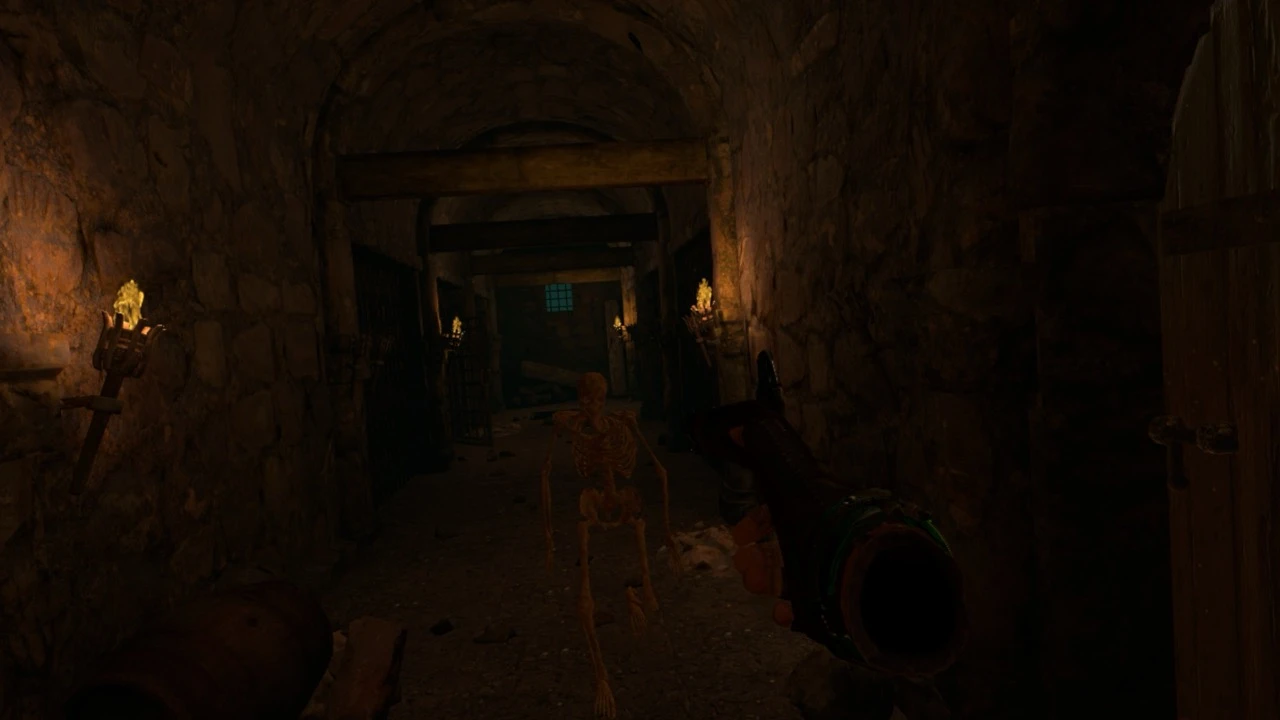
Presentation is probably the game’s strongest aspect, but even that is inconsistent. The environments can look quite good at times, especially outdoors. Lighting and scale are handled well enough to sell the island setting, and performance on Quest 3 is generally stable. But once you move indoors or into more puzzle focused areas, the visual appeal drops off. Animations are stiff, interactions lack polish, and the world never feels truly alive.
The biggest issue, though, is how short the experience is. I finished the entire game in about two and a half hours, in one sitting. Given the frustration along the way, that short runtime does not feel tight or well paced, it feels undercooked. There is no real reason to go back once you are done, no alternate paths, no meaningful collectibles, and no mechanics deep enough to encourage replay.
In the end, Pirates VR: Jolly Roger is hard to recommend. It has a nice opening and a solid visual foundation, but almost everything else feels unfinished or poorly thought out. Weak storytelling, confusing puzzles, shallow combat, and clunky interaction systems all pile up into an experience that never really finds its footing. There is a version of this game that could have been charming and engaging, but what we have here feels like a rough draft that needed more time, more playtesting, and a clearer design vision. If you are desperate for a pirate themed VR experience on Quest, you might get some fleeting enjoyment out of it. Otherwise, there are far better ways to spend your time. Thanks for reading!