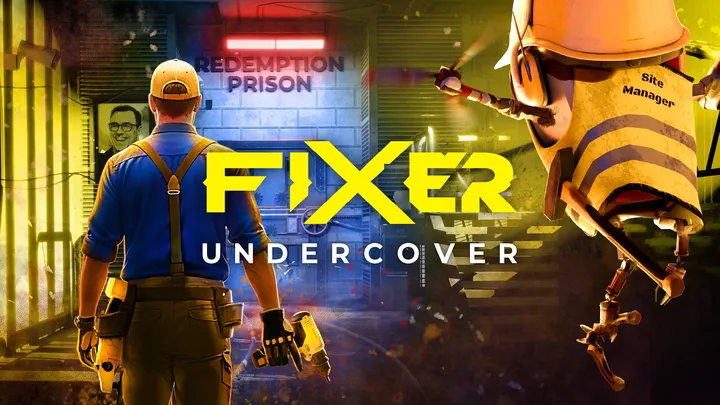
Fixer Undercover is one of the smartest and most creative VR puzzle games on Quest 3, with brilliant puzzle design, excellent banter, and a story that keeps pulling you forward
Fixer Undercover grabbed me almost immediately, then kept raising the bar all the way to the end. It is funny, confident, and packed with puzzle design that actually respects the player. After finishing it, I can honestly say this is one of the best VR puzzle games I have played, and I have played a lot of them.
The setup is strong from the start. You are Agent 404, sent undercover into Redemption Prison to investigate what is really happening behind the warden’s so called miracle program. The pitch is already great, but what makes it special is how grounded the tools are. No futuristic spy goggles, no magic hacker glove, no superspy nonsense. You go in as a fixer, and you work with practical tools.
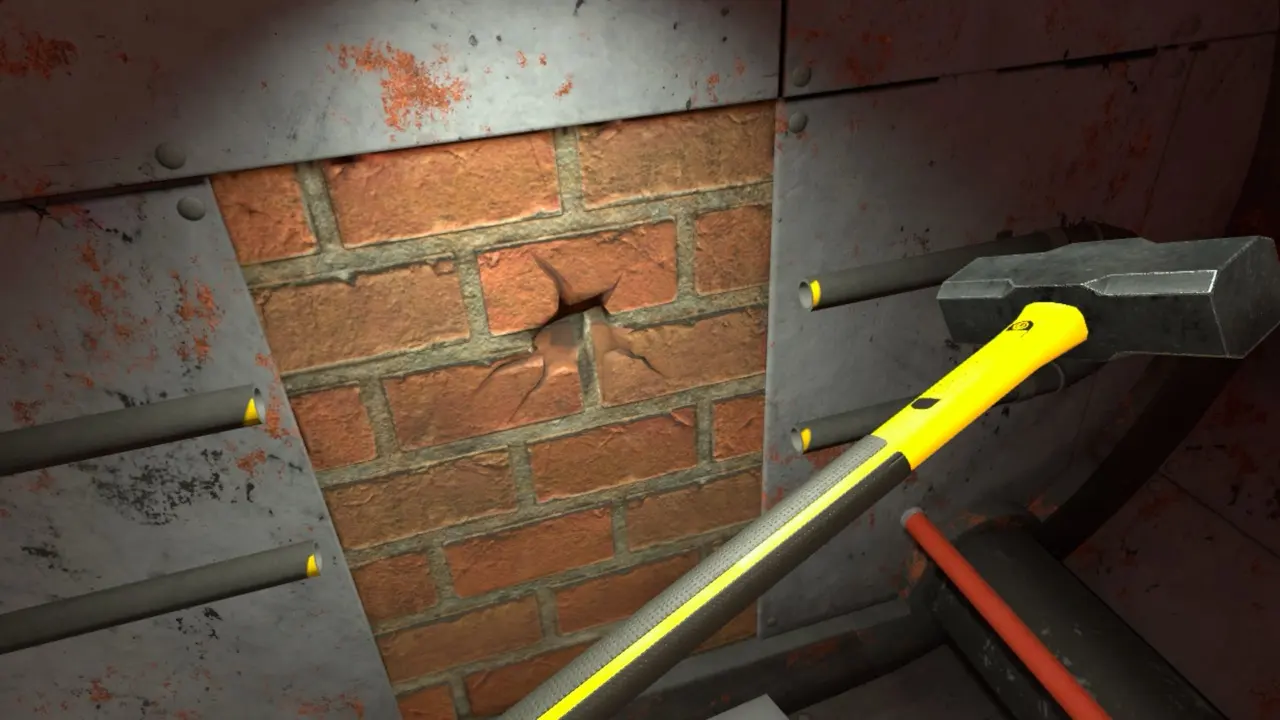
That means a drill, a wrenche, a grinder, a hammer, pliers, and temporary utility items you grab as the mission unfolds. This sounds simple on paper, but in the headset it becomes the game’s core identity. You are not solving abstract puzzle boxes disconnected from the world, you are physically handling the exact kind of objects that would plausibly exist in a prison maintenance environment.
Then there is Winston, the drone companion. He follows you around, carries part of your loadout, helps with key interactions like tape hacking, and keeps the mission from feeling lonely. A lot of single player VR games can feel isolating after an hour or two, but Winston fixes that in a smart way. He has personality, he has timing, and he never crosses that line into annoying sidekick territory.
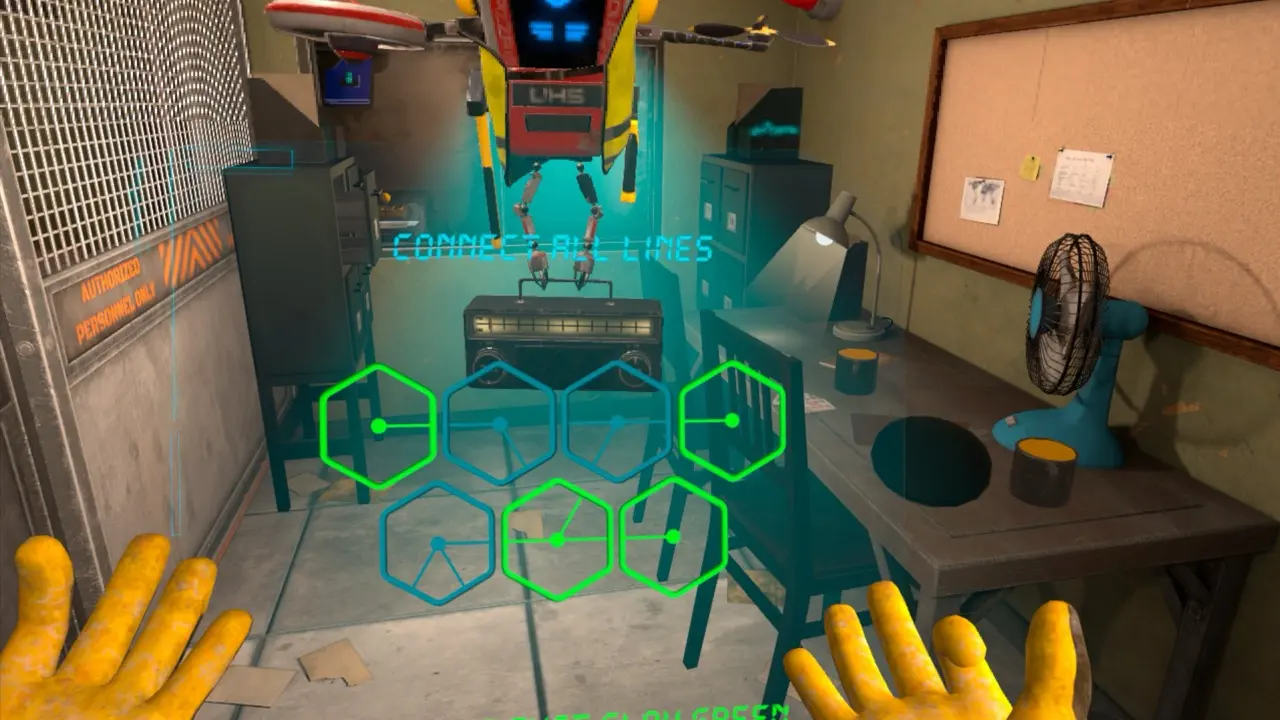
The banter between Winston and Agent 404 is genuinely funny. The writing understands when to crack a joke and when to let tension build. There is one Alec Baldwin joke that hit me so hard I had to stop for a second. That kind of humor is hard to pull off in a puzzle game because it can break pacing, but here it actually helps the pacing by giving your brain a short reset before the next puzzle chain.
The story itself is handled through progression, clues, and environmental detail rather than long exposition dumps apart from the intermissions which might drag a tad too long in some cases. Most of the time though you are moving forward with purpose, always feeling like each solved room reveals a little more of the prison’s darker truth.
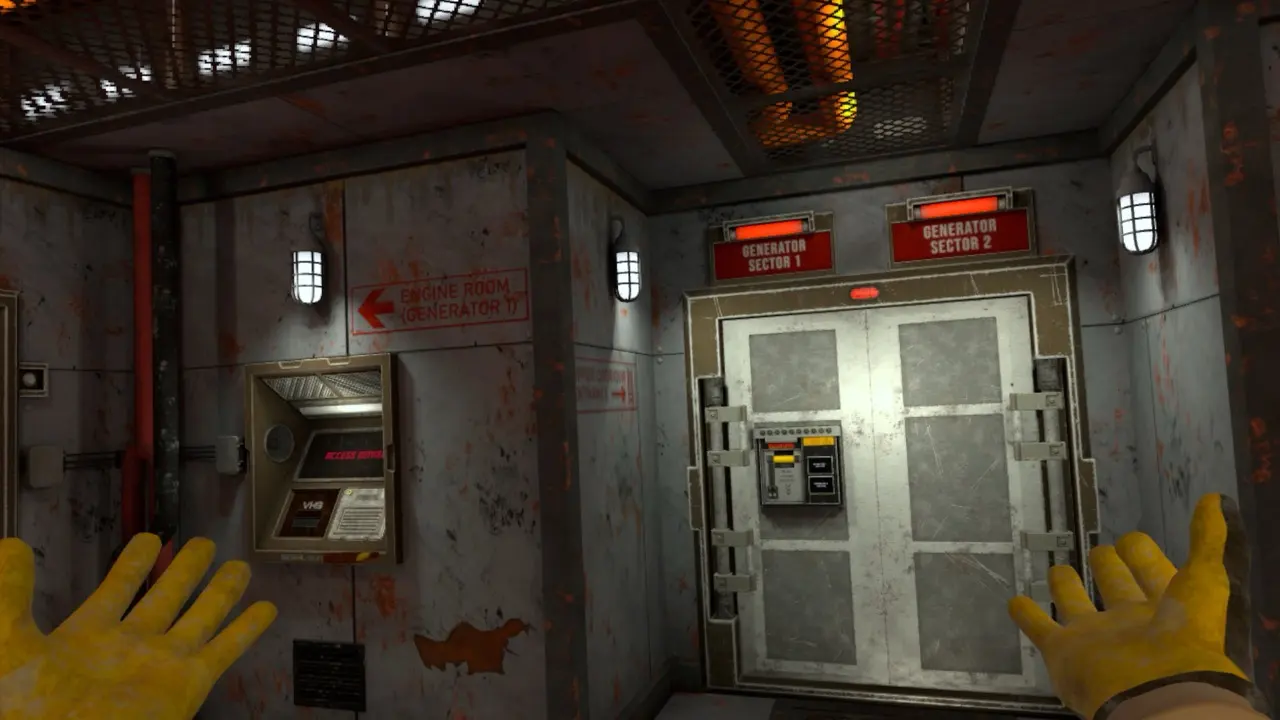
Where Fixer Undercover truly separates itself is puzzle design. I do not say this lightly, every puzzle in this game has that clean, satisfying click when the logic finally locks in. Not because the answer is random, not because you brute force it, but because the game taught you to observe properly and think in context.
That is the key. The solution is usually right in front of you, but presented naturally as part of the environment. A rusted panel is not decoration, it can hide the code you need if you grind the rust away. A wall crack is not just visual detail, it can be the exact entry point that opens your next step. A random chalk mark under a mattress might be the missing piece of a sequence. Everything feels placed with intent.
One of my favorite things is that the game teaches this language without over explaining it. You are not stuck reading endless tutorial text. Instead, early puzzles quietly train you to scan your surroundings, test assumptions, and combine tools in believable ways. By the midpoint, your brain is in the game’s rhythm and your pattern recognition starts firing in a very satisfying way.
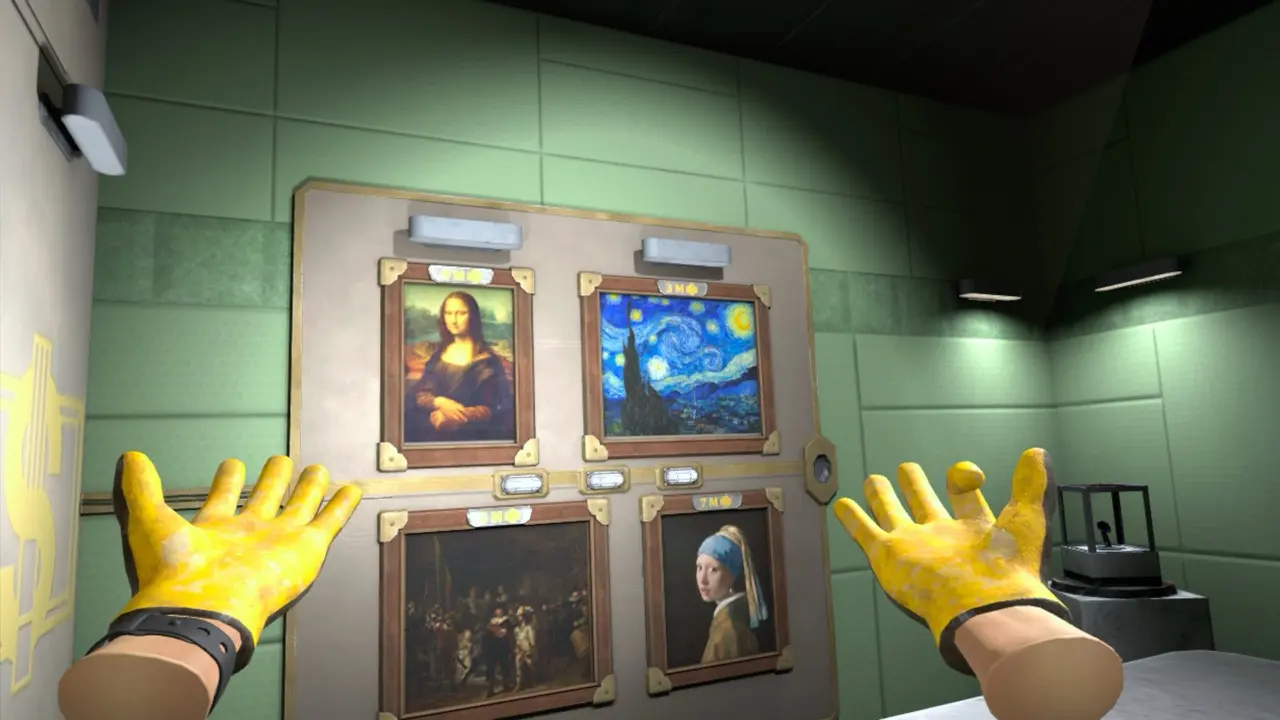
The examples are endlessly creative. You might smash a weak wall with a hammer, cut and reconnect wiring with pliers, then route power to unlock a terminal. You might repair an ice machine to generate ice, melt that ice on a stove, collect the water, and run it through a pressure washer to reveal a hidden code on a dirty wall. You might use a tape measure to well, measure shelf spacing to extract a four digit number. You might find what you need to do by checking what a painting above a fireplace actually shows. It is creative in the best possible way.
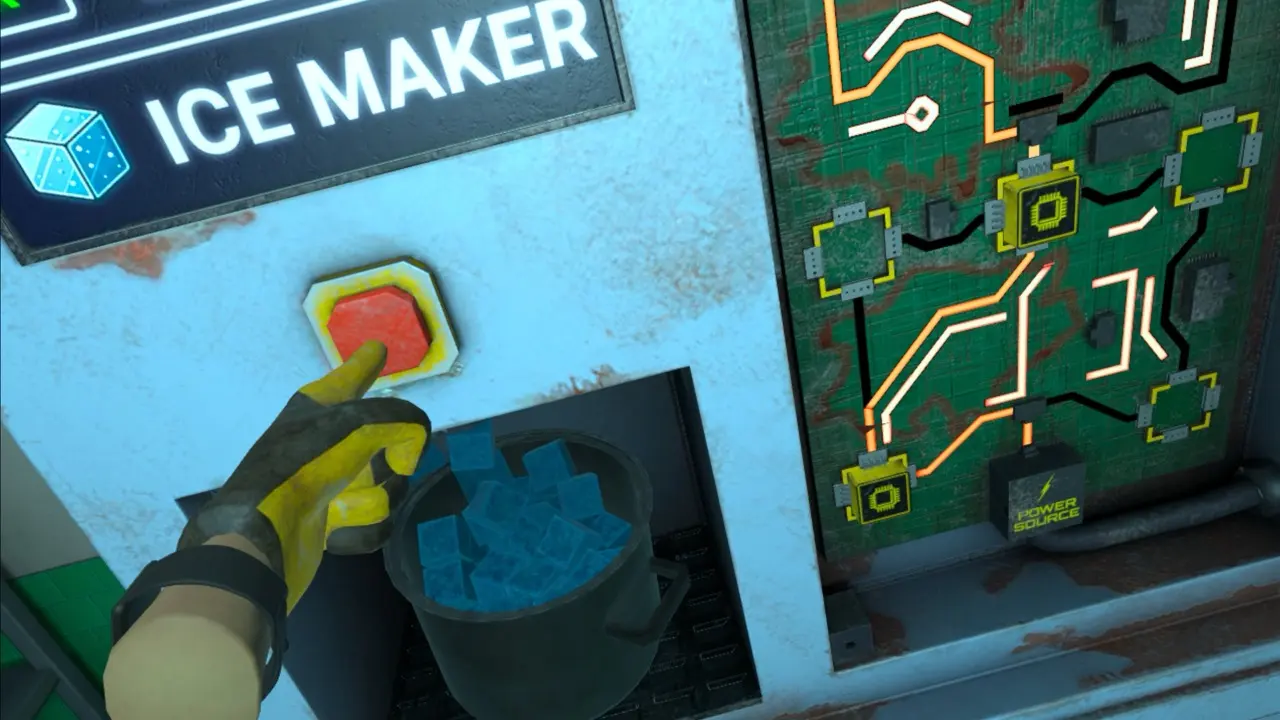
The brilliant part is that these chains still feel logical. Complex, maybe, but logical. The game constantly rewards paying attention rather than guessing. There is a hint system if you need it, and that is a good accessibility choice, but most of the time stepping back and looking again is enough to trigger the answer.
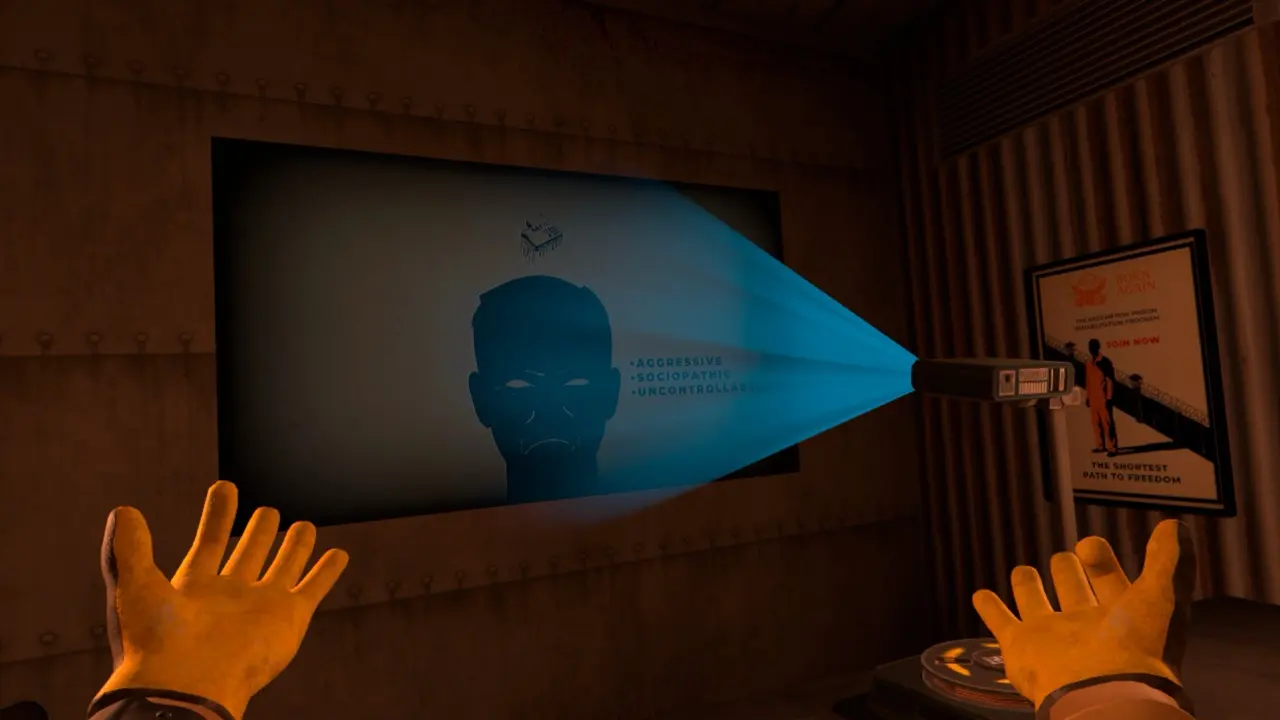
That “step back” idea becomes unforgettable in one of the late game projector puzzles. You find a projector and film reels from A to Z. You play the reel that was already in the projector and in the video, you immediately see 3 film reels with B, A and P on them as part of the logo of the project. So you naturally gravitate to play those three reels, but you only see a bunch of square patterns that seem meaningless at first. Then you notice a whiteboard in the room with the same grid layout. You start marking what you saw, still confused as it just seems like a bunch of squares in a grid. Then you physically step back from the board and suddenly the code appears in negative space. It is one of those proper "aha" moments that only lands because the game has trained you so well by then.
Playing this on Quest 3 feels great overall. Interactions are tactile, tool handling is intuitive, and there is a strong sense of physical presence in each space. The game trusts your hands and your eyes, and that trust pays off. You are not just pointing at hotspots, you are manipulating systems.
Visually, it looks good and grounded. It does not chase the absolute technical showcase crown, but environments are detailed enough to support all the mechanical interactions, and the art direction keeps the tone coherent from start to finish. Lighting and texture work do enough heavy lifting to maintain atmosphere while still keeping important puzzle cues readable.
The audio design also deserves credit. Mechanical sounds, small interaction clicks, environmental hum, and Winston’s voice work all come together in a way that supports puzzle flow. Winston’s radio bringing in heist style tracks is a small touch that adds a lot of personality and keeps momentum high during longer sections.
It is not perfect, and most of the rough edges come from the same thing that makes the game special, heavy use of physics based interactions. You will occasionally grab an object at a weird angle, your hand can clip into geometry, and sometimes things can look a bit janky for a moment. In many games that would be immersion breaking, here it rarely caused actual progress issues, so I ended up accepting it as the price of having this level of tactile freedom.
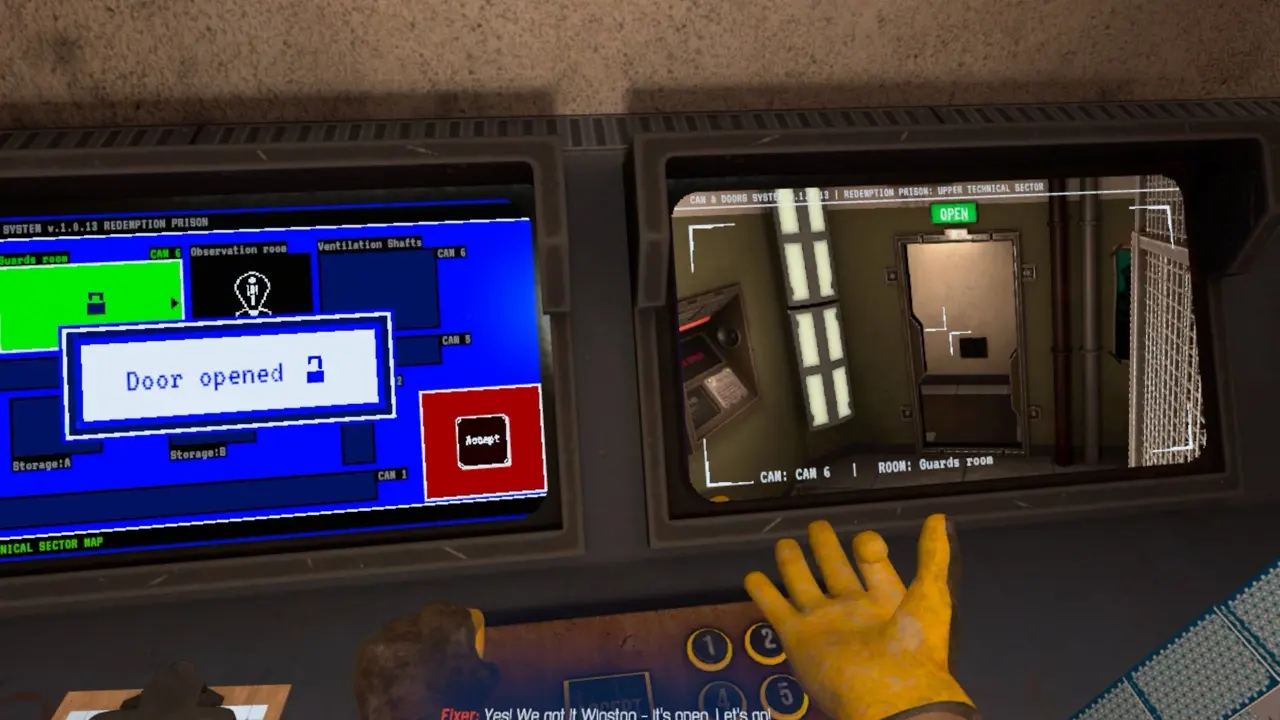
Even with that jank, this game feels polished where it matters most, puzzle logic, pacing, personality, and flow. It understands what makes VR puzzle solving feel magical. It does not waste your time, it does not insult your intelligence, and it consistently delivers those “aha” payoffs that so many puzzle games keep promising but rarely achieve.
Fixer Undercover is creative, funny, and smartly designed from beginning to end. The premise works, the tools work, Winston works, and the puzzle craftsmanship is genuinely top tier. If you own a Meta Quest and care about puzzle design that actually feels fresh, this is an essential game.
I absolutely love this game, and I recommend it without hesitation.