Death Howl has a striking identity and some cool ideas, but for me, its grind-heavy structure and RNG-driven tactical combat made it hard to enjoy
From the first trailer, it looked exactly like the kind of game I would sink hours into. The pixel art was unique, the mood was eerie in a good way, and it had cards. I had just spent a lot of time with Balatro and loved it, so seeing another card-based game with this kind of visual style felt like a safe bet. I expected something more in that direction, maybe not the same tone, but something with that same loop of quick decisions, clever synergies, and the kind of runs that make you say “one more.”
That is not what Death Howl is.
Death Howl is not a roguelike deckbuilder in the way many people will assume. It is a turn-based tactical strategy game on a grid, with deck-building elements layered into it. That distinction matters a lot, because it changes the entire feel of the game. Instead of run-based escalation and flexible improvisation, this is about surviving harsh encounters while managing limited resources over multiple fights. In practice, for me, it became exhausting.
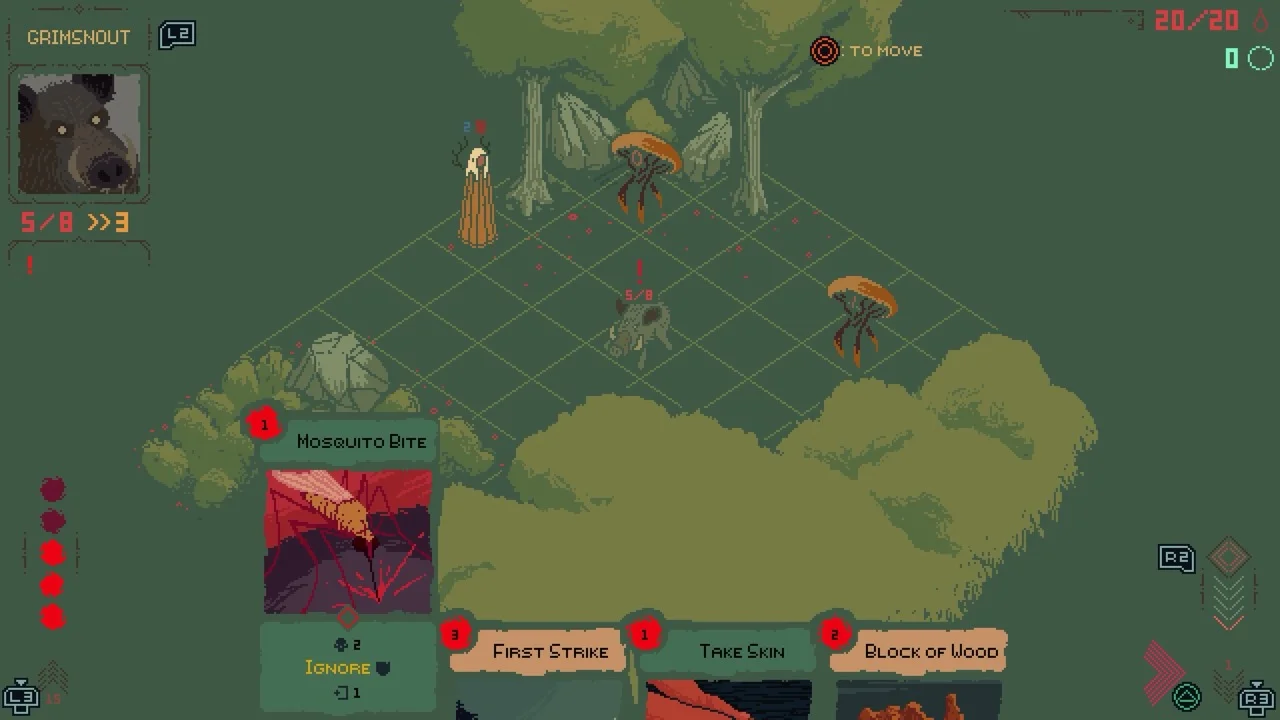
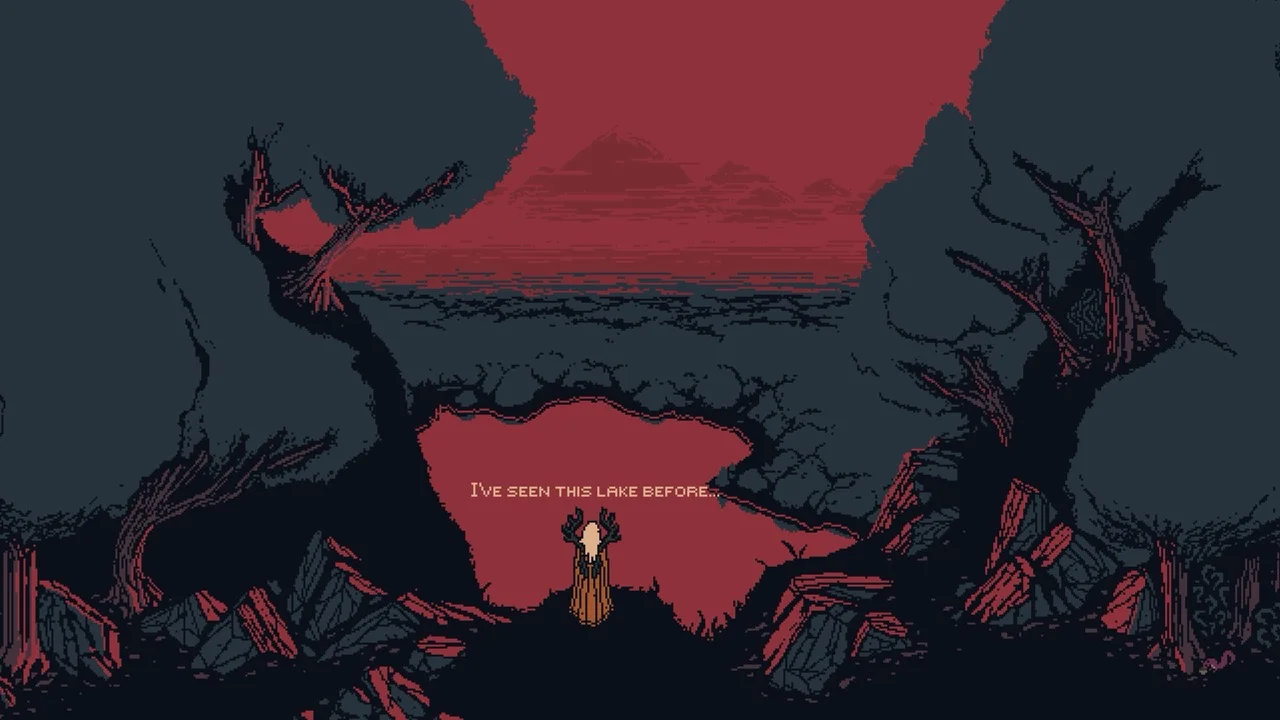
The setup is pretty straightforward. You play as Ro, a grieving mother who enters a spirit world to search for a way to bring back her dead son. The game leans into themes of loss and obsession, and the world design supports that mood well. I respect what it is going for narratively, even if the gameplay kept getting in the way of my investment.
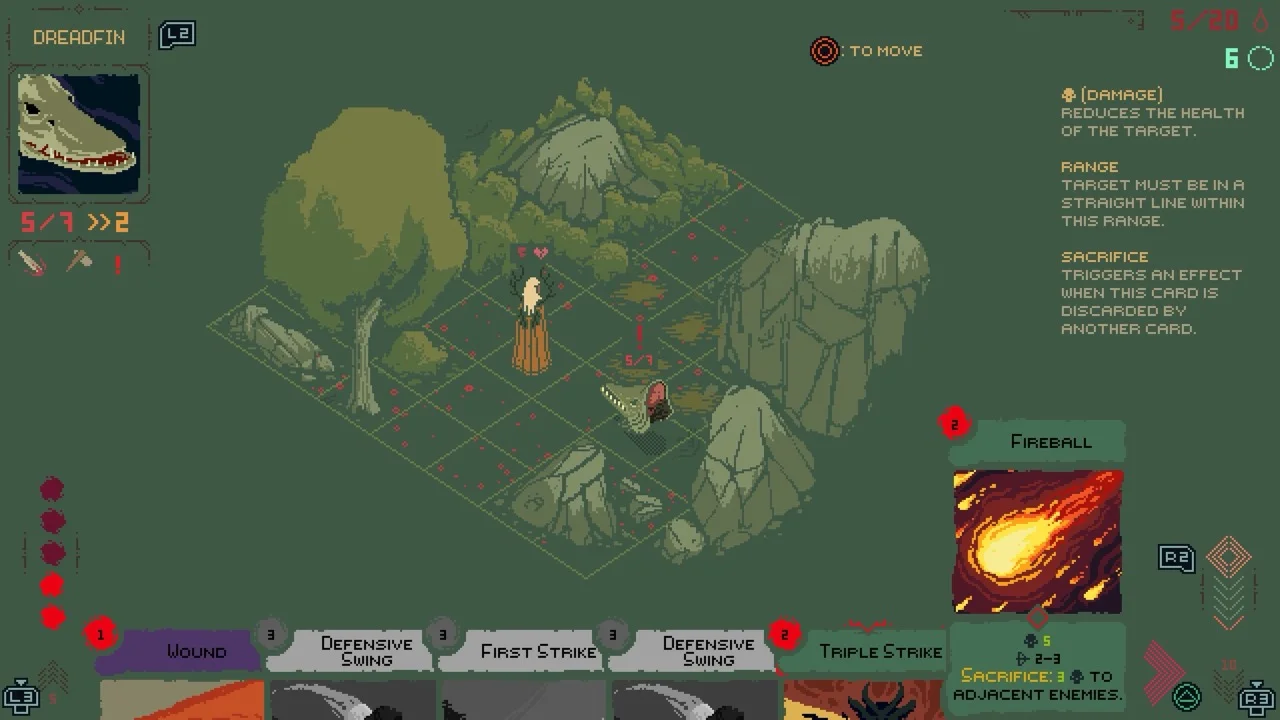
Combat is built around a grid, a 20-card deck, 20 health points, and strict action economy. At the start of each turn, you draw five cards and get five action points. Cards cost different amounts of AP to play, and movement also costs AP, one point per tile. Every turn is a puzzle of movement, offense, defense, and positioning. Enemies are often aggressive, and encounters usually throw multiple targets at you.
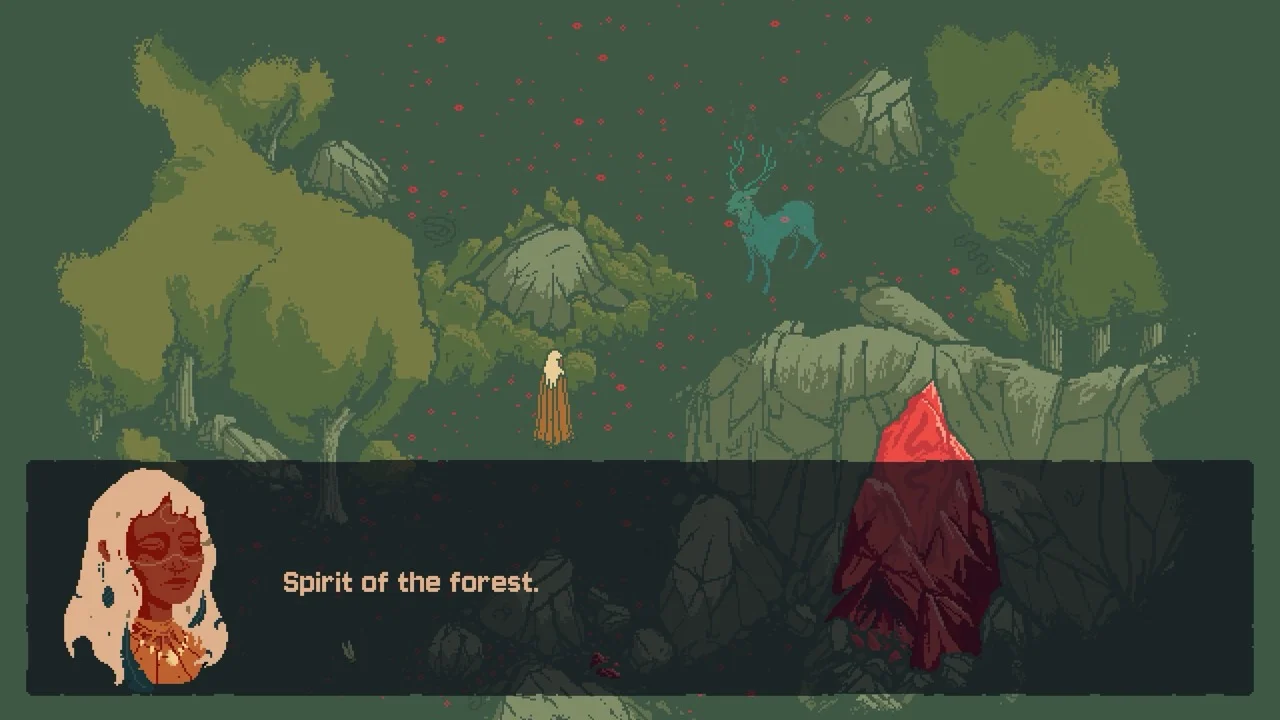
Your health does not fully reset after each battle. Whatever HP you finish with is what you bring into the next encounter. There are resting points in the world that function like bonfires, where you can heal, but resting also resets enemy encounters in the surrounding area. So you are constantly stuck in a push-pull rhythm, keep moving while low on health and risk dying, or rest and replay fights you already beat.
To reach those safe points, you often have to clear two or more encounters back to back. If your early draws are bad, and yes, that happens often, you can easily walk out of fight one in rough shape and enter fight two already doomed. You can still brute force through by repeating encounters and grinding materials, but that loop felt more punishing than rewarding to me.
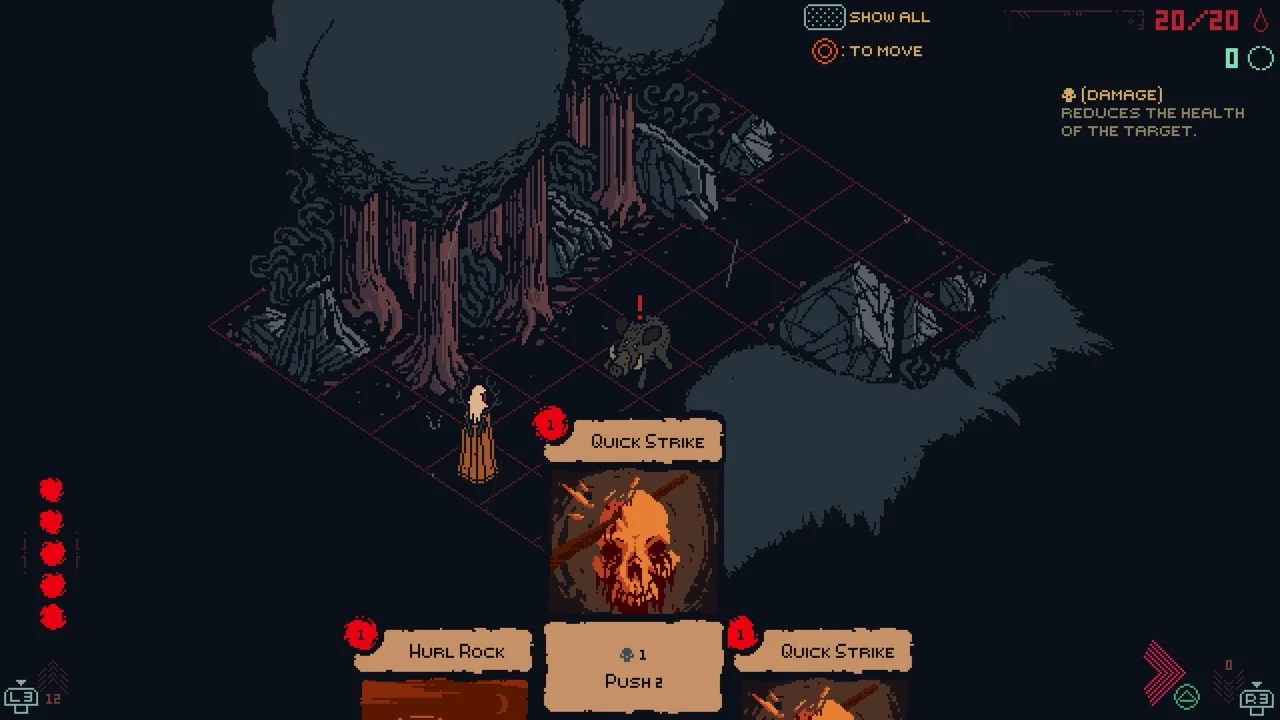
The core issue for me is the mix of tactical intent and draw RNG. Tactical games ask you to plan and control space. Deckbuilders ask you to embrace variance. These ideas can work together, but here the collision often feels rough. If your first few hands are weak, your strategy can collapse before it begins. You can position perfectly and still get buried because your options never showed up when you needed them.
That is why I do not agree with comparisons to soulslikes. In soulslikes, difficulty is usually direct, your execution versus enemy patterns. Here, part of the challenge is whether your draw cooperates at the right moment, and that makes losses feel less educational.
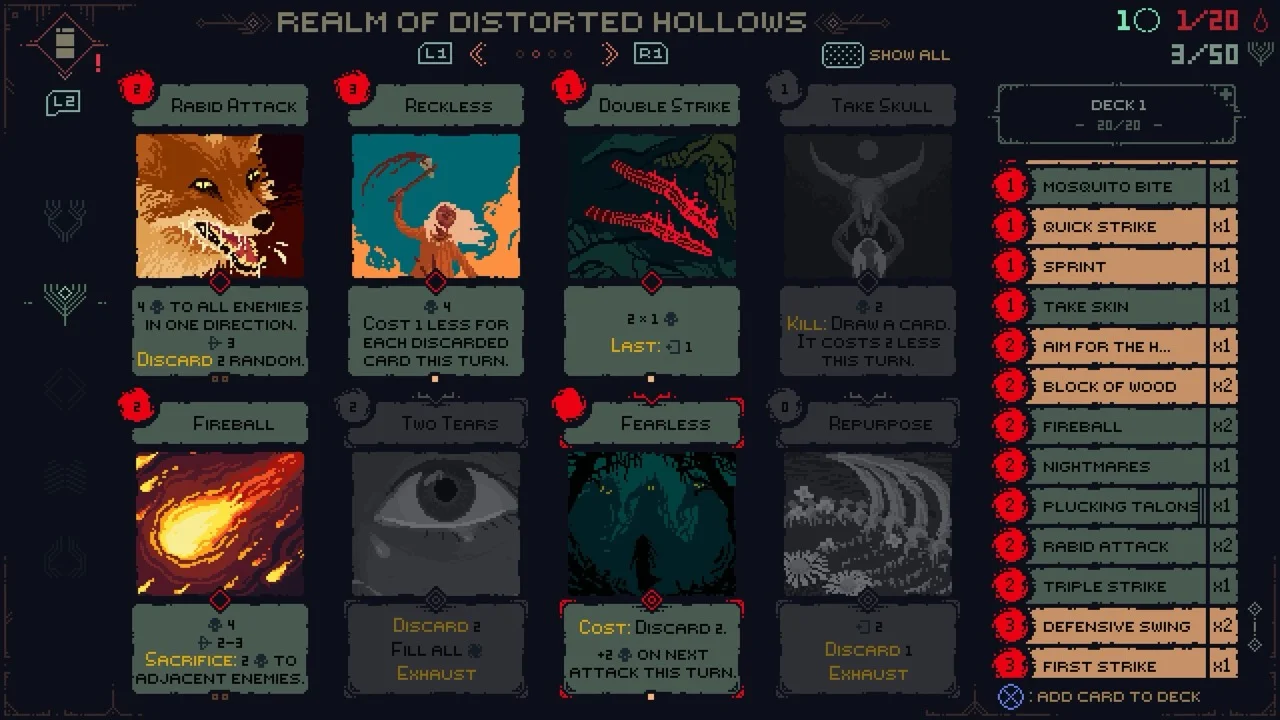
Progression itself is familiar and reasonably deep. You gather materials in the world and earn howls from defeated enemies. Those resources let you craft and unlock new cards, which is how your deck evolves. You can also choose to bank howls into teardrops, which are spent on realm-specific skills. Then there are totems you can equip for passive bonuses. So there is a clear build layer, and you are always working toward a stronger setup.
There is one more wrinkle. As you move between realms, cards from other realms cost one extra action point. That means you are nudged, and sometimes forced, into using cards that match your current region. It is an interesting idea for identity and pacing, but in a game already tight on AP, that penalty can feel brutal. If your deck is not tuned for that realm, turns can feel clunky and underpowered fast.
Not because I could not beat individual encounters, but because the total loop did not feel good to me. Fight, scrape by with low health, limp into the next encounter, get punished by rough draws, restart, grind, craft, repeat. I understand that many players enjoy exactly this kind of attrition-heavy progression. I am just not that audience.
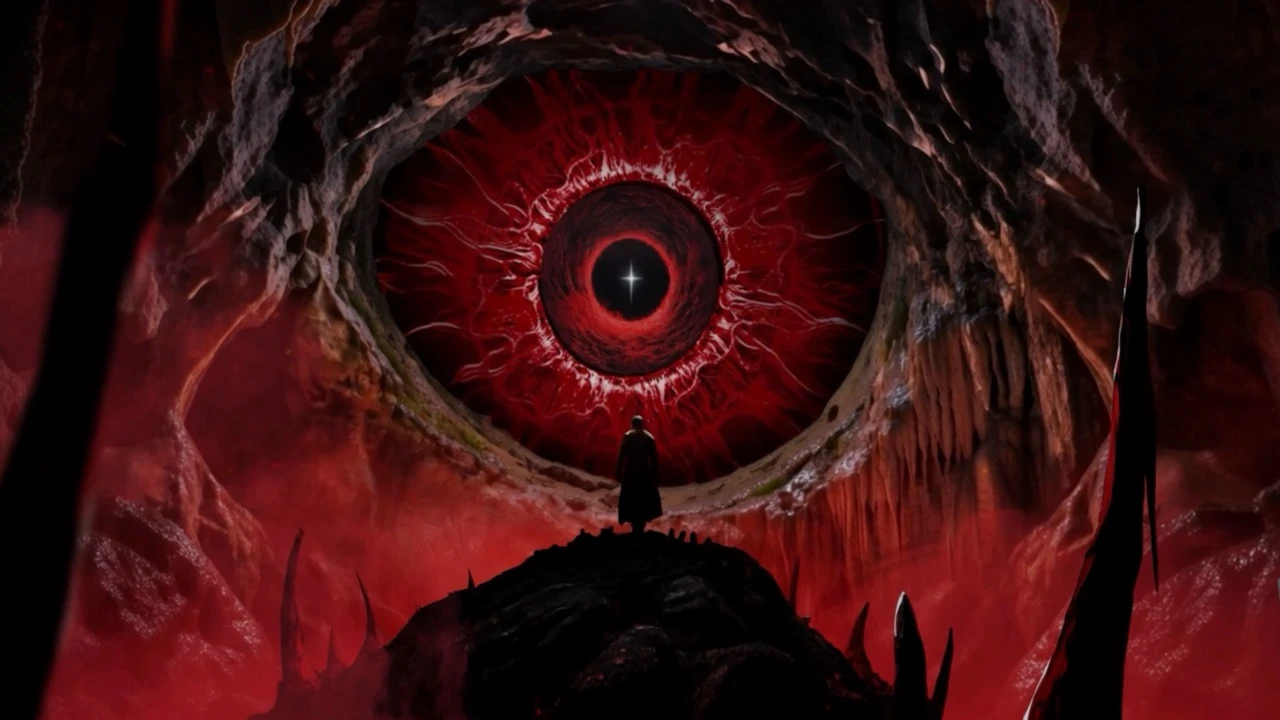
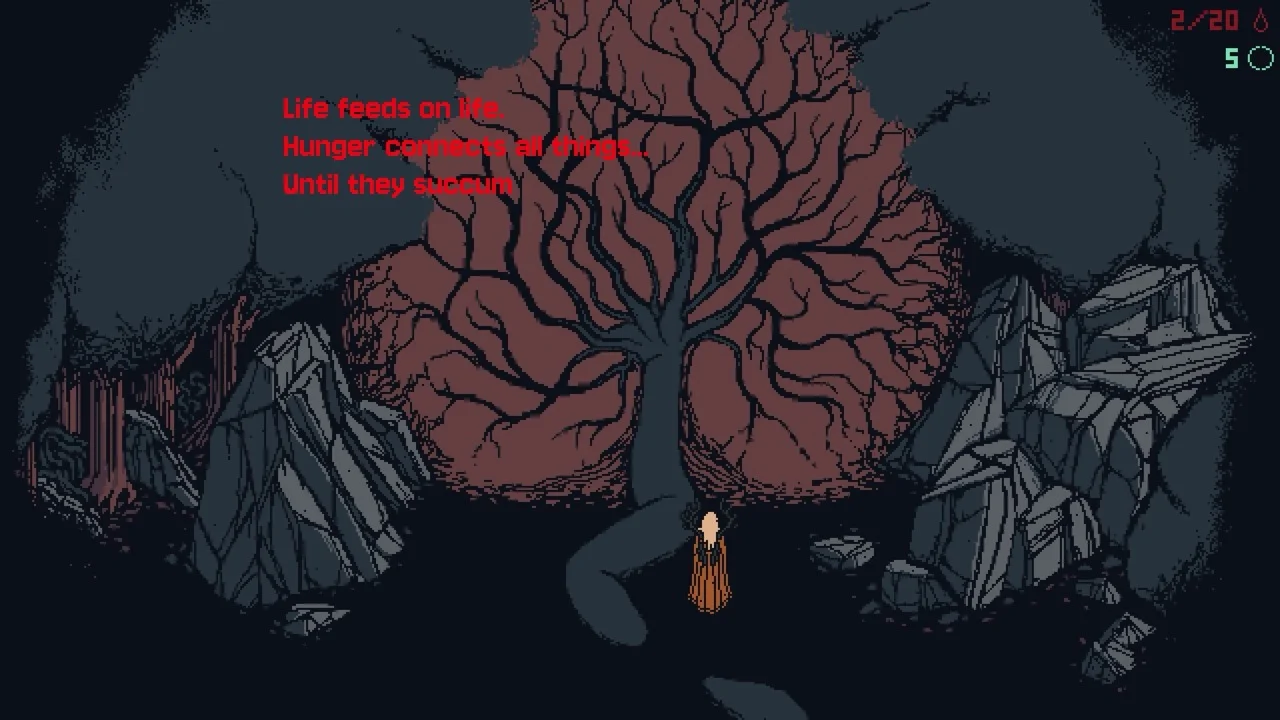
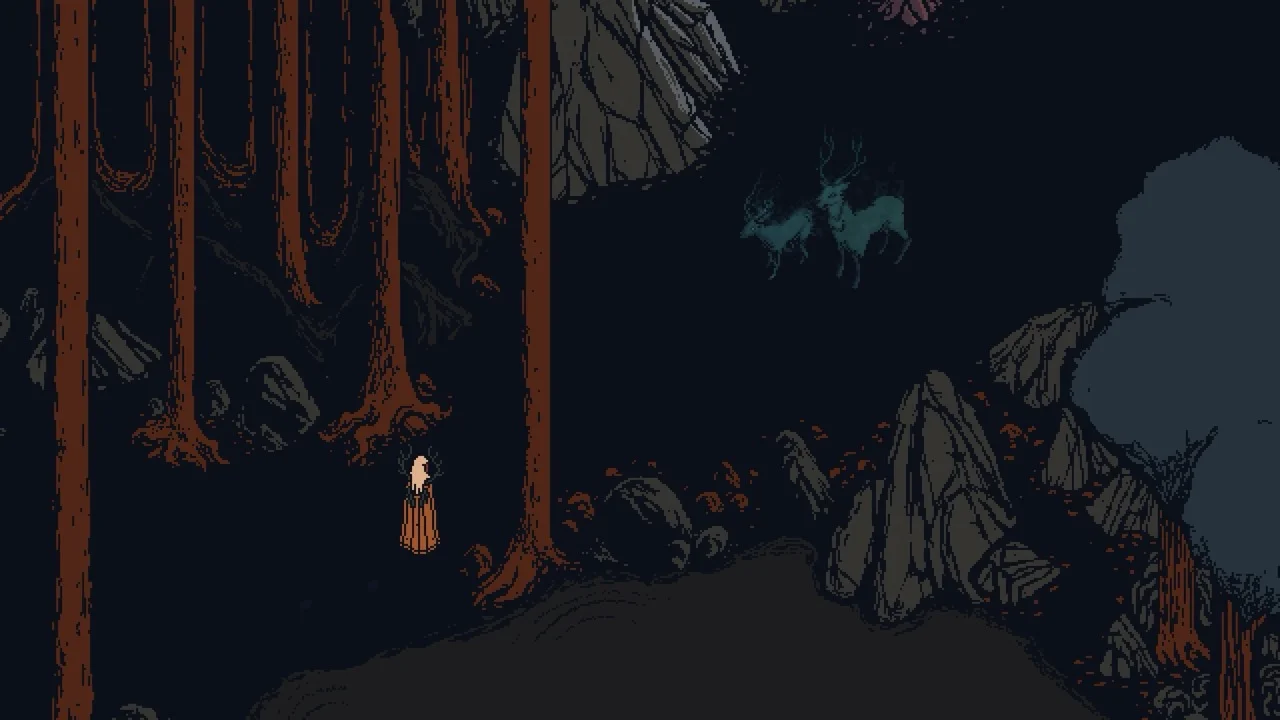
The pixel art is excellent. It uses a specific color language with little shading and strong contrasts, which gives everything a raw, almost painted look. Characters and enemies read clearly on the battlefield, and the world has a haunting, folkloric vibe that fits the grief-driven story. Audio also does good work here, keeping tension high without becoming noisy.
Menu navigation on PS5 does not feel great. You can end up on the wrong tab easily, focus movement between UI elements can feel inconsistent, and there are moments where it is not immediately clear where your cursor state actually is. This sounds like a small complaint, but in a system-heavy game where deck management matters constantly, friction in menus adds up quickly.
There is also a specific deck management annoyance that happens way too often. When you unlock a card, it is automatically added to your active deck. Since the deck is already capped, you then have to go in, scroll through cards, find what got added, and remove it if it does not fit your plan. A cleaner “unlock to collection first” flow would help a lot.
By around eight hours in, I bounced off. Not because I could not beat individual encounters, but because the total loop did not feel good to me. Fight, scrape by with low health, limp into the next encounter, get punished by rough draws, restart, grind, craft, repeat. I understand that many players enjoy this kind of attrition-heavy progression. I am just not that audience.
I respect Death Howl more than I enjoyed it. It has a clear creative identity, strong art direction, and a combat system that will click with players who enjoy hard, grind-forward strategy with heavy resource tension.
For me, it was mostly frustration. I came in expecting a deckbuilder that would scratch a certain itch, and instead found a very demanding tactical game where RNG and attrition often drowned out the fun.
I do not hate Death Howl, and I do not think it is a bad game. I think it is a very specific game that asks for a lot, very early, and gives back in ways that did not work for me. If the premise already sounds appealing, you might get way more out of it than I did. But if you are expecting a smoother roguelike deckbuilder loop, this is probably not what you want. Thanks for reading!