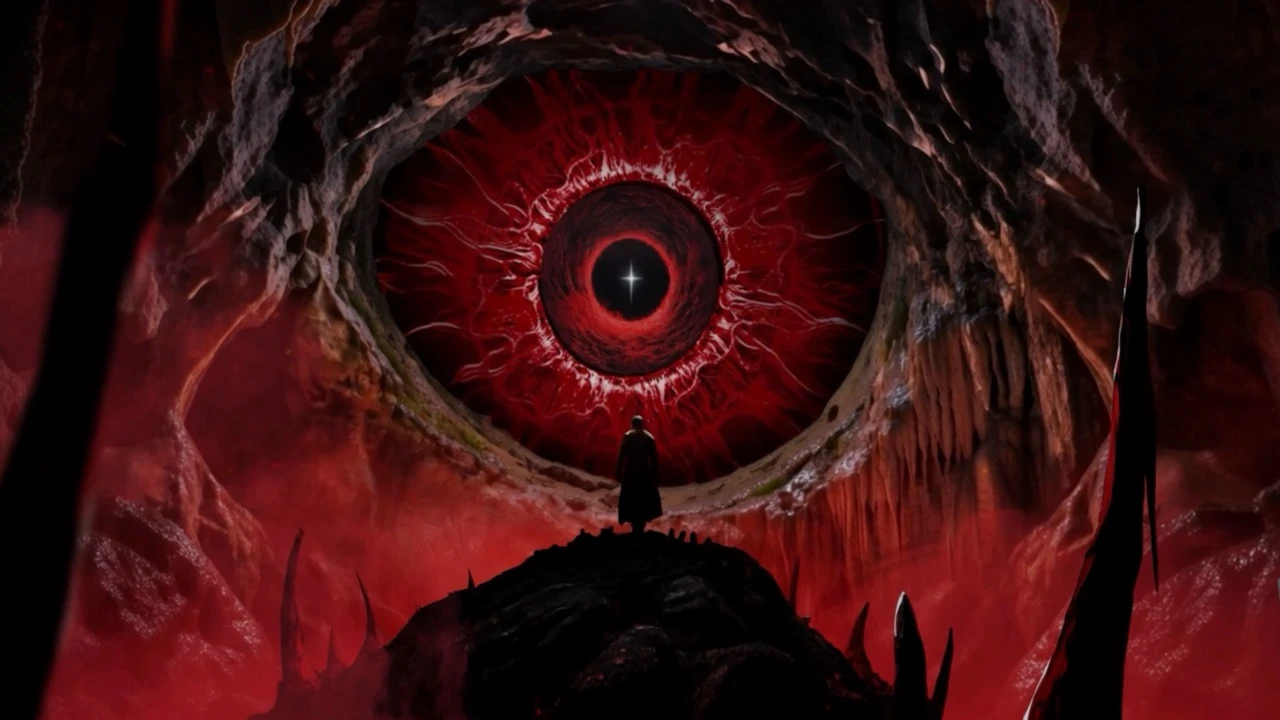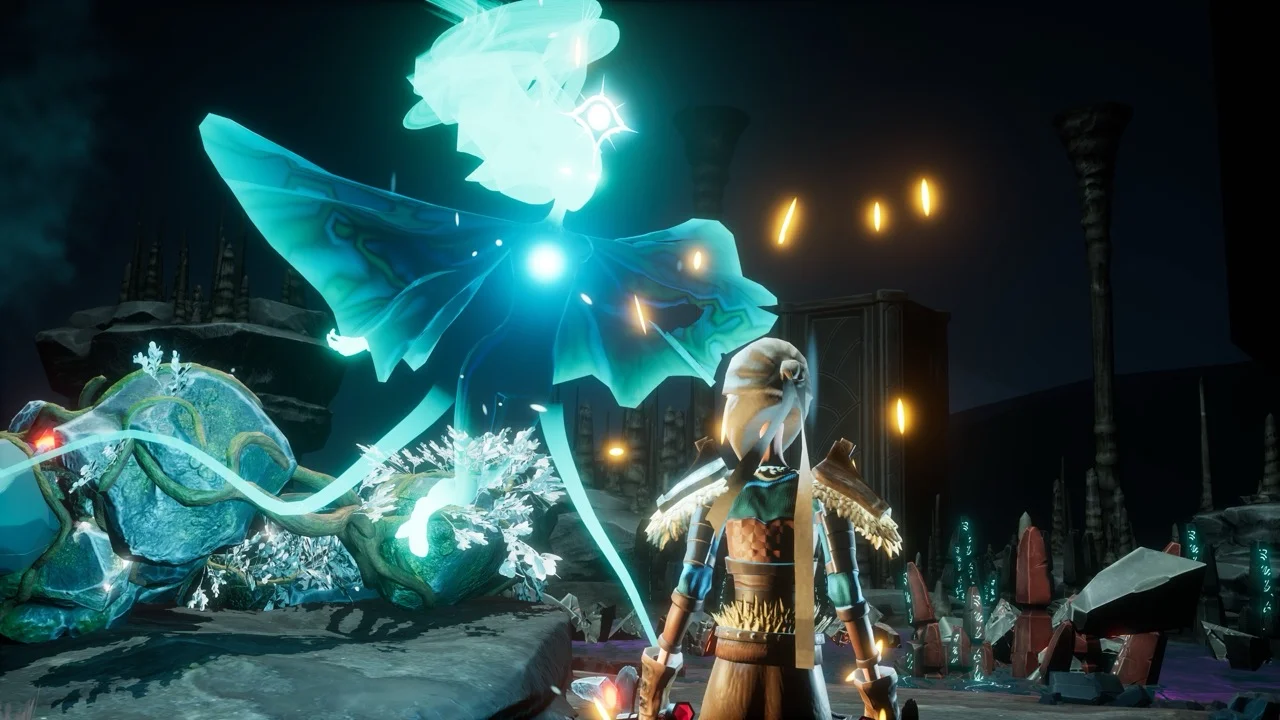
Sands of Aura has style and ambition, but too much of the moment-to-moment play feels rough instead of rewarding
After years on PC, Sands of Aura has finally arrived on consoles, and on PS5 it lands in a weird middle space. There is a lot to like in the setup, the world has a clear identity, the atmosphere is strong, and the game has enough personality to stand out. But once you are in the thick of combat and progression, things start to wobble. This is one of those games where I could always see the intention, but I could not always feel the execution.
A lot of people are quick to call any hard action RPG a soulslike, but that label does not really fit here. Yes, it has dodge rolling and punishing fights. But the good soulslikes are usually very clear about why you died and what you can improve. You can go farm, switch builds, upgrade a weapon, try a different spell, or simply learn an encounter until it clicks. In Sands of Aura, difficulty often feels less like a lesson and more like getting clipped by systems that are not fully cooperating with each other.
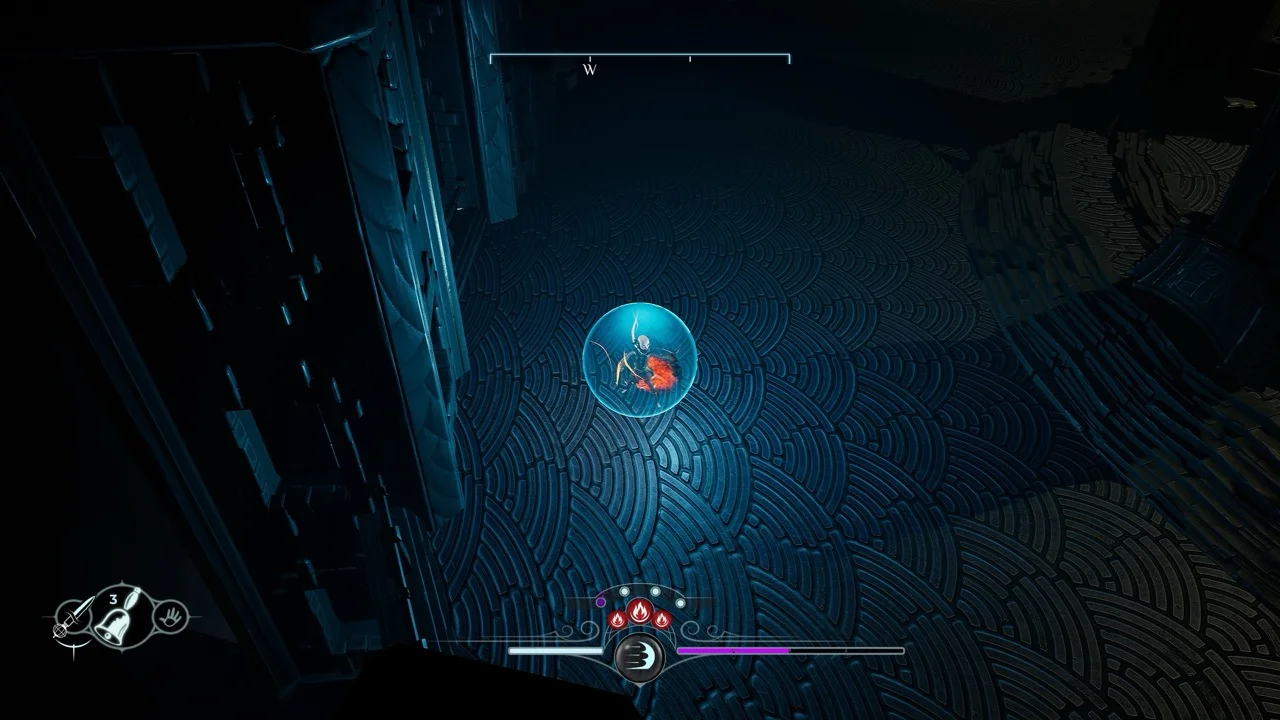
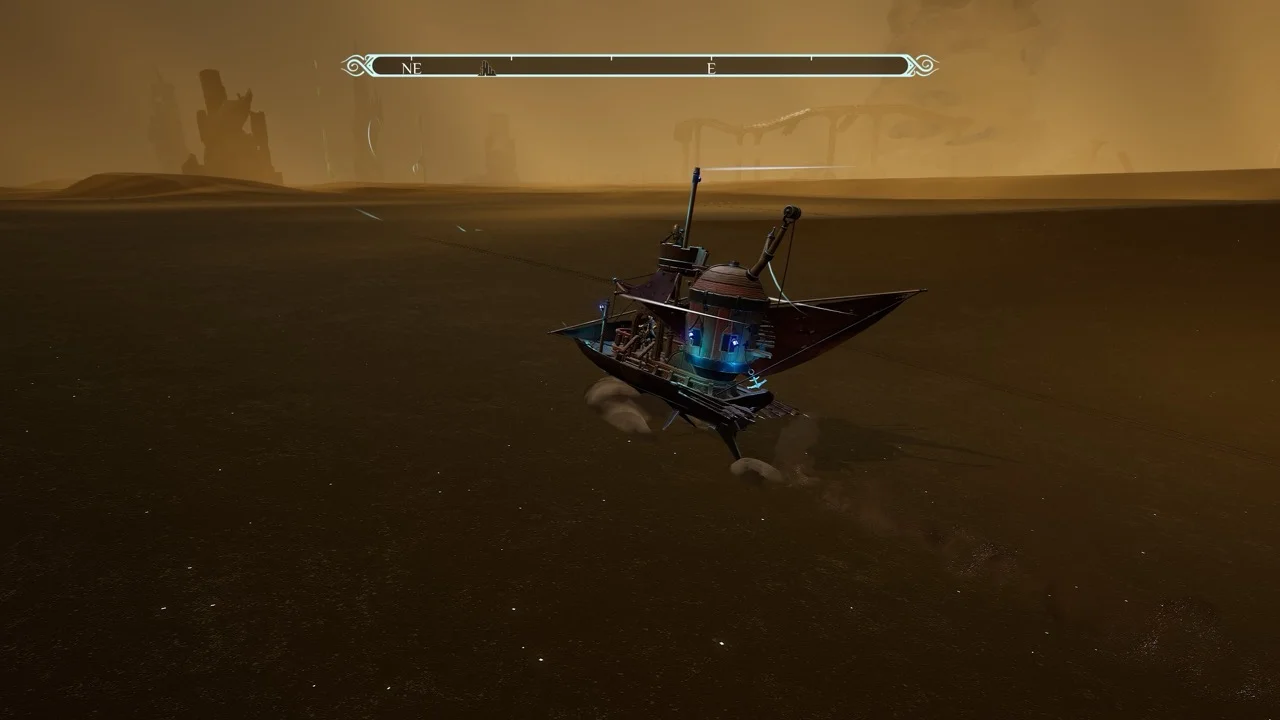
The story is actually one of the reasons I kept playing. You step into the role of a Remnant Knight in a world that has basically collapsed into a sea of sand. Civilization survives on scattered islands, small settlements, and ruined strongholds that hint at a richer past. It is a cool premise, and the game sells that mood well. Sailing your skiff over dunes that move like an ocean gives the world a distinct flavor, and arriving at a new location usually feels exciting at first.
Narratively, the game is not bad, it is just distant. There is lore, history, and enough mystery to suggest something deeper, but character connection never fully locks in. I understood the stakes, I just rarely felt emotionally tied to them. That said, the setting itself does heavy lifting. Even when quest writing is simple, the world design makes you curious about what happened here and why everything feels half-buried, half-forgotten.
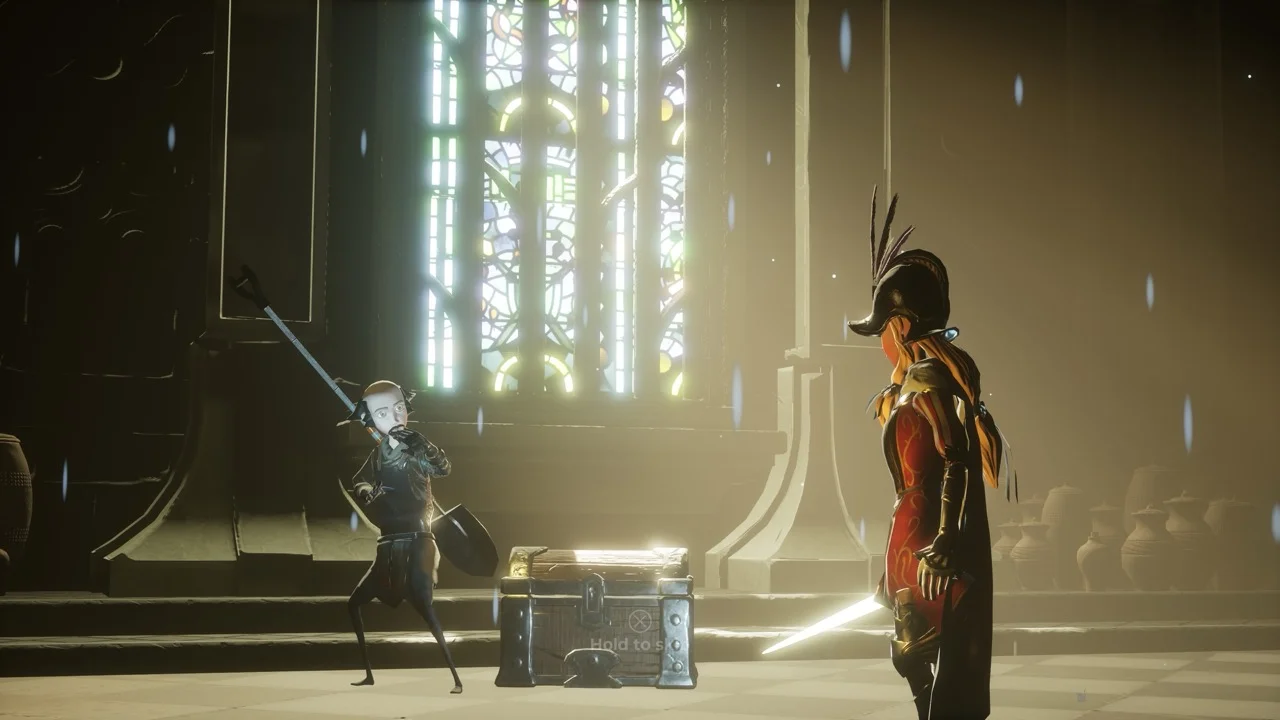
Combat is where the cracks start to show, and once you notice them, it is hard to ignore them. On paper, the toolkit is solid. You can dodge, parry, block, swap gear, and mix weapon types. In practice, timing often feels off. Parries are technically available, but the input response and defensive animation windows can feel delayed enough that you stop trusting the mechanic. There were many moments where I reacted correctly, read the attack, hit the button, and still took damage anyway.
Bosses are the biggest problem. Some encounters feel tuned around erratic chains and awkward recovery windows, where enemies can snap into a follow-up faster than your own animation lock allows you to recover. Early on, one stone-like boss can re-engage almost immediately after finishing a combo, and even clean dodge movement still gets tagged more often than it should. That does not feel like healthy pressure, it feels like inconsistent collision and weird invincibility frames behavior.
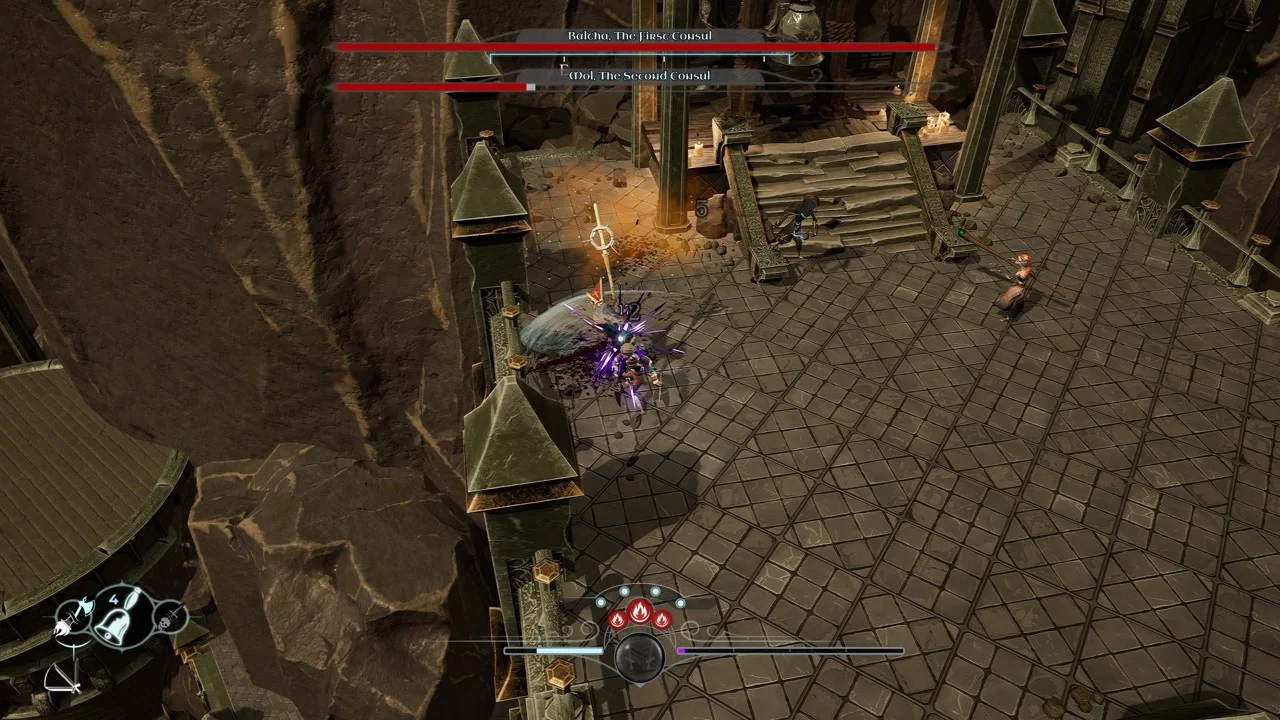
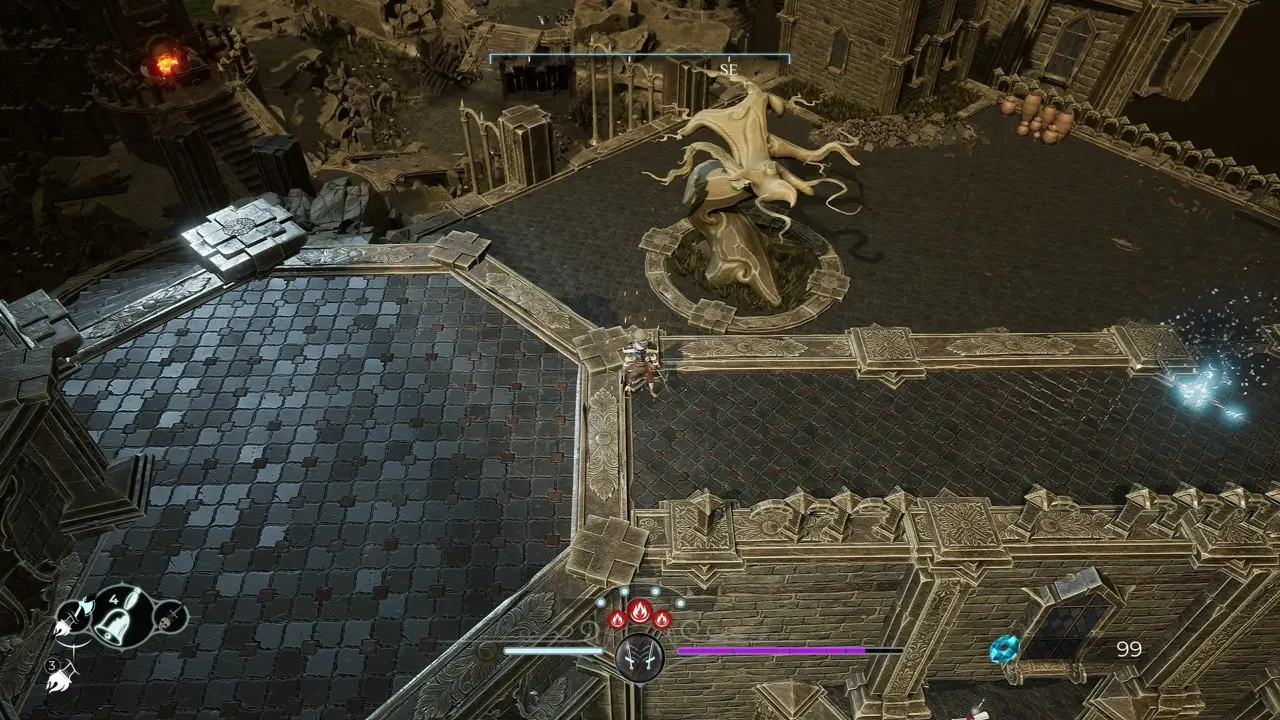
Another early fight against two mages on a rooftop shows both sides of the balance issue. Solo, it was chaos, poison zones, knockback, overlapping pressure, very little room to stabilize. After hiring a nearby NPC companion for the fight, the same encounter became dramatically easier. Not just manageable, almost trivial. Enemy behavior felt less aggressive and less coordinated, and the win felt more like system manipulation than mastery. I was happy to progress, but it did not feel earned.
That contrast highlights the core combat frustration. The game can swing between oppressive and passive depending on setup, with little in-between. If a game is going to be hard, it should still feel internally consistent. Here, too many encounters depend on whether the AI cooperates with your build and positioning in that specific attempt.
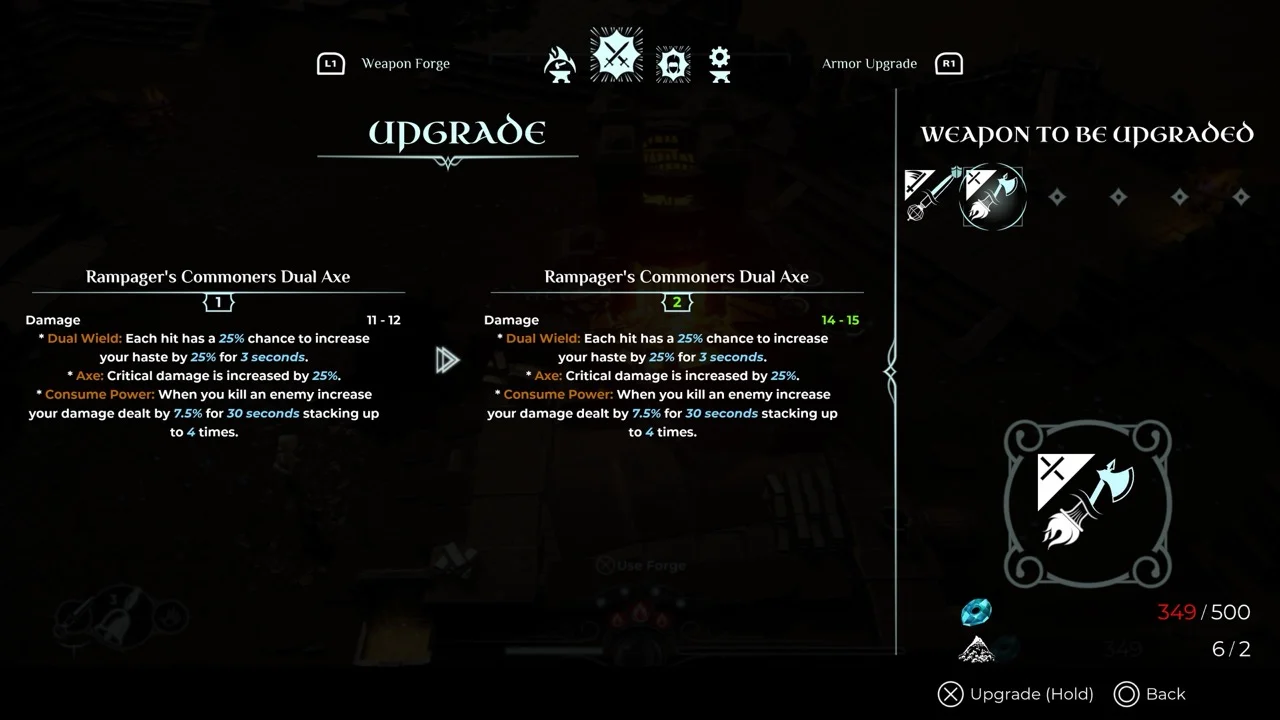
Progression also struggles to communicate impact. There is no traditional character leveling path where your base stats steadily rise. Instead, your power comes from weapon crafting, upgrades, armor runes, and trinkets. In theory, that is fine, gear-driven progression can be great. The issue is feedback. I crafted new weapons, upgraded them to higher tiers, experimented with status effects like poison, and changed loadouts often. Against regular mobs, sure, you can feel some improvement. Against mini bosses and major bosses, the difference was much less noticeable than it should be.
When upgrades do not visibly change outcomes, the motivation loop weakens. You still gather resources, still craft, still test builds, but you start asking whether the system is deep or just busy. The same goes for the many runes you get that supposedly have some sort of bonus effect if you attach them to your armor, but in reality you don't feel any change. Then you have trinkets which I can just say good luck finding the priest that can allow you to equip them. If core progression asks for this much investment, it needs clearer payoff in real combat performance.
Exploration has a similar push and pull. Island zones are interesting to comb through, with hidden chests, side paths, and optional encounters. The problem is navigation clarity. There is no mini-map while actively exploring these locations, and with the camera angle sitting in that semi top-down perspective, spatial awareness can get messy fast. I frequently had that feeling of, have I already checked this area, am I missing one corridor, or am I even on the right route for the active objective.
The sailing mechanic is is stylish and initially memorable, but its long-term value drops once fast travel opens up through bell checkpoints. Early travel across sand seas sells the fantasy. Later, you mostly hop between unlocked points, which is efficient, but also means one of the game's coolest ideas becomes less central than expected.
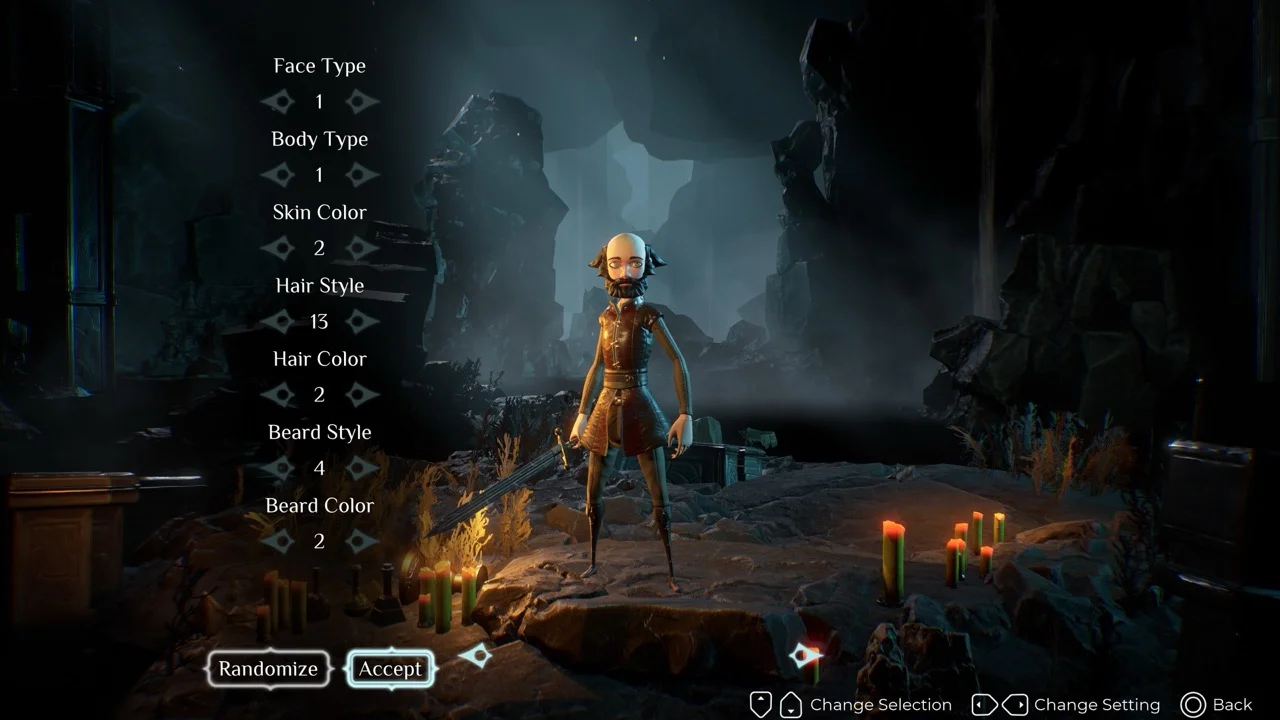
Presentation is still a genuine strength. The art direction leans into elongated, stylized character designs and stark silhouettes, almost storybook-gothic in places. It will not work for everyone, but it gives the game its own look, which I always appreciate in a crowded genre. Environment art does good work too, ruined architecture, windswept sandscapes, and weathered structures all help sell a world that has survived too many disasters.
Audio and general feel are solid enough, though not exceptional. Weapon hits sometimes lack the punch you want in a heavy action RPG, and that contributes to the broader feedback issue. On PS5, performance is mostly stable and playable, so the core problem is less technical breakdown and more tuning, responsiveness, and readability under pressure.
Sands of Aura is not a disaster, and it is not a hidden masterpiece either. It sits in that frustrating middle tier where the ideas are stronger than the final feel. If you are patient, like experimenting with gear systems, and do not mind rough edges in boss design, there is something here for you. If you want tight combat feedback and reliable encounter logic, this can become draining quickly.
I came away respecting the ambition more than the actual play experience. There is a compelling world, a decent narrative frame, and moments of real atmosphere. But the game keeps undercutting itself with inconsistent defensive timing, uneven encounter behavior, and a progression loop that does not always make you feel stronger when it should. For me, that leaves Sands of Aura as a just okay action RPG, interesting enough to remember, not polished enough to recommend broadly.