Crisol: Theater of Idols borrows boldly from modern Resident Evil, adds a brilliant blood-as-ammo system, and delivers one of the best indie survival horror games in years
Crisol: Theater of Idols completely surprised me on Xbox Series X. I expected a solid indie horror shooter with a cool gimmick. What I got will probably be one of my favorite games of the year, with style, confidence, and a clear understanding of what makes action-horror click.
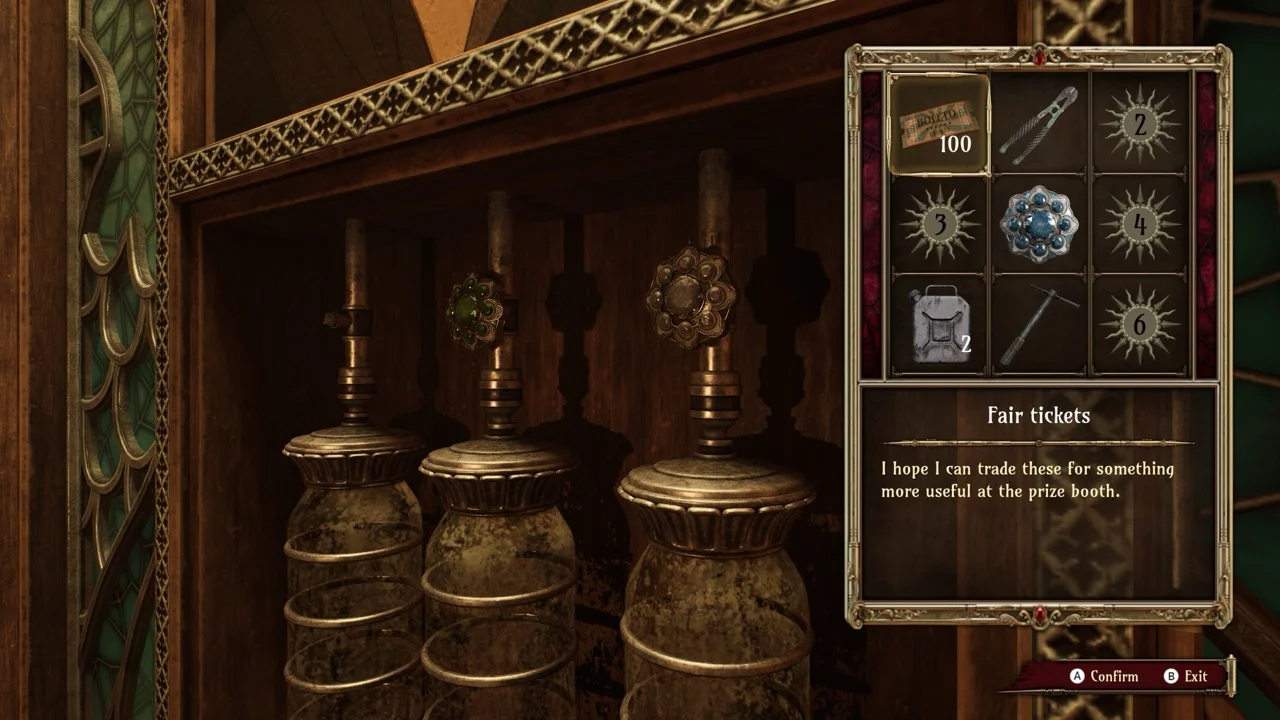
The first thing to get out of the way is the obvious comparison. Yes, Crisol borrows heavily from the newer Resident Evil structure and feel. The first person movement, the combat rhythm, the map that flips room colors when you clear items, puzzle flow, a merchant style upgrade stop, breakable boxes, yellow paint hints, key tools, all of that DNA is there. If you have played RE7, RE8, and the modern RE remakes, you will spot those influences in minutes.
And honestly, good. Borrowing from some of the best modern survival horror design is not a sin. It is smart. The real question is whether the game makes that template work for its own world, and Crisol absolutely does.
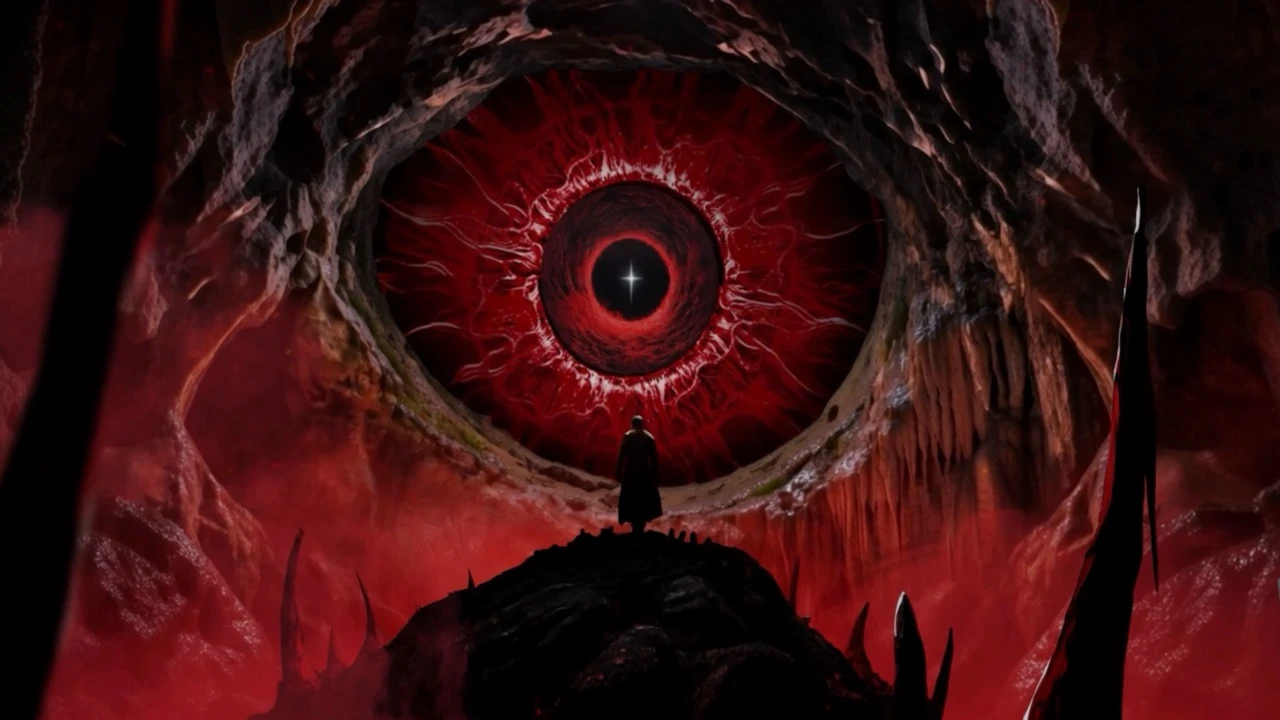
Set in Tormentosa, a grim, stormy, Spanish gothic nightmare, the game puts you in the boots of Gabriel, a captain and devout follower of the Sun God. He arrives in a city tied to rival worship of the Sea God, and things go bad fast. After a brutal early death at the hands of a towering mechanical horror, Gabriel is brought back with a divine gift, or curse, depending on how you read it. His weapons now feed on his own blood.
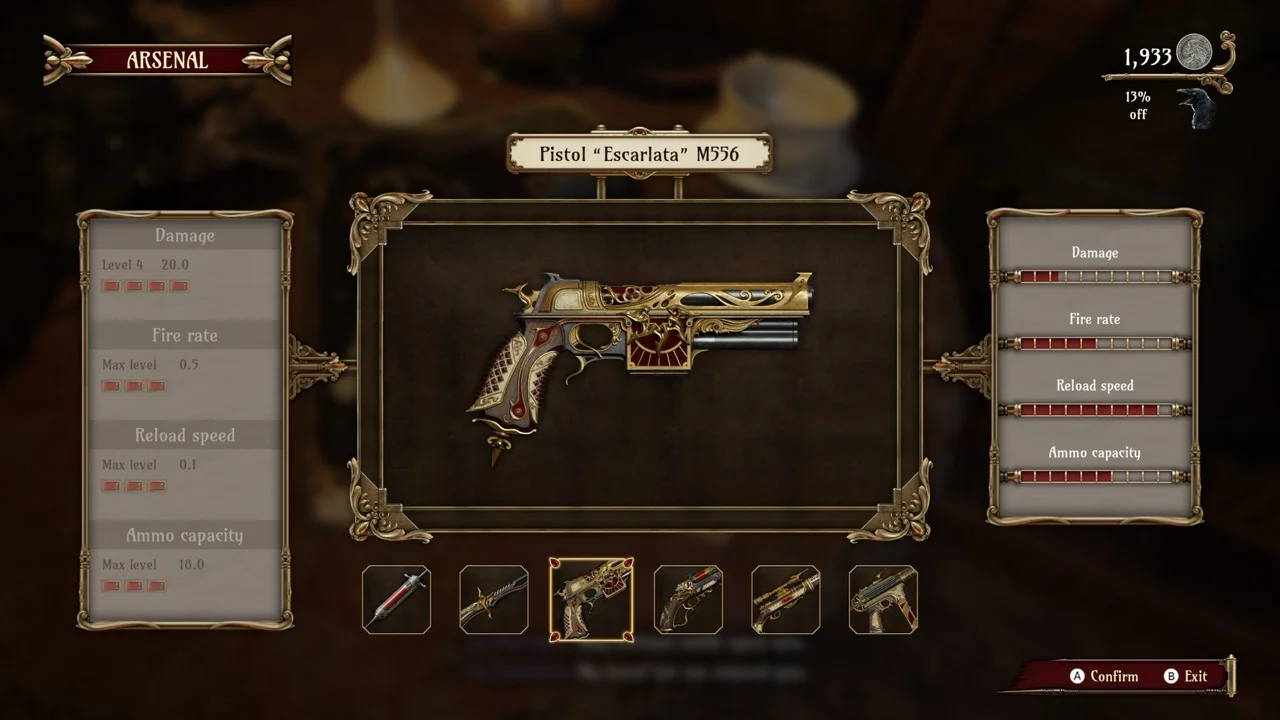
That blood-as-ammo system is the best mechanical hook in the game. Every reload costs health. Every shot carries a tiny sting of panic, especially in tense rooms where enemies are closing in and your bar is running low. Reloading is not a quick background action here. You hold the input, spikes bloom from these ornate weapons, and blood fills the chamber with nasty, stylish animation work. It looks incredible and instantly sells the fantasy.
On paper, it sounds like a gimmick that might wear off. In practice, it drives almost every decision you make. Do you top up now and risk getting hit with low health? Do you stay conservative and try to line up cleaner shots? Do you use blood syringes to heal, or treat them as future bullets? That loop keeps the whole game alive, even in sections where level structure feels familiar.
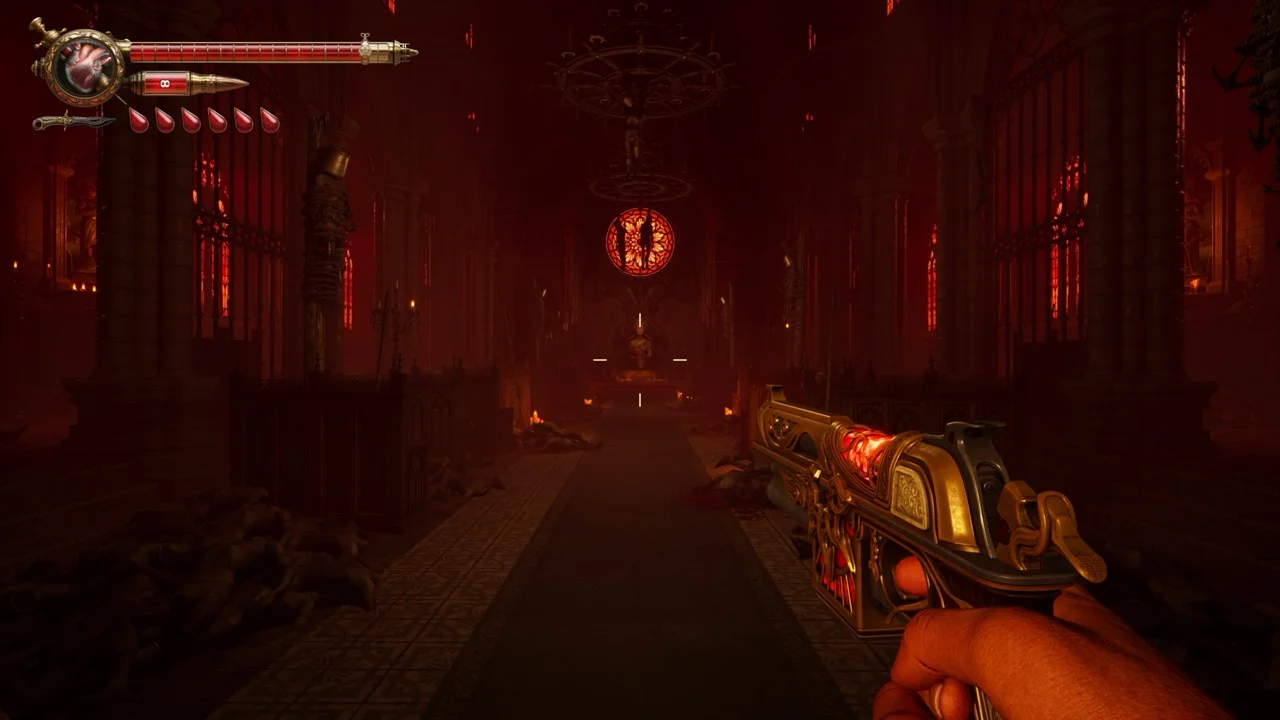
The guns feel good. For a debut indie release, this is shockingly polished. Weapons sound punchy, recoil feels deliberate, and enemies react enough to keep firefights readable. Aiming is not laser accurate, and that is by design. You are not playing a twitch shooter. You are in a slower action-horror space where committed shots matter more than speed.
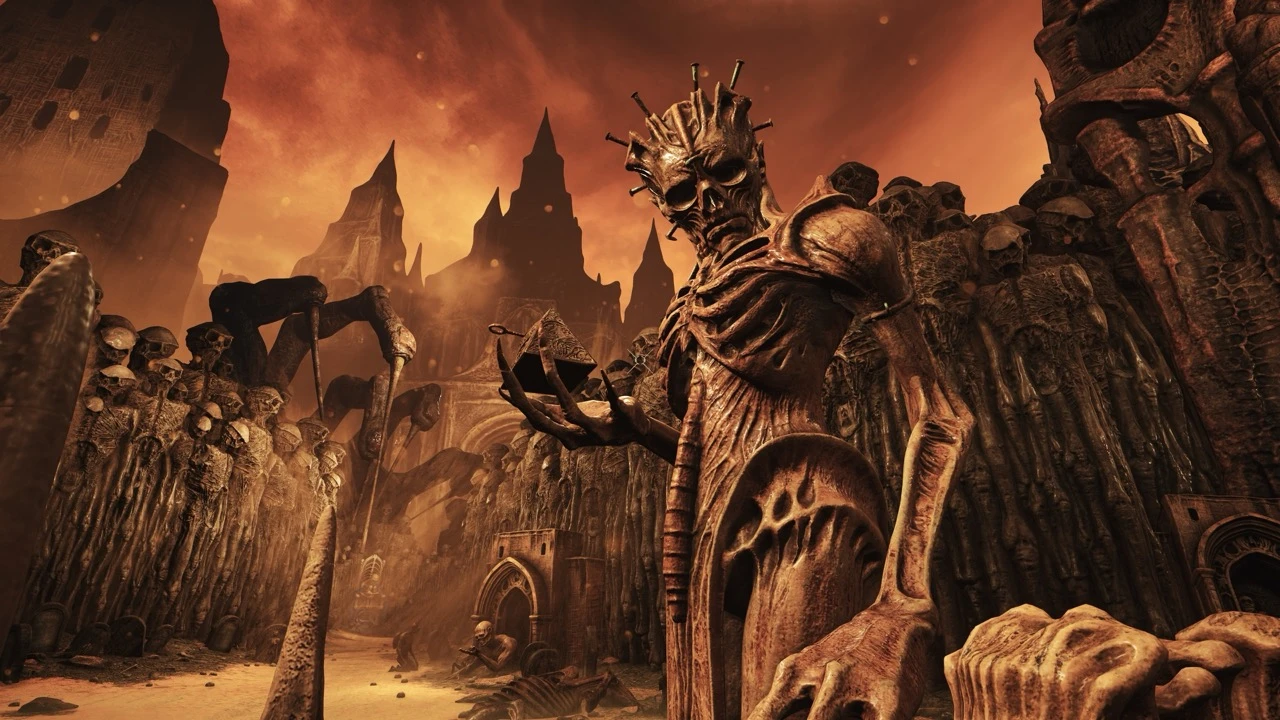
The main enemy set also helps carry the game. Most of what you fight are twisted wooden or porcelain-like puppets and statues with uncanny movement and grotesque silhouettes. Some shamble with tools and farm implements, some throw in weird visual touches that make each encounter unsettling even after hours. One had a frying pan, which somehow made it even creepier. You also face archers, flying baby-like threats, and later tougher glass-like enemies that demand better control and ammo discipline.
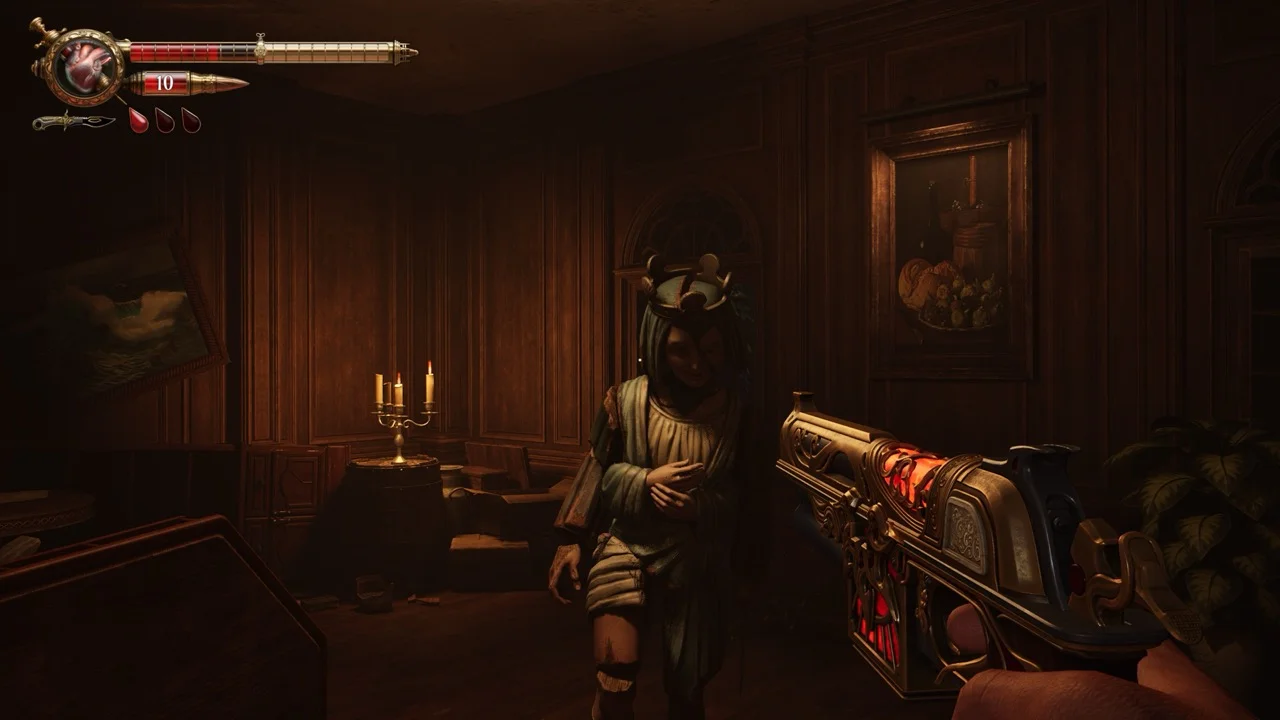
Crisol is not obsessed with huge enemy variety, but what it has is memorable, and the atmosphere does heavy lifting in a good way. You hear wood creaks, mechanical groans, and environmental noise that keeps you tense.
The story is another big win for me. Without spoiling specifics, the core setup is strong, and the game feeds you history and character context in controlled pieces. Gabriel starts as a believer with a mission, then the deeper you go, the messier things get. You begin to question motives, gods, and what this war is really asking from people.
Absorption mechanics tie story and systems together nicely. You can draw blood from syringes and from corpses, including animals like pigs and horses, which reinforces the grim tone of Tormentosa. Human absorption matters even more, because your hunt is tied to key figures whose transformation into ritual objects drives progression. It keeps the narrative stakes connected to what you are physically doing in gameplay, which is always a plus.
Now, about the twist. I thought I saw it coming. I did not. The game hints just enough to make you feel clever, then pulls the thread in a better direction. It does not reinvent storytelling, but it lands with confidence and adds weight to the final stretch.
Structurally, this is very much a zone-based horror adventure. You progress through distinct regions with their own visual identity and puzzle logic, then collect critical items that build toward the endgame objective. Again, yes, this is familiar. But it is also one of the cleanest frameworks in the genre when done right, and Crisol does it right more often than not.
The puzzle design is mostly strong. Expect the classic flow of exploring, finding tools, unlocking earlier barriers, and then realizing how spaces connect. There are also dedicated puzzle rooms with light-grid logic, scale balancing, and pattern interpretation.
One specific puzzle type, which I don't even know how to explain it in words, it has some like face figurines and you need to move them in a chess-like board (I don't know), felt underexplained and awkward. I brute-forced it and moved on. That was a genuine low point because the game is usually better at signaling what it wants from you.
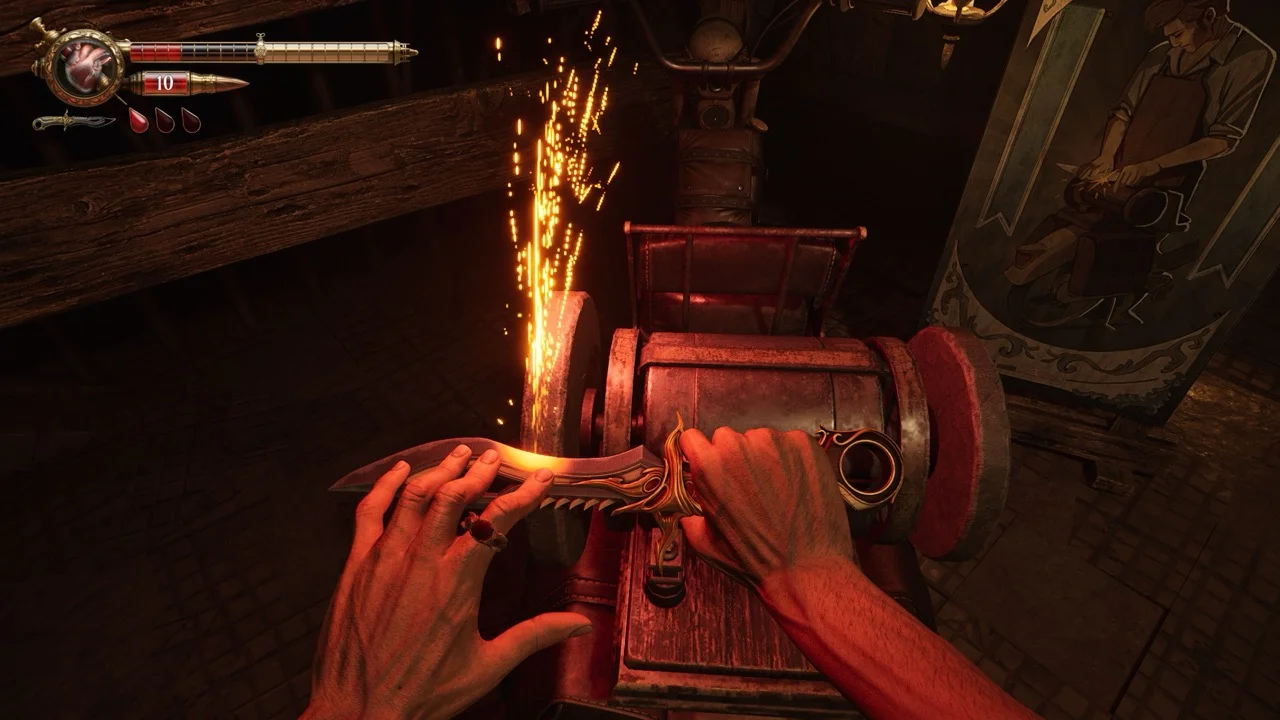
Combat has one other mixed system, the knife. It is a consumable utility with slashes and parry potential, very much in the lane of recent survival horror design. The idea is good. In practice, parry windows can feel inconsistent, and the game does not always teach timing clearly enough for confidence under pressure. I rarely felt fully in sync with it, and that is a shame because a tighter parry loop would have elevated close range encounters.
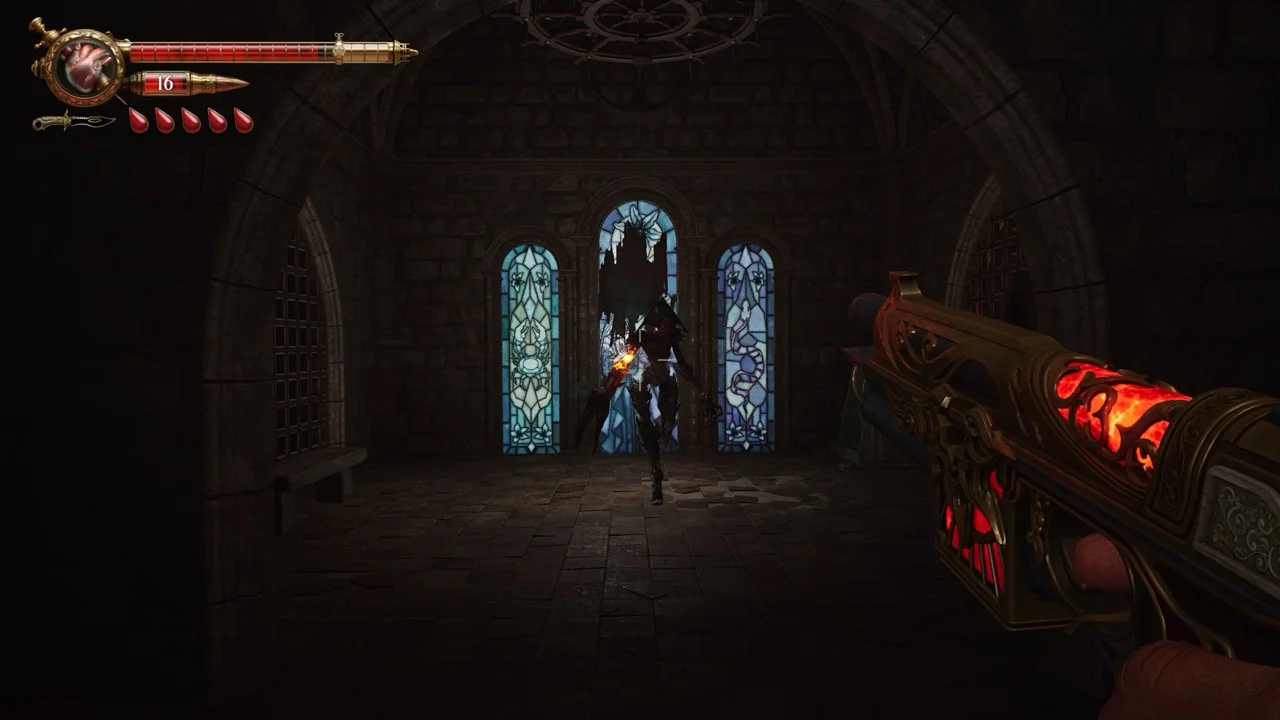
Then there is Dolores, the giant mechanical stalker that appears in dedicated pursuit sections. Design and story wise, she is excellent. Visually terrifying, sonically intimidating, and instantly kinda iconic. But the actual cat-and-mouse play is the most undercooked part of the game.
These sections should be peak tension moments. Instead, level layout and AI behavior sometimes flatten the fear. You can end up in stop-start patterns where you wait, move, hide, repeat without much improvisation. It is not broken, just less dynamic than the rest of the experience. I never hated these segments, but they felt like the one area where sequel-level refinement is needed.
Still, even with that issue, moment-to-moment play remains very strong because the game understands pacing. It gives you pressure, then breathing room, then pressure again. It lets you scavenge, think, route, and prepare.
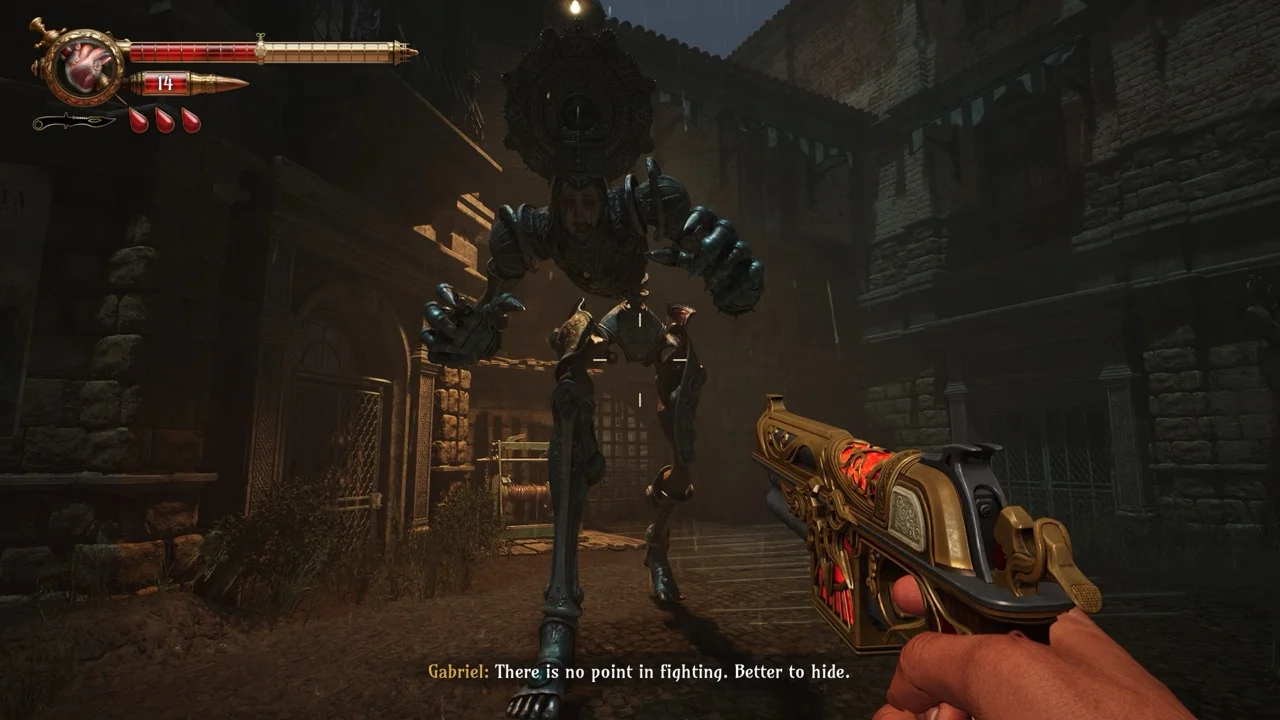
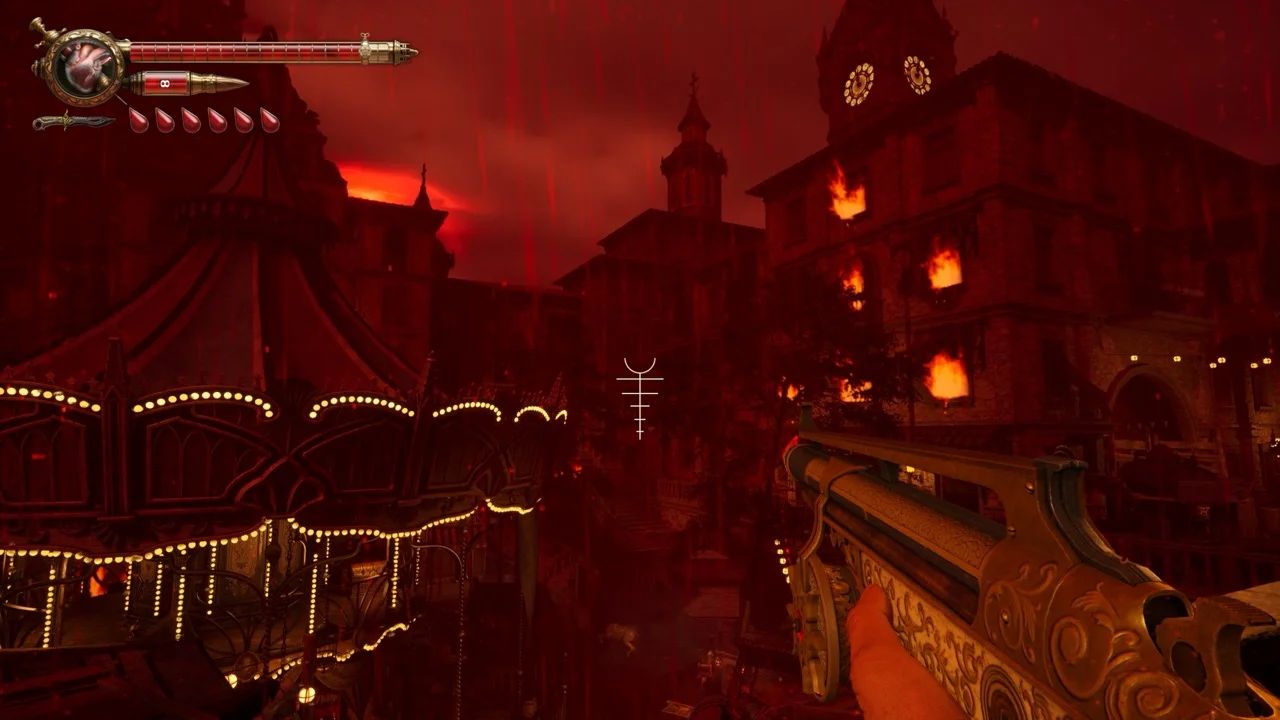
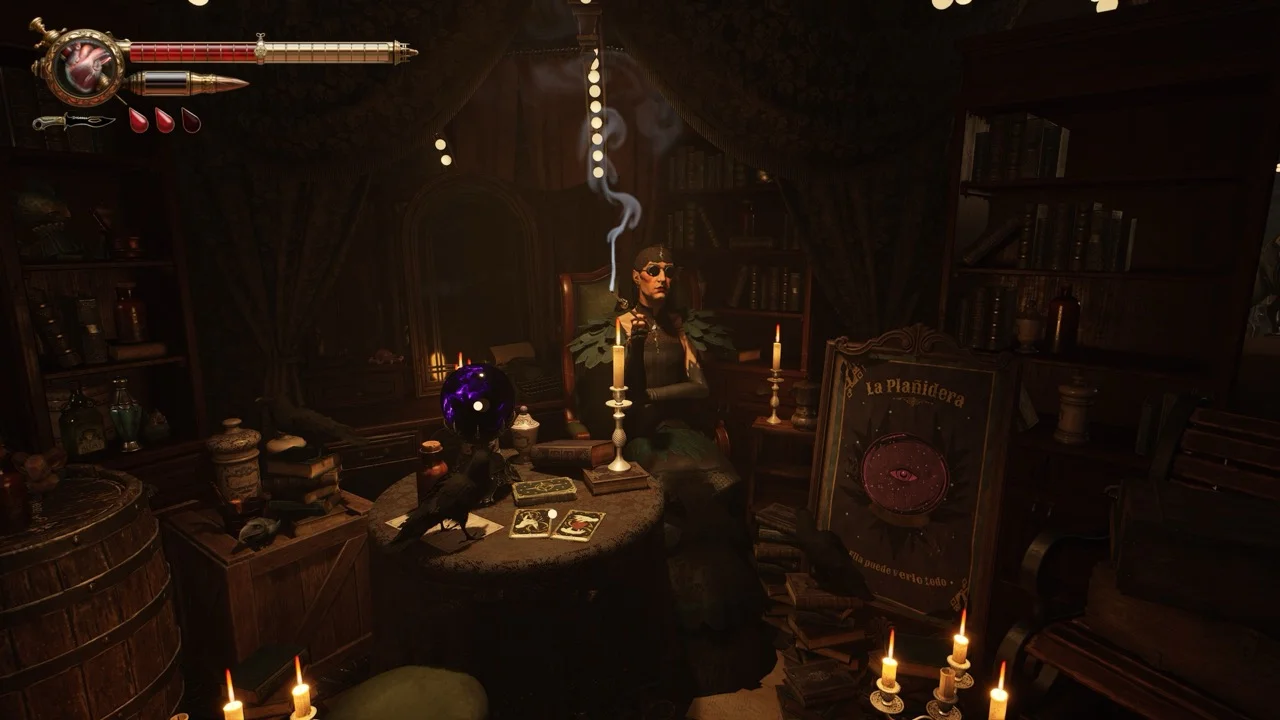
Presentation is where Crisol punches absurdly above its price. The Spanish gothic art direction is stunning. Religious iconography, rain-washed cough blood-soaked cough streets, carved architecture, and unsettling puppet design create a world that feels authored, not procedural. Tormentosa has identity.
On the Series X, the visual quality is impressive for a debut project. Lighting sells the mood, weapon models are gorgeous, and animation detail during reloads and interactions is consistently high.
Audio also deserves serious credit. Weapon reports have weight, environmental layering supports paranoia, and character voices generally do their jobs in building tone. Even when some line delivery can feel uneven, the overall soundscape remains a major strength.
Value is the final knockout punch. At around $20, this feels almost absurd in today's market. Many full-price releases offer less identity, less mechanical risk, and less memorable art direction than Crisol. As a first game from a new studio, this is genuinely impressive.
Crisol: Theater of Idols is not perfect cause nothing ever really is. Parry feedback needs work. Some puzzles felt clumsy and the Dolores sections needed smarter AI and more dynamic spaces. But those flaws never outweighed what the game does right.
What it does right is a lot, a striking setting, excellent weapon fantasy, smart resource tension, strong pacing, memorable enemies, and a story that sticks the landing better than expected. Most importantly, it feels great to play. You can sense the craft in every room, every animation, every system connection.
I adored this game, and I hope people do not skip it just because its inspirations are easy to spot. Crisol understands those inspirations, executes them with real care, then adds enough identity through art direction, lore, and blood economy to stand on its own. It's essential for fans of the genre. Do not miss this one. Thanks for reading!
If you enjoyed this one, read our One Piece: World Seeker review and God of War Ascension review next.