Meta introduces an ultralight $1,300 headset powered by an external pocket puck, boasting 120Hz micro-OLED clarity, eye-tracked foveated rendering, and a spring 2027 launch window
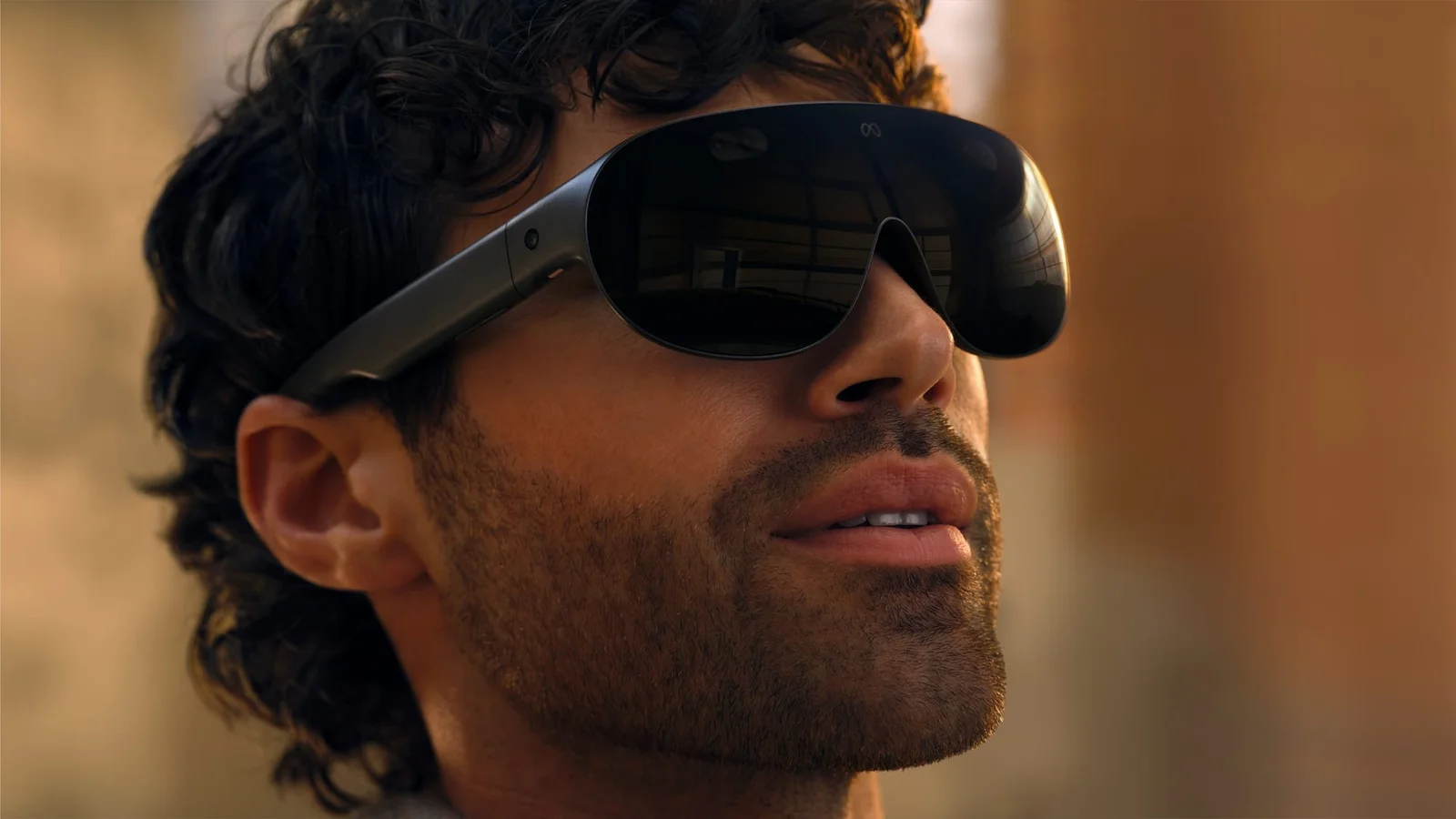
Meta used its Connect 2026 keynote to take the wraps off the Meta VR Glasses, representing the company's boldest hardware redesign since the standalone VR category began. Starting at $1,300 for the 128GB configuration, the wearable departs from the bulky all-in-one headset formula by adopting an external compute architecture. By decoupling processing and battery hardware from the facial visor, the glasses weigh approximately 100 grams, with retail shipments planned for spring 2027.
Hardware details and specifications announced at Meta Connect on September 24, 2026. Features and availability may adjust closer to commercial launch.
A split architecture designed for lightweight comfort
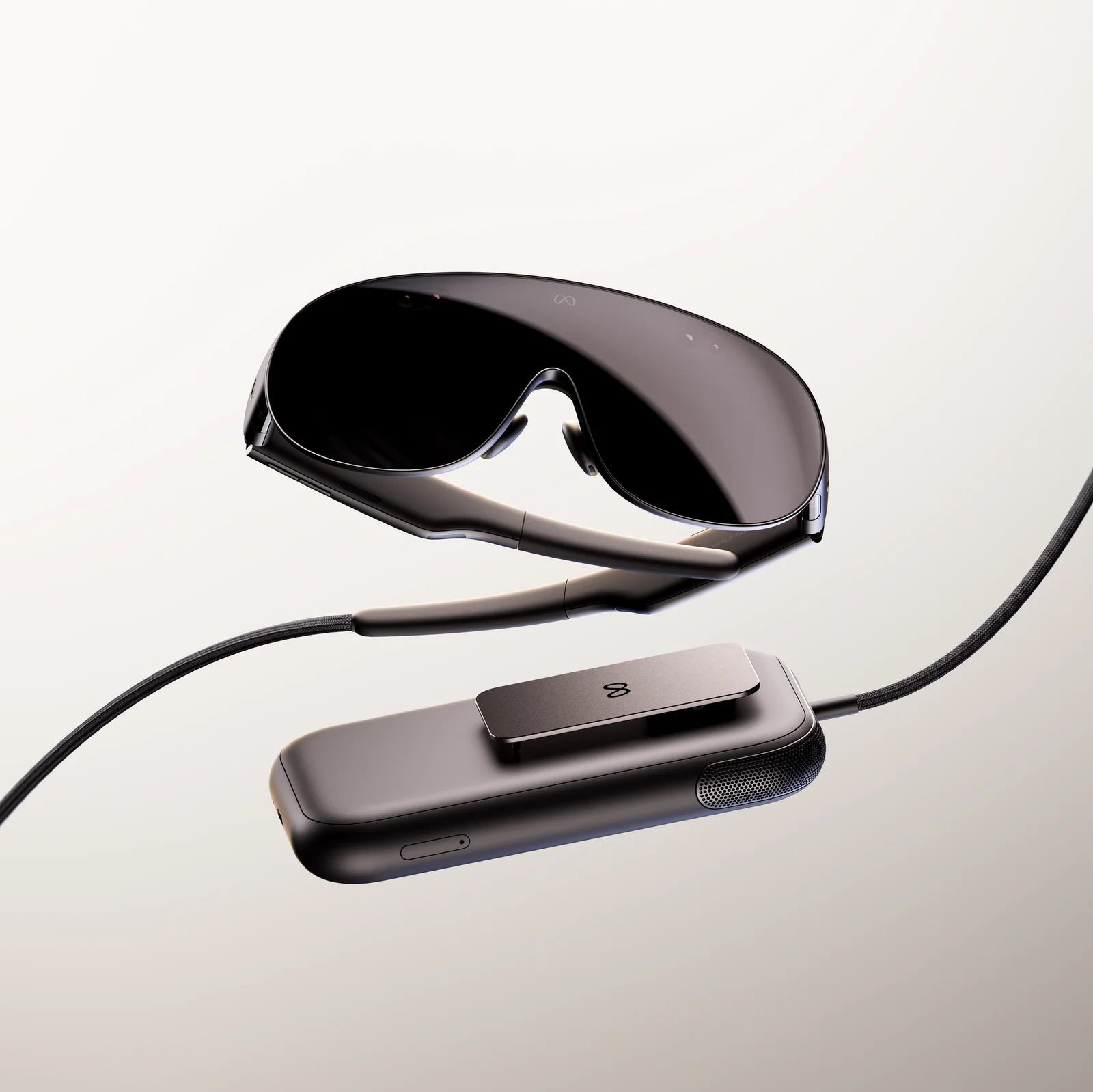
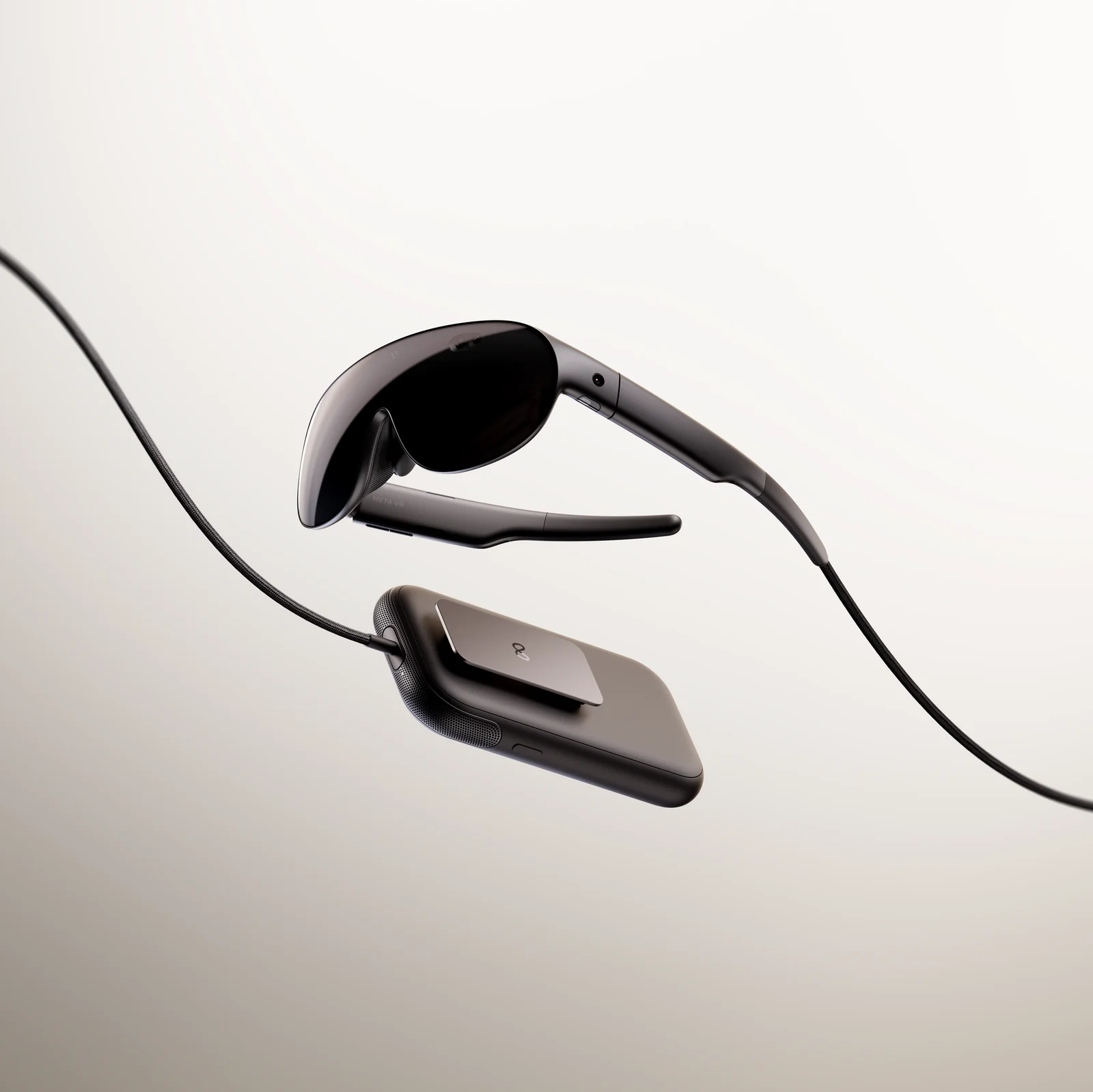
Unlike traditional standalone devices that mount batteries, cooling fans, and processors directly against the user's face, Meta VR Glasses offload core hardware to a pocketable companion unit. This external puck weighs roughly 300 grams (matching the footprint of two stacked smartphones) and connects to the eyewear via an ultra-thin, flexible fiber-optic cord that transmits both power and high-bandwidth data.
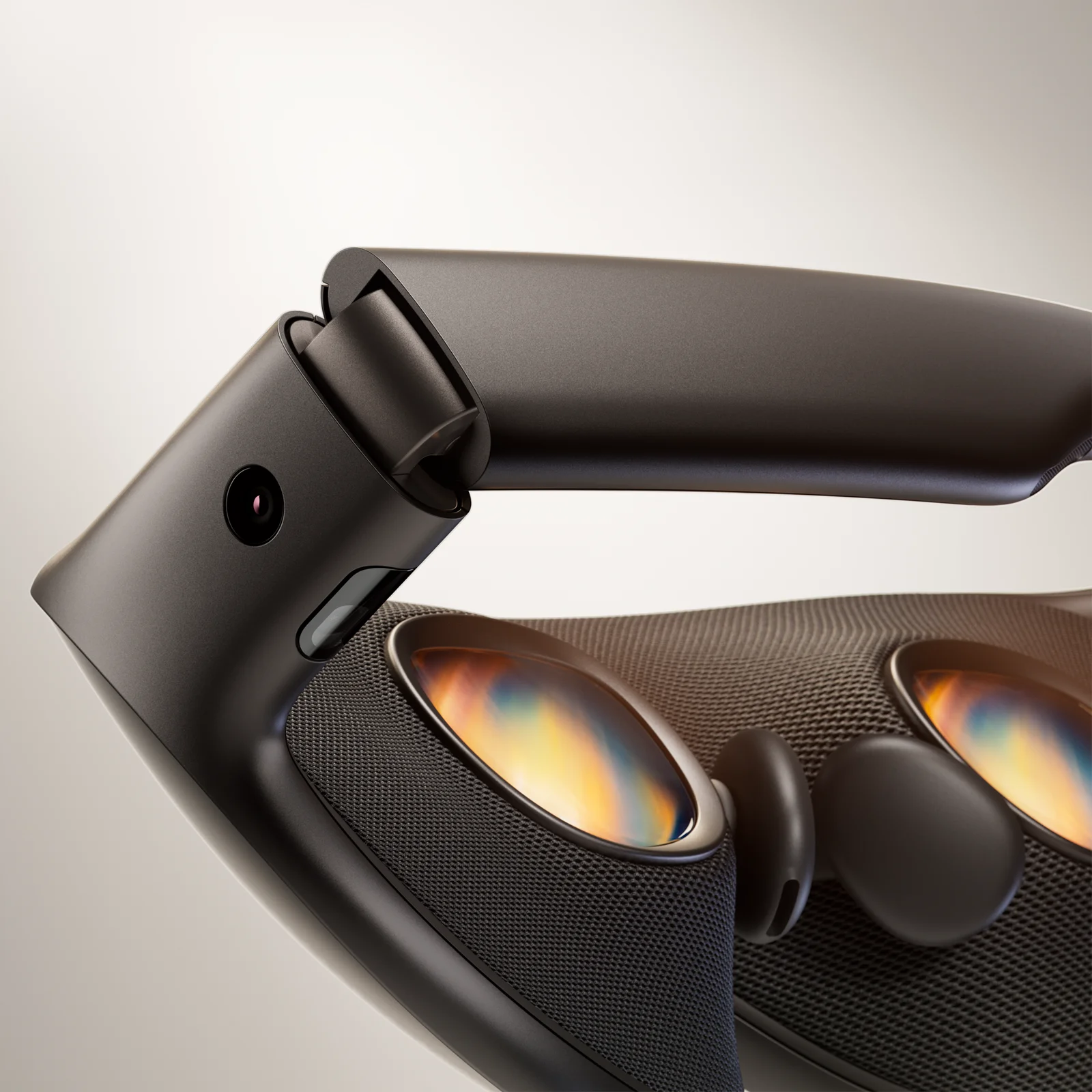
Moving thermal components and heavy battery cells away from the face allows the visor to drop down to around 100 grams. Built around a magnesium alloy frame that functions as a passive heat spreader, the glasses operate completely fan-free. The visor also uses an open-periphery frame, leaving natural peripheral vision clear on the sides and bottom for mixed reality tasks. Wearers wanting complete visual immersion for traditional VR gaming can snap on optional light-blocking shields to seal off ambient lighting.
High-clarity micro-OLED panels balanced against a narrower field of view
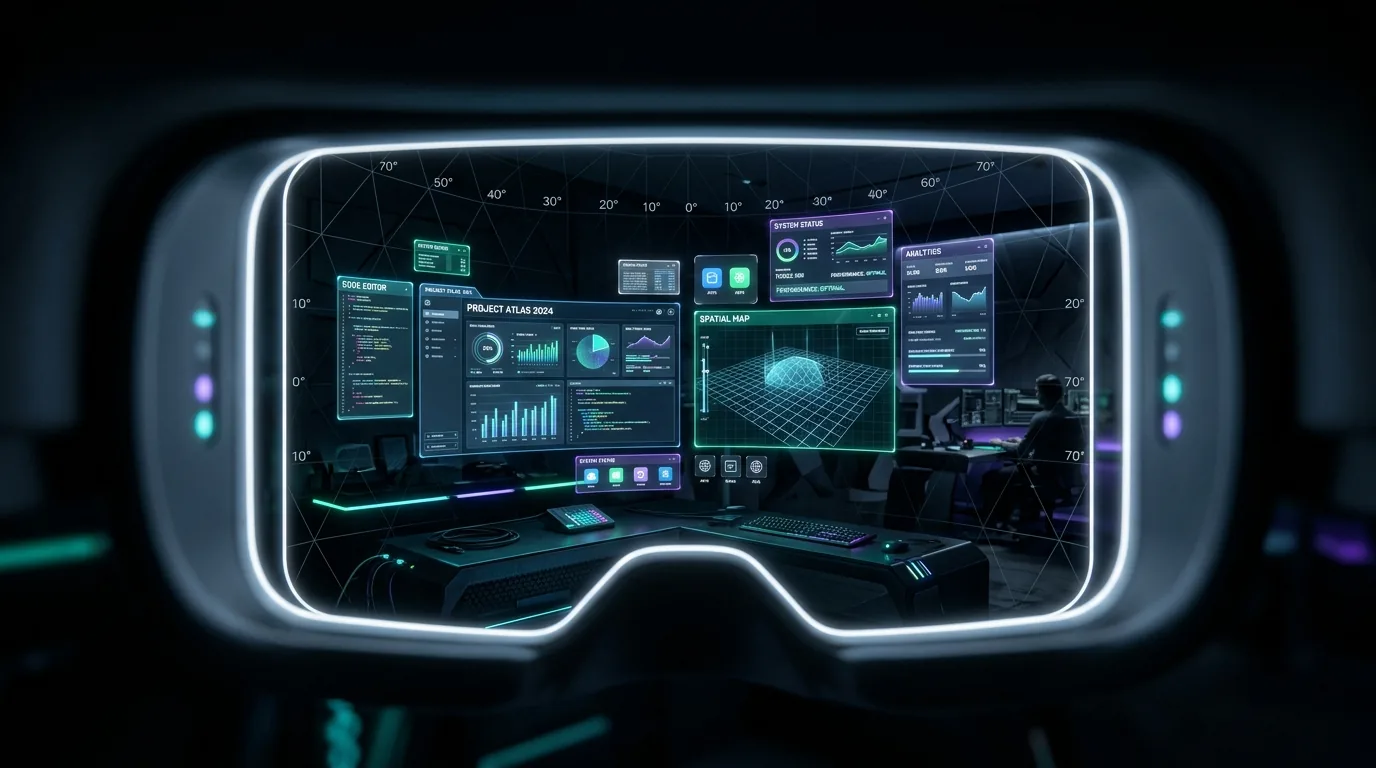
On the visual front, the glasses offer Meta's sharpest image output yet. Dual 120Hz micro-OLED panels output 2412 × 2288 pixels per eye, delivering a central resolution of 37 pixels per degree (PPD). That provides a noticeable clarity boost over the 25 PPD found on the Meta Quest 3. The display stack also features Dolby Vision HDR decoding and is the first VR wearable to earn official IMAX Enhanced certification, catering directly to movie enthusiasts wanting a pocket-sized personal cinema.
The radical downsizing comes with one major optical tradeoff: field of view. The Meta VR Glasses provide a viewing window measuring 70 degrees horizontal by 66 degrees vertical (roughly 87 degrees diagonal). That is significantly more compact than the 110-degree horizontal field of view seen on Quest 3 or Steam Frame. While the tighter window suits productivity and mixed reality overlays where peripheral awareness is helpful, fully enclosed VR titles will feel noticeably more boxed in. (You can experience this firsthand in your Quest 3 using our interactive Meta VR Glasses FOV Simulator.)
Meta VR Glasses vs. Quest 3, Steam Frame, and Apple Vision Pro
| Specification | Meta VR Glasses | Meta Quest 3 | Steam Frame | Apple Vision Pro |
|---|---|---|---|---|
| Screen Technology | Micro-OLED | Fast-Switch LCD | Fast-Switch LCD | Custom Micro-OLED |
| Per-Eye Resolution | 2412 × 2288 | 2064 × 2208 | 2160 × 2160 | 3660 × 3200 |
| Field of View | 70° H × 66° V (~87° diag) | 110° H × 96° V | 110° H × 110° V | 100° H × 73° V |
| Central Pixel Density | 37 PPD | 25 PPD | ~25 PPD | 44 PPD |
| Processing Chipset | Snapdragon Reality Elite | Snapdragon XR2 Gen 2 | Snapdragon 8 Gen 3 | Apple M5 |
| System RAM | 12GB | 8GB | 16GB | 16GB |
| Passthrough Cameras | Full-color (26 PPD) | Full-color (18 PPD) | Monochrome (low-res) | High-fidelity color |
| Hand Gesture Tracking | Supported | Supported | Not supported | Supported |
| Eye Tracking Hardware | Quad-camera array | Not supported | Dual-camera array | Quad-camera array |
| Facial Expression Tracking | Supported | Not supported | Not supported | Supported |
| Motion Controllers | Optional (sold separately) | Included in box | Included in box | Optional (sold separately) |
| Base Retail Price & Storage | $1,300 (128GB) | $600 (512GB) | $1,059 (256GB) | $3,700 (256GB) |
| Expandable MicroSD Storage | Supported (on puck) | Not supported | Supported | Not supported |
Next-gen silicon, Horizon OS, and expandable storage
Inside the companion puck sits Qualcomm's new Snapdragon Reality Elite processor paired with 12GB of RAM. The updated silicon works alongside an internal quad-camera eye tracking system to enable dynamic foveated rendering, focusing rendering muscle strictly where your eyes look to maximize fidelity.
The device runs Meta's Horizon OS platform and maintains broad software compatibility with the existing Quest library, rendering titles at noticeably higher native resolutions. Storage starts at 128GB on the base model, but unlike sealed Quest hardware, the compute puck includes an integrated microSD card reader, letting users expand local storage for offline media and games.
Hand-tracking priority and optional motion controllers
To achieve a streamlined lifestyle profile, Meta is not packing physical motion controllers inside the default retail box. The device is built primarily as a hands-first wearable navigated through optical hand tracking and pinch gestures. Meta announced several experiences built specifically for bare-hand control, including a gesture-based "Flux" mode for Beat Saber.
Users who want physical buttons and analog sticks for intensive action games are not left out. The headset pairs with existing Touch Plus controllers from Quest 3 and Quest 3S. Meta also plans to sell Touch Plus controllers separately in an all-black color option, with bundled packages heading to select retail partners.
Direct DisplayPort video input and Hologram photorealistic avatars
The puck includes a dedicated USB-C port with DisplayPort video input. This feature allows wearers to plug in a laptop, smartphone, or handheld gaming console directly to project a virtual monitor without wireless lag or external video capture cards.
Connect 2026 also marked the debut of Hologram, the commercial rollout of Meta's long-running Codec Avatars research. Leveraging the headset's facial tracking sensors and eye cameras, Hologram creates a photorealistic digital avatar of the user. During standard video calls on apps like WhatsApp, wearers can participate through their lifelike likeness. In spatial calls with other headset users, the launch software presents a true-scale 2.5D stereoscopic feed from a front angle. Meta confirmed that future software updates will evolve Hologram into fully volumetric, 6DoF spatial avatars that will eventually replace the platform's cartoonish Horizon avatars.
Who are the Meta VR Glasses built for?
At $1,300, the Meta VR Glasses are not positioned as an entry-level gaming headset to replace the mainstream Meta Quest 3. Instead, they target power users, mobile workers, and movie watchers who want spatial computing without wearing a bulky plastic helmet.
By balancing ultra-sharp 120Hz micro-OLED visuals and a featherweight 100-gram visor against a narrower field of view, Meta is carving out a new hardware category that bridges the gap between smart glasses and high-end spatial headsets.
Meta VR Glasses FAQ
How much do the Meta VR Glasses cost?
The Meta VR Glasses start at $1,300 for the base configuration with 128GB of internal storage.
When will the Meta VR Glasses release?
Meta confirmed a spring 2027 launch window for the headset and companion computing puck.
Do Meta VR Glasses come with controllers?
No. The standard package relies on hand tracking and does not bundle controllers. Touch Plus controllers in a new matte black finish will be sold separately, and existing Quest 3 or Quest 3S controllers can be paired.
Can you connect external devices like laptops or handheld consoles?
Yes. The compute puck features a USB-C DisplayPort input that allows direct video passthrough from PCs, smartphones, and handheld gaming systems onto large virtual displays.
Can you expand the storage on Meta VR Glasses?
Yes. The tethered compute module includes a microSD expansion slot, allowing you to add removable storage for movies, media, and applications.