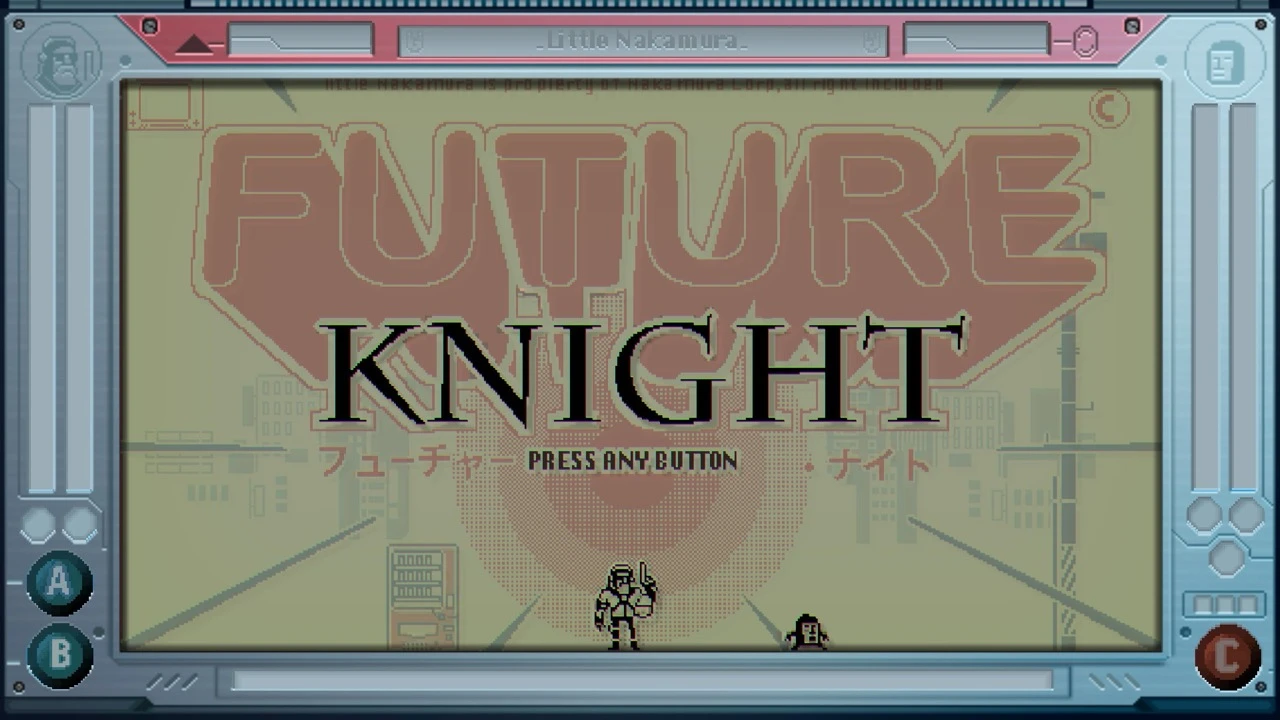
Future Knight looks like a Game & Watch dragged into the future, and its strange style is backed up by genuinely fun run-and-gun action
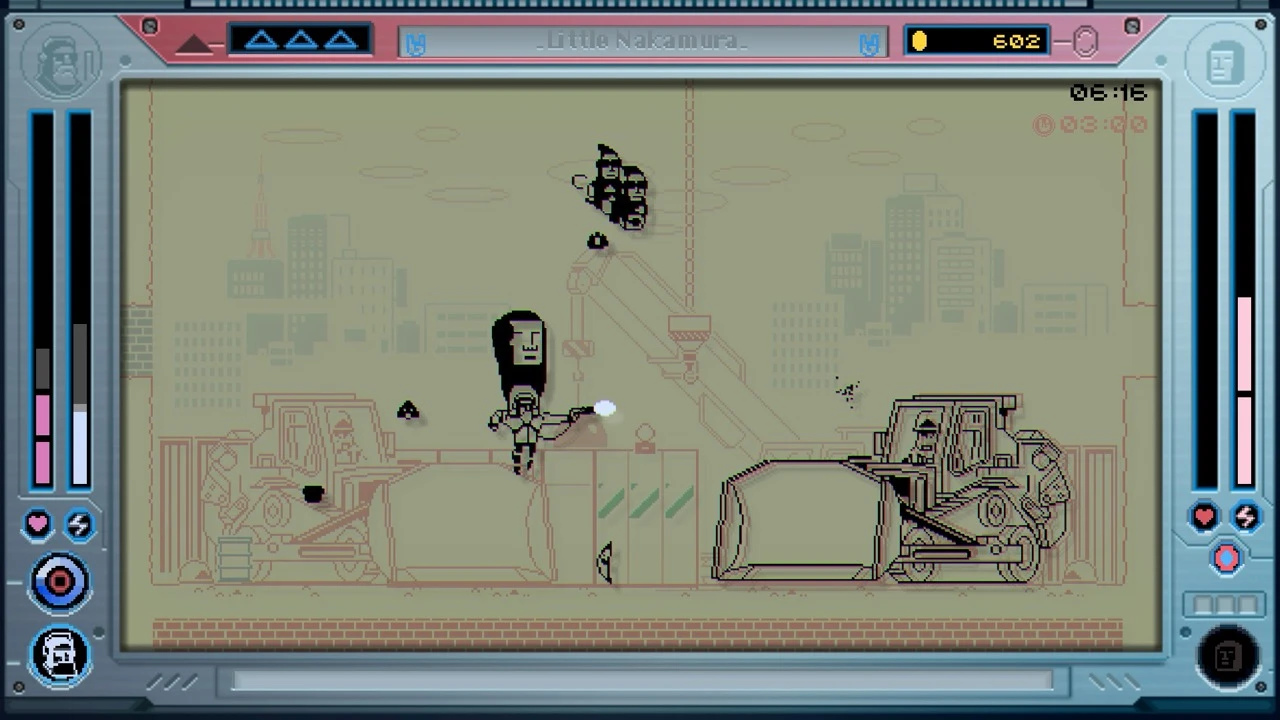
I have not really seen another game that looks like Future Knight. It recreates the feel of an old Game & Watch or Tiger Electronics display so convincingly that playing it on my ROG Xbox Ally X made the entire handheld feel like some retro-futuristic LCD thingamajig from an alternate timeline.
The static, softly colored backgrounds sit behind characters and enemies rendered as crisp black shapes. Everything moves like animated ink across the screen, complete with little display-like trails and shadows that sell the illusion. It is an incredibly specific style, and the game commits to it everywhere, from its interface to its wonderfully bizarre cutscenes.
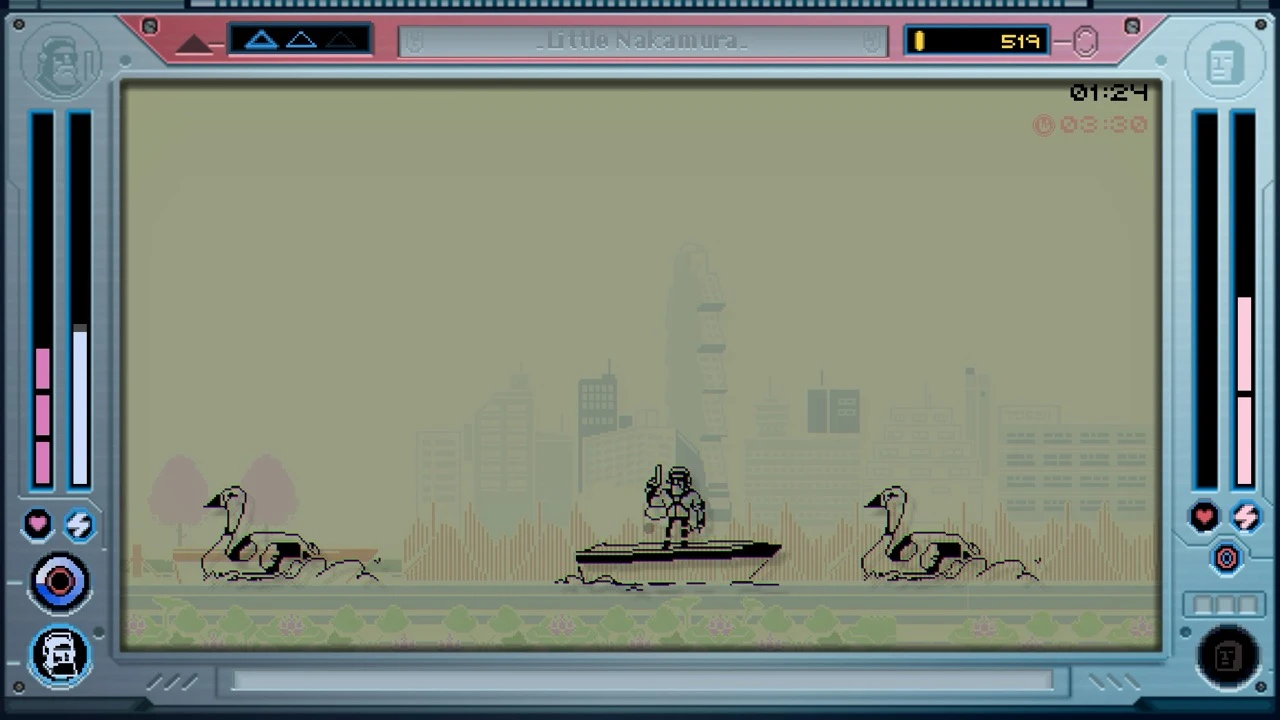
The story matches that weird energy. Future Knight is a robot sent eight hours into the past to stop the Lady of the Past and her pyramid cult from wiping humanity's memories. Living inside him is Two More, a benign tumor with a face and a useful set of powers. It is absurd, deliberately silly, and delivered with enough confidence that I quickly stopped questioning any of it.
Future Knight himself has a Techno Blaster, plus simple jumping, aiming, rolling, melee, and prone abilities for dealing with enemies. The controls feel responsive on the Ally X, and there is an enjoyable rhythm to picking off threats, slipping beneath incoming fire, and moving through each compact stage. It is easy to understand without feeling mindless.
The smartest part is Two More. You can eject him whenever you want, or take control of him after Future Knight loses his health. Two More can climb walls, dash through special blocks, squeeze into tight areas, and unleash a very fast but limited burst of bullets. He is fragile, so using him creates a fun bit of tension, especially when you are waiting for Future Knight to recover.
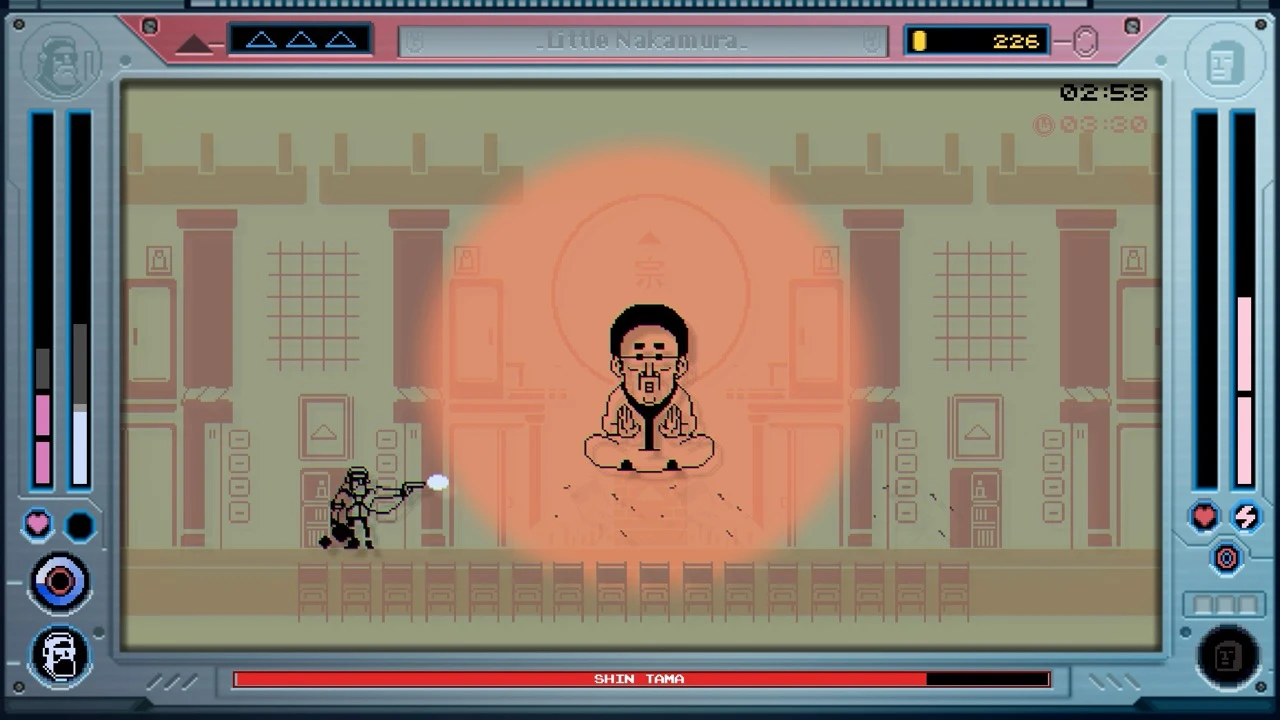
These two play styles complement each other extremely well. Future Knight brings the firepower, while Two More opens alternate paths and adds mobility. Switching between them never feels like a gimmick bolted onto an otherwise ordinary shooter. It becomes part of how you read the levels, hunt collectibles, and survive the busier fights.
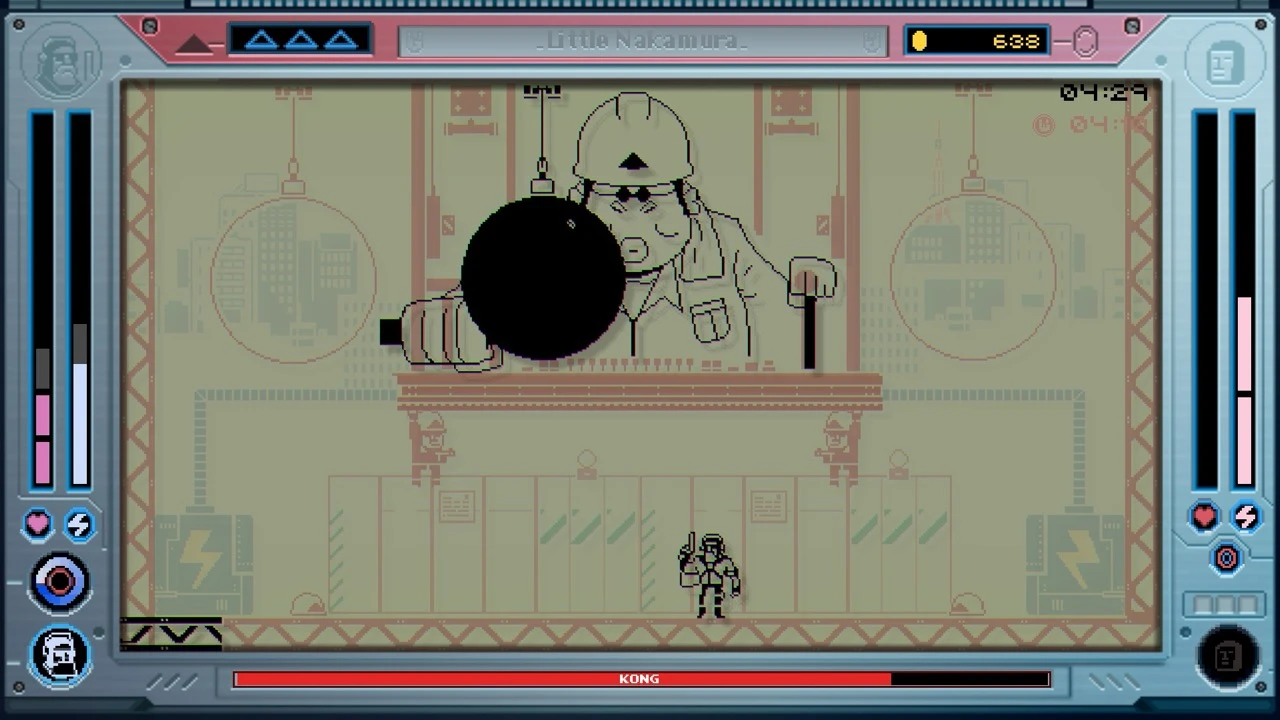
The game moves through several themed biomes, each split into short levels and capped by a boss fight. Those bosses were among my favorite moments. They are visually ridiculous, mechanically interesting, and built around patterns that are satisfying to learn. The encounters feel properly considered instead of simply throwing a larger health bar onto a normal enemy.
There is still room for more variety between those highlights. Most of your time is spent jumping and shooting through fairly straightforward arrangements of enemies and hazards. Later sections bring in new ideas, but the basic level structure can start to feel familiar. Thankfully, the responsive action and constant visual creativity kept me engaged.
The music is just as unusual as the art. It often sounds like someone making funky electronic beats with their mouth, backed by a playful rhythm. The closest comparison I can think of is Pikotaro's PPAP, which probably tells you everything you need to know. It is strange, catchy, and completely at home in this world.
The face in the opening menu animation immediately looked familiar, and that connection makes sense once you know Studio Koba, the developer behind Narita Boy, helped create the game. You can feel a similar love for retro visuals, odd beats, and old-school action here, but Future Knight pushes that creative instinct somewhere even stranger.
I love creative stuff like this. Future Knight may rely on a familiar jump-and-shoot foundation, but its presentation, dual-character design, and excellent bosses give it a personality that few games can match. It played beautifully on the ROG Xbox Ally X, and turning that hardware into a giant futuristic Game & Watch is a novelty I will not forget anytime soon. Thanks for reading!