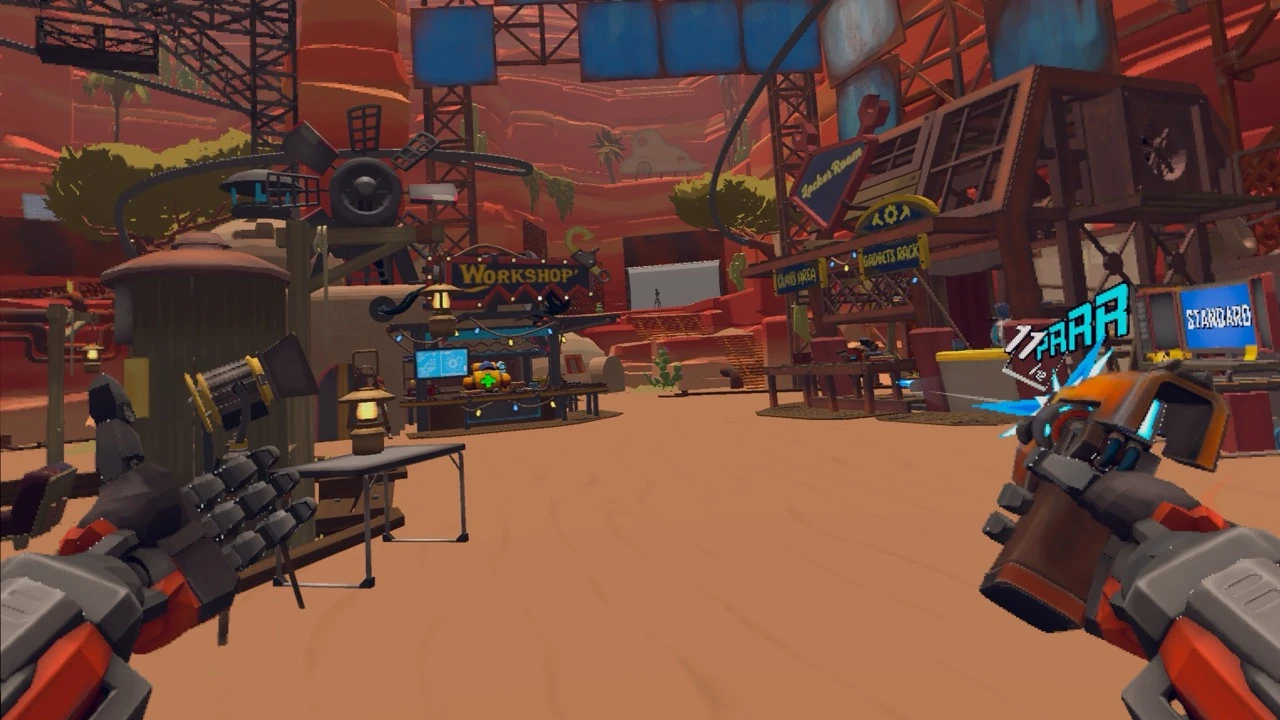
Roboquest VR delivers a lightning-fast roguelite shooter on Meta Quest 3 that proves breakneck movement and chaotic gunplay feel right at home in a headset
It feels so good to be back playing VR games now that the insane summer heat has finally started to cool down. Slipping on a headset in blistering temperatures is never a great time, so having the weather break just in time to dive into a fast-paced shooter felt ideal. The team at Flat2VR has stepped up once again, delivering another standout VR adaptation that feels like it was always destined to be experienced inside a headset.
I still vividly remember playing the original flat version of Roboquest on my Xbox Series X back when it was tucked away inside the Xbox Insider beta program. Even in that early, somewhat limited state, the kinetic energy of the gunplay hooked me immediately. Stepping into the virtual reality release on Meta Quest 3, you are getting the full, feature-complete game, and running through its neon-drenched arenas in first person is an absolute blast.
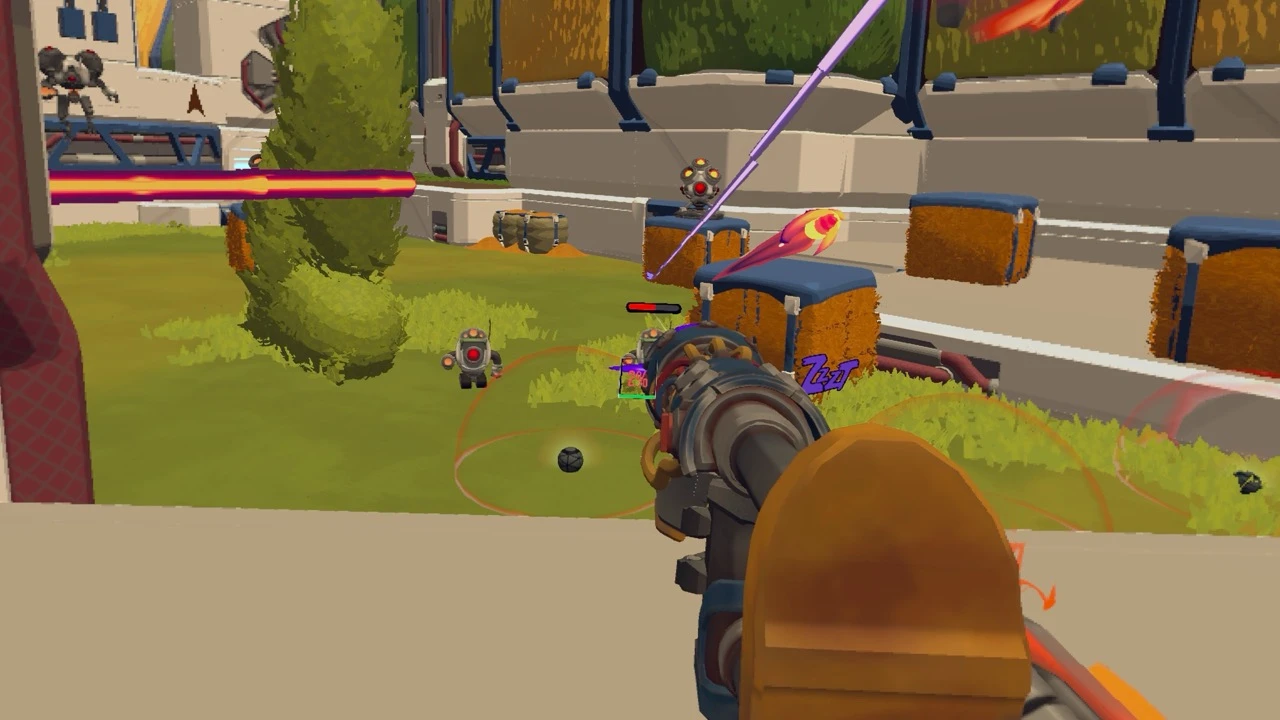
Performance on Meta Quest 3 holds up remarkably well. The action stays smooth and responsive, which is essential for a game this fast where split-second dodges mean the difference between clearing a stage or wiping out. Visually, it looks very clean with its colorful, comic-book cel-shaded aesthetic. It obviously does not match the visual fidelity of the console release or a high-end PCVR setup, with ambient occlusion and detailed dynamic shadows being the most noticeable omissions, but the presentation remains sharp enough that the compromises never get in the way of the fun. The music on the other hand, while you appreciate it first as it pumps you up to blow up the enemies, it quickly becomes too much as it feels like it's the same 4 beats repeating to a grating result which, in my case, forced me to lower the music volume altother. It's not all bad though, as the sound effects are absolutely incredible and add a ton of weight to the weaponry.
There is a narrative setup here about stepping into the shoes of a rebooted Guardian robot escorted through a scorched earth wasteland by a young scavenger named Max. The overarching lore is not something you will dwell on for too long, but the comic book style cutscenes and 2D artwork look gorgeous and give the journey plenty of charm. Still, nobody plays a high-octane roguelite purely for dialogue, and Roboquest VR makes sure its gameplay loop takes center stage from the second you drop in.
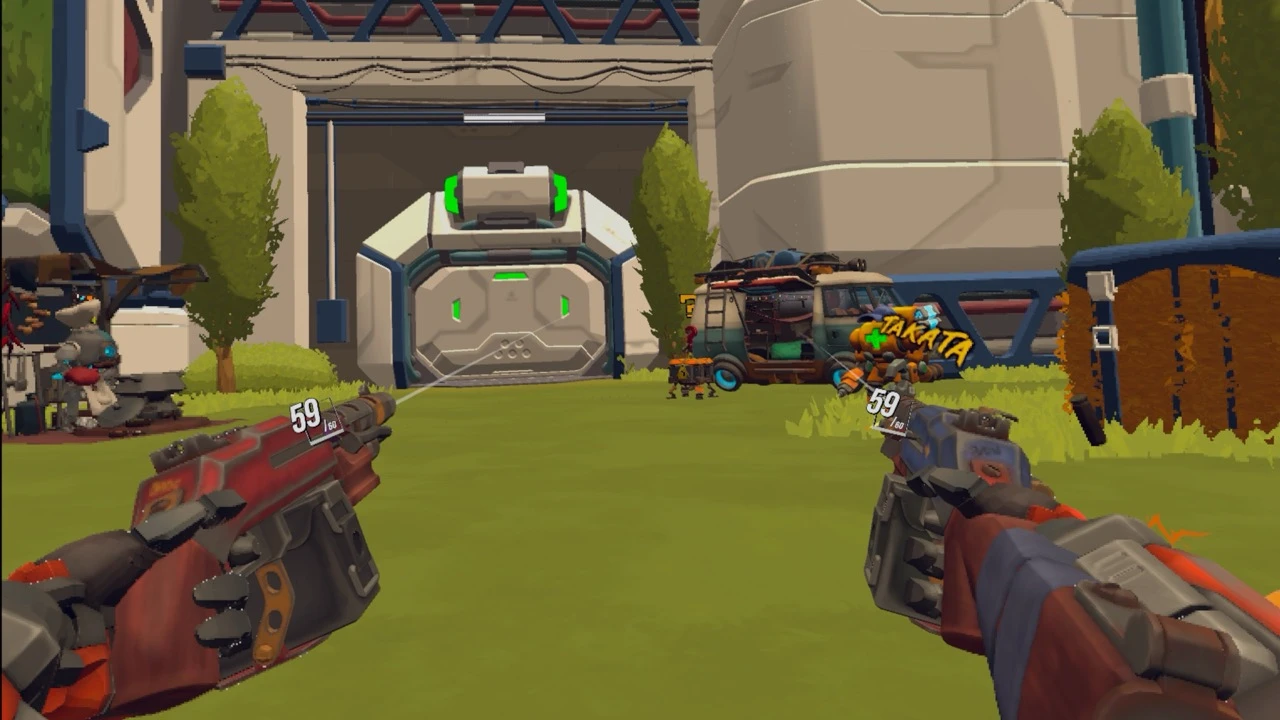
Because this is a true roguelite, no two runs feel identical. You choose from multiple unlockable Guardian classes that you unlock as you play, each armed with distinctive primary abilities and powerful ultimates.
What elevates the moment-to-moment combat above standard wave shooters is the sheer fluidity of locomotion. You are not meant to camp behind barricades. Roboquest VR demands constant motion, letting you sprint across open courtyards, leap across platforms, slide beneath incoming laser grids, and grind along elevated rails at breakneck speeds while returning fire. Rail-grinding in VR while picking off flying targets feels incredible, providing that rare rush of arcade momentum without making my stomach turn.
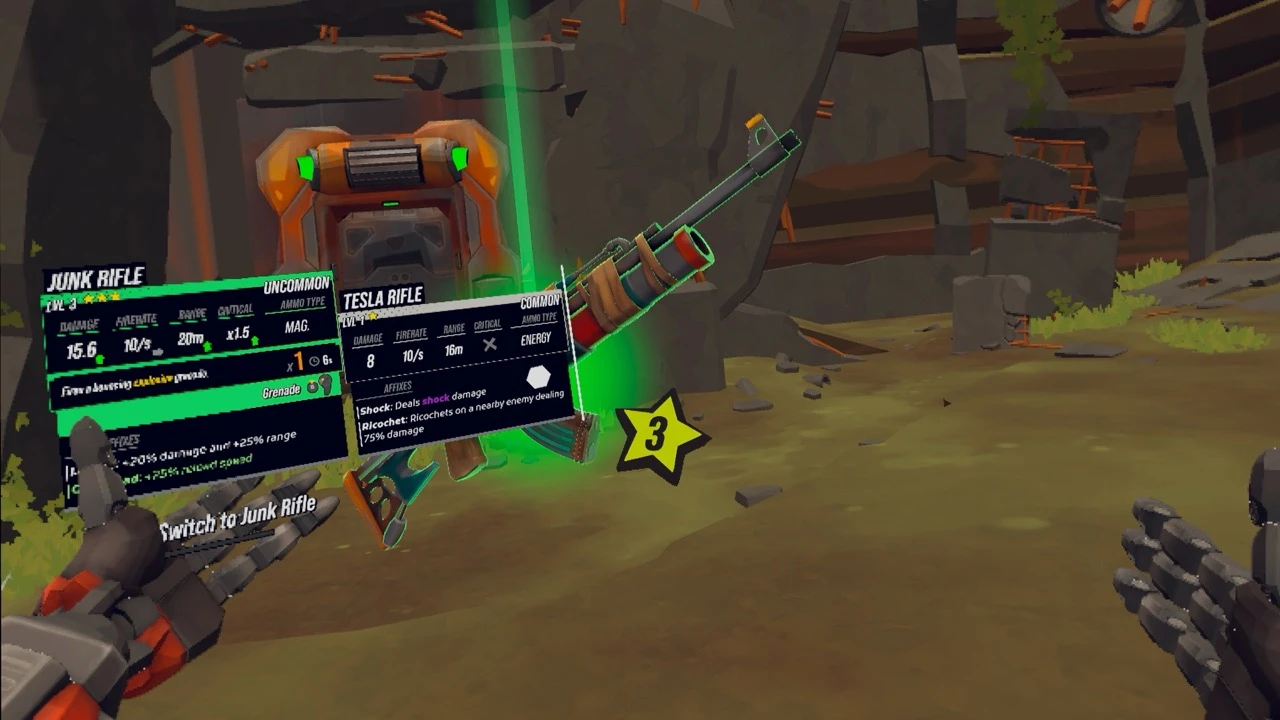
The sheer variety of weapons in this game is bordering on absurd. You will stumble upon traditional firearms like crisp revolvers, sidearm pistols, dual SMGs, rapid-fire assault rifles, and punchy shotguns, alongside precision crossbows, bows, and heavy snipers. Then the sci-fi sandbox kicks into overdrive with energy blasters that spray ice particles to freeze targets in their tracks, flame projectors that torch crowds, rocket launchers, elemental grenade launchers, Iron Man style wrist repulsors, and arc-lightning rifles that chain stun damage across entire squads. Add in throwable melee gear, heavy blades, and hand grenades, and the sandbox rarely runs dry.
On top of baseline damage values, Roboquest features a comprehensive rarity ladder where higher-tier drops introduce potent weapon perks. Combine that with a mountain of stackable passive modifiers that boost elemental affinities, magnify explosion radiuses, jack up your movement speed, or grant invulnerability windows after specific actions, and you can assemble wildly broken synergies before a run concludes.
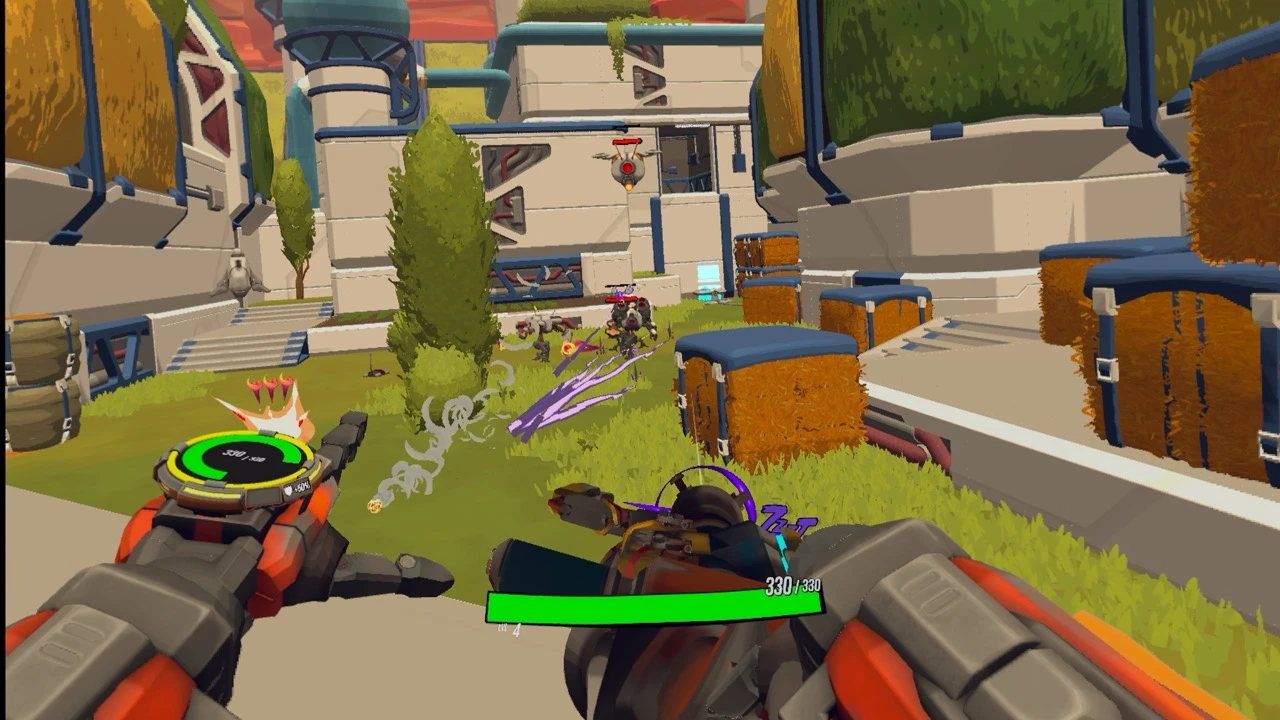
To accommodate different playstyles, Flat2VR included several reloading systems. You can opt for fully manual reloads where you drop the magazine with a button press and slot a fresh clip using your off hand, an active gesture style where you drop the magazine and flick the firearm down near your hip, or full automatic reloading. While manual reloads are fun during early exploratory rooms, switching to automatic reload felt like a genuine lifesaver in the deeper stages of a run, where the screen fills with dozens of airborne drones, laser turrets, and relentless boss volleys.
Physically aiming, pulling back a bowstring, and sighting down scopes in VR is undeniably more immersive than nudging an analog stick or clicking a mouse. However, there are a couple of interaction quirks. For one, every firearm can be wielded one-handed with zero penalty. Holding a massive, room-clearing elemental launcher in a single hand without any simulated weight, recoil drag, or two-handed handling requirement feels slightly disconnected from the physical world. I mean, you are a very big robot, but still.
The bigger frustration is that weapons are permanently glued to your hands with no option to simply drop them. Flat2VR took this same rigid approach in WRATH: Aeon of Ruin VR, and it remains awkward here. When a glowing, high-tier weapon drops in the middle of a chaotic firefight, you cannot casually toss aside your current weapon to force-grab that new juicy weapon. Instead, you have to stand still in the open while robots pelt you with gunfire, awkwardly hovering your virtual hand over the floating item to trigger the swap.
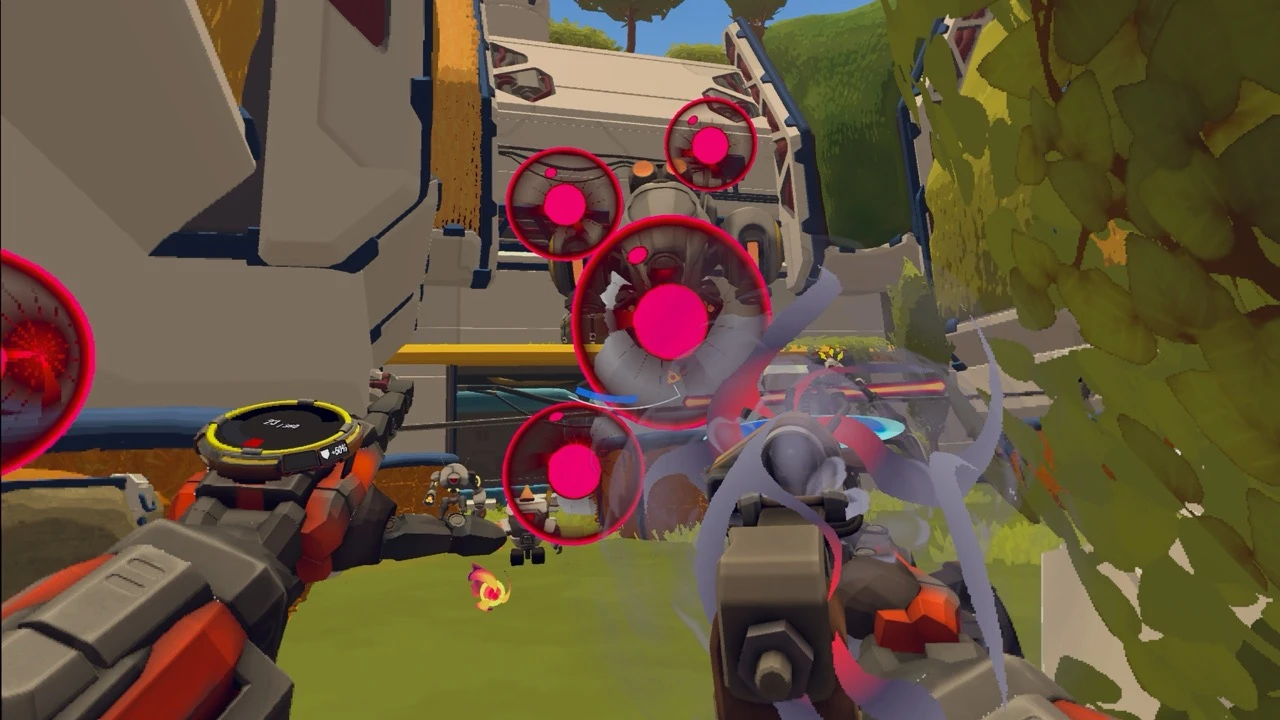
Your wrists handle essential interface data, with a handy minimap on the right hand that tracks explored rooms, branching pathways, and dropped weapons, while the left wrist monitors your health pool and level-up readiness. My issue with the level-up prompt is that it is far too easy to overlook during intense brawls. I ended up clearing multiple demanding encounters without leveling up simply because I forgot to check my wrist. Having a persistent HUD icon in peripheral vision or an unmistakable controller rumble when an upgrade is ready would solve this cleanly.
Ability inputs also have a slight learning curve. Playing a class with an arm-mounted secondary weapon requires holding the grip button to deploy the launcher, after which pulling the trigger fires a shotgun blast while pressing the upper face button launches a missile. You can also trigger the missile by clicking the analog stick, but as I have noted in past VR reviews, repeatedly mashing tiny plastic thumbsticks in the heat of battle always makes me feel like I am about to snap the module. Letting players trigger these abilities directly using the unused face buttons during standard shooting would feel much more comfortable.
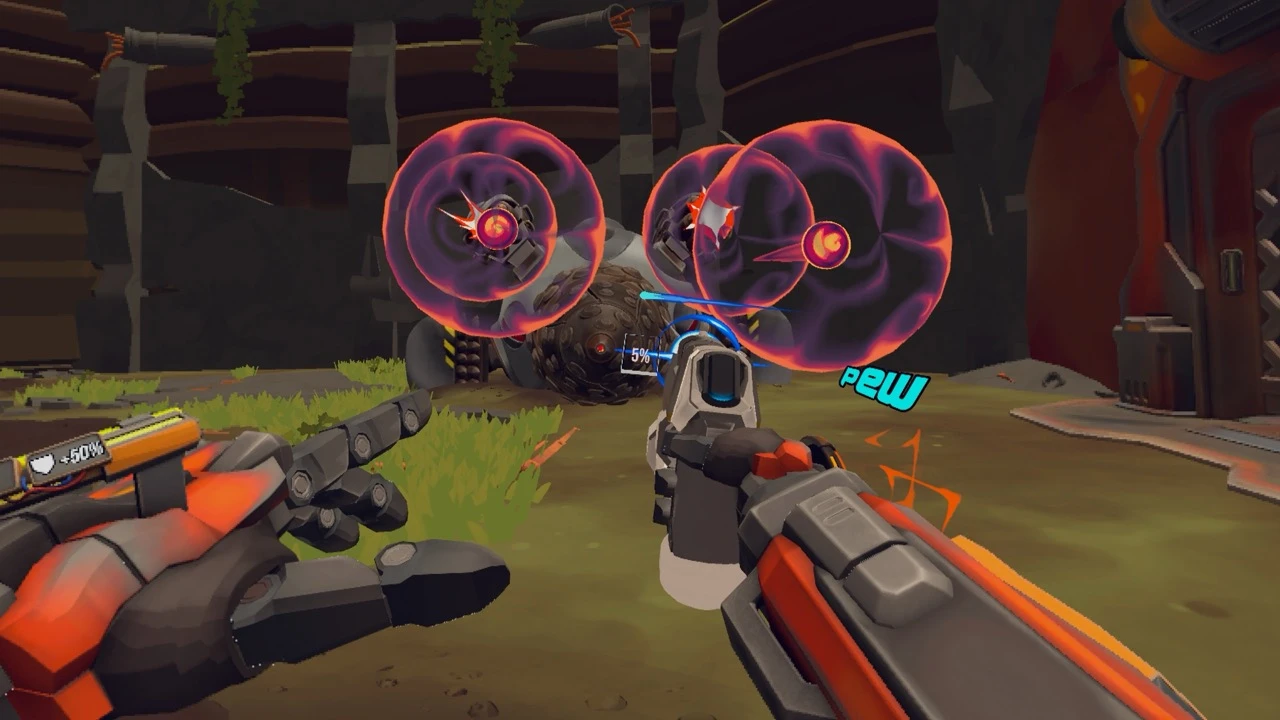
Boss encounters provide satisfying climaxes to each zone. The initial bosses are straightforward enough to take down with basic circle-strafing and steady aim, but later bosses ramp up the bullet-hell intensity with multi-layered projectile spreads and arena hazards that demand your entire movement repertoire. When you finally collapse and find yourself back at Basecamp, you can spend collected wrenches on an extensive tech tree of permanent account upgrades, unlocking new classes, base stat perks, and equipment options that make each subsequent expedition stronger.
Cooperative multiplayer is supported, allowing two players to team up across runs. Unfortunately, much like what I ran into when testing Big Shots, the public matchmaking lobbies felt mostly deserted when I tried searching for random sessions. If you want to experience the co-op dynamic, you will likely need to bring along an organized friend.
Even with minor complaints about weapon swapping and button mapping, Roboquest VR is an exceptionally polished and thrilling roguelite that delivers hours of high-energy shooting on standalone hardware. Thanks for reading!