Peak Rhythm has an interesting hook on paper, but right now its inconsistent rhythm logic, unreliable grabbing, and limited content make it hard to recommend
Peak Rhythm is built around a pitch that sounds immediately attractive in VR, rhythm climbing. You expect a physical game where momentum, timing, and movement all click together. After several sessions on my Meta Quest 3, that is not what I got. The game has some good ideas, and you can see where the developers want to take it, but in its current early access state it feels more like a rough prototype than a polished rhythm experience.
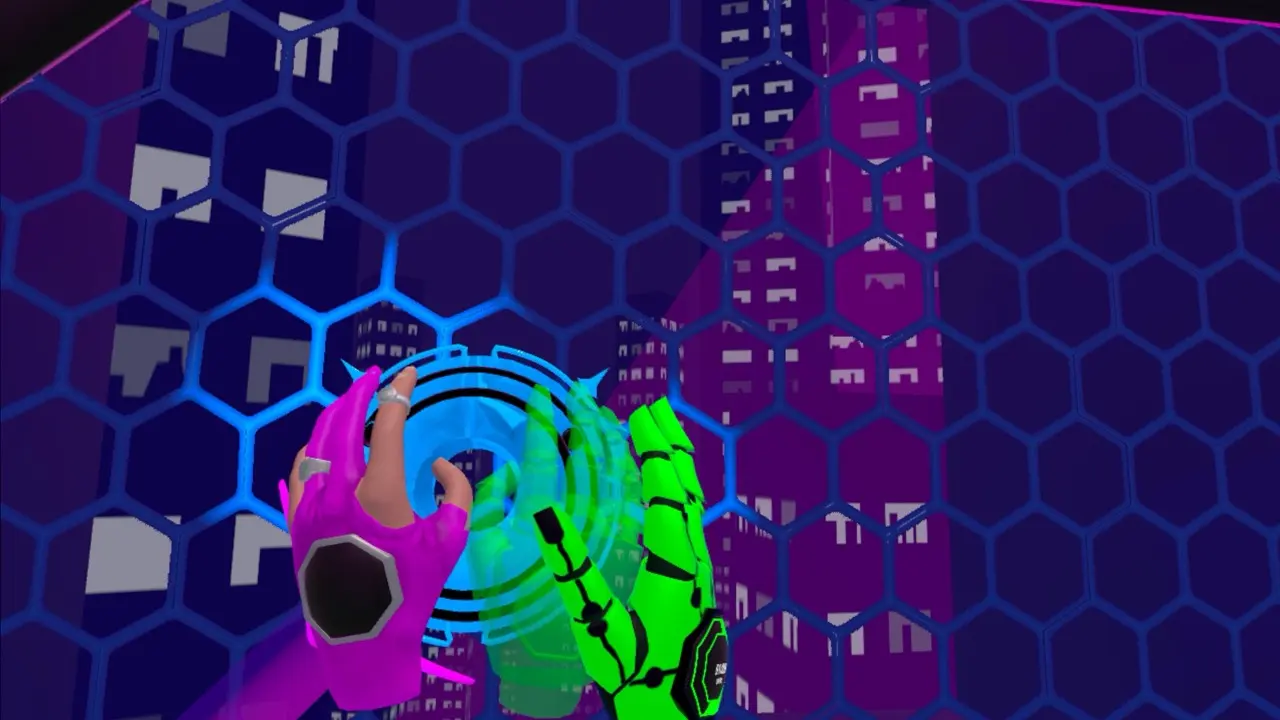
If you are coming in expecting an actual climbing game, it helps to reset expectations early. There is no real traversal across walls, no rhythm-based route planning, and no sense of scaling a space in the way games like The Climb established years ago. Instead, you stand in a small play area while handholds appear around you in sequence, and you grab them with the requested hand at specific moments. The loop is simple and readable, but also very limited once you understand what it is actually doing.
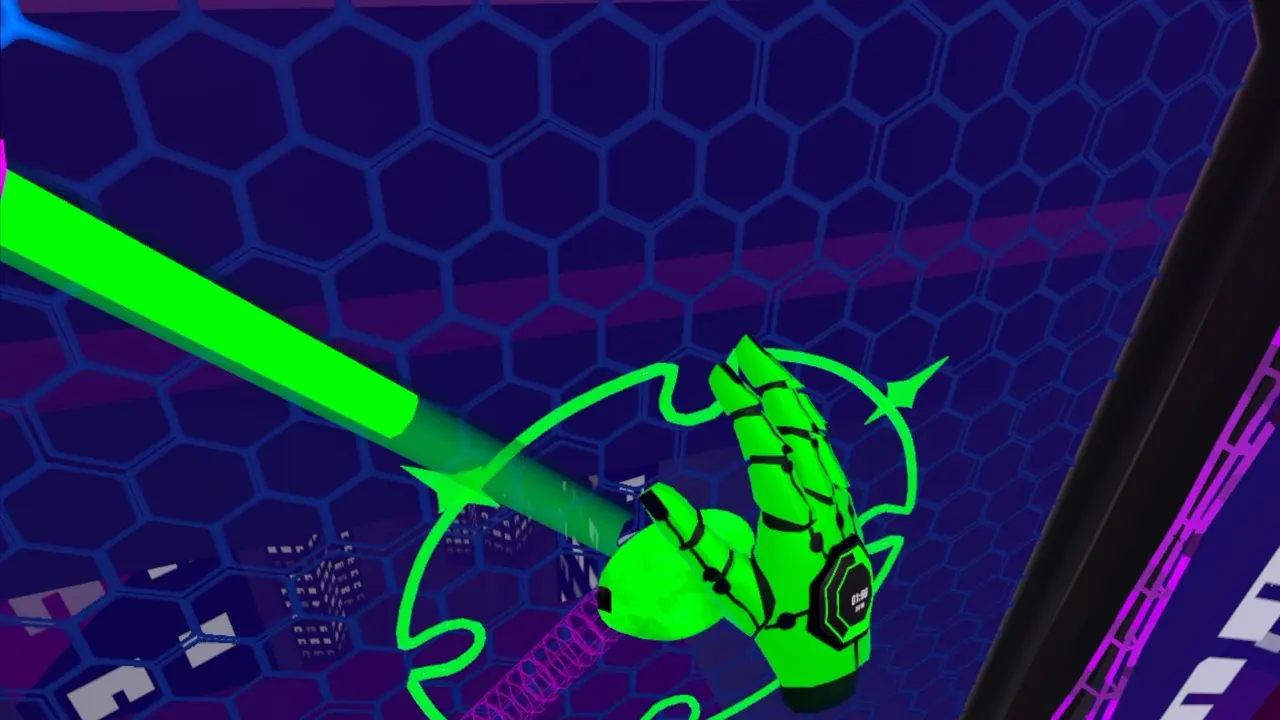
The structure is straightforward. You load a song, pick a difficulty, and run through a pattern map where each hold corresponds to a beat. The game introduces a few hold types to add variety. Standard grips ask for the correct hand and timing. Drop holds ask you to release and catch the next hold below with the same hand, or force a quick jump in rhythm. Twisting holds require rotating your wrist to match the prompt while still keeping pace. On paper, that is enough for a solid arc of challenge.
The problem is that the game often does not feel consistent enough for that challenge to be satisfying. Timing windows and note flow can feel erratic, even on lower difficulties where you expect clean onboarding. Some patterns ramp up suddenly, then settle down again, which makes failure feel less like a skill check and more like the game briefly changing rules. In rhythm games, trust is everything, you need to believe a miss was your fault. Here, I did not always feel that trust.
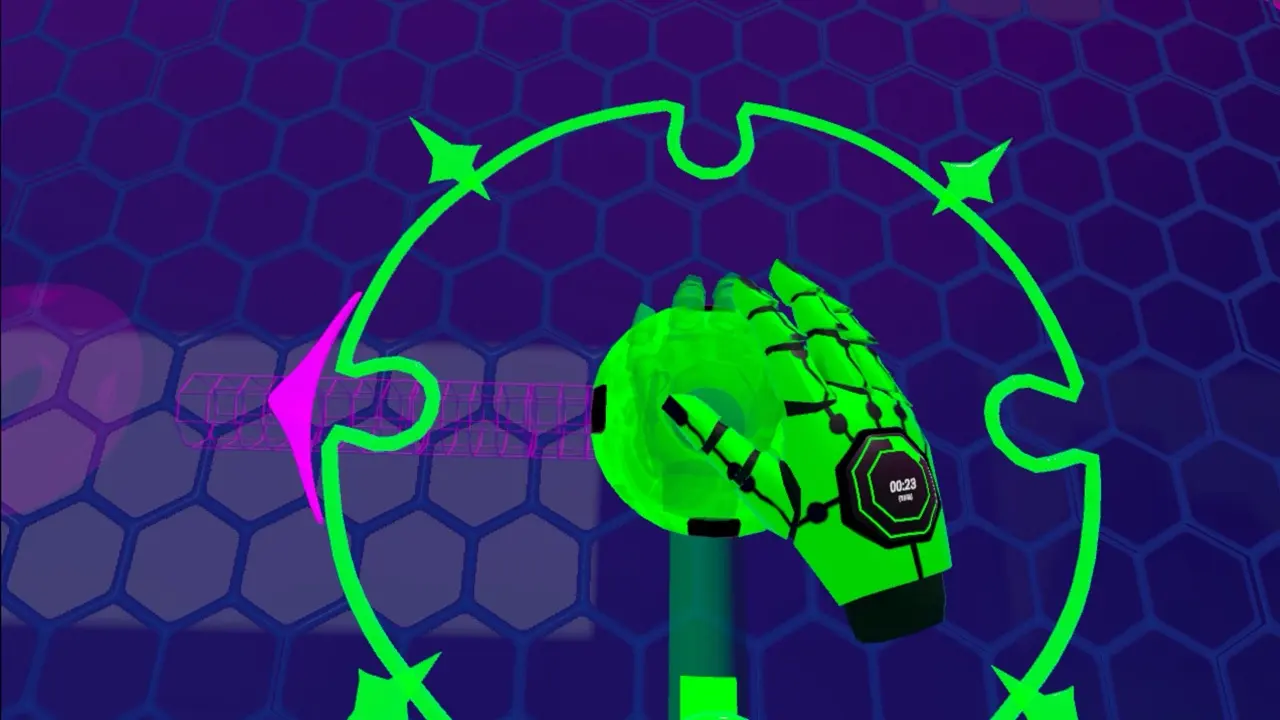
Hit detection and grabbing reliability are the biggest issues right now. I had repeated moments where I clearly released the grab button, yet my hand stayed attached for a beat longer than expected. That sounds small, but in a game where each move depends on precise release timing, it throws off the entire flow. Once that happens, your next move is late, then the next one, and the run spirals in a way that feels artificial.
There is also a practical VR comfort issue with the current hold design. Some holds are small and tightly placed, and a few sequences expect both hands in close proximity. That creates real chances of bumping your controllers together in your physical space. It breaks immersion, and more importantly it makes you play more cautiously than the game wants. A rhythm title should make your movement feel natural and confident, not hesitant.
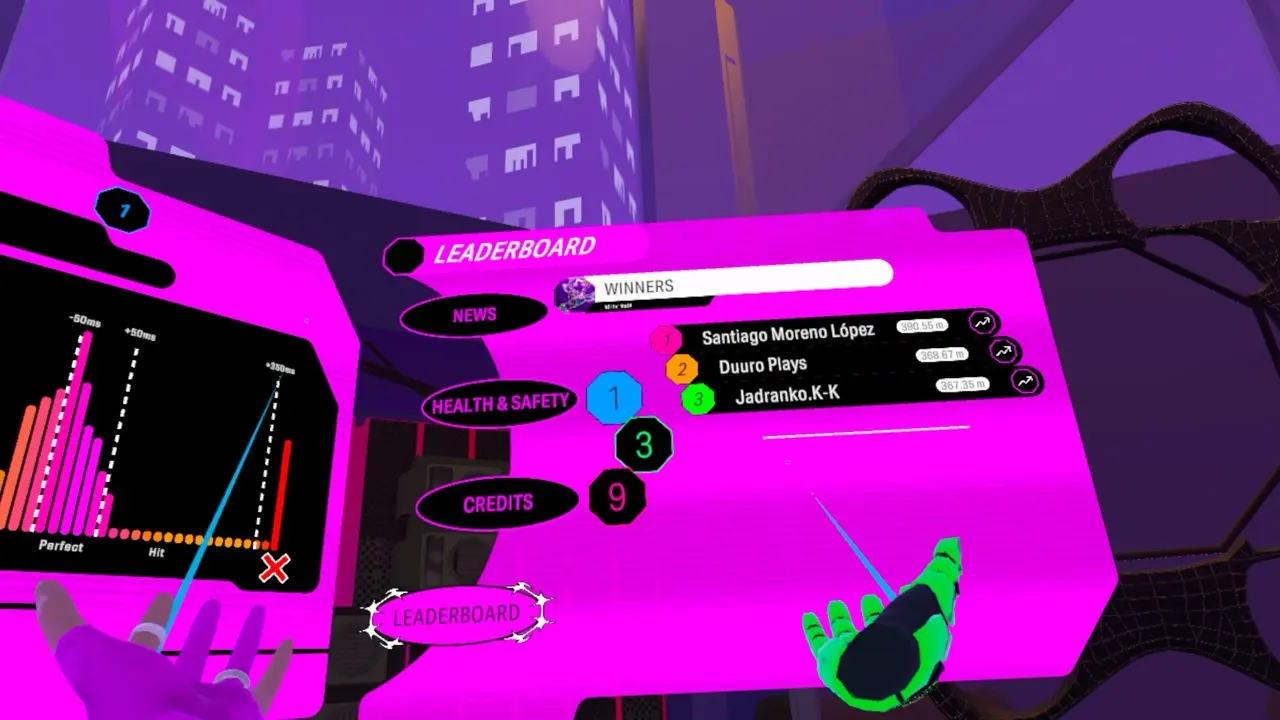
Difficulty tuning needs more work as well. Early access does include three difficulty settings, but even the easiest option still has spikes that feel out of proportion with the surrounding sections. Instead of a smooth climb in complexity, songs can jump to dense or awkward patterns without enough preparation. If you are new to rhythm games, you may bounce off quickly, and experienced players may feel like they are fighting uneven charting rather than learning a coherent system.
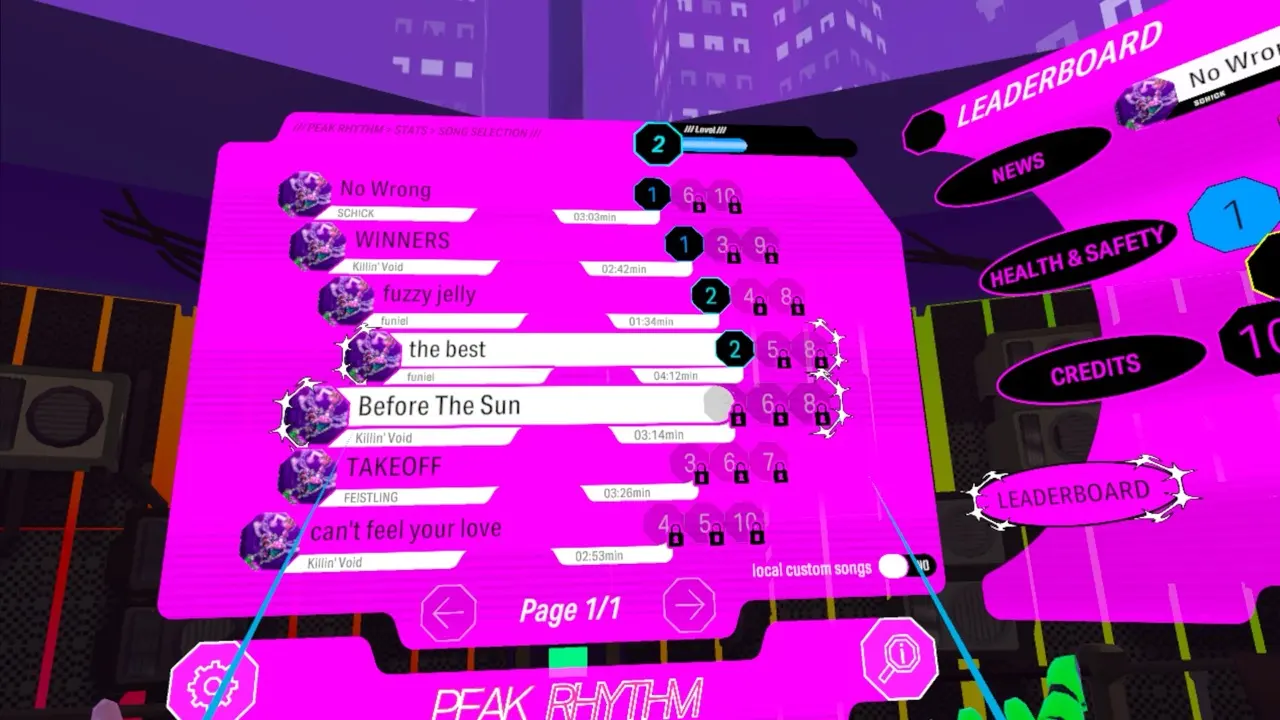
In terms of content, the current package is slim even for early access. There are eight tracks right now, each with those three difficulties. That gives you something to sample, but not enough to support long-term replay unless you really connect with the core mechanics. There is a level editor, which could become the game’s strongest feature if the community adopts it and if creation tools stay accessible. I did not spend much time in the editor, so I cannot judge its depth yet, but it is clearly where the game’s lifespan could grow.
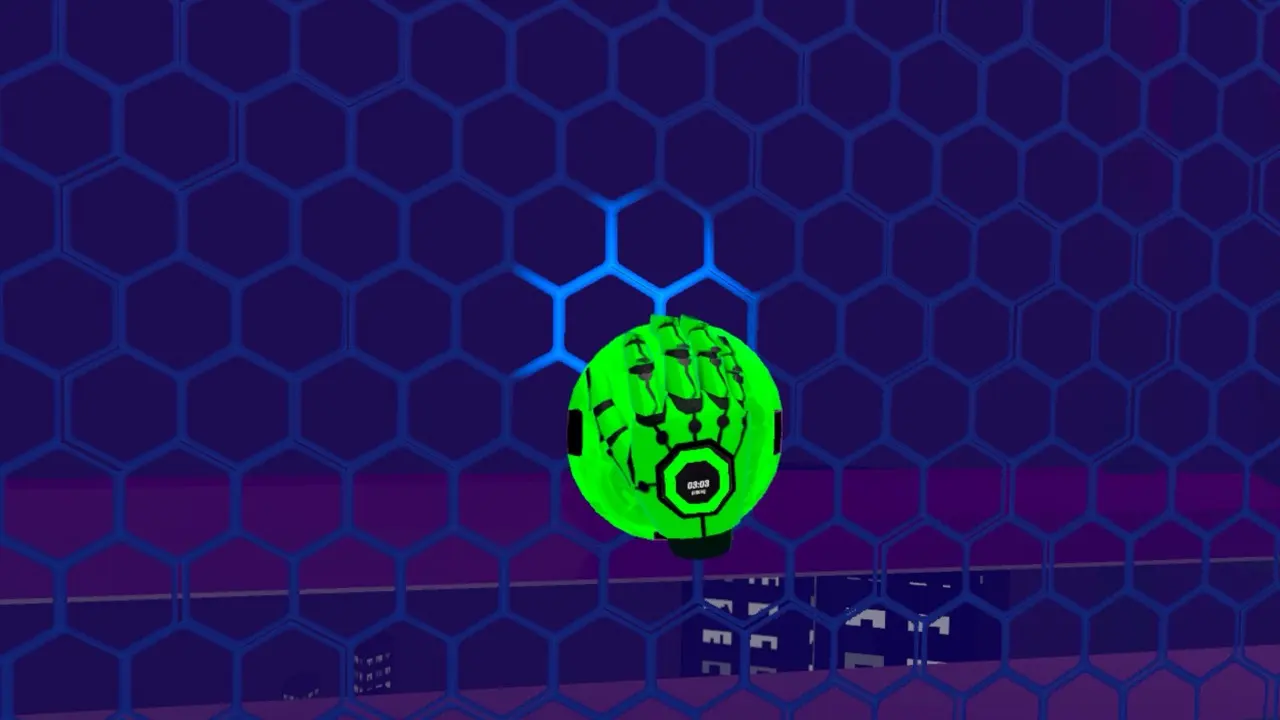
Presentation is acceptable but basic. Visuals are clean and functional, with clear hold readability and little clutter to distract from inputs. That part is fine. The issue is that nothing in the environment, interface, or overall art direction gives the game much personality right now. Menus are serviceable, but they look plain and a bit dated. For a music-focused game, the whole package should feel more energetic and stylish than this.
The physical feeling of play is mixed. When a sequence lines up, and your hands move left-right-up in a smooth rhythm, there is a glimpse of what Peak Rhythm could become. Those moments are genuinely fun. But they are interrupted too often by awkward hold placement, controller collisions, or grab behavior that does not feel precise enough. Because of that, sessions became more frustrating than motivating, and I found myself quitting earlier than I expected.
To be fair, this is still early access, and that context matters. The base concept is not doomed, it just needs tighter execution across almost every core system. Better chart consistency, stronger hit detection, improved hold spacing, and a more confident visual identity could change the picture over time. The team has room to iterate, and this kind of game can improve quickly with focused updates.
Right now though, I cannot recommend Peak Rhythm on Meta Quest unless you are specifically curious about following an early access project as it evolves. The hook sounds better than the current reality. There are sparks of a good idea here, but the game is not delivering a reliable rhythm-climbing experience yet, and the limited track list makes that harder to ignore. I hope it gets there, but today it feels undercooked. Thanks for reading!