Battery life is still one of the most annoying limits of standalone VR. The Meta Quest 3 is a fantastic headset, but once you start playing more demanding games or spending long sessions in VR, the internal battery becomes the bottleneck. That is where external battery solutions come in, and the Kiwi P5000 Compact Power Bank takes a very different approach compared to most headstrap batteries on the market.
Instead of one big battery attached permanently to your headstrap, Kiwi gives you two small 5000mAh power banks, two charging docks, and a velcro mounting system with an USBC out cable. On paper, that might not sound revolutionary. In practice, it changes how you think about VR battery life entirely.
Let’s break down why this accessory works so well, where it falls short, and who it actually makes sense for.
Design and Build Quality
The first thing you notice when you take the P5000 out of the box is how small it is. Each battery is genuinely compact, closer in size to a chunky USB stick than a traditional power bank. At around 100 grams per unit, it is light enough that you barely notice it once it is mounted on your headset.
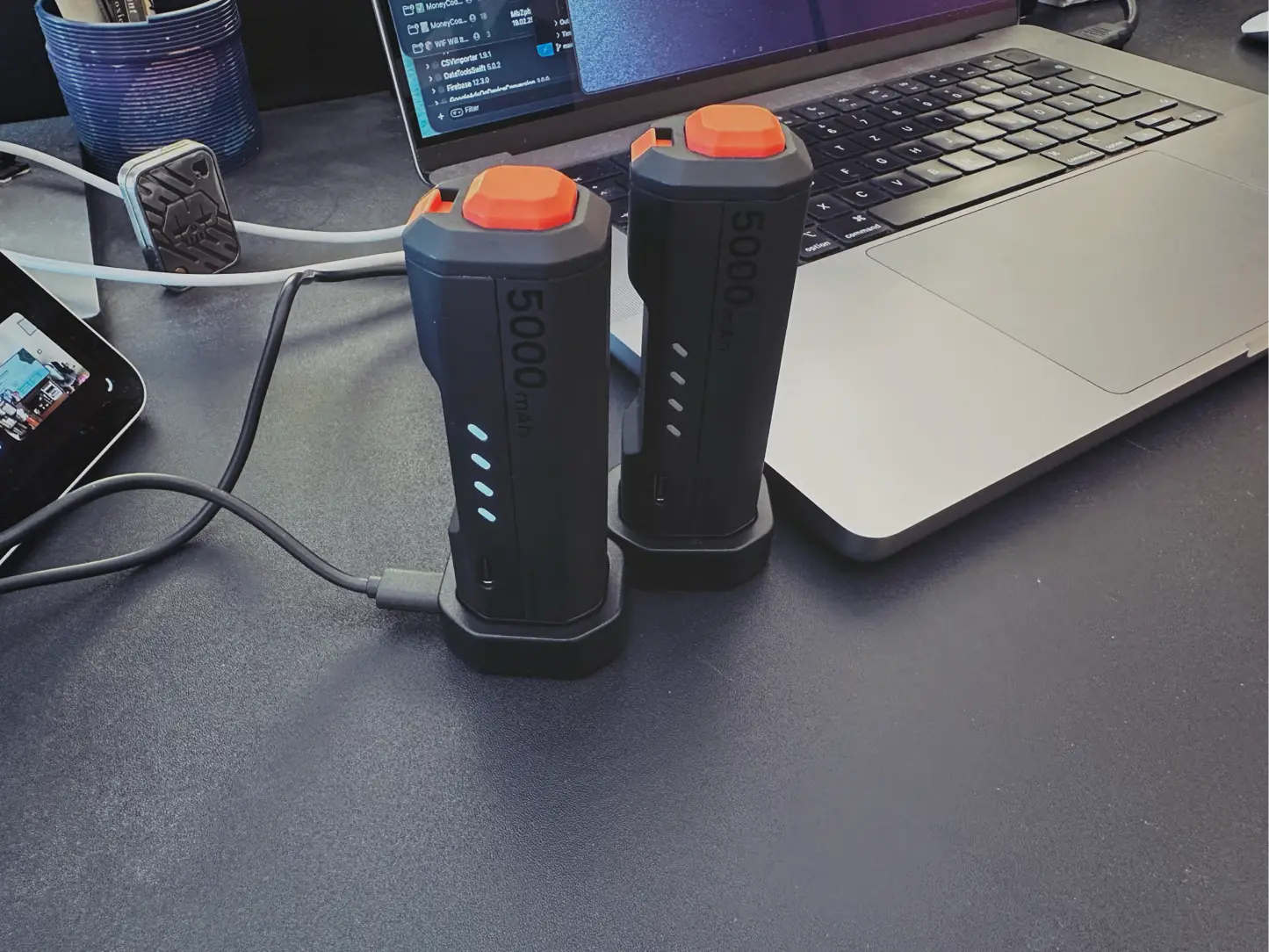
The build quality is solid without feeling overbuilt. The casing has a clean, minimal look, with a matte finish that does not attract fingerprints too easily. There is a single USB-C port on each battery, used for both input and output, and a couple of LED indicators to show the charge level. No unnecessary buttons, no flashy lights, just the essentials.
The charging docks are equally straightforward. They sit on your desk and you can charge both batteries at once, if you have two USBC cables running to each of them. Drop them in, walk away, and you always have a full pair ready to go. This sounds trivial, but it is a big part of what makes the system feel frictionless in everyday use.
Battery Capacity and What It Means in VR
Each P5000 battery is rated at 5000mAh and delivers up to 20W of output. For VR, that 20W figure matters more than the raw capacity number. The Quest 3 draws a fair amount of power under load, especially in games with higher resolution, mixed reality features, or demanding physics systems. Cheaper power banks often fail here, slowly draining while plugged in instead of actually keeping the headset charged.
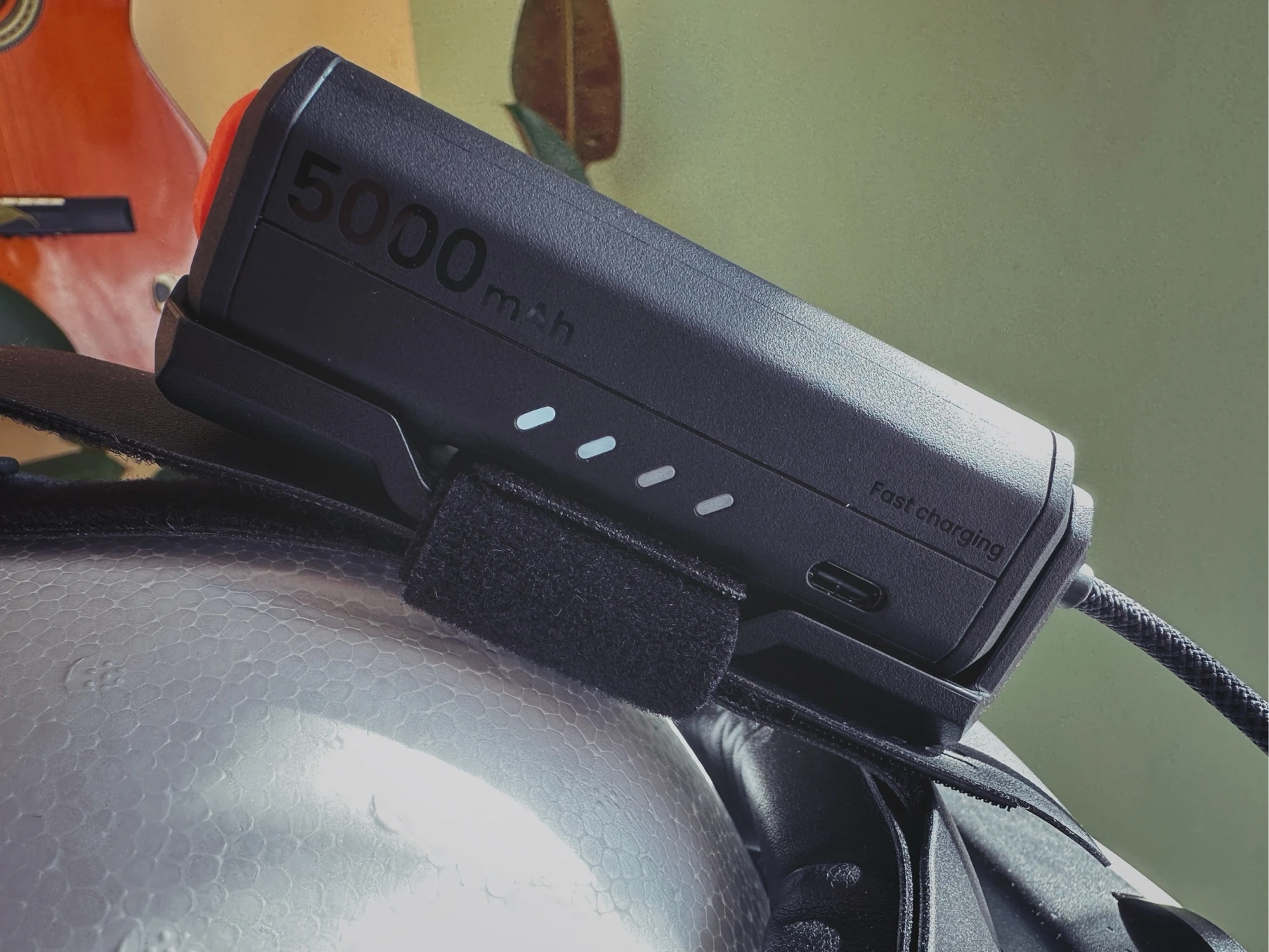
The P5000 has no such problem. In real use, it comfortably keeps the Quest 3 at or near 100 percent while playing. In some lighter experiences, you will even see the headset charge up while you are playing. One battery gives you roughly two additional hours of playtime, depending on the game and brightness settings.
The magic happens when you remember there are two batteries. When one runs out, you quickly unplug it, drop it on the charging dock, grab the other one, and plug it in. The swap takes seconds. There is no reboot, no interruption, and no awkward cable juggling. As long as you are near your charging dock, you effectively have infinite battery life.
For long VR sessions, social VR nights, development work, or fitness apps where stopping breaks immersion, this is a huge win.
Hot-Swappable Is the Real Killer Feature
Many headstrap batteries offer more total capacity, but they often lock you into a single battery. There are some headstraps that have hotswappable batteries, but they cost more. Once it is empty, you are done. The P5000 flips that idea on its head. The hot-swappable nature is not just a nice extra, it is the core feature.
You are no longer planning your playtime around battery percentage. You are not thinking, “I have 40 percent left, maybe one more match.” You just swap batteries and keep going.
This also makes the system future-proof in a way. If battery health degrades over time, you are replacing small power banks, not an entire headstrap.
Comfort and Weight Distribution
Comfort is always a sensitive topic with VR accessories. Anything you add to the headset risks making it front-heavy or awkward. Because the P5000 batteries are so light, this is much less of an issue here.
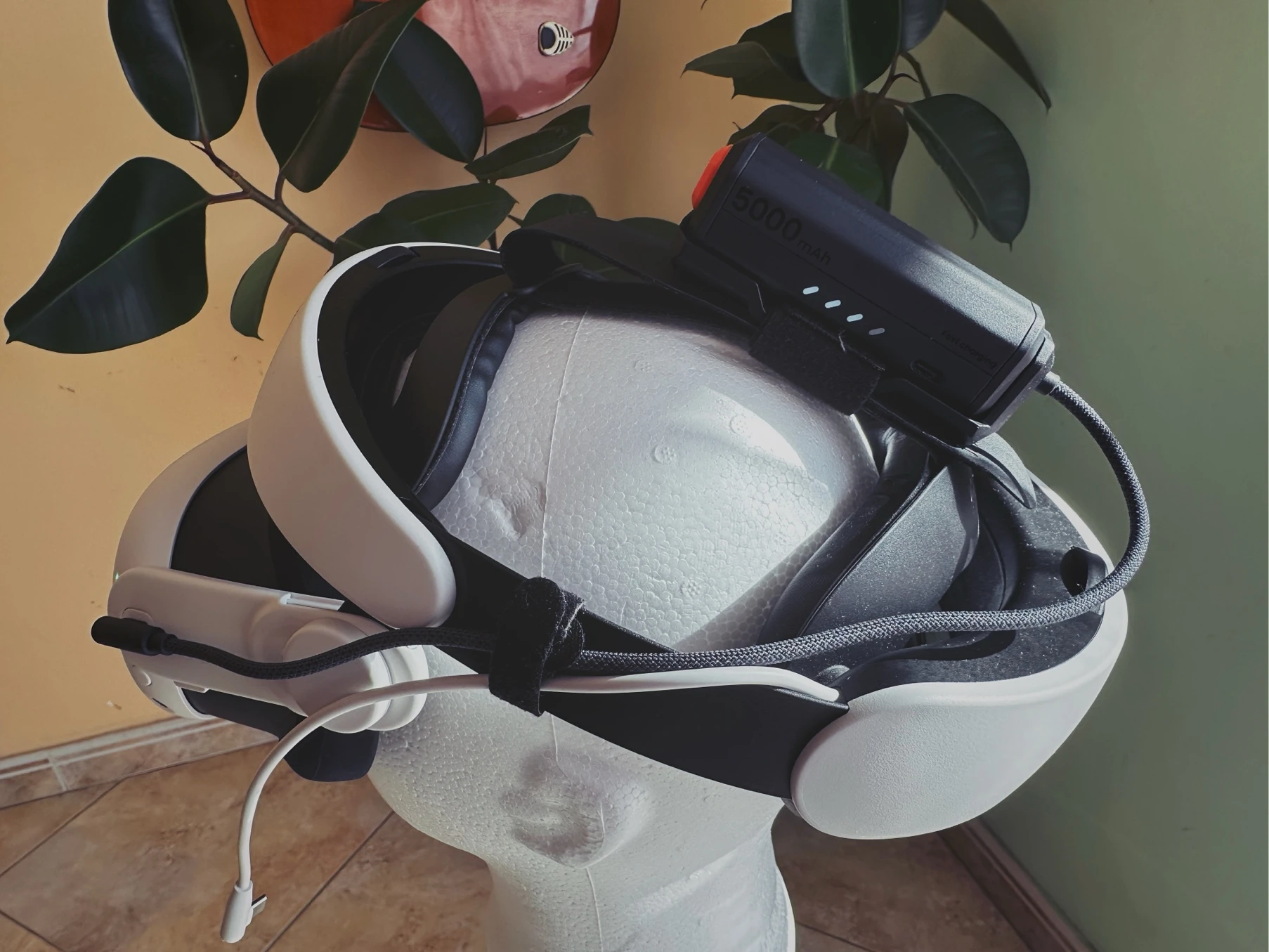
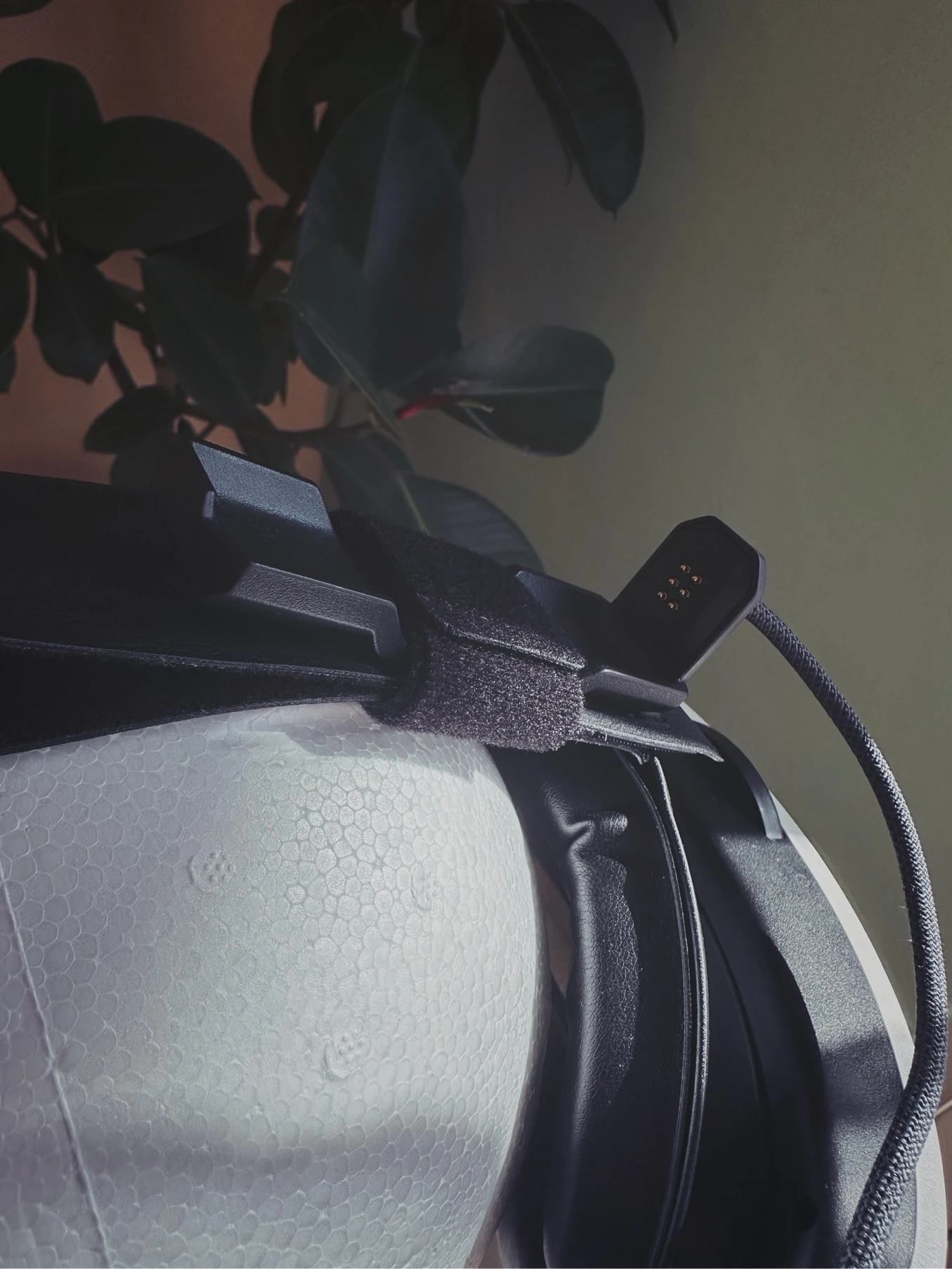
With the default Quest 3 strap, mounting the battery at the back of your head actually improves balance. The headset feels slightly more stable, counteracting the weight of the front display. If you prefer, you can also mount it on top of the strap, which keeps the weight centered and out of the way.
If you are using third-party headstraps, the included velcro strap makes it easy to experiment with placement. It is not locked to a specific ecosystem, which is refreshing. You are free to adapt it to whatever setup you already like. I myself also use the Kiwi Design H4 Boost Halo strap on my Meta Quest 3 for additional comfort and an additional built-in battery in the back and the P5000 fits perfectly on the top strap. Basically with this setup, I can play VR indefinitely if I want, but my unc back gets so tired when I hit that 4 hourish mark that I have to just stop.
Not Just for VR
One of the biggest strengths of the P5000 system is that it does not trap you in VR-only usage. These are standard USB-C power banks. When you are not playing VR, you can throw one in your pocket and use it like any other portable charger.
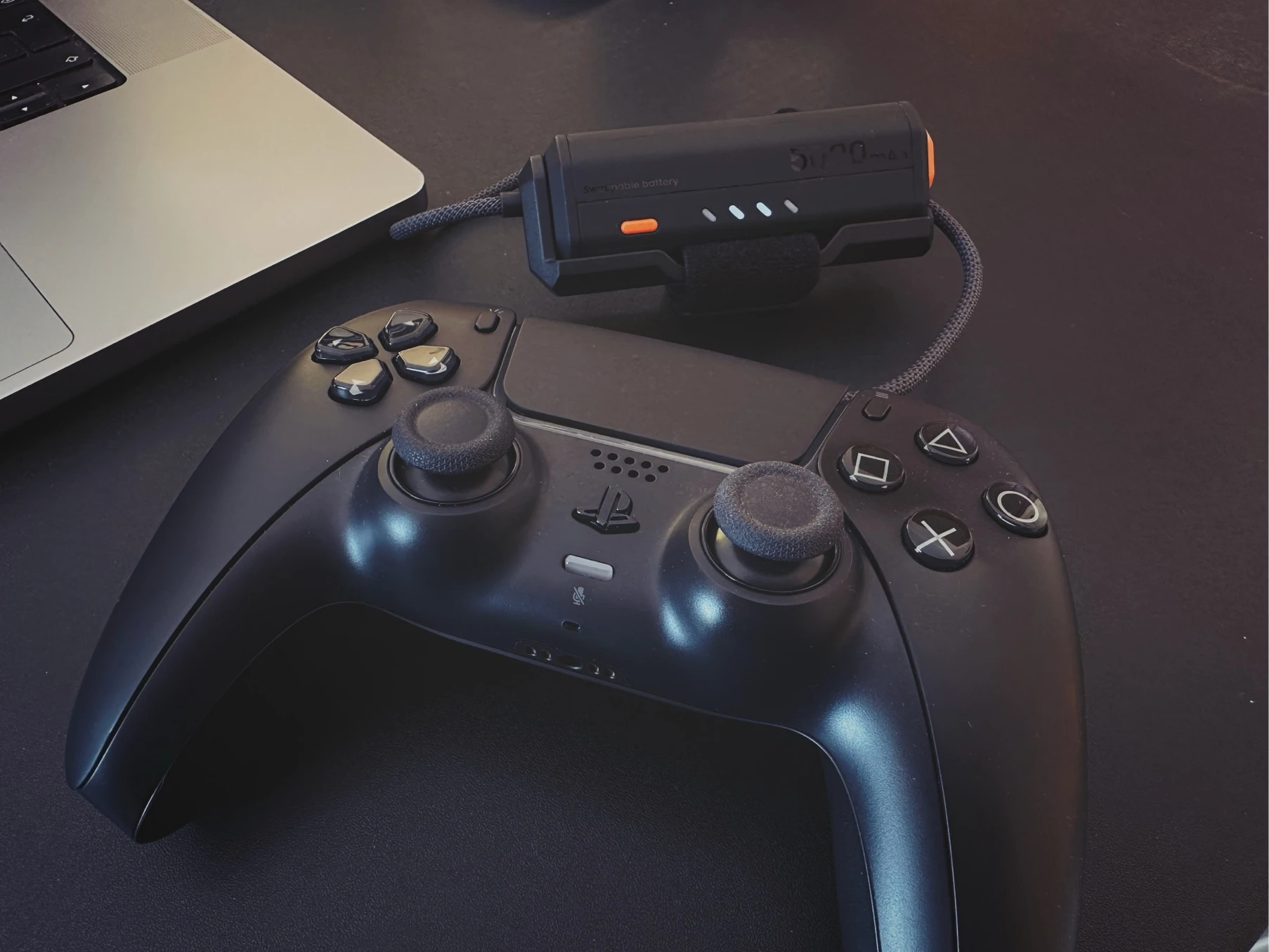
I have used it to top up an iPhone, charge a DualSense controller, and power various small gadgets around the house. Because it supports 20W output, it is actually fast enough to be useful, not just an emergency trickle charger.
This versatility makes the price easier to justify. You are not buying a single-purpose accessory that sits in a drawer when you are not in VR.
Ease of Use in Daily Life
What really sells the P5000 is how little it asks of you. There is no app, no firmware update, no setup process beyond attaching velcro once. Charging is passive. Swapping is instant. Using it outside VR is obvious.
This kind of simplicity matters more than it sounds. Accessories live or die by whether they feel annoying after the novelty wears off. The P5000 fades into the background in the best possible way.
The Price Problem
Now we need to talk about the elephant in the room. At around 89 dollars, the Kiwi P5000 is not cheap. In fact, it is expensive enough that it forces a comparison with battery headstraps that include extra padding and improved ergonomics.
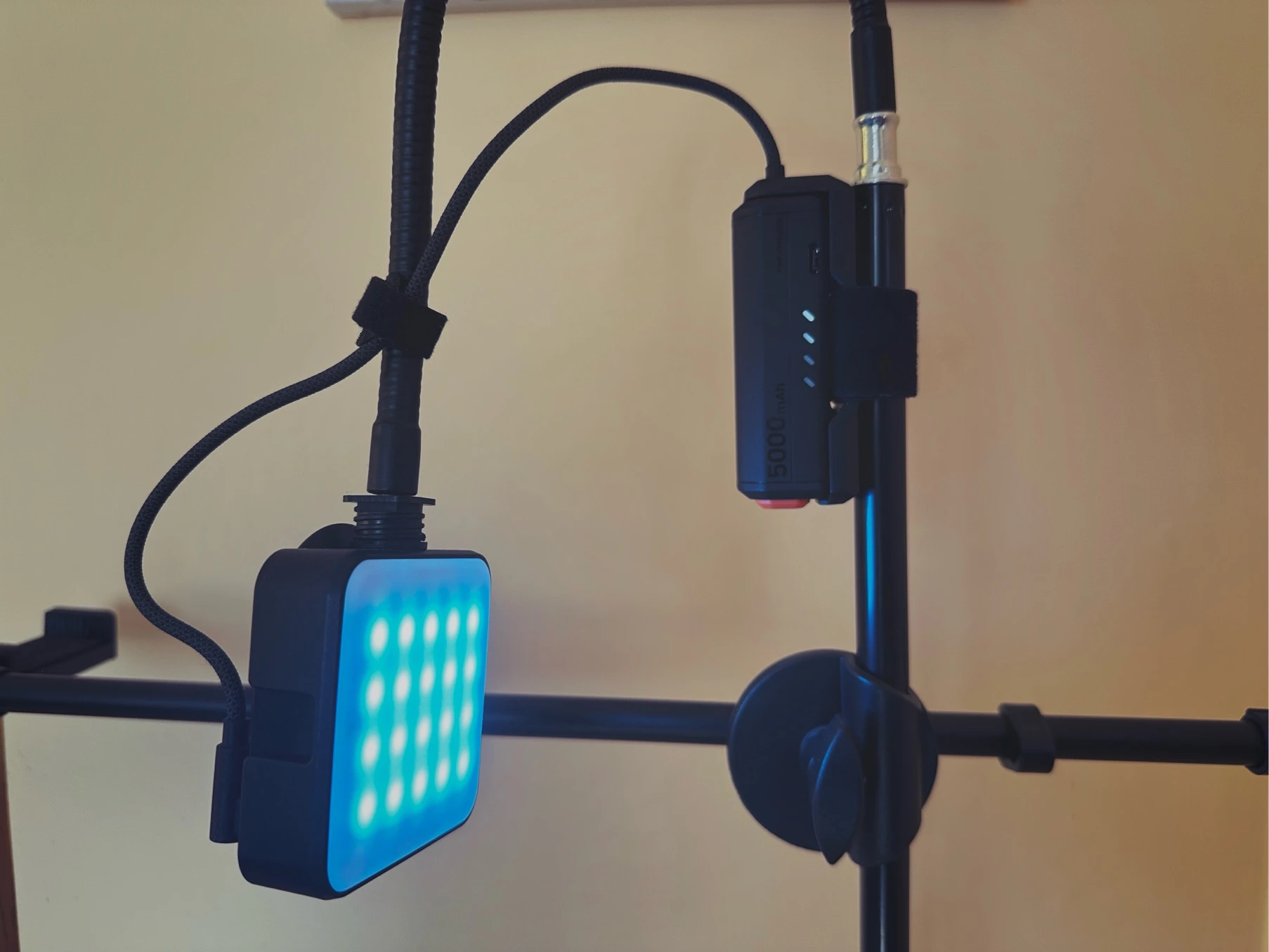
For the same money, or sometimes even less, you can buy a KIWI Design headstrap with a built-in battery. Those options give you better comfort and extra playtime in a single package. For many users, that will be the more sensible purchase.
So why would you choose the P5000 instead?
The answer is flexibility and longevity. The headstraps that offer true hot-swapping are on the expensive side. And most of the ones with a built-in battery, once that battery is dead, you only have like an hour or so more until the Meta Quest 3 battery dies. The P5000 gives you continuous play and lets you reuse the batteries for other devices. If you value that freedom, the price starts to make sense.
Discounts and promo codes also help. At a lower price, the P5000 becomes much easier to recommend without hesitation.
Who Is This For?
The Kiwi P5000 Compact Power Bank is not for everyone. Casual players who jump into VR for 30 minutes at a time will never hit the limits it solves. For them, the internal Quest battery is fine.
This accessory is for people who spend hours in VR, who hate stopping because of battery warnings, or who want a modular setup that adapts to different headstraps and devices. Developers, streamers, fitness users, and VR enthusiasts will get the most out of it.
The Kiwi P5000 is a smart, well-executed accessory that solves a real problem in a genuinely elegant way. The combination of small size, light weight, fast output, and hot-swappable design makes it stand out in a crowded field of VR batteries.
Yes, it is expensive. Yes, there are cheaper ways to get more battery life. But none of them work quite like this.
If you want something that feels closer to a professional, no-compromise power solution for your Quest 3, Quest 3S, or any other standalone VR headset, the P5000 delivers. Once you experience infinite battery in VR, it is very hard to go back.
Get your own Kiwi P5000 Compact Power Bank on Kiwi Design website. For other Meta Quest 3 VR accessories I believe can enhance your experience during extended play sessions, check out our Meta Quest 3 VR accessories guide.