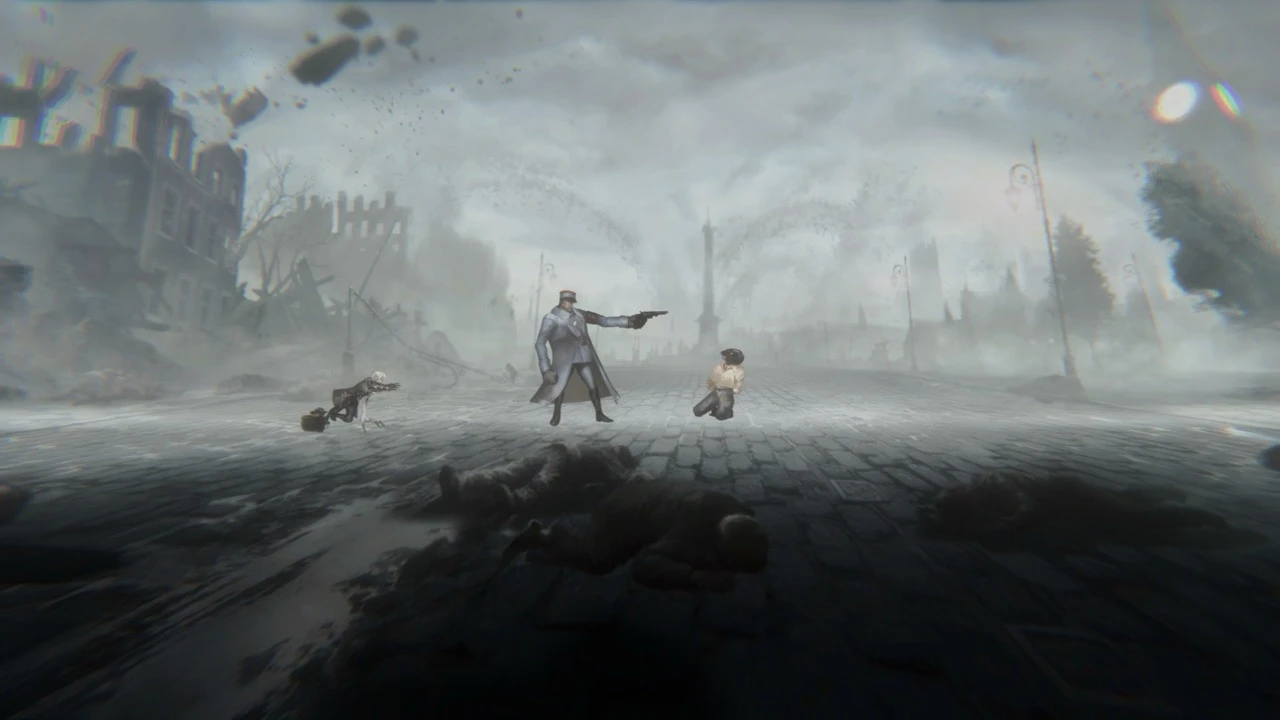
Akatori has the ingredients of a great metroidvania, but its exploration, combat, and progression never quite come together.
I wish I enjoyed Akatori more than I did. On paper, it has almost everything I want from a metroidvania. Its protagonist, Mako, is a cool young monk joined by a mystical bird that can transform into her staff. The world is interconnected, movement is fast, and its mixture of detailed 2D sprites and 3D environments immediately gives the game its own identity.
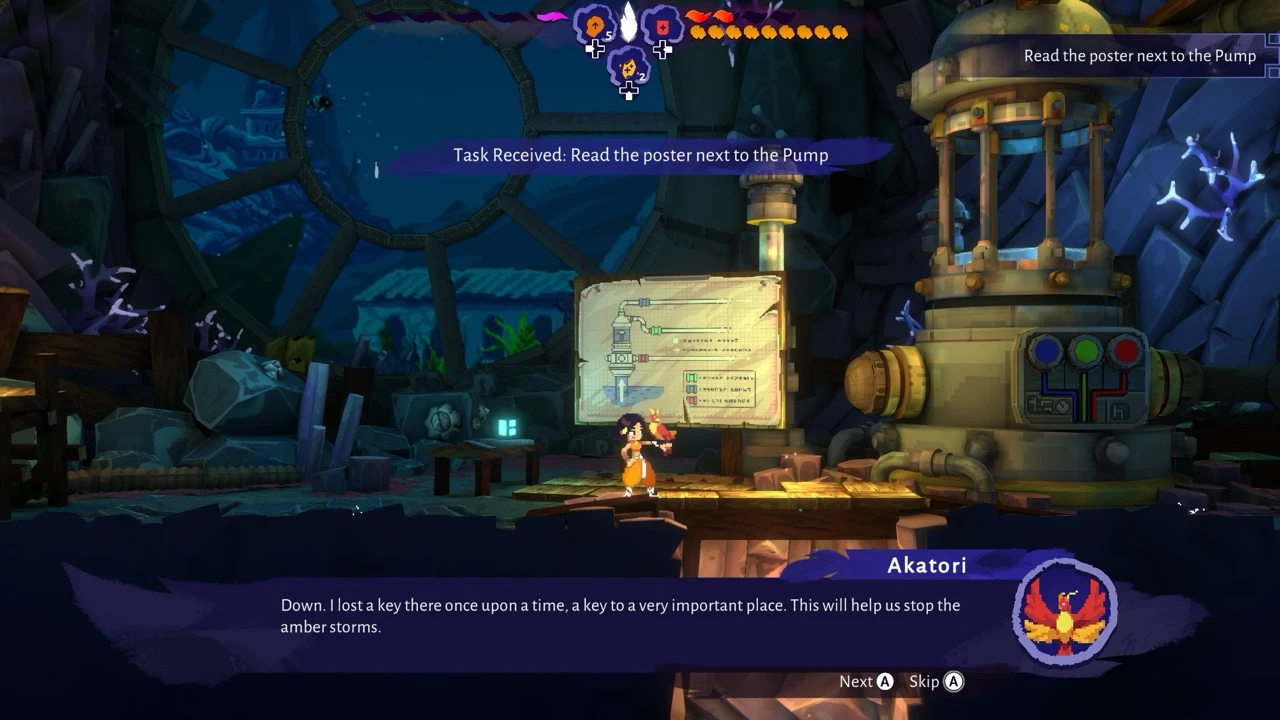
The setup sends Mako into a world being consumed by dangerous Amber corruption. Her relationship with Akatori gives the adventure some personality, especially when the pair bicker during the journey, but the story mostly acts as a reason to keep moving through its different regions. The visual presentation does much more to sell the world than the writing does.
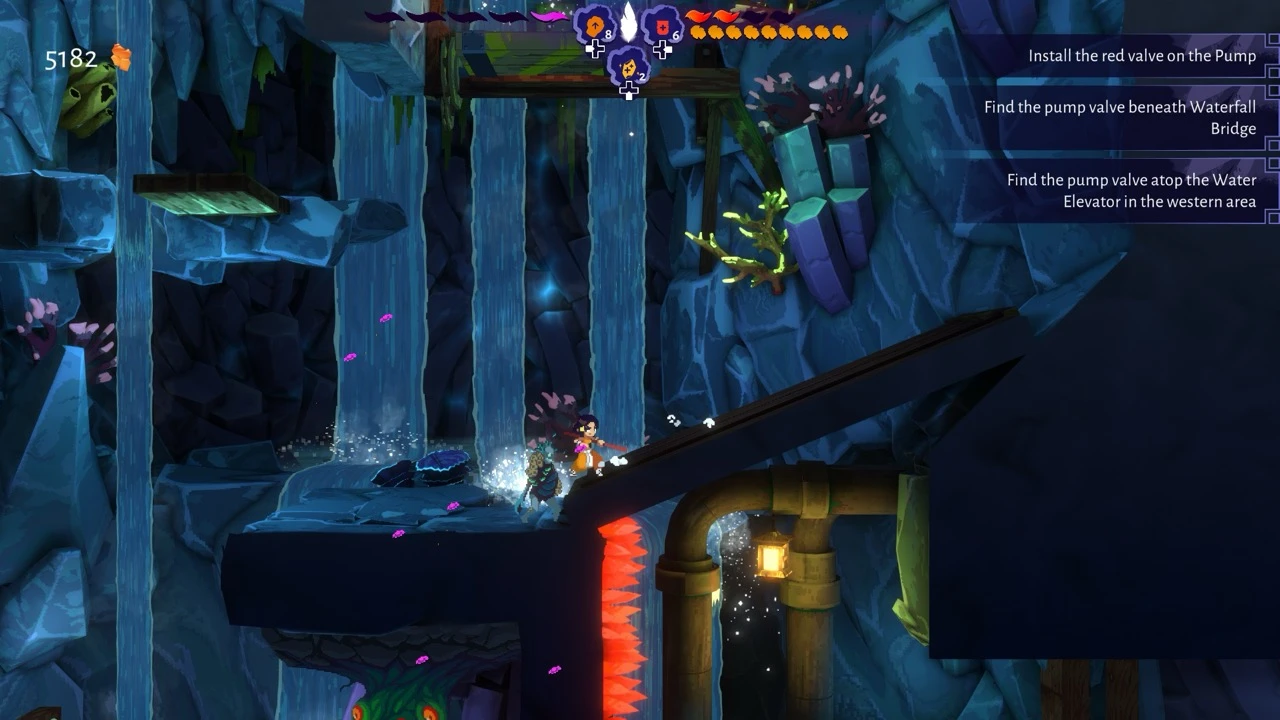
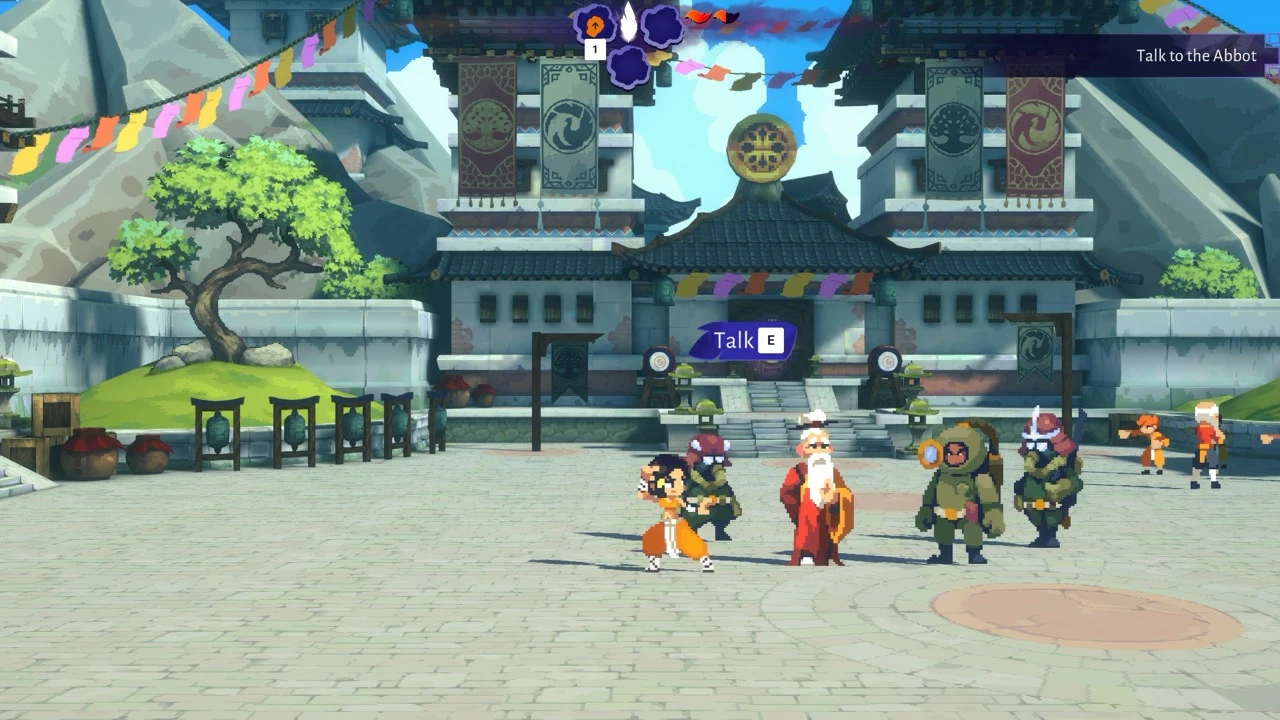
Akatori can look fantastic. Mako and the enemies are expressive pixel-art characters placed inside layered 3D environments, creating a style that feels both nostalgic and modern. Some backgrounds get busy enough to hurt readability, but most areas are vibrant, detailed, and full of atmosphere. Seeing a tiny 2D Mako run through these large spaces gives the world a convincing sense of scale.
Movement also feels good in isolation. Mako can jump, double jump, dash, cling to walls, and combine those actions to clear spike pits and tricky platforming sections. Later, she gains tools such as a glider for crossing large gaps and a ground pound for breaking through floors. The controls are responsive, and chaining moves together can create a satisfying rhythm.
The problem is how these abilities are introduced. Great metroidvanias tease future possibilities long before you can reach them. You see a ledge that is slightly too high, a huge chasm, a suspicious floor, or an inviting route blocked by an ability you do not yet possess. Those moments stick in your head and make returning with a new power exciting.
Akatori rarely builds that anticipation. For a large part of the game, most blocked routes are doors that must be opened from the opposite side. Mako already has several familiar traversal options early on, while later powers tend to appear shortly before the game places an obvious obstacle designed for them. You receive the solution and then immediately encounter the lock. It works as straightforward action-platforming, but it weakens the discovery that makes this genre special.
That also makes backtracking feel unrewarding. Earlier areas do not consistently contain memorable secrets that become accessible after a new upgrade. There is no compelling trinket or charm system that makes me eager to search every corner and experiment with different builds. Most detours lead to health upgrades, consumable potions, or one of the collectible cat figurines. None of those rewards made me want to comb through old rooms again.
Healing makes exploration more frustrating than it should be. Akatori does not give you a dependable reusable way to recover health during a difficult stretch. Potions must be found or purchased, and traders are spread far enough apart that I regularly had nothing available when I needed it. A limited healing system can create tension, but here it often made damage feel like attrition rather than an interesting resource to manage.
Regular combat has a similar problem. Hitting enemies with the staff feels snappy at first, and Mako has a dodge roll for avoiding attacks. Once I realized that basic enemies could often be stun-locked by repeated strikes, however, most encounters collapsed into button mashing. If one or several enemies are caught inside the combo, they frequently cannot respond. There is little need to finesse positioning or make full use of the dodge, so fighting the same mobs quickly loses its spark.
Bosses are much better. These encounters feel like combat puzzles built around reading patterns, dodging at the right moment, and attacking during a safe opening. They demand the attention that ordinary enemies rarely do, and their cinematic presentation makes them stand out. The Serpent fight was my favorite because it brought movement, timing, and spectacle together in a way the rest of the combat often fails to achieve.
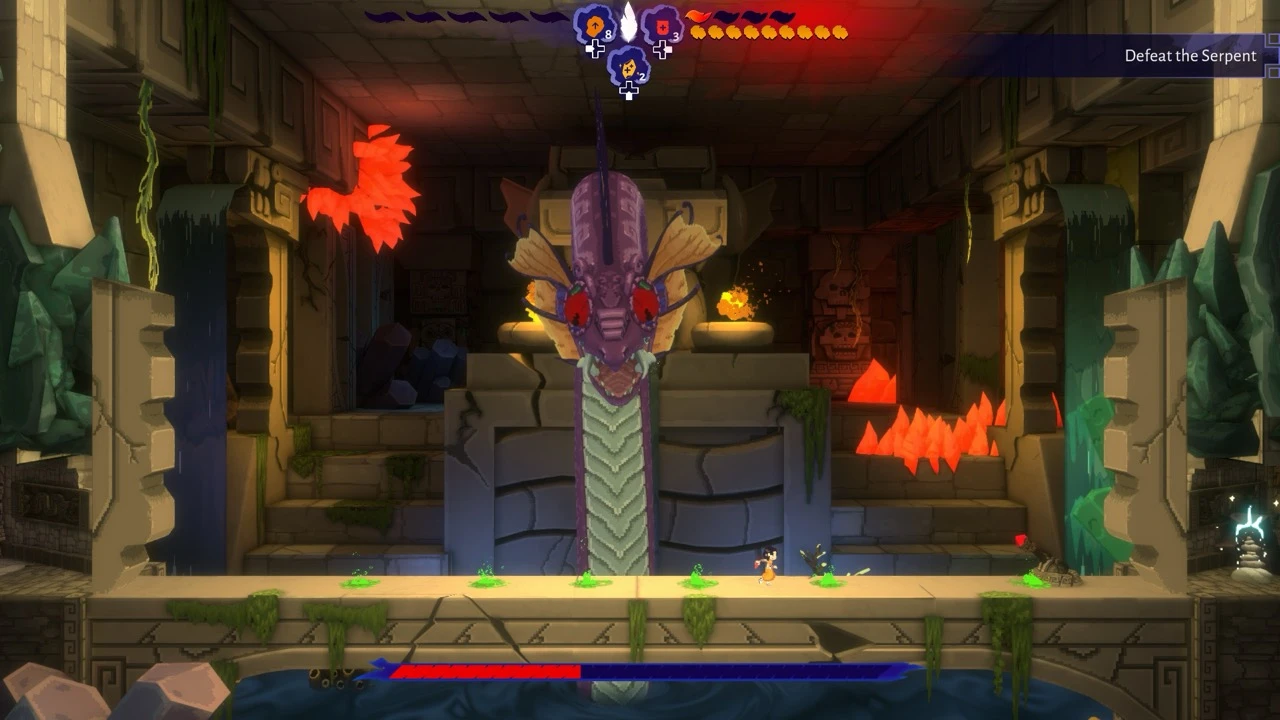
On the ROG Xbox Ally X, Akatori is an appealing handheld game when it behaves. The art looks great on the display and the controls fit the device naturally. Performance is only OK, though. I encountered frequent frame drops even while playing plugged in, which can interrupt the flow of a game so dependent on precise movement and timing. It is playable, but I hope further optimization passes smooth out those rough spots.
Akatori is not a bad metroidvania. Its visual direction is memorable, Mako is fun to control, and the boss fights show how good the game can be when its systems work together. But its shallow rewards, weak ability gating, awkward healing economy, repetitive regular combat, and inconsistent Ally X performance hold it back. A few thoughtful tweaks could turn it into something much stronger. Right now, genre fans have better worlds to get lost in, while players who prefer a more direct action-platformer may be more forgiving of its streamlined structure. Thanks for reading!