AVO: Echoes of the Void has a strong setup and some decent ideas, but weak movement and frustrating puzzle logic make the experience hard to recommend right now
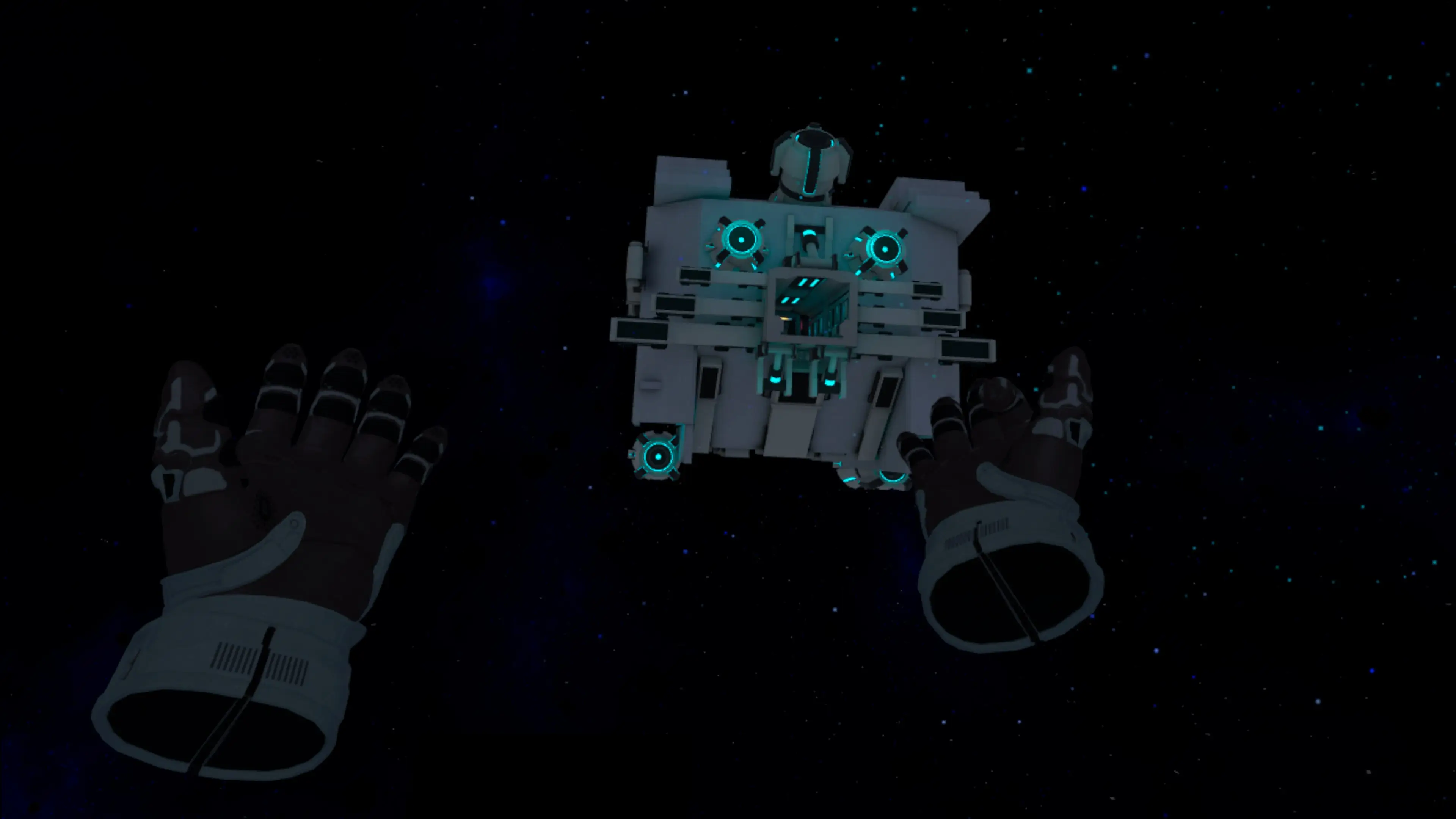
AVO: Echoes of the Void opens with a premise that should be a slam dunk in VR. You are stranded in space, floating through a damaged ship, solving escape-room style puzzles to find a way home. That setup alone creates immediate tension, and for the first few minutes it really feels like the game could become something special.
The problem is that the execution keeps pulling you out of the experience. Nearly every part that should feel smooth or satisfying ends up awkward, unclear, or inconsistent. I wanted to like this one, but after several layers of friction and confusion, the game stopped being challenging in a good way and became exhausting in a bad way.
Story-wise, AVO frames your journey as survival wrapped in mystery. You wake up in wreckage, systems are failing, and each area reveals more about what happened on this ship.
That approach can work really well in VR, especially when atmosphere and pacing support it. Here, the narrative hook stays interesting enough to keep you going for a while, but the actual moment-to-moment interaction keeps undermining the tension the story is trying to build. Instead of feeling like a clever survivor in a dangerous place, I often felt like I was wrestling the controls.
The biggest issue is zero-G movement. Early on, the game asks you to propel yourself by pulling your arms toward your body. In theory, that could feel physical and immersive, in practice it feels clunky and strangely unreliable. Input registration is inconsistent, momentum feels off, and basic navigation turns into a chore.
What makes this more frustrating is that the obvious alternative is right there. A swim-like motion system would have been more intuitive, and letting players grab onto nearby surfaces to pull themselves through space would have added precision and comfort. Instead, you spend the early game fighting movement more than learning puzzles.
This type of movement sucks and for like the first hour or so, I was just pondering like why isn’t there a locomotion based on small jets I just could attach to the gauntlets, would make so much sense. And to my surprise you do exactly get that as a reward in the second puzzle room, you get two tiny jets you can attach to either hand. Immediately the movement becomes more readable, more responsive, and less physically awkward. It is still not perfect, but it is a major upgrade.
So the obvious question is, why not start with this? Why make players push through an abysmal locomotion system first, only to later reveal a better one? Makes no sense. Since we're here, I also ran into another weird issue or design choice where I attached the jets to my right hand, with no possible way to move them to the left. What that resulted in was that apart from just flying around in space I would also snap turn since both movement and rotation where attached to the right analog stick.
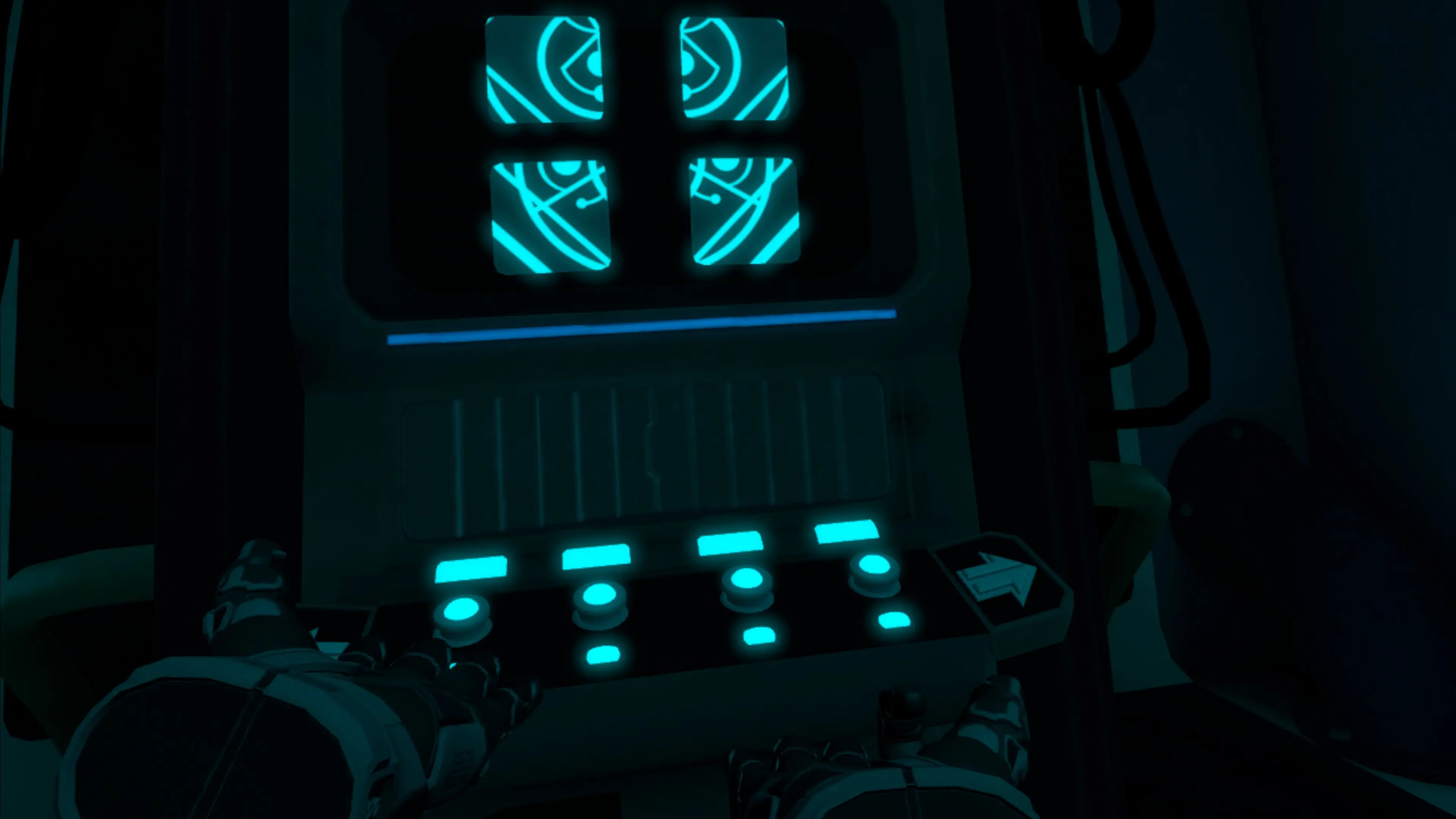
Puzzles are the second major problem. The first room has three puzzles, and that is where the game first loses trust. The first puzzle asks you to rotate four image tiles to form a full picture, straightforward enough. Except there are some extra buttons with unclear functions and there's really no feedback if you are doing anything right and all that makes the whole thing feel random.
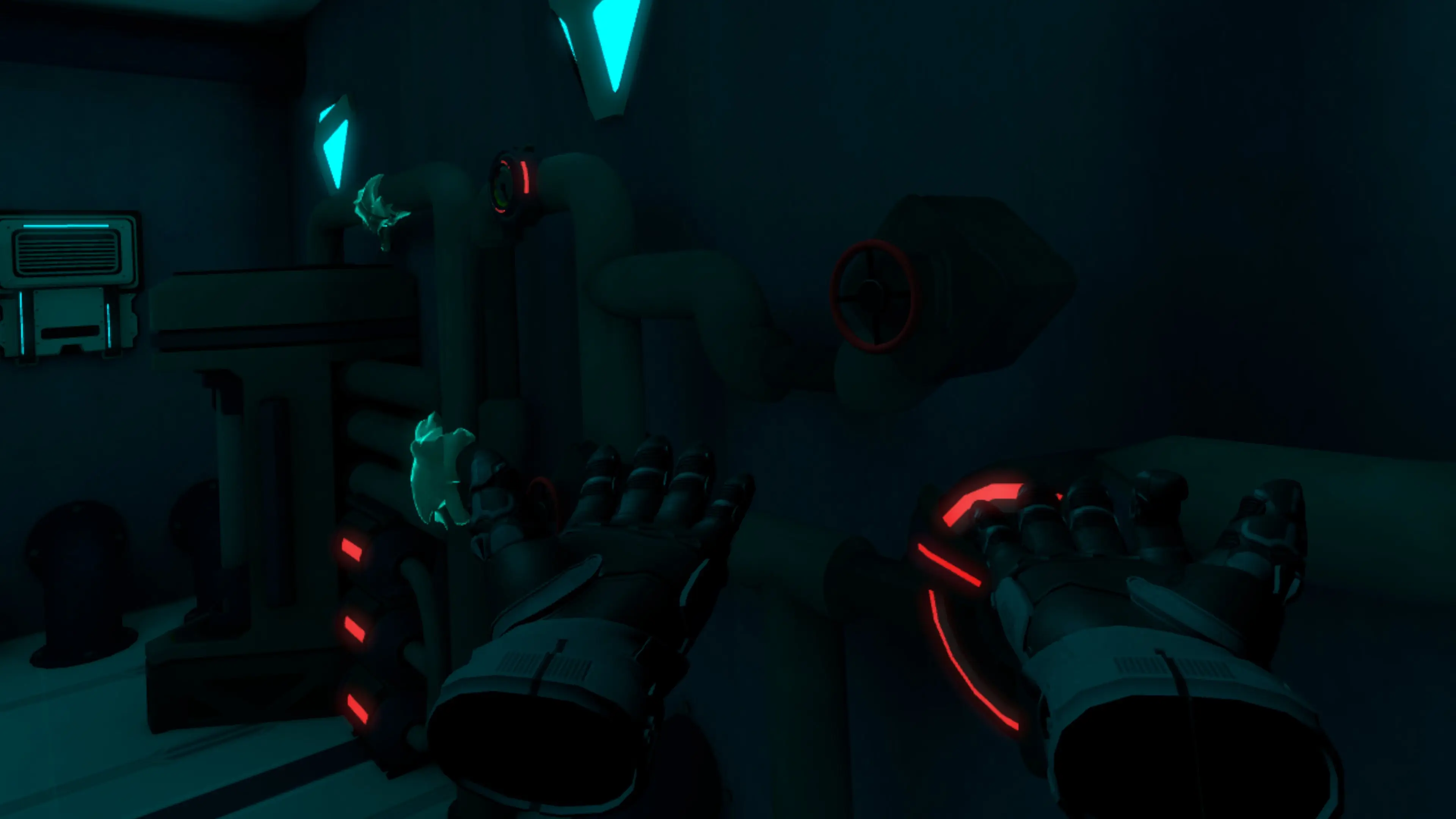
The next one is a valve puzzle which is conceptually simple, rotate valves to equalize pressure. Unfortunately, the interaction reliability is very poor. One time a valve bugged out, couldn't rotate it and I was forced to restart. The second attempt, I spent around 15 minutes rotating the valves and nothing was really changing in the pressure gauge. The inconsistent registration of the action made it borderline annoying to go through. The audio cues of the valve shutting off also failed to trigger most of the time so I was just stuck there rotating the valves hoping for something to happen.
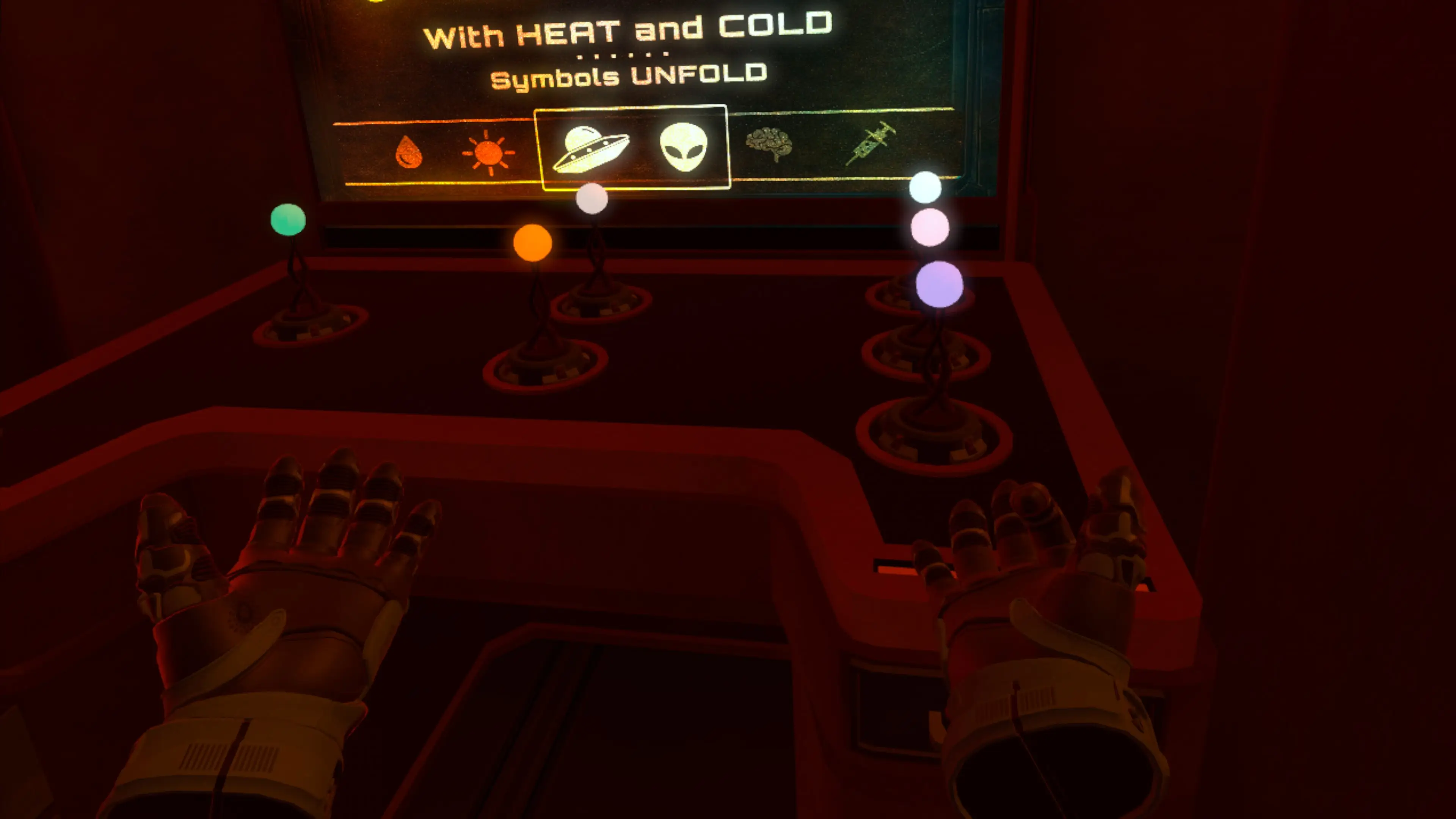
Later rooms continue this pattern. There is a table where you need to place some objects in the right spots. There's a hint in the display on top of the table, but the as it turned out the hint was far more confusing than helpful. Anyway, after completing it, you get a keycard to use on a terminal and need a four-digit code. I searched the room thoroughly trying to find the correct numbers, heck, I even began counting the number of grills in the vents above the terminal itself. That was not it, but there was indeed a visual clue in the previous table puzzle that seemed to suggest two numbers, 4 and 7. So I spent like 10 more minutes analyzing the environment for the next two numbers, only to find out in the end that the code was actually 4747. What?!
Another room has giant fans that need calibration. So after fiddling with some switches to carefully balance the speed and rotation of the fans, the puzzle still wouldn't complete. You see, at the base of each fan you see symbols for fire and ice, so what I understood from that is that it was just an indication that if the fan was turning clockwise was hot with the other being cold. Nope. Instead, the game expects you to use the torch to actually set the fan to either hot or cold...
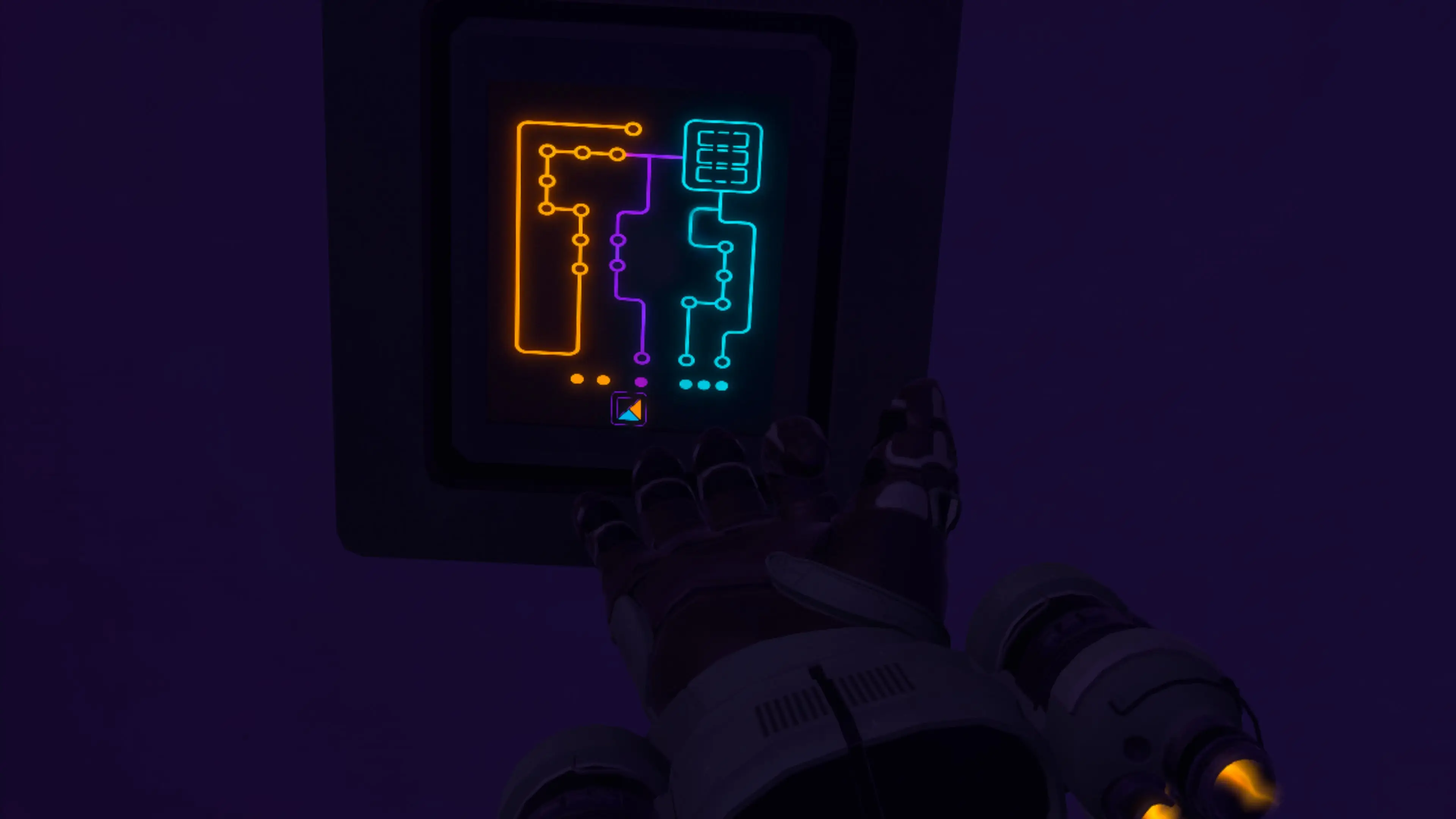
The final nail in the coffin for me was a three-digit keypad puzzle tied to an abstract glyph clue. I stared at it for around 20 minutes and for the life of me I could not decode what this meant. At that point I quit.
That is really the core design issue in AVO. Great VR puzzle games teach you mechanics in small, readable steps, then build complexity so your final solution feels earned. The Room VR, Ghost Town, The House of Da Vinci VR, and Fixer Undercover all do this very well. AVO just skips the teaching part and jumps straight to opaque problems with little to no guidance whatsoever and no meaningful hint system. There is no strong internal logic to any of the puzzles, so instead of that most desired "aha" moment, you get a lot of Professor Farnsworth "Whaat" moments.
Presentation is mixed. On Meta Quest 3, the game is serviceable visually, but mostly plain. Environments look like plain functional spaceship sets without much personality, and without much visual storytelling to pull you deeper into the world.
Audio does enough to support the setting, but it rarely carries emotional weight. You hear machinery, pressure systems, and environmental effects, and the occasional ship-AI voice, but the soundscape is not rich enough to compensate for the gameplay friction.
To be fair, there is still a seed of a good VR game here. The premise is intriguing and once the jet movement appears, you can glimpse a better version of this experience. However, the puzzles are just not there yet. If the developers significantly rework locomotion, improve interaction reliability, and redesign puzzle with proper onboarding, AVO could become worth recommending.
Right now though, it feels undercooked in the places that matter most. I came in hoping for a smart zero-G puzzle adventure, I left mostly frustrated. Avoid this game for now. Thanks for reading!