Icarus: Console Edition is a deep and often rewarding survival game with huge long-term potential, but non-existent onboarding, confusing systems, and clumsy console UI make the first dozens of hours rough
Icarus: Console Edition is one of those survival games where your first few hours can feel like a bad joke, then ten hours later you realize there is actually something great buried inside all the frustration. I played about 25 hours on PS5, enough to understand what the game is trying to do, but nowhere near enough to fully experience it let alone master.
The core premise is strong. You drop from orbit onto Icarus, a planet that failed terraforming and turned into a harsh wilderness full of storms, hostile wildlife, and survival pressure from every direction. You gather resources, level up, unlock tech, build shelter, manage oxygen, food, water, weather exposure, injuries, and eventually start expanding from basic survival to more advanced crafting and exploration. It sounds familiar on paper, but the way Icarus stacks systems together gives it a very different rhythm than most survival games on console.
That rhythm is exactly where my relationship with the game started to break down. The onboarding is close to nonexistent. You get dropped in, you get a field manual with lots of text, and the game basically says, good luck. I can respect the idea of discovery, but here it often crosses into needless confusion. There is a difference between trusting players and refusing to teach them.
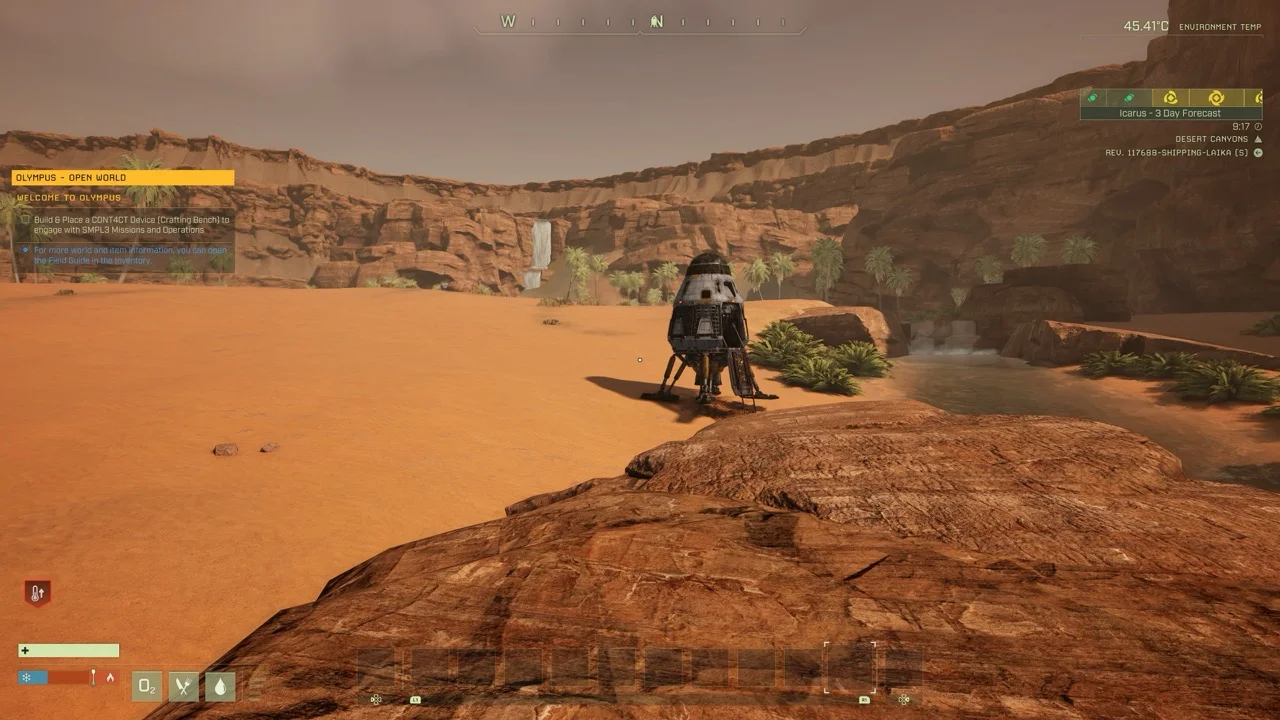
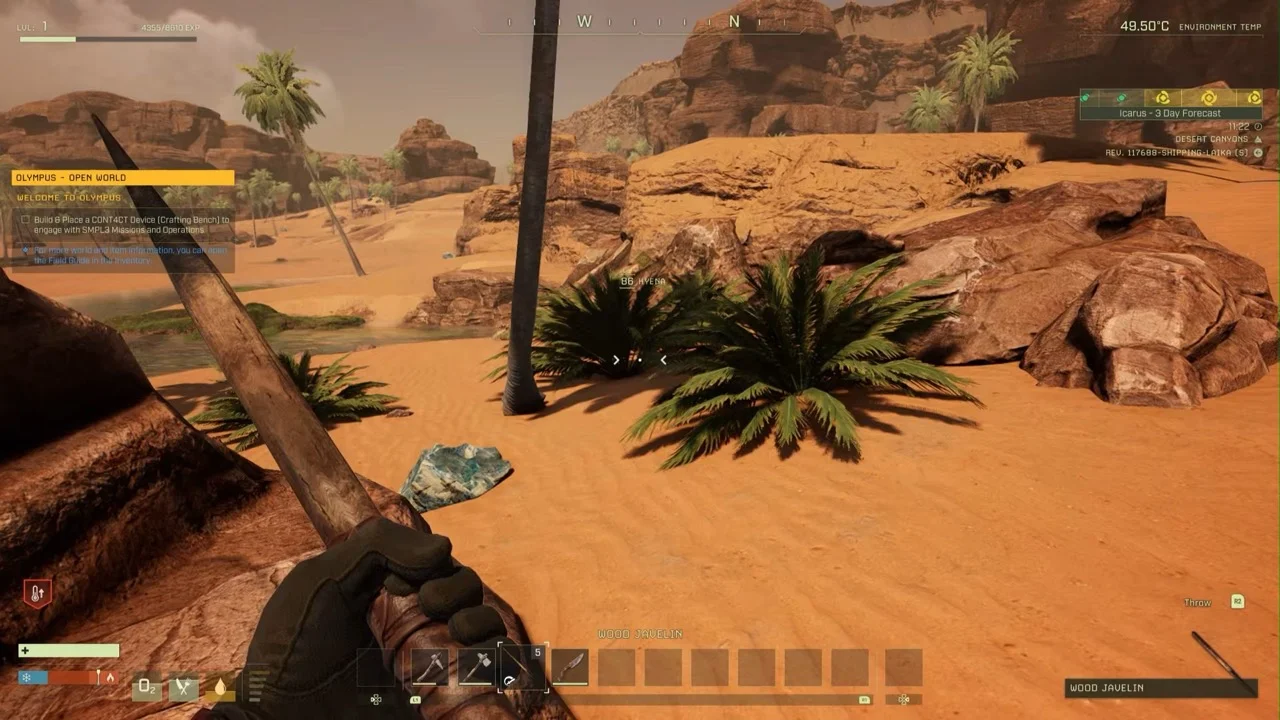
My first drop was in the desert biome. I chose it because it looked manageable, sunny, open sightlines, river nearby, some vegetation, plenty of rocks. In most survival games that setup means you can quickly make a crude tool and stabilize. In Icarus, even basic tools can be locked behind progression decisions. Before I go any further, from a narrative point this make no sense whatsoever. Like I came down from space in a drop pod and I don't know how to build a stone axe?! Anyway, I did not know that at first, so I spent early minutes picking up rocks and plants with no practical way to defend myself or speed up gathering.
Then wildlife pressure kicked in hard. Coyotes, boars, and scorpions started attacking before I had anything useful equipped. I died repeatedly. I couldn't figure out why I couldn't craft basic weapons. I had to unlock it from the tech tree. Then got a storm warning and quickly discovered you cannot just hide in your drop pod when bad weather hits. Died again. Then I assumed I just needed a hammer to build shelter because many survival games work that way. Wrong again, dead.
I needed bandages and a splint cause even after respawning I still had broken bones, but again, I had to unlock before I could craft them. I needed water, so drank from a river, got sick and died again. None of this is impossible once you understand the systems, but the game does almost nothing to teach you them in a clean order.
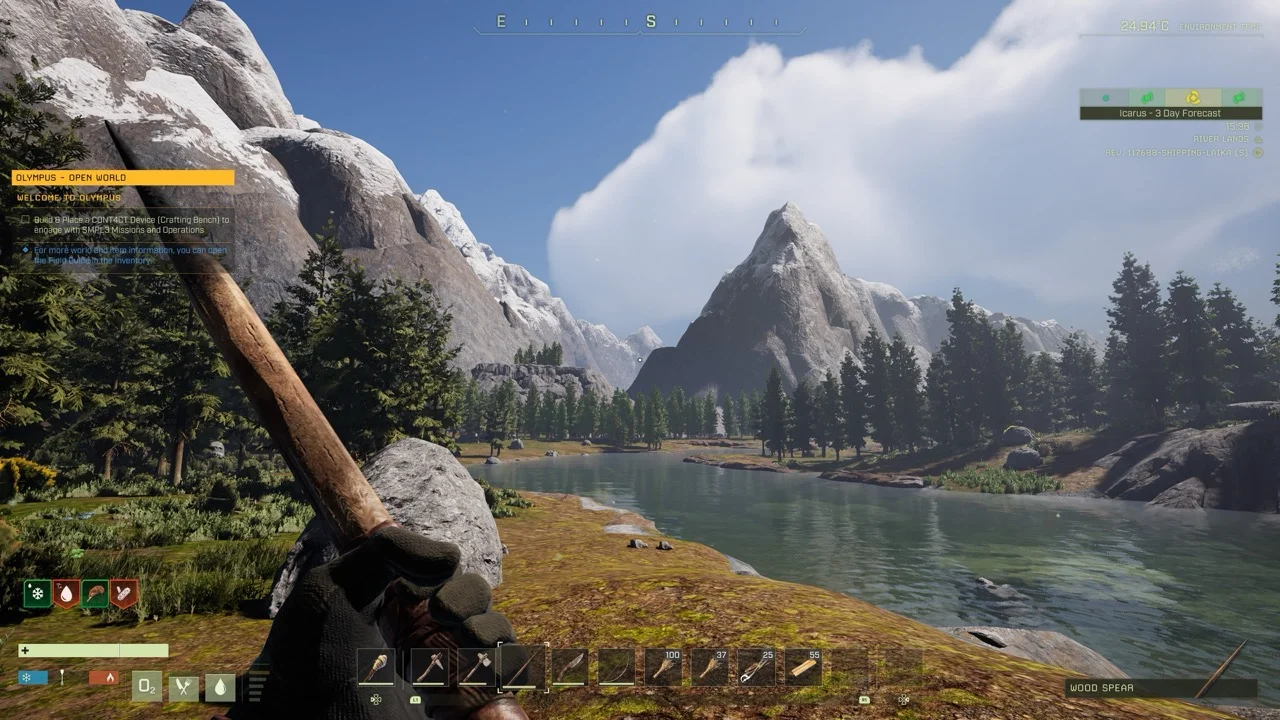
At that point I nearly quit. But I had to give it a fair chance, so I started over in the forest biome, and that was the turning point. The forest was still dangerous, but less punishing than desert, and my previous unlocks carried over through character progression.
Even then, confusion continued. Oxygen management is a perfect example. I saw my oxygen dropping, checked the tech tree, found an oxygen-related object, but I had no tech points to unlock it. I died. So I just like googled and found a YouTube short that explainded that you can equip oxite directly in your suit to keep oxygen up early on. That is crucial information, and the game does not communicate it clearly when it matters most.
This pattern repeats everywhere. Icarus has a massive number of mechanics, and many are interesting, but the game too often leaves players to decode them through trial, error, and external guides.
Still, I pushed through the early chaos and started making better unlock choices, the game opened up in a very satisfying way. The survival fantasy finally clicked. I built a cabin by the water, set up drying racks for meat, placed water purification in the river, had a refiner for my oxygen supply, and started turning a fragile setup into an actual home base. Those moments are the reason I kept playing.
There is real satisfaction in seeing your self-made infrastructure solve problems that used to kill you. Getting food early in the game is hard, later it becomes planning and storage. Getting oxygen early in the game is confusing, later it becomes logistics.
Then the game humbled me again. I learned the hard way that putting a campfire inside a wooden house can end exactly how you think it would. Everything burned down. That was a painful loss, but it was also one of those classic survival game stories you remember afterward and laugh about, once the rage passes.
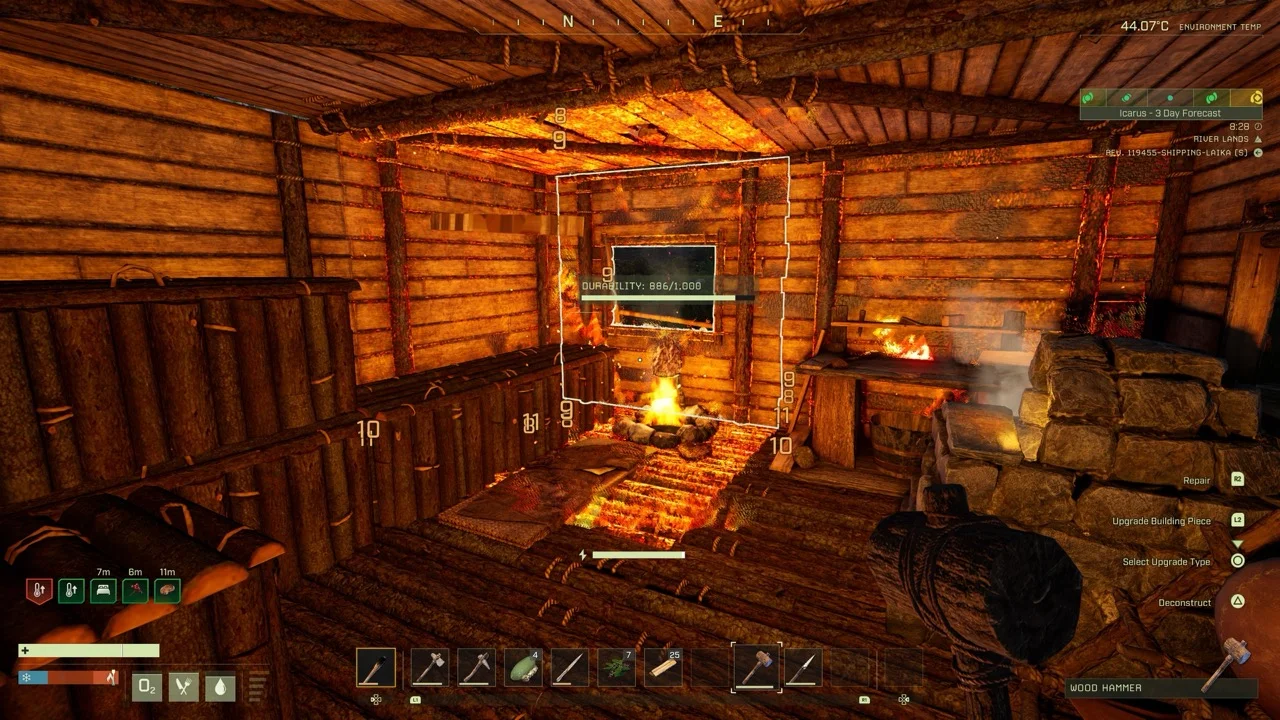
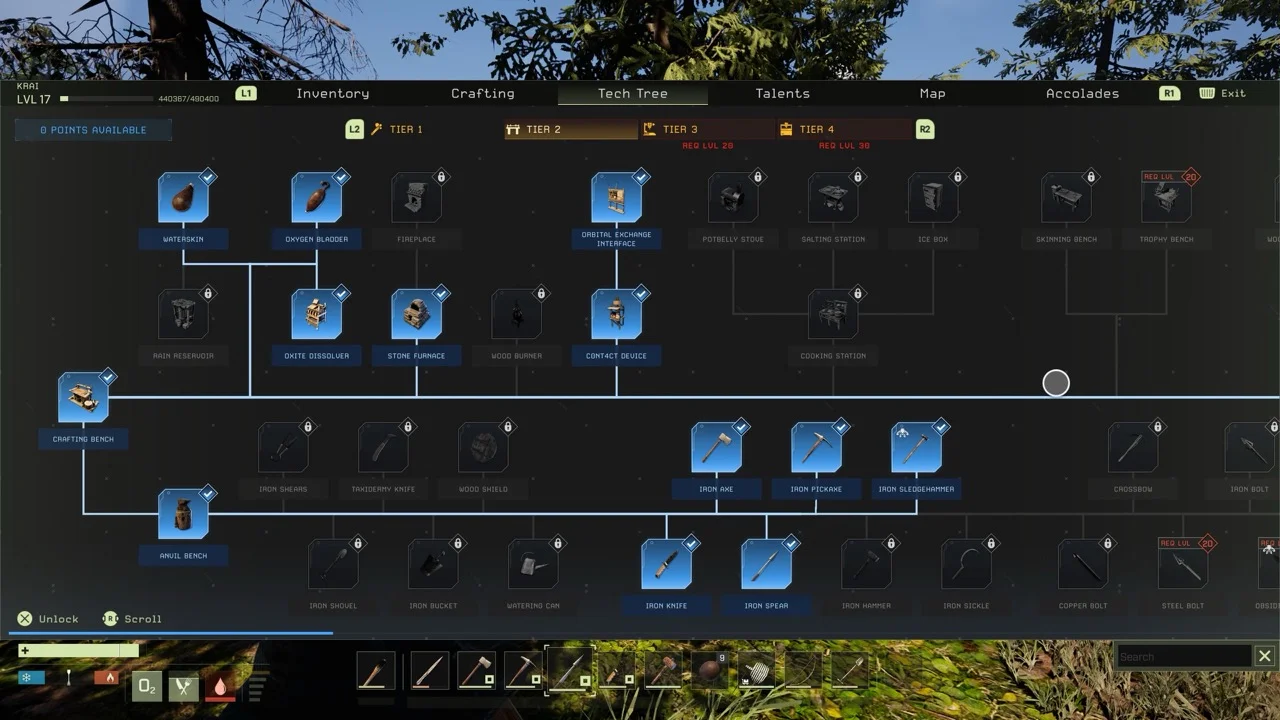
From a progression standpoint, Icarus is huge. Tech trees are broad, and every unlock choice matters early on. You cannot just grab everything immediately, so building a sensible path is part of the game. But the game does not do a good job of teaching you how to build a sensible path. I mean, I get that it is a survival game, but it could at least have like a tech tree that would make sense to a new player.
Narratively, this is not a character-driven story game with big cutscene drama. The story is environmental and systemic. You are a prospector dropping into a hostile world for resources and survival goals, and most of the emotional pull comes from your own survival stories rather than scripted plot beats.
On PS5, this console port is functional, but clearly rough around the edges. The biggest problem is UI and controls. Menu navigation feels like it was adapted from the PC version and no thought whatsoever was put into translating it to a controller. Some screens use a cursor style, others force directional selection through dense grids, and the logic changes from menu to menu in ways that never feel natural.
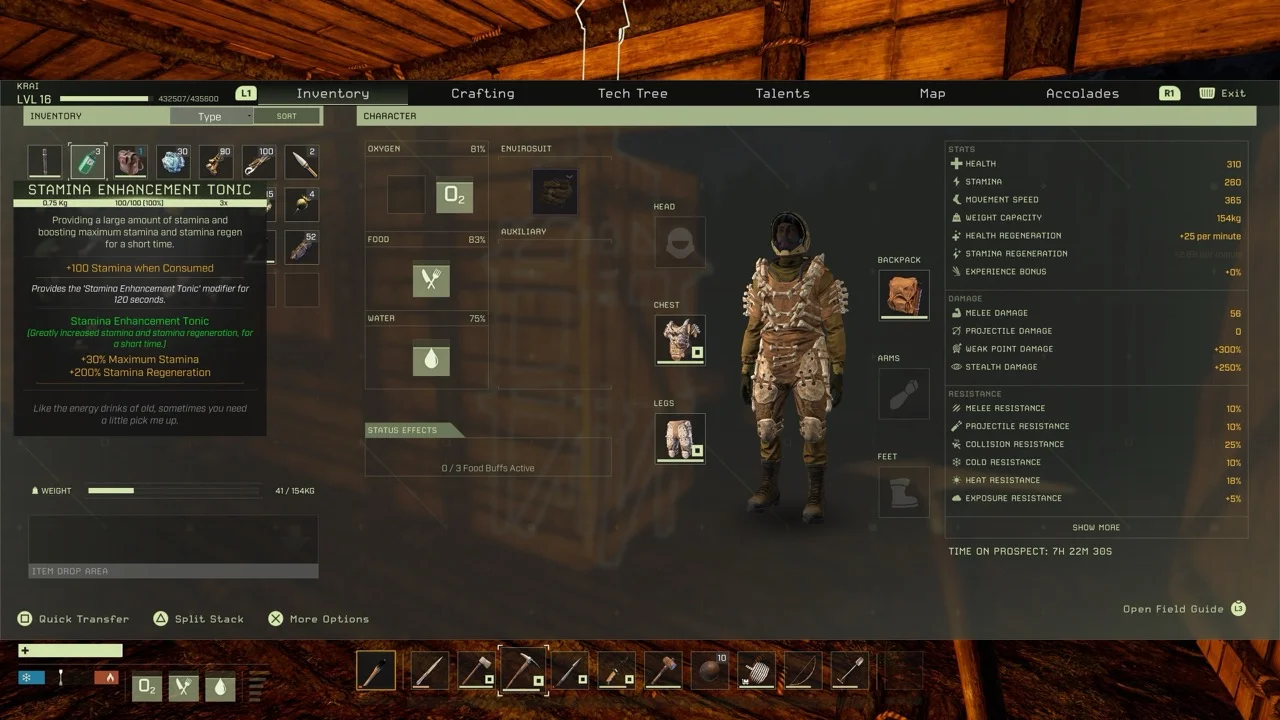
Inventory management is the worst offender because it is the screen you use constantly. With multiple panels, crafting queues, item details, and stat blocks competing for focus, moving around with directional taps can be slow and irritating.
Quick item switching in the field also feels dated. Cycling tools on shoulder buttons through a horizontal strip works, but it is clunky in normal moments let alone during tense ones. A radial wheel that slows time would suit this game much better on controller and would reduce accidental mis-swaps when combat gets chaotic.
Readability needs more work too. UI scale and text clarity can make item descriptions and hovered information harder to parse than they should be, especially when you are learning what each resource does.
Combat on controller has another issue, there is basically no meaningful aim assist. Trying to land clean hits with a spear or bow while an angry bear is charging you is much harder than it needs to be, and it makes already stressful encounters feel more awkward than skillful.
Presentation is generally solid on PS5 once you settle into a biome. The forest looks lush and alive and the desert feels exposed and threatening, and the weather events do a good job of changing mood and urgency. Audio is practical more than cinematic, but it does the job, storms sound dangerous, wildlife cues help with awareness, but you have to pay attention to all of these things.
Performance on PS5 is mostly okay, but it has some issues that make it not as smooth as it should be. Framerate generally holds up while roaming and building, but there is this weird stutter I noticed while moving through the world. It often felt tied to wildlife or world activity spawning in and it happens so often that it quickly becomes annoying. It is playable, but not polished.
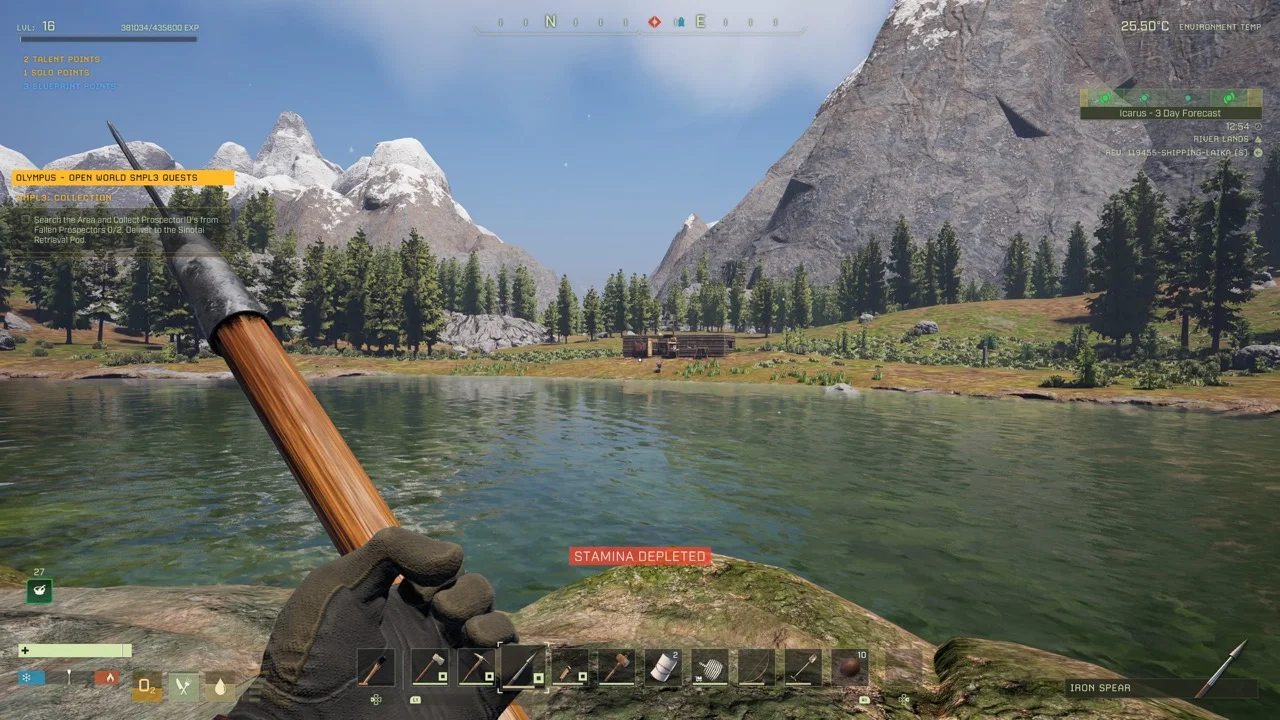
During my review window, multiplayer availability wasn't available at all, so I could not fully evaluate co-op flow and stability in long sessions.
Where does that leave the overall verdict? Well, it's in a weird but honest place. I was frustrated for most of my first stretch. I questioned design choices constantly, especially around tutorialization and early unlock gates for things that feel like basic survival knowledge. Some of it felt so counterintuitive that I had to look up external explanations just to keep going, and that should not be necessary for core early-game mechanics.
At the same time, once I understood the systems and started playing with the intention to learn and survive, I had real fun. The kind where you finish a session thinking about your next upgrades, better base layout, and safer resource routes.
That tension defines Icarus: Console Edition on PS5. It is a content-rich survival game with serious depth, but it demands patience that many players simply will not have.
If you are the kind of player who enjoys learning complex systems, does not mind rough onboarding, and can tolerate some console UI friction, there is a lot here to love. If you want a smoother first impression, clearer guidance, and controller UX that feels purpose-built, this version will test your patience early and often.
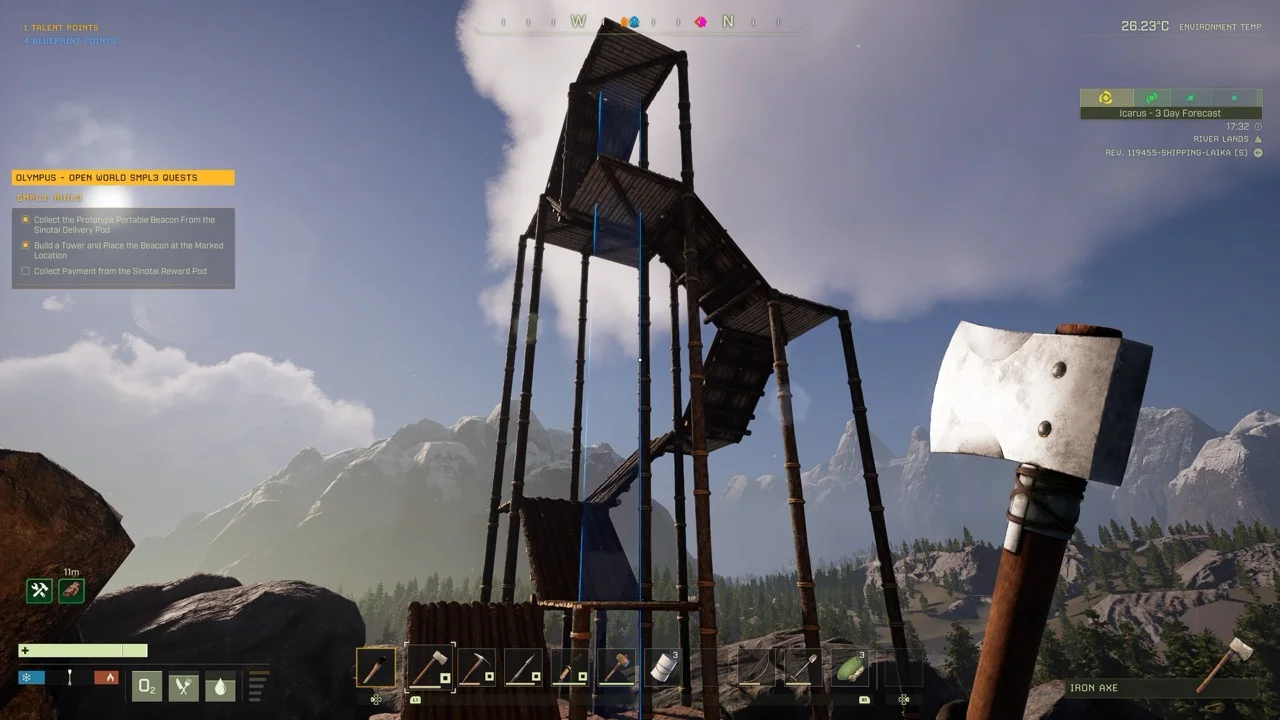
I respect what the developers are building here. You can feel the scale, the ambition, and the effort behind it. I also think it can absolutely be fun if you give it time and meet it on its terms. But the game has to meet players halfway too, and right now it often does not.
Icarus: Console Edition is good, sometimes very good, but also stubbornly unfriendly in ways that did not need to be this painful. The potential and payoff are real, yet the onboarding, UX, and counterintuitive early experience hold it back from being an easy recommendation for everyone. Thanks for reading!