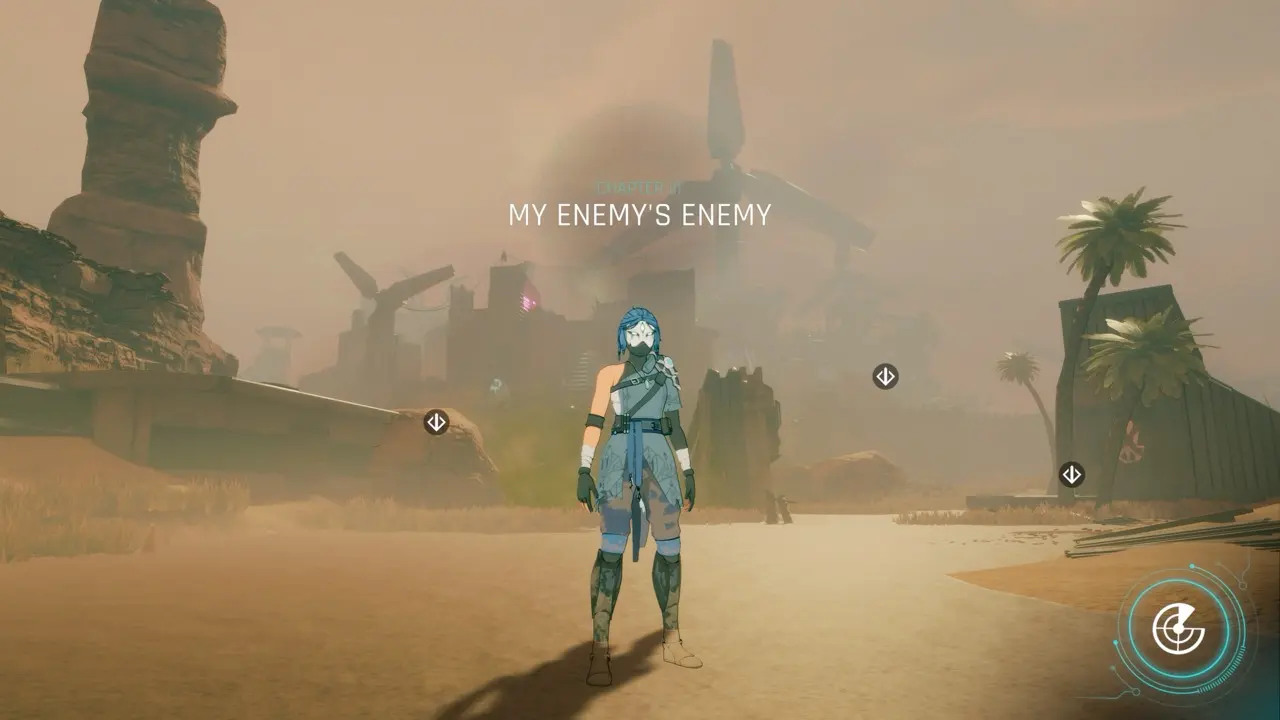
Ereban: Shadow Legacy has a cool premise and flashes of real creativity, but it never fully escapes the feeling of unrealized potential
Ereban: Shadow Legacy is one of those games that immediately makes a strong first impression. You play as Ayana, the last known member of the Ereban, a forgotten race tied to shadow-based powers. That setup is genuinely interesting, and the central mechanic is even better on paper. Ayana can dive into shadows, glide through them, exactly like in SCHiM if I can add a comparison, and use darkness as both movement and stealth. It feels a bit like stepping between worlds, and in the opening hours, that fantasy works. Sneaking around patrol routes, slipping under enemy lines, and popping out from cover is satisfying.
The world is built around a clear contrast between darkness and industrial light. Helios, the giant corporation controlling almost everything, has turned sunlight into power and wrapped the world in surveillance and control. It is a cool sounding conflict, shadow against light, old legacy against machine authority. The story starts with Helios trying to recruit Ayana for her powers, then quickly flips into betrayal, escape, and resistance. From there, you join a revolutionary cell and start pushing back while digging into what happened to your people.
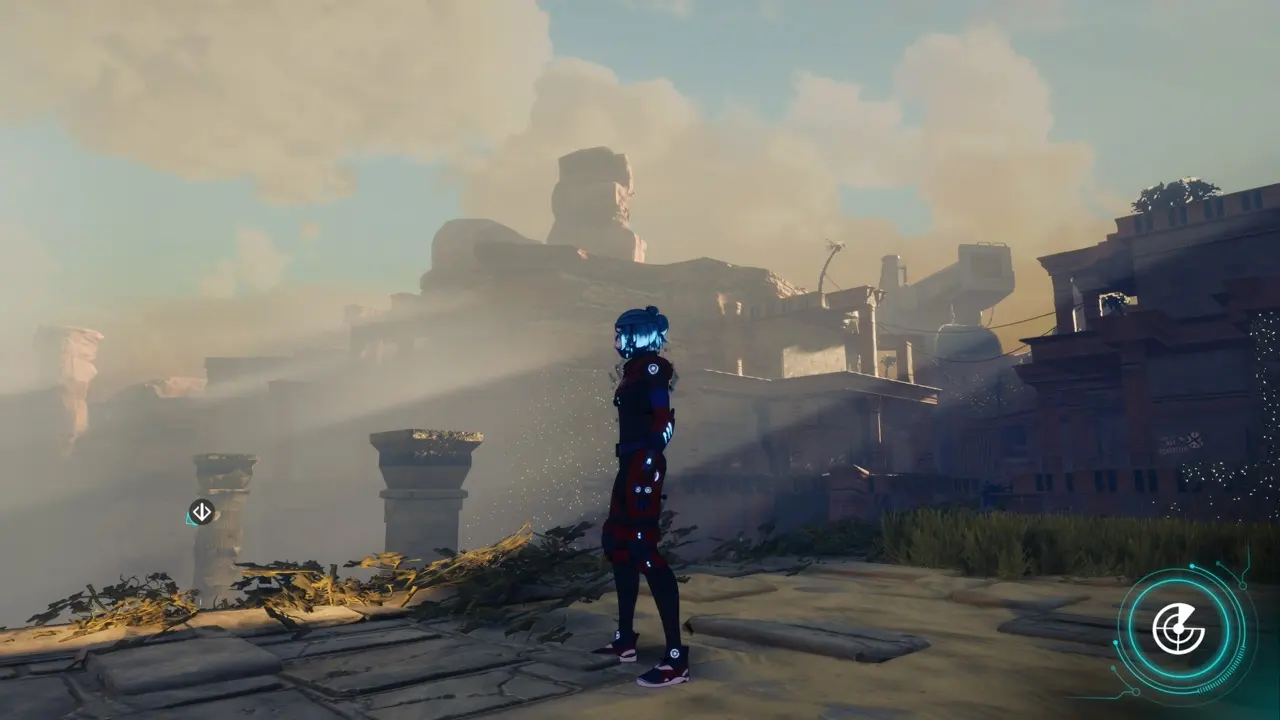
That all sounds like it should lead somewhere big, but it mostly doesn’t. The game keeps hinting at deeper revelations about the Ereban and about Ayana’s place in this world, but the narrative never quite commits to anything bold. You do find lore fragments and remnants that explain bits of history, and none of it is bad, but it feels like background flavor instead of a real dramatic payoff. By the end, I understood the premise more than I felt it. The story is serviceable, not memorable.
Where Ereban keeps you playing is in the level flow. Early maps are reasonably open, with room to improvise and optional side tasks for the rebel group. You can choose to play like a ghost and avoid confrontation, or go aggressive and clear out guards. The game clearly wants both paths to feel valid, and structurally they are. You can route through vertical spaces, chain shadow movement, and use stealth kills with very little friction. At a basic level, movement and infiltration are smooth.
The problem is that the systems around that core are too soft. There is a morality framework, but in practice it barely matters. I played very aggressively, eliminating basically every robot and worker I came across, and the game never pushed back in a meaningful way. No real narrative consequence, no serious mechanical penalty, no hard shift in how missions react to your behavior. If anything, the game can reward that style by expanding your shadow mana pool in ways that make an already easy run even easier.
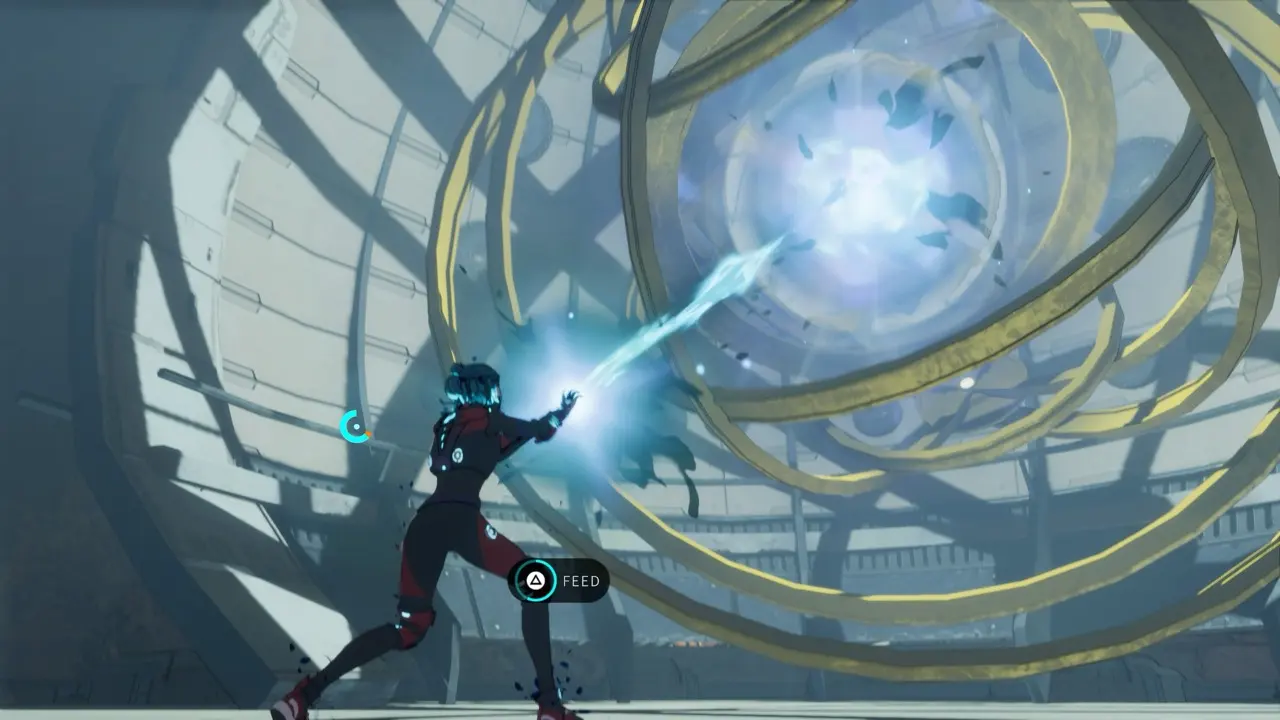
That is where the stealth-combat balance starts to wobble. You can tell the game was designed around tension, observation, and smart use of darkness, but enemy AI often feels too limited to sustain that tension. An old game, very similar in premise called Aragami had this exact problem (btw, there's an Aragami plushie you can find in the game, clearly an easter egg). Patrol behavior is predictable, reaction windows are forgiving, and it is very easy to break encounters once you understand how quickly Ayana can disappear into shadow. A lot of situations end the same way, slip behind target, execute, move on. It works, but it gets repetitive faster than it should.
Ereban does include gadgets and upgrades that should add variety, decoys, mines, sonar scans, and several powers you unlock over time. But most of them feel optional to the point of irrelevance. The sonar-style enemy highlight has clear value, and some consumables can help if you want cleaner runs, but plenty of tools feel like filler in a game that never asks enough from you. I kept unlocking things and rarely felt a strong reason to use them. The base kit already solves almost every encounter.
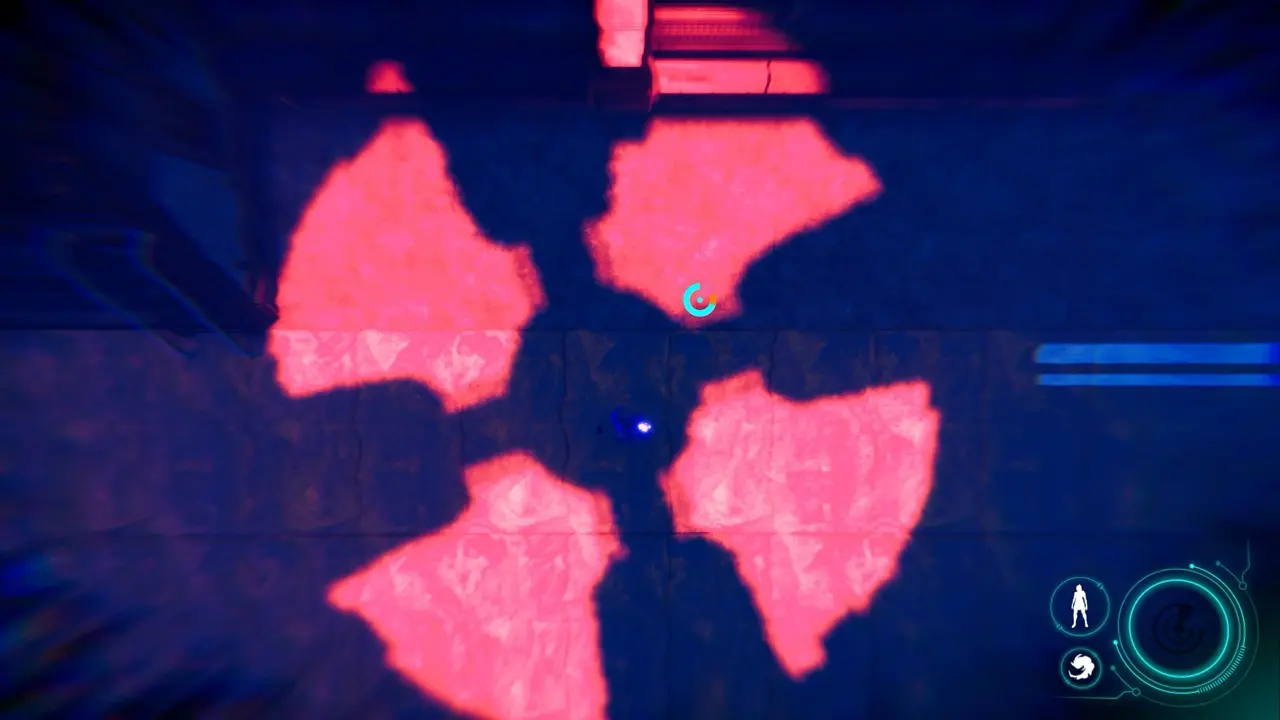
The biggest missed opportunity is environmental shadow traversal. This is the mechanic that could have elevated the whole game. Climbing structures through dark surfaces and using moving shadows as temporary paths is genuinely cool, and when levels lean into that, Ereban feels special. There are moments late in the game where you wait for moving machinery or fans to cast usable shadow lines, then chain movement at just the right time. Those sections are clever and memorable, but they arrive too late and too rarely. For long stretches, the game settles for safe layouts when it should be building around its best idea.
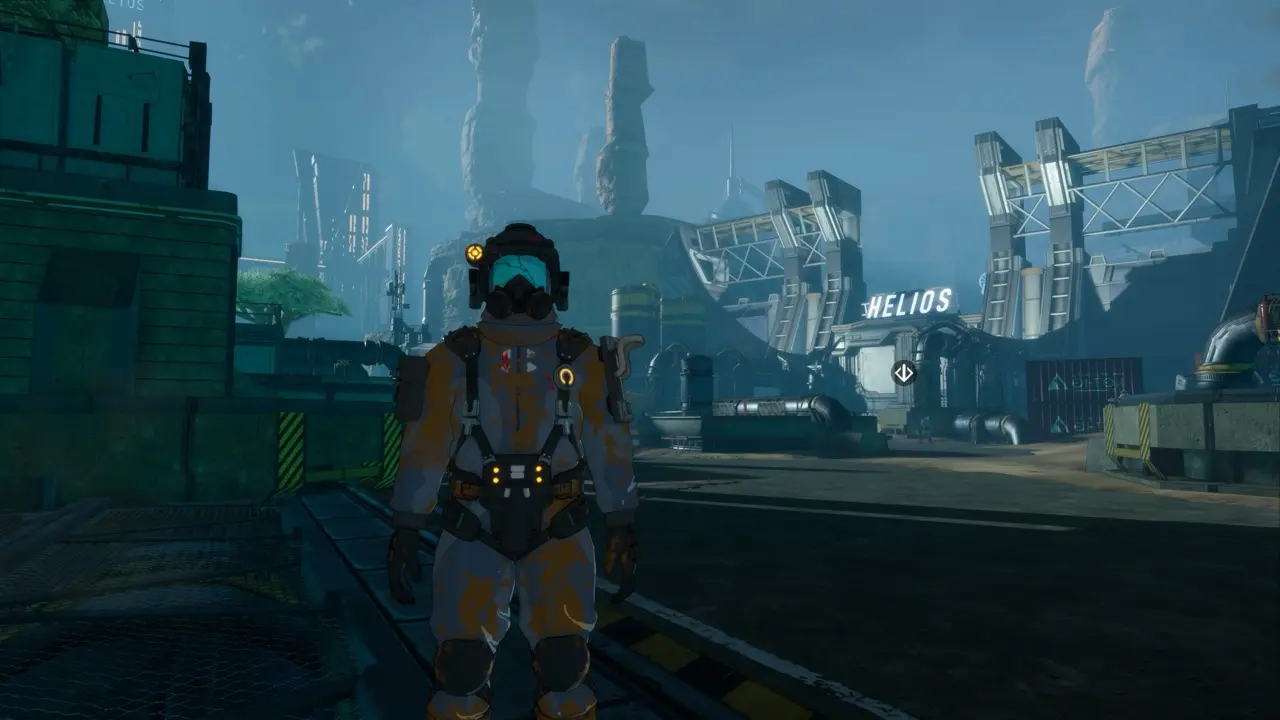
On PS5 specifically, performance is another mixed point. In the bigger early levels, framerate can dip below a stable 60 and it is very noticeable during traversal. That matters in a game where smooth movement is a major part of the appeal. And it's weird you know, since the game has been on PC since 2024, one would expect a fully locked 60fps experience, but that's not what we got.
To be fair, I am playing this game early as I got an early review code in March 2026 and the game releases in April 2026, so this may improve with patches, but right now the game does not feel all too good to play. Visually, the game lands in the okay range. Art direction is coherent, the light versus shadow identity reads well, and some industrial-ruin vistas look great when the game slows down and lets you take them in. But raw detail and animation quality are inconsistent, and the presentation does not carry enough punch to compensate for the mechanical repetition.
Audio follows a similar pattern. Voice acting is competent, nothing embarrassing, but not standout. Music and ambience support the stealth mood well enough, especially when you are in a clean infiltration rhythm, but the soundtrack rarely takes control of a moment. Overall presentation is functional. It supports the game, it just does not elevate it.
What makes Ereban frustrating is that you can always see the better version of it. The concept is strong, the movement hook is strong, and the best levels prove the team had smart ideas. But too many systems stop at "good enough". The story teases more than it delivers, the morality setup lacks consequence, progression tools are underutilized, and encounter design does not demand much adaptation. You can finish a lot of this game on autopilot once you learn the basics, and that is the opposite of what a shadow-stealth game should feel like.
So yes, this is a very "6 out of 10" kind of game. Not awful, not broken, not a waste of effort, but consistently stuck in the middle. If you are a stealth fan and can get it at a deep discount, there is still something here, mostly in the movement and occasional level design highs. At full price, it is harder to recommend. Ereban: Shadow Legacy has a cool premise and flashes of real creativity, but it never fully escapes the feeling of unrealized potential. Thanks for reading!