A-RED Walking Robot is a physics-driven puzzle platformer with a strong concept and frustrating execution, where patience is the real challenge
A-RED Walking Robot is one of those games where I instantly respected what it was trying to do, even though I didn’t enjoy actually playing it. Developed by Jookitooz, digitally published by Dojo System, and physically published by Tesura Games, this is a deliberately slow, physics-driven experience that puts all its chips on tension, balance, and precision. It is also getting a physical PlayStation 5 release this Friday, January 30th, which is honestly pretty cool to see for such a niche title.
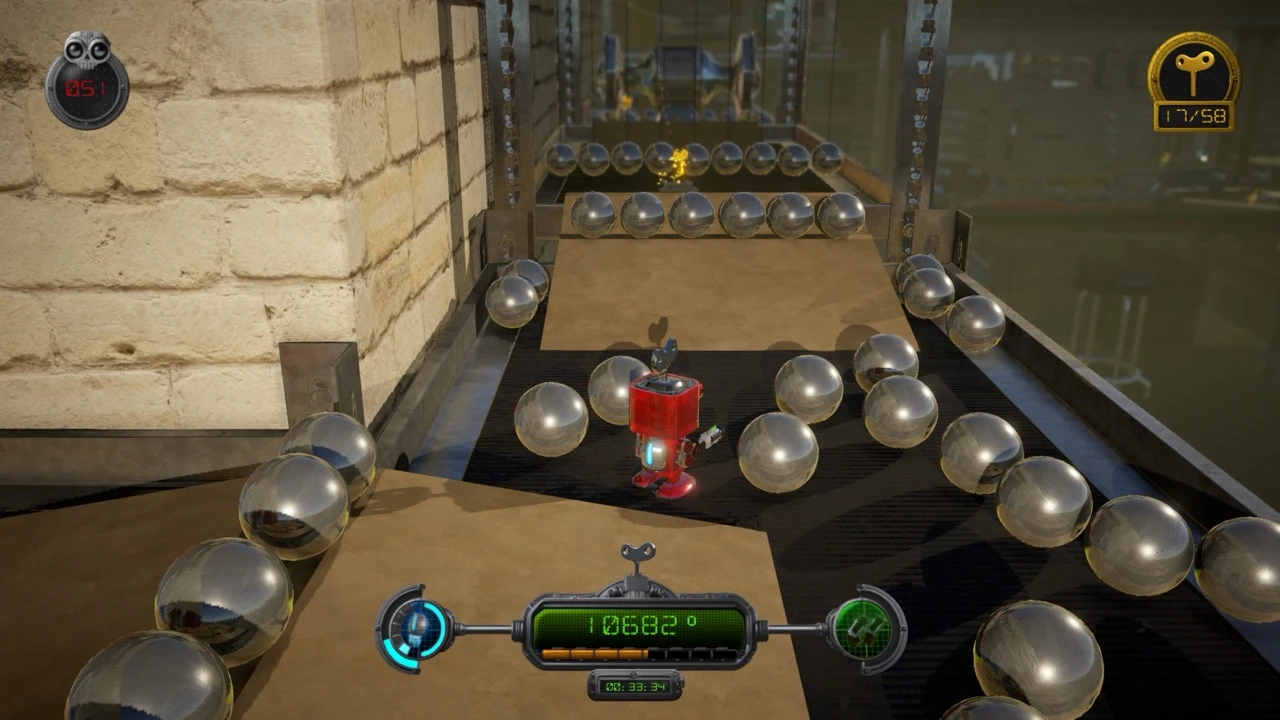
The setup is simple. You control a tiny red robot, A-RED, who finds himself navigating what might be the messiest workshop ever created. The story is mostly environmental and very light, more of a framing device than a driving force. You are not here for plot twists or emotional beats. You are here to move from point A to point B without falling over, and that is pretty much the entire game.
That sounds basic, but the way you move is where things get interesting, and also where things started to fall apart for me. A-RED uses old-school tank-style controls. You are not directly telling him where to go in a traditional sense. Instead, you increase or decrease his movement speed and rotate him, then let physics do the rest. If you move too fast while turning, you will lose balance. If you rotate carelessly on a narrow beam, you will tip over. When that happens, it is straight back to the last checkpoint.
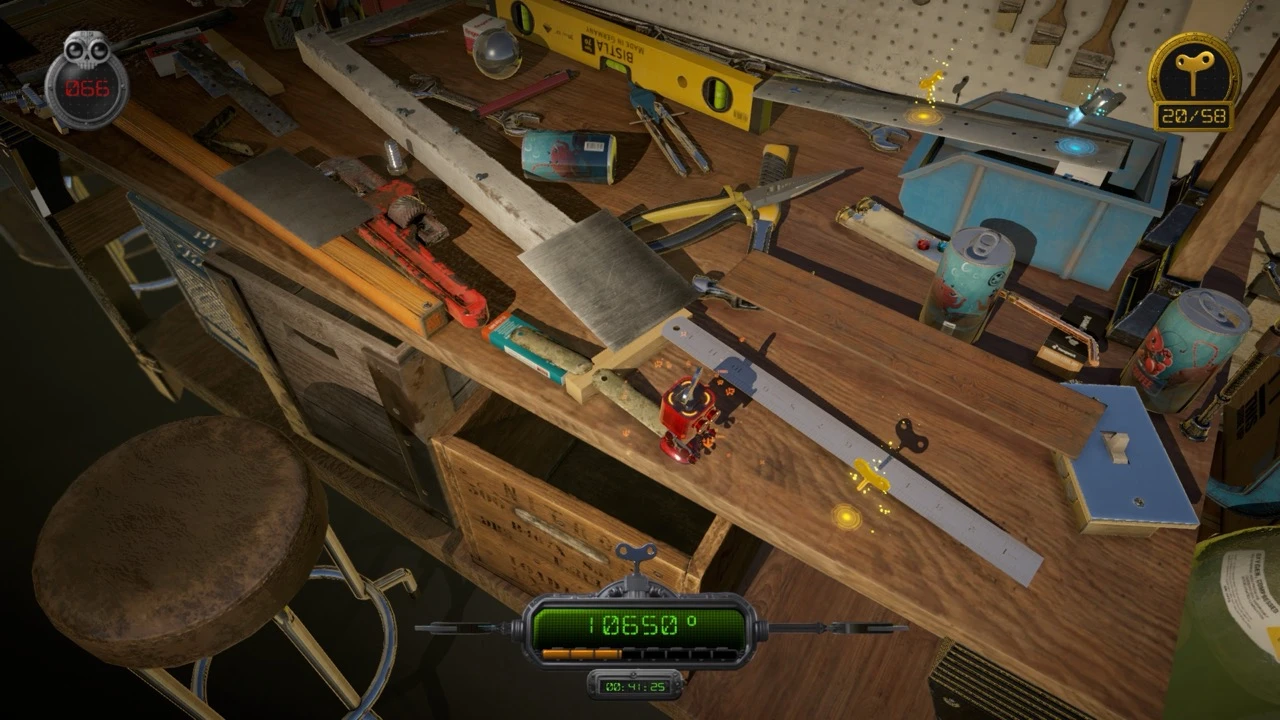
There is a fully simulated physics system at play here, and on paper it makes total sense. A small robot, top-heavy, walking across thin planks and cluttered surfaces, should be unstable. The challenge is learning restraint, reading the environment, and respecting momentum. The problem is that while the idea works, the execution feels more punishing than satisfying.
Most of the levels are about navigating obstacles, climbing over junk, walking across skinny beams, and squeezing through tight spaces. Even something as small as a nail sticking out of a table can send A-RED tumbling if you are slightly off. The game is constantly daring you to move slower, be more careful, and second-guess every input. That can be tense at first, but very quickly it became exhausting.
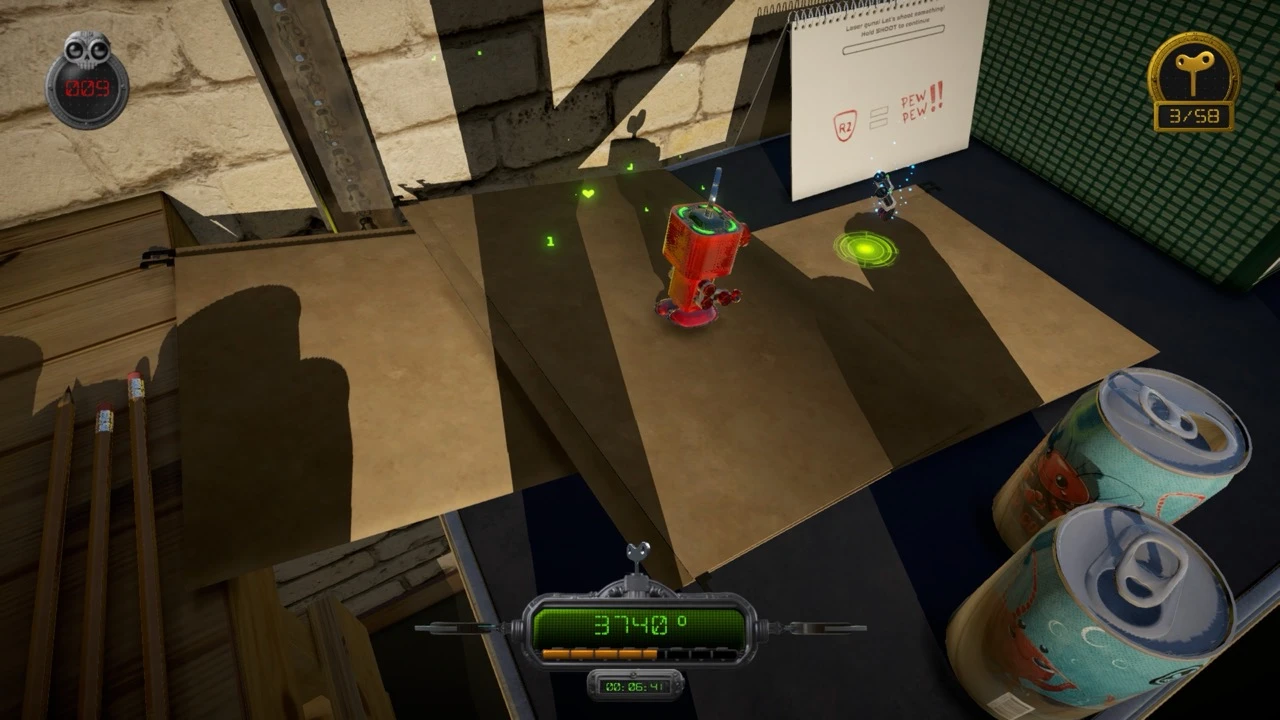
The single biggest issue, and the thing that pushed me from mild frustration to straight-up quitting, is the fixed camera. You have zero control over it. The camera angles are set by the game, and while they are clearly hand-crafted, they are often terrible for actually playing. It becomes really hard to judge distances, height differences, or whether you can safely fit on a platform. Sometimes you fall not because you made a bad decision, but because you literally could not see the space properly.
This gets worse as the environments become more vertical and cluttered. You are constantly guessing how far a drop is or whether a beam is wide enough. When you fail, it rarely feels like a lesson learned. It feels like the game shrugging and saying, try again.
Later on, A-RED gains access to a jetpack, which sounds like it should open things up. Instead, it adds another layer of awkwardness. You now have to manage the pitch of the robot mid-air and make sure he lands safely without tipping over. In theory, it is a cool extension of the physics system. In practice, it feels stiff and unintuitive, especially combined with that fixed camera. Landing becomes another stressful chore instead of a satisfying skill to master.
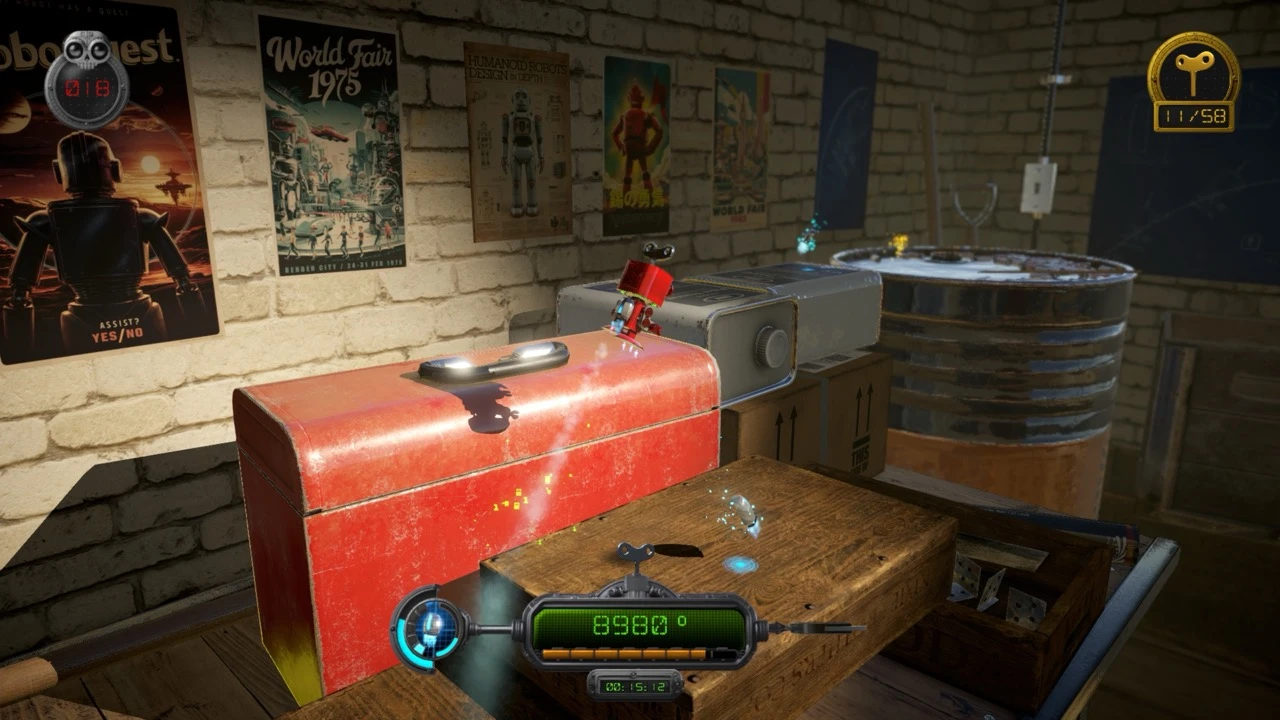
Presentation-wise, the game is very old-school. The visuals reminded me a lot of classic Crazy Machines-style games, with simple textures, industrial props, and a very utilitarian look. It is not ugly, but it is definitely made to feel dated. Animations are functional, not expressive, except for one genuinely charming touch. The more you fail, the more A-RED gets angry and starts swearing at you in “robotese”. It is a fun bit of personality that actually made me smile a few times, especially when the game was clearly testing my patience.
Sound design is fine, nothing special, but it does its job. The clanks, whirs, and mechanical noises fit the setting well enough. There is no soundtrack here that stuck with me, which kind of matches the overall vibe of the game.
After about an hour, I realized I was not having fun. I respected the idea, the commitment to physics, and the willingness to be unapologetically difficult. But difficulty alone does not make something engaging. For me, it crossed the line from challenging into tedious. Every mistake felt costly, every retry felt like busywork, and the lack of camera control killed any sense of flow.
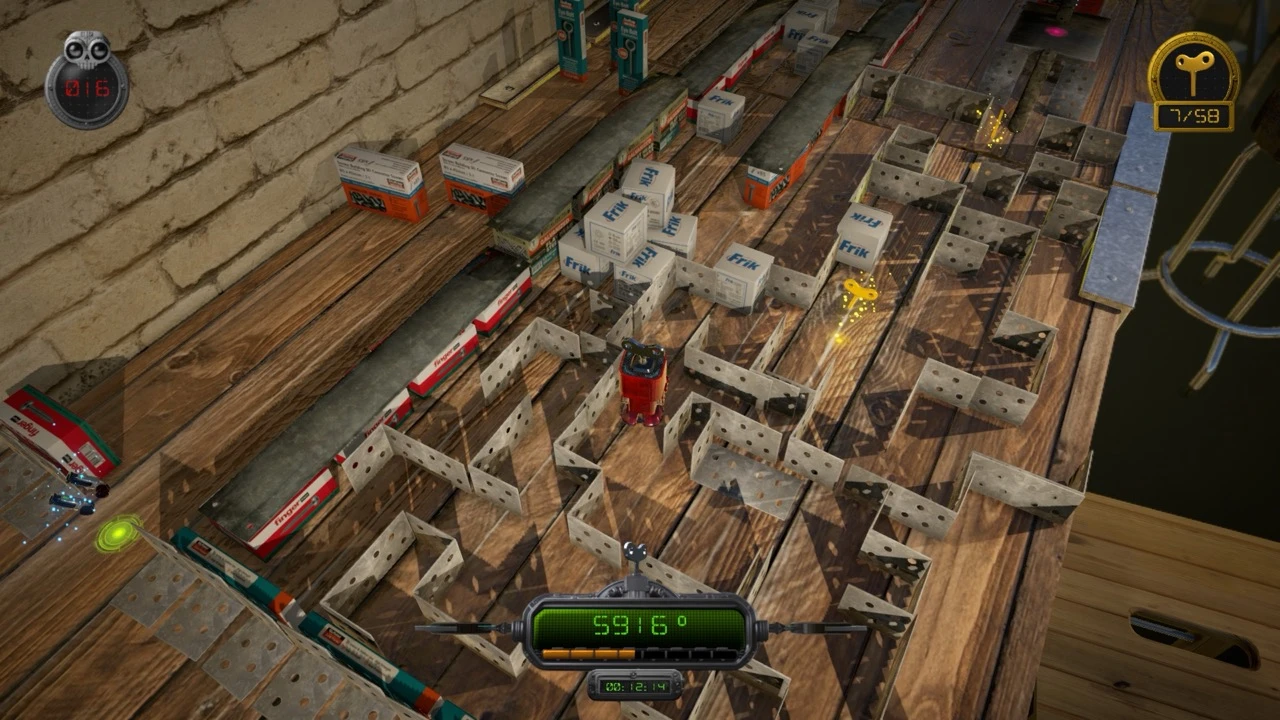
A-RED Walking Robot is clearly made with intention and care, and there will absolutely be players who love this kind of slow, punishing, physics-based design. I am just not one of them. I respect what it is doing, but that does not mean I think it is good or easy to recommend, even with a nice physical PS5 edition on the way.
If you enjoyed this one, read our Beholder: Conductor review and Crysis Remastered Trilogy PS5 review next.