007 First Light on PS5: the verdict
007 First Light was one of my favorite James Bond games after a roughly 14-hour PS5 playthrough. IO Interactive blends social stealth, gadgets, melee combat, and cinematic action into a convincing Bond origin story. Driving and some forced shootouts are weaker, but base PS5 performance was rock solid during my campaign.
I went into 007 First Light hoping IO Interactive would understand the assignment. By the end, I was sitting there thinking they may have delivered the best James Bond game ever made. This is not just Hitman wearing a tuxedo. This is Bond, fully formed as a game, with the charm, danger, improvisation, big locations, ridiculous confidence and emotional weight that make this franchise special.
What surprised me most is how grounded the story feels. There is no death ray, no cartoon world domination scheme, no empty nostalgia parade. The plot sits closer to the Craig era, with a modern threat built around a quantum AI system that starts hallucinating catastrophic mistakes and powerful people scrambling to erase the damage. That setup turns into a proper web of assassinations, betrayals, cleanups, coverups and desperate spycraft.

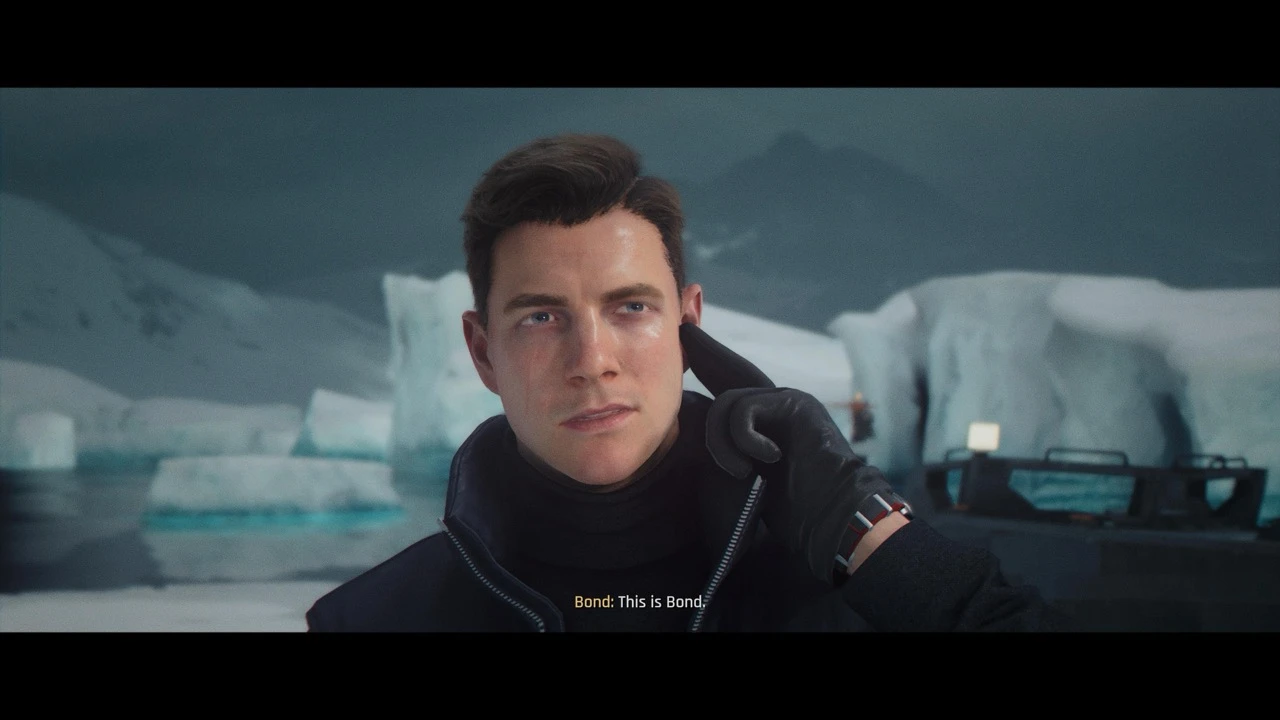
The young Bond at the center of it all is fantastic. He is semi-reckless, arrogant in that dangerous Bond way, but also charming enough that you understand why people keep giving him another chance. Patrick Gibson absolutely nails him. The smirk, the eyebrow raise, the one-liners, the physical confidence, the quick read of a room, it is all there. He does not feel like an imitation of a movie Bond. He feels like James Bond at the start of the myth.
The bluff mechanic might be my favorite small touch in the entire game. Get spotted somewhere you should not be and Bond can talk his way through it with a completely absurd excuse. Drop out of a vent and he might pretend to be the vent inspector. Climb out of an infinity pool and he will sell himself as the pool inspector. Get stopped by a guard and he can casually spin nonsense long enough to sucker punch the guy. It is funny, mechanically useful and perfectly in character.

The supporting cast is just as strong. Greenway starts as the mentor who clearly does not trust Bond, then slowly begins to see a younger version of himself in him. That relationship gives the story a strong emotional spine, especially once the game leans into its "earn the number" idea. Moneypenny is sharp and playful in exactly the right way. M pushes and pulls Bond like a boss who knows he is a problem, but also knows he might be the problem MI6 needs. Q is wonderful too, not just because he gives you gadgets, but because he becomes another father figure through small gestures, advice and quiet support.
And yes, there is a Bond woman, and she is great. She has that classic femme fatale quality, helping Bond just enough while clearly working her own angles. The game also knows it is setting up something bigger in the shadows, and without spoiling where it goes, I came away wanting the next game immediately.

The campaign is a globe-trotting adventure in the proper Bond tradition. You move from rooftops over London and the underground spaces of MI6 to a grand European castle hotel, a pirate-run city in Aleph, a gorgeous elite resort in Vietnam and a futuristic villain facility in the ice. IO has spent years mastering large, lived-in spaces, and that design language translates beautifully here.
Every major location feels dense. NPCs talk, move, gossip, argue and expose little story threads if you slow down long enough to listen. Those details are not just flavor either. Eavesdropping often gives you opportunities, pathways or social openings. It gives the game that improvisational Bond rhythm where the plan rarely survives contact with the mission, so you adapt, charm, steal, fight or lie your way forward.

Aleph is the best example. Bond needs to get into a high-end illegal auction, but the buy-in is $100,000 and the mission is off the books. So you wander this pirate city figuring out how to raise the money. You can pickpocket some of it, fight in a club, complete shooting challenges, play games, chase leads and generally hustle your way into the room. It feels incredible because it captures Bond as a man who can walk into chaos with no clean plan and still make the whole thing look deliberate.
Stealth, gadgets, and combat
If you are expecting Hitman-level freedom, that is not quite what this is. 007 First Light is a linear cinematic action-adventure with open sections, not a full assassination sandbox. But the Hitman DNA is absolutely there in the level density, the options, the disguises of intent, the way spaces are built around observation and opportunity. The difference is forward momentum. Bond does not patiently reset a puzzle ten times. Bond makes a mess, smiles, and keeps going.
Stealth is approachable, maybe even easy, but it works because it is fun and expressive. You sneak through restricted areas, perform takedowns from behind or around corners, and use the Q-Watch to hack radios, AC units, vacuums, laptops and other objects for distractions. Gadgets let you blind guards, confuse them with darts, drop flash mines, or use a laser to break locks and trigger small explosions. It is slick, quick and always readable.

When stealth breaks, the game lets Bond throw hands, and the melee combat feels far better than I expected. Dodges, parries, grabs and contextual environmental takedowns give fights a strong physical rhythm. You slam guys into walls, tables, railings and whatever object happens to be nearby. You throw wrenches, mugs and empty guns. Bond does not fight like a superhero. He fights like a stylish bastard who knows the room is also a weapon.
Gunplay is surprisingly strong too. The License to Kill moments are a smart way to control when Bond can escalate to lethal force, and once the guns come out, they feel good. The pistol has punch. Rifles crack loudly. Headshots are satisfying. You can shoot guns out of enemy hands, tag legs to stun them, close in for a takedown, throw an empty weapon, grab another one and keep the momentum going. The small ammo economy helps because it pushes you to mix shooting, movement and melee instead of hiding behind cover forever.
That said, the forced shootout arenas are the one part of the combat that does not always land cleanly. The actual feel of shooting is great, but some enemy positions, waves and arena layouts feel slightly off. I cannot point to one single fatal problem. It is more that the game is at its best when combat erupts from infiltration, and less convincing when it locks you into a room and says, alright, clear these waves now.

I also wanted more gadget freedom. For a lot of the campaign you are limited to a couple of gadgets at a time, which feels restrictive for Bond. The tools you get are cool, but I wanted the game to trust me with a bigger toy box. There is a late sequence in the Q-Lab where you basically get the ultimate version of the Q-Watch and can hack, overload and explode all sorts of absurd prototypes. It is glorious, and it made me wish the regular campaign opened up a little more often.
The driving sequences are the weakest part. They are not terrible, but they are very on rails. For a Bond game, I wanted the car to feel more dangerous and playful. Give me machine guns, oil slicks, rockets, absurd shortcuts, gadget chaos, the whole fantasy. Instead, the chases mostly function as cinematic breaks. They look good, but they do not have the same mechanical spark as the stealth, melee or gunplay.
Campaign length and Tactical Simulations
My playthrough took around 14 hours, and while a few stretches feel padded, most of that extra time serves the story and the world. The campaign has room to breathe, which matters because this is an origin story. Bond's relationships need time. His failures need time. His transformation into 007 needs time. A two-hour film could not have done this exact arc with the same texture.

After the campaign, Tactical Simulations give the game a proper IO-style replay hook. You can revisit specific encounters and missions, complete challenges, unlock tools and cosmetics, and start treating sequences like score-driven playgrounds. It is not a full replacement for Hitman's endless escalation structure, but it is absolutely the kind of mode I can see IO expanding over time. I hope they do, because I want more missions in this framework.
007 First Light PS5 performance and presentation
Visually, 007 First Light is stunning on PS5. The locations are gorgeous and packed with detail, from luxury interiors and crowded hubs to cold industrial facilities and sunlit resorts. Character models are excellent, facial animation is consistently strong, and the performances sell both the charm and the pain behind this version of Bond.
The audio is just as good. Guns hit hard, punches crunch, crowds create believable noise, and the music knows exactly when to swell into Bond mode. When that score rises at the right moment, the game understands the fantasy completely. Performance on a base PS5 was rock solid for me too, with no major issues across the campaign.

007 First Light is not perfect. The driving should be better, some shootouts feel awkwardly staged, and the gadget loadout could be more generous. But those complaints barely dent what IO has achieved here. This is a confident, cinematic, mechanically varied and genuinely exciting Bond game that respects the franchise without being trapped by it.
Most importantly, it made me believe in this new Bond. By the time he earns the number, it feels deserved. IO Interactive has built a modern 007 origin story that captures the fantasy, updates the stakes, and gives the character room to grow. This is one of the best games of the year, one of the best Bond games ever made, and easily one of my favorite PS5 experiences in a long time. Thanks for reading!
See where 007 First Light ranks among the best PS5 games of 2026.