Project Songbird is a personal, unsettling psychological horror game that nails story and atmosphere, even when its combat systems hold it back
If you play a lot of indie horror lately, you already know the pattern. Big ambition, tiny budget, big claims, then a game that ends up feeling unfinished in all the wrong places. Project Songbird is one of the few that mostly escapes that trap. It is clearly made with limits, but it also feels made with intention.
At surface level, the premise is straightforward. You play as Dakota, a recording artist stuck in a creative rut, pushed by management to deliver the next album. Her manager suggests a month of isolation in a remote cabin in the Appalachian wilderness, because other artists came back from similar retreats with their best work. Dakota agrees, expecting focus and clarity, then quickly finds out this place is not peaceful at all.
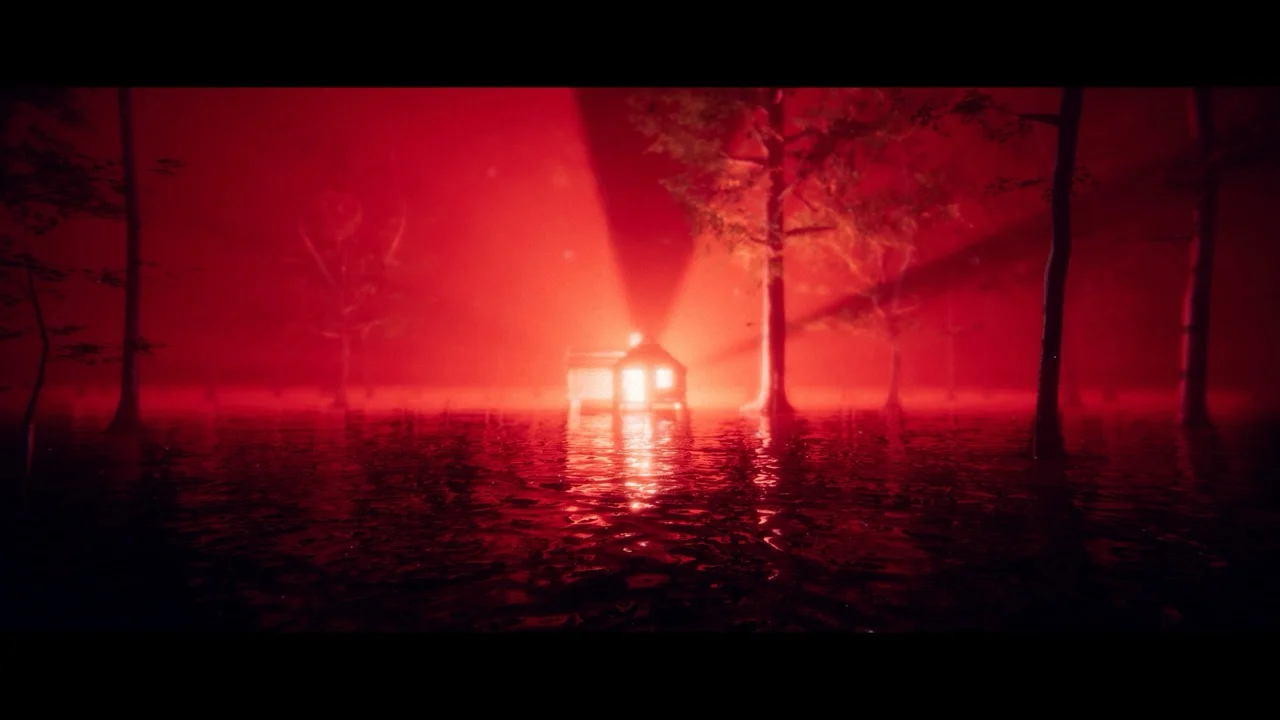
That setup could have gone full cliche and stayed there, but Project Songbird does more with it than I expected. The game keeps asking one core question, are the horrors around Dakota real, or is this what trauma feels like when it finally breaks through all the noise and denial. By the end I still was not fully sure where the line is, and honestly that ambiguity works in the game’s favor.
The story unfolds across three acts. The opening stretch is deliberately grounded. You explore the cabin and surrounding paths, collect items, read notes, solve environmental puzzles, and start noticing odd details that feel slightly wrong before anything explodes into full horror.
One detail I really appreciated is that Dakota reacts like a believable person when things first get weird. She does not instantly become a fearless horror protagonist. Her confusion, panic, and disbelief feel natural, and that matters. A lot of smaller horror games skip this and jump straight to "run from monster" mode. Here, that first contact with the supernatural has weight.
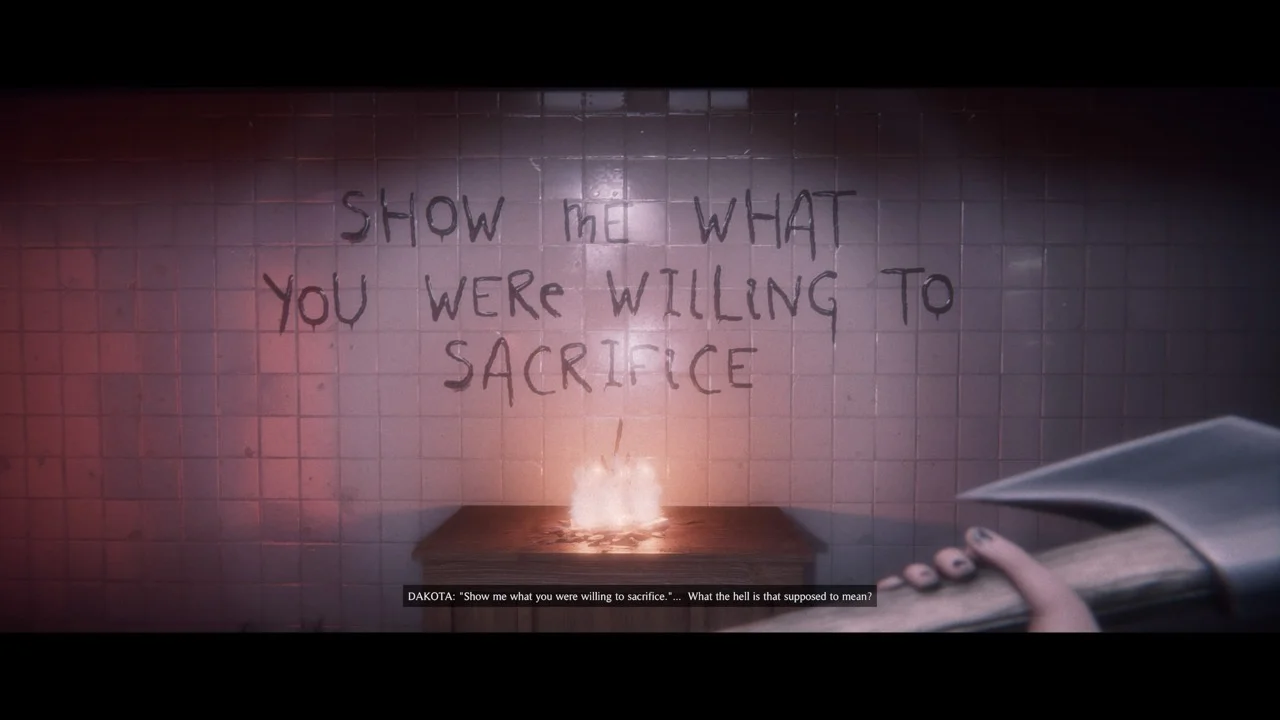
As the acts progress, the game leans deeper into grief, guilt, and self-destruction. Without spoiling key beats, the trauma at the center of Dakota’s life feels real, not just there for shock value. The game turns emotional pain into places, enemy encounters, and recurring motifs. By act three, you are dealing with disembodied voices, distorted spaces, and hostile creatures while still trying to finish that album, and that pressure between creative expectation and emotional collapse becomes the whole point.
The voice performance is a huge reason this works. Dakota’s actor carries the game through quiet moments, panic spikes, and emotionally raw scenes. Supporting performances are strong too, but Dakota is the anchor, and she sells the vulnerability and exhaustion the story needs.
From a gameplay perspective, this is mostly a narrative-first exploration game with puzzle solving, some resource management, and occasional combat. The puzzle design is solid. The solutions are readable if you pay attention to notes, visual clues, and room layout.
There is also a recorder mechanic tied to Dakota’s music process. You can capture ambient sounds in the environment, which fits the theme and reinforces the idea that she is still trying to create even while everything falls apart. The recorder can also help detect movement through walls in certain moments.
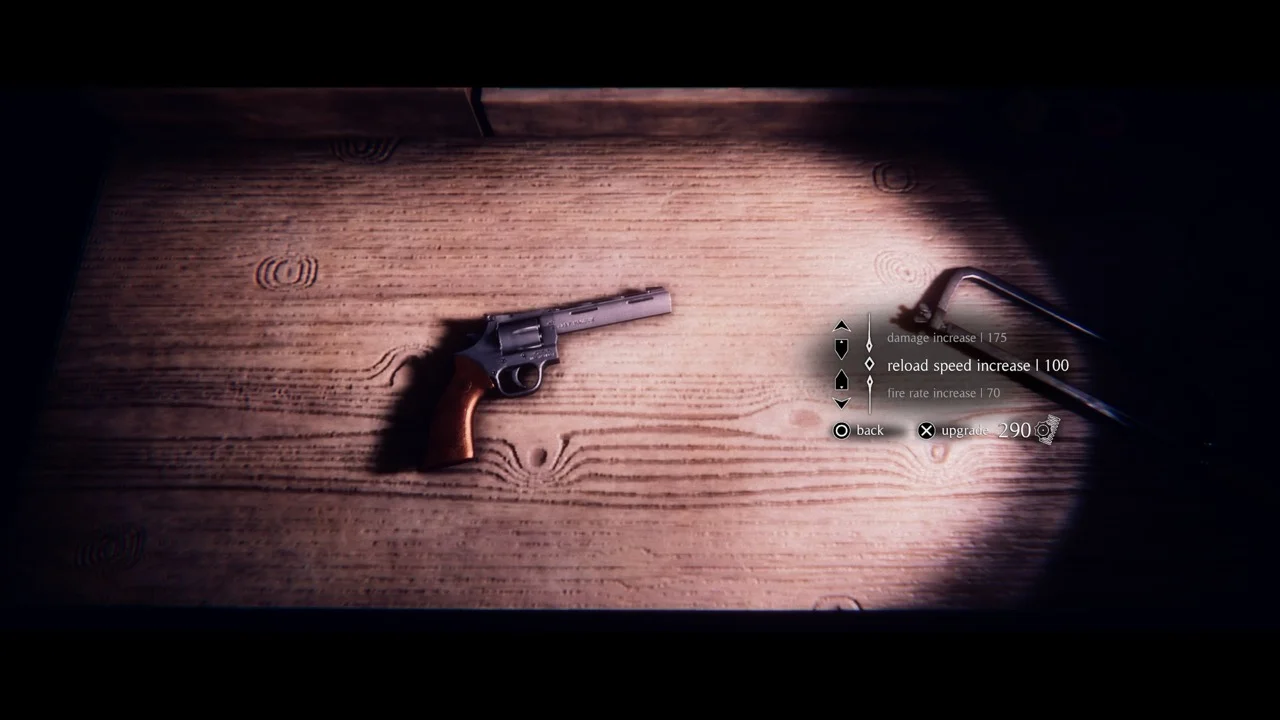
Where things get shaky is combat and stealth. You get an axe plus firearms later, and there is a workbench system for upgrades and repairs. In theory, that sounds fine. In practice, it never really clicks. Ammo is scarce as there are like 15 bullets in total you can find in the game, enemy encounters in late sections can stack pressure fast, and the shooting itself feels stiff. Hit feedback is inconsistent, melee is clunky, and stealth rarely feels dependable enough to be a satisfying alternative.
To be clear, this is not a combat-focused game, and I do not need it to play like a shooter. But if a game asks me to fight or sneak under stress, those systems still need to feel trustworthy. Here, they mostly feel bolted onto a stronger narrative core.
Enemy variety is also limited. There are only two main enemy types, one aggressive brute style enemy, and one stalking type, like the Angels from Doctor Who, that creates tension through visibility and movement rules. That second type is by far the standout, because encounters with it are genuinely stressful. The audio cues, the spatial pressure, and the sense that you are one mistake away from disaster work very well.
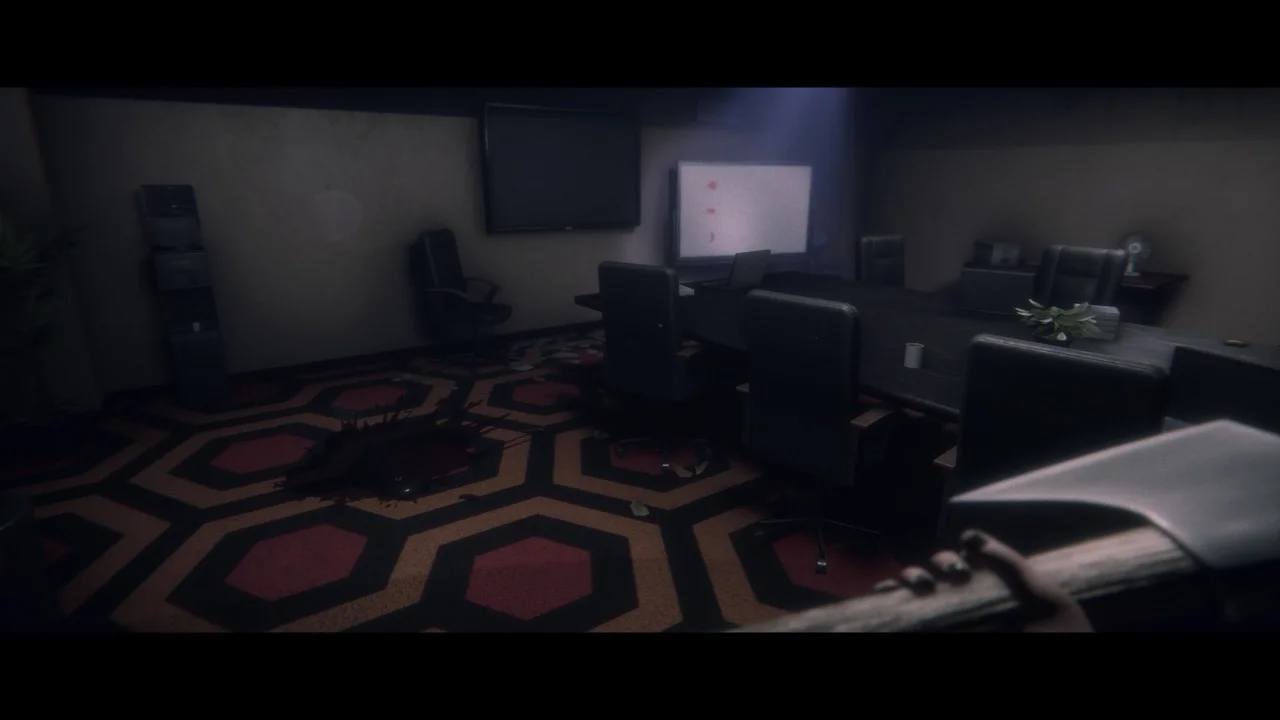
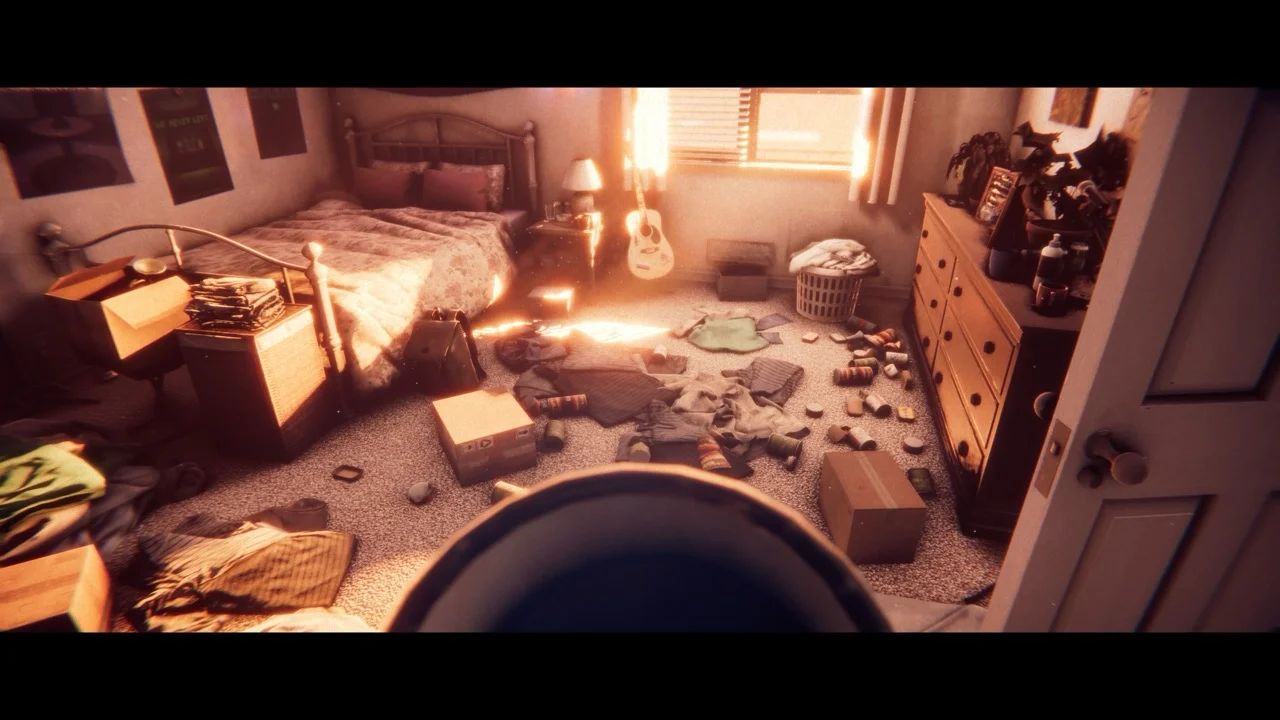
The visual presentation is one of the game’s biggest strengths. The environments are carefully composed, especially once the story shifts deeper into nightmare territory. Lighting and color do a lot of heavy lifting, warm tones in daytime spaces, colder palettes in nocturnal sequences, and occasional surreal flourishes that communicate Dakota’s mindset better than exposition ever could.
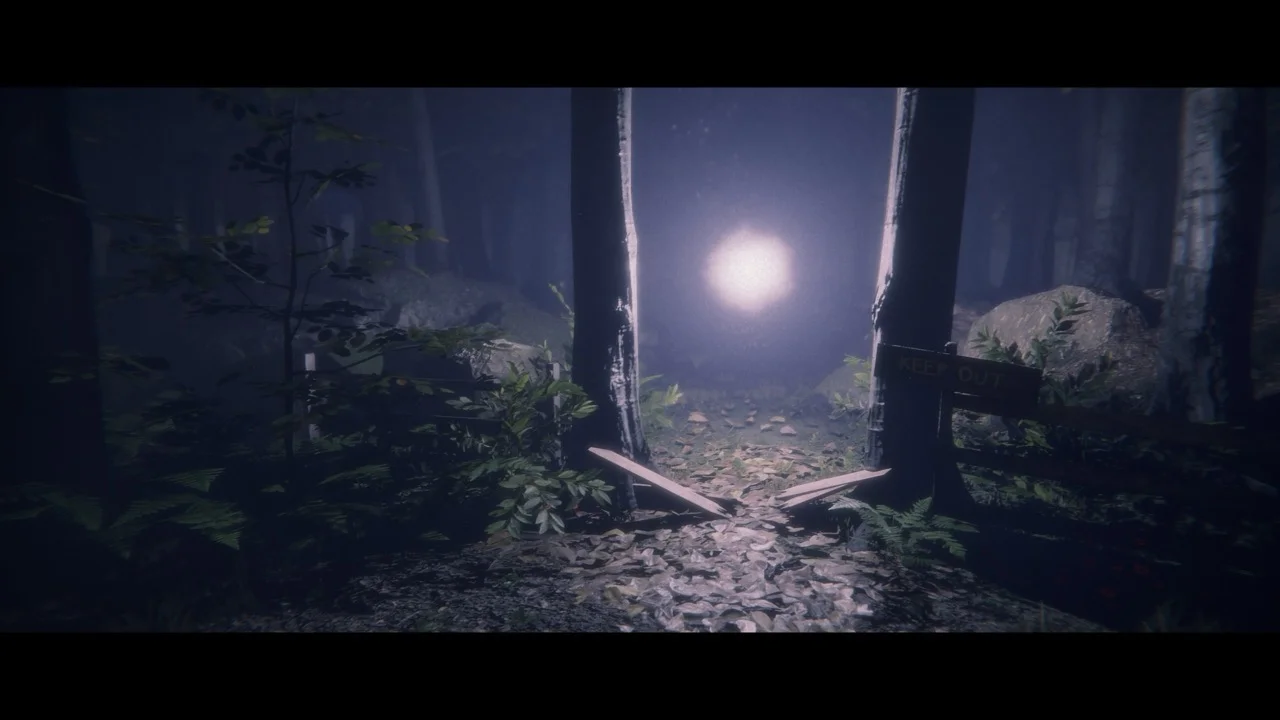
There is an old-film style grain and heavy post-processing look that gives the game personality. Plus the game advises you to play in widescreen mode, with two black bars at the top and bottom of the screen and that only adds to the cinematic feeling. Sometimes it is effective, sometimes it can feel a bit too much and reduce clarity. Even the quiet forest spaces feel loaded with tension.
Audio is another major win. Ambient sound design, environmental cues, and the score all support the game’s emotional tone. The world does not rely only on jump scares, it relies on unease. Its best moments are when it lets dread build slowly.
On PS5, performance is serviceable but not perfect. I ran into occasional frame dips and some rough edges in animation and AI behavior during chase or stealth sections. None of it was a total deal-breaker for me, but it is noticeable, and it adds to the feeling that gameplay systems needed another polish pass.
Even with those issues, I came away impressed. Project Songbird is one of those games where the heart of the experience is much stronger than its weakest mechanics. When it focuses on story, voice work, atmosphere, and thematic cohesion, it is excellent. When it pushes combat and stealth too hard, it wobbles.
What makes it stand out is that it has something real to say about creative pressure, grief, and the damage that can come from living inside your own head for too long. It is not subtle all the time, and the final stretch may not work equally well for everyone, but I respect how committed it is to its themes.
Project Songbird is not for everyone. If you want mechanically tight horror combat, this will frustrate you. If you want a story-led psychological horror game with strong performances, memorable atmosphere, and an emotionally heavy core, this is worth playing.
I enjoyed this one a lot. The combat needed more work, stealth needed more reliability, and I can see why some players will bounce off those sections. But Dakota’s journey, the way the game handles grief, and the overall presentation stuck with me after the credits. For an indie horror built with this level of personal intent, that is a big achievement. Thanks for reading!