Luna Abyss looks like another retro-styled FPS at first glance, but its lock-on bullet hell combat, phenomenal movement, and strange lunar world make it feel genuinely fresh
I went into Luna Abyss expecting a stylish boomer shooter. That is what it looks like from a distance: big guns, chunky enemies, gothic sci-fi spaces, and a pace that seems built for constant forward motion. What I actually got was much weirder and much more interesting. This is not really a throwback FPS. It is closer to a first-person bullet hell game where movement, lock-on shooting, and arena awareness matter more than twitch aiming.
That difference is what makes it special. Hold L2 and your weapon locks onto enemies, letting you focus on the more important part of the fight: staying alive while huge, fat projectiles fill the room. Instead of planting your feet and clicking heads, you are jumping, double jumping, dashing, grappling, weaving through incoming fire, and using every inch of the arena to stay ahead of the chaos. Once that rhythm clicks, Luna Abyss feels fantastic.
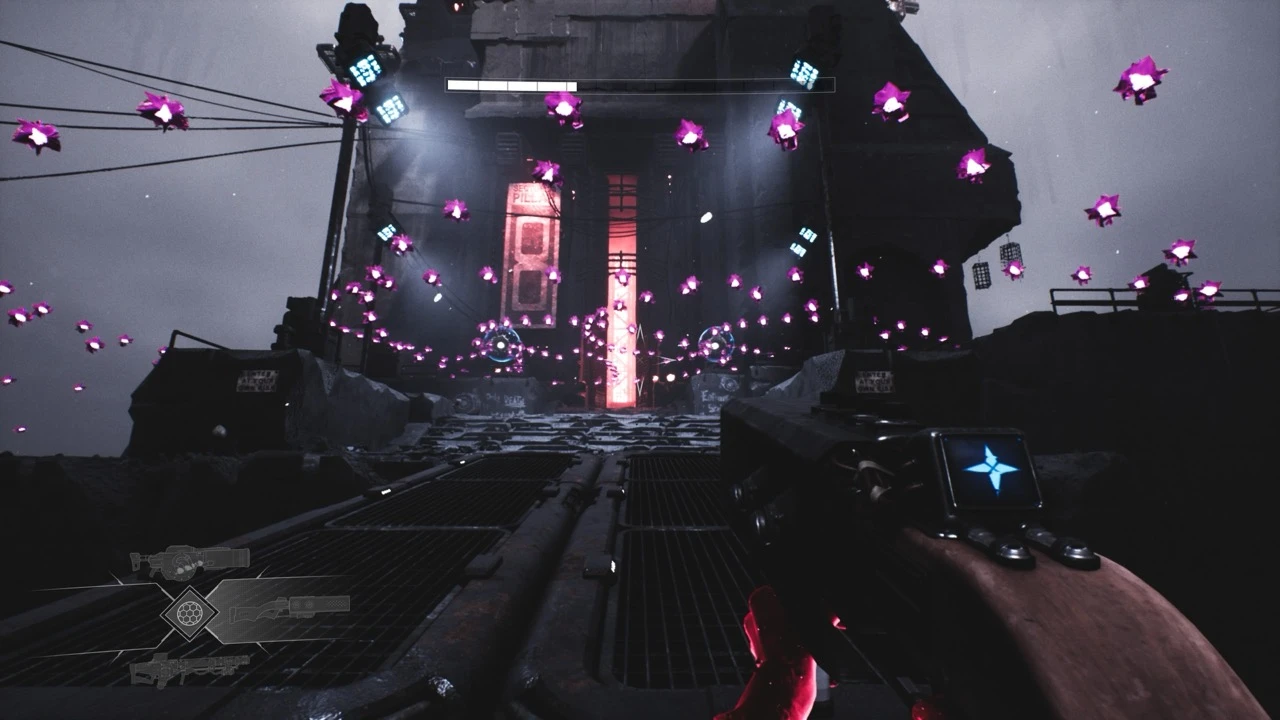
The setup is immediately cool too. A red Moon appears in Earth's orbit, humanity does what humanity always does in sci-fi, and they colonize it. Then they turn it into a penal colony, because apparently the mysterious red moon full of impossible structures was not already asking for trouble. Things obviously go wrong. An alien infection spreads through the colony, twisting the people who made it there into hostile, mutated creatures.
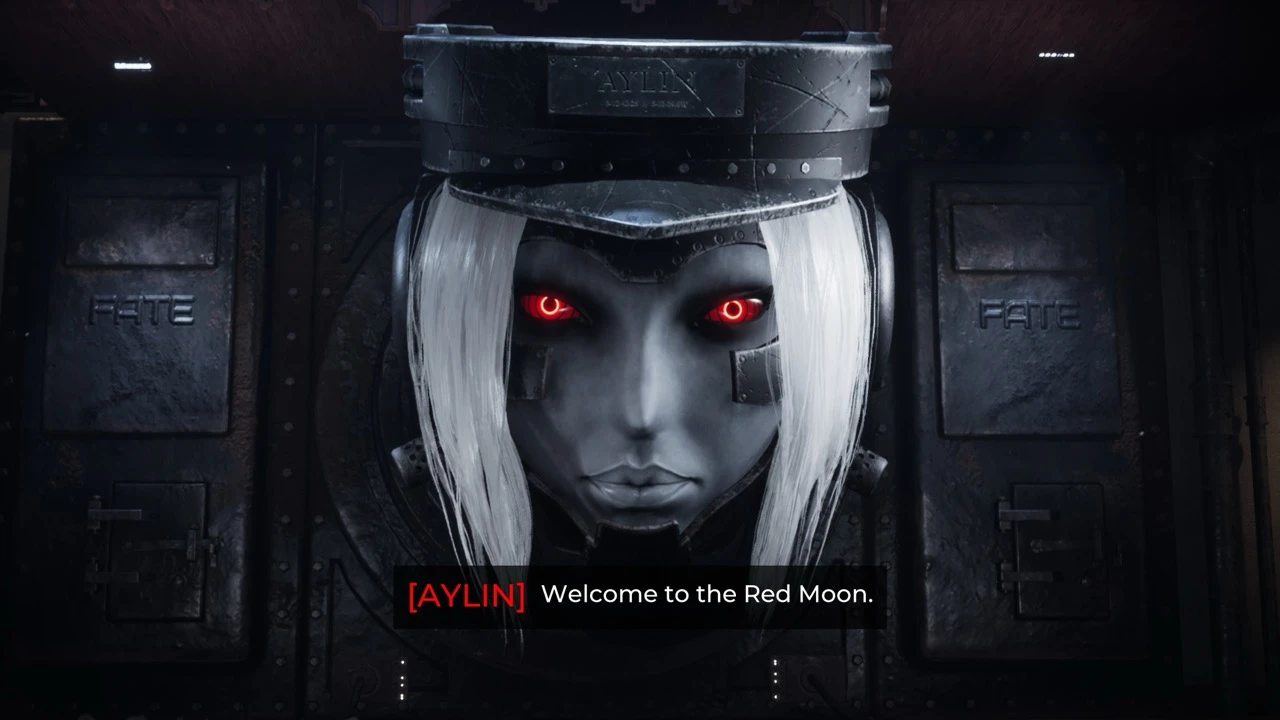
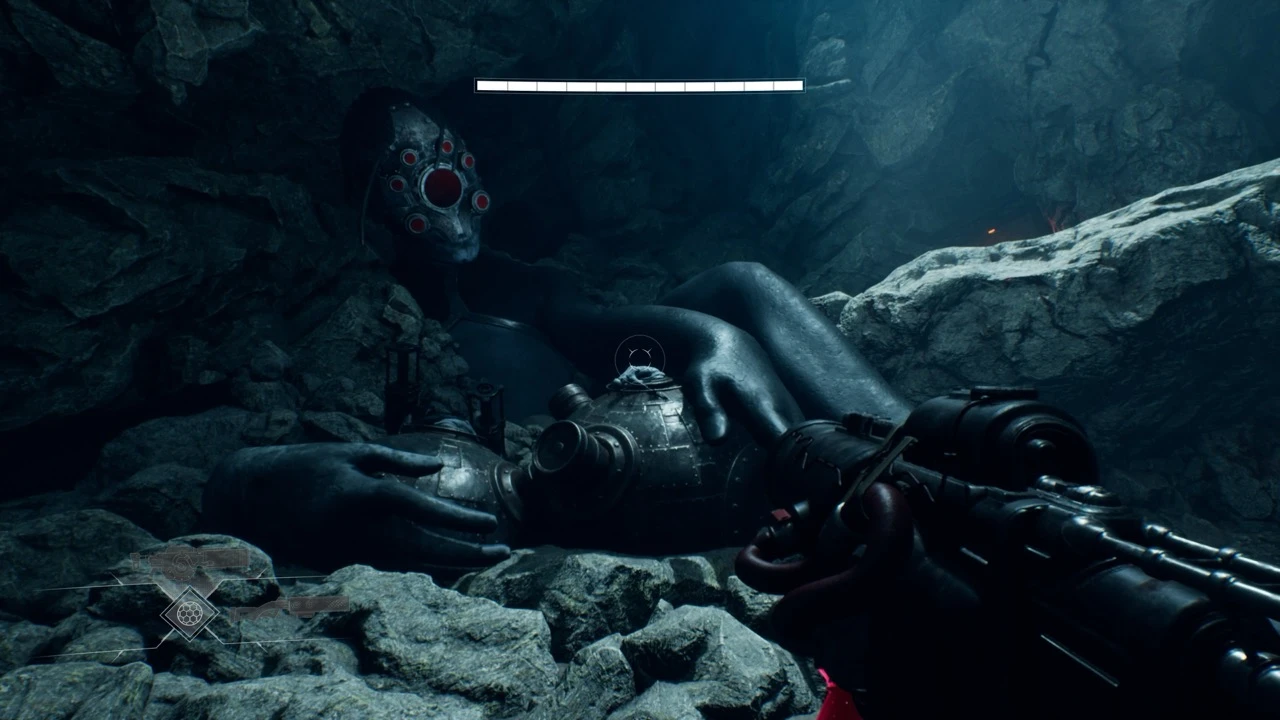
You play as Fawkes, a convict sentenced to serve as a Warden inside this prison. Your handler is the AI that runs the facility, a robotic snake-like thing with the face of a hot woman. It is bizarre, unsettling, a little horny, and somehow completely fits the tone. Luna Abyss knows it is weird. More importantly, it commits to that weirdness without constantly winking at you.
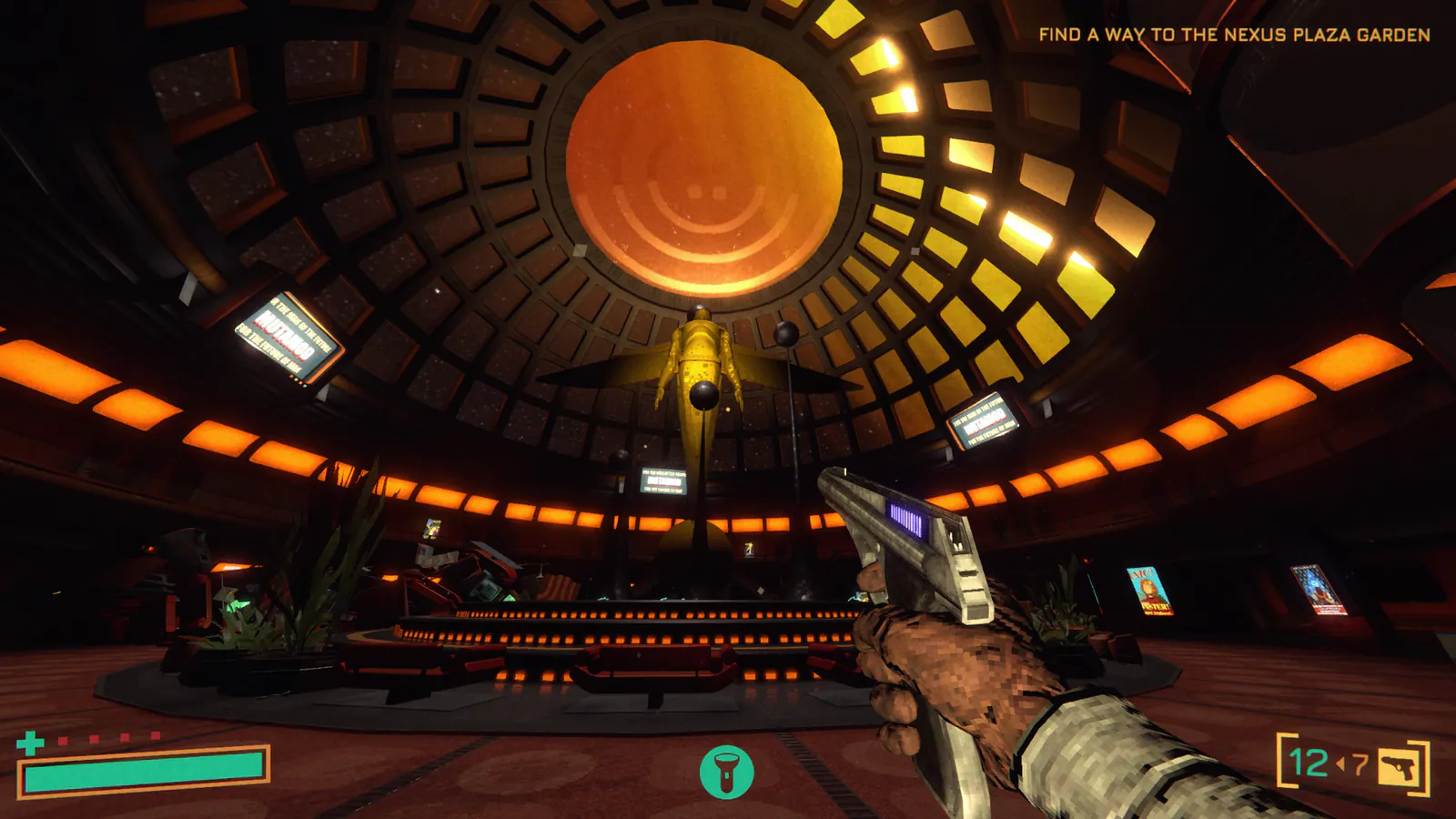
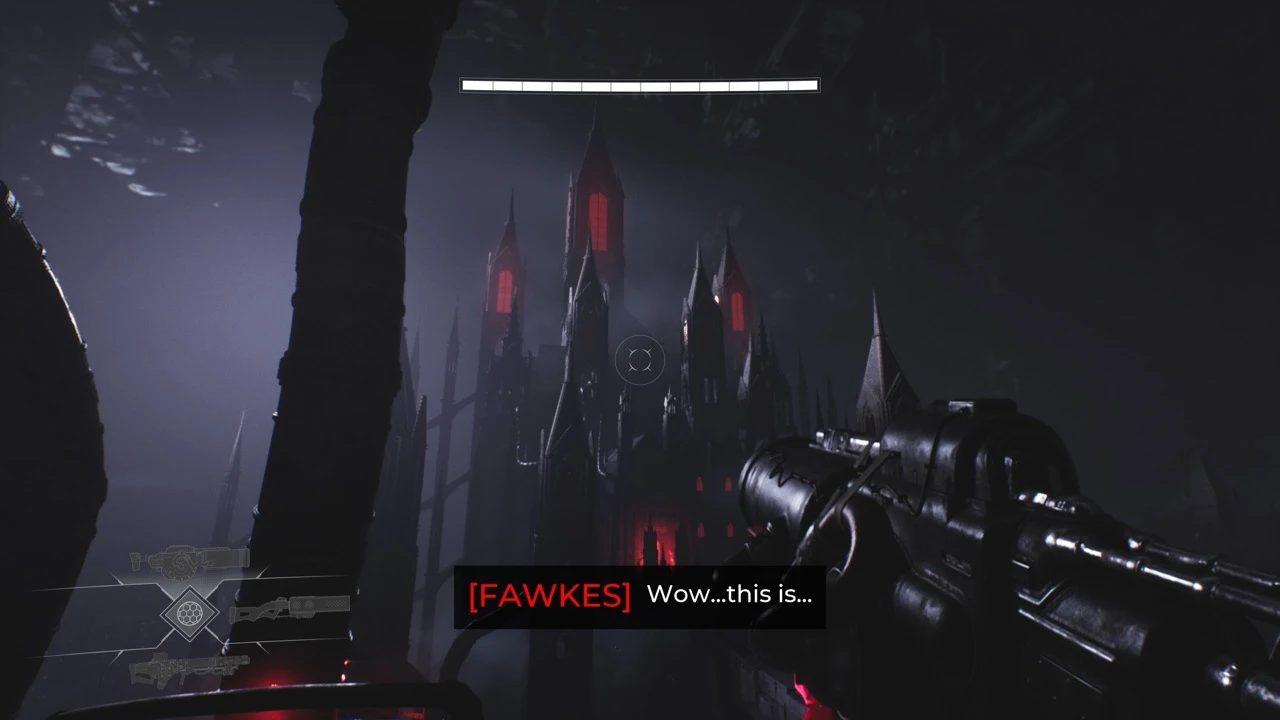
The world is the real star. This lunar prison is not just grey corridors and industrial machinery. Early on, it leans into massive, oppressive architecture that reminded me of Blame!, with endless concrete spaces stretching out in impossible directions. Then you move through tunnels and mechanical chambers that feel like they could have been pulled from Destiny's Vault of Glass. Later, the game sends you by train to a gothic, Hogwarts-like city, except the train has a face and talks to you. It is absurd in the best way.
The level design is excellent because it understands the movement system. Luna Abyss keeps placing tiny platforms, far-off ledges, and impossible-looking gaps in front of you, then quietly trusts you to reach them. Jumping, double jumping, dashing, and grappling all feel responsive and clean. There is a real satisfaction in spotting a platform across a giant void, thinking there is no way you can make it, then chaining your tools together and landing exactly where you wanted to land.
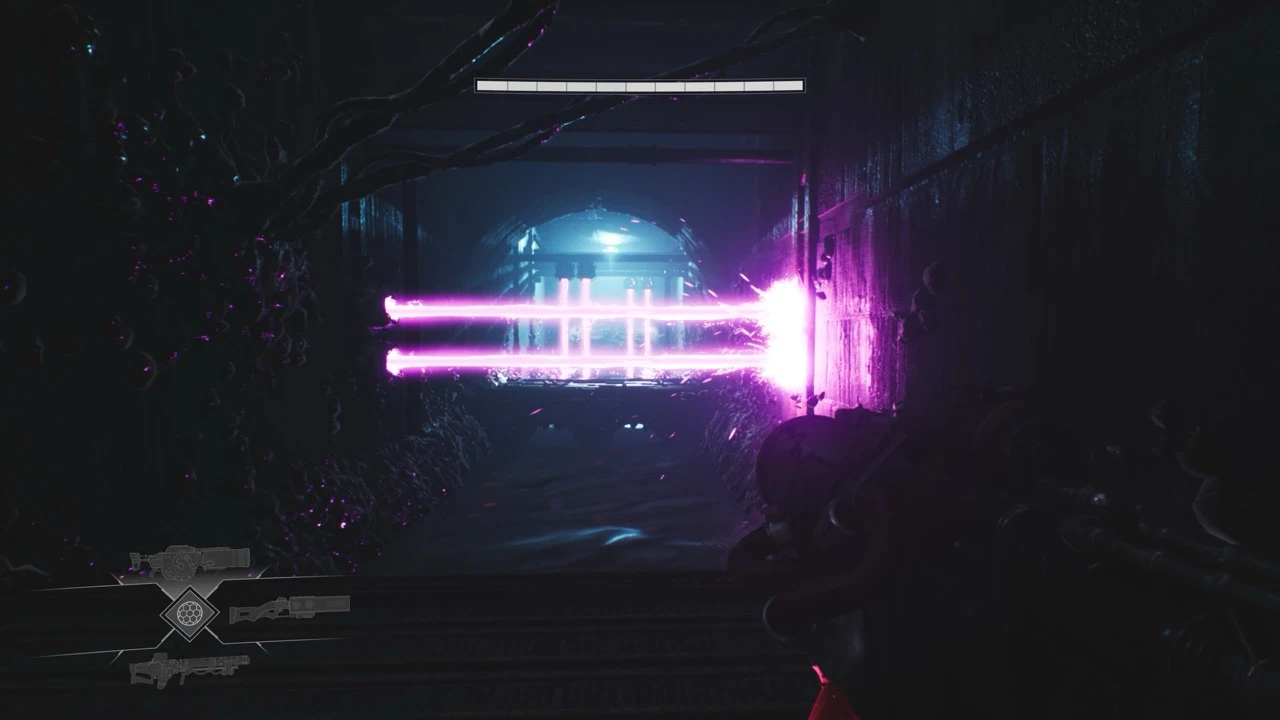
That same design carries into combat arenas. Many encounters lock you into tight spaces and force you to kill everything before the way forward opens. On paper, that could have been repetitive. In practice, the arenas are built around motion. You are constantly reading enemy positions, dodging slow but dangerous bullet patterns, finding grapple points, and deciding when to commit to damage. It feels almost like a shmup translated into first person.
The lock-on system might sound like it would remove skill from the gunplay, but it does the opposite. By taking some of the manual aiming pressure away, Luna Abyss shifts your attention to dodging, timing, positioning, and weapon choice. You still need to know what to shoot, when to shoot, and how to survive long enough to finish the job. The guns also feel great. They hit hard, they sound nasty, and they give enough feedback that every kill has weight.
There are only four main weapons, but each one has a clear job. The scout rifle is your dependable all-rounder. The shotgun is devastating up close and also required for enemies with blue shields. The sniper comes into play when certain shields flash purple for a brief moment, forcing you to read the opening and react properly. Then there is the big rocket launcher, which can lock onto multiple targets and absolutely obliterate groups when used well.
That might not sound like a huge arsenal, but Luna Abyss gets plenty of mileage out of it through enemy variety. The game keeps introducing new shield rules, attack patterns, and enemy combinations that force you to swap weapons and adjust your movement. You cannot just hold lock-on and autopilot through every room. If you stop dodging, you die quickly. If you ignore shield colors, you waste time and take unnecessary damage. If you panic in a busy arena, the screen fills with projectiles and the fight falls apart fast.
Exploration gives the game a nice extra layer too. Hidden upgrades are tucked across the levels, and they are worth chasing. Some improve your weapons, others increase your survivability, and you will want both. Luna Abyss is not brutally punishing, apart from the difficulty spike in the last boss fight, but Fawkes can go down quickly if you get careless. Those upgrades make you stronger without flattening the tension, which is exactly how this kind of game should work.
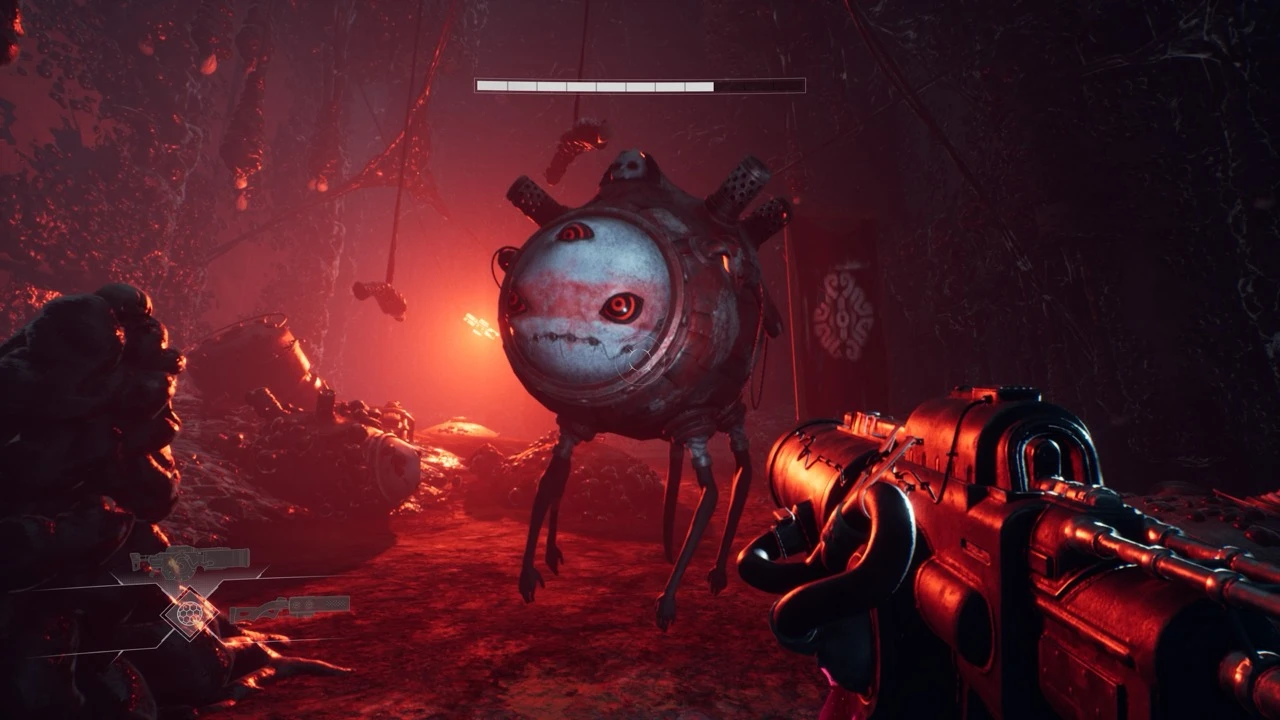
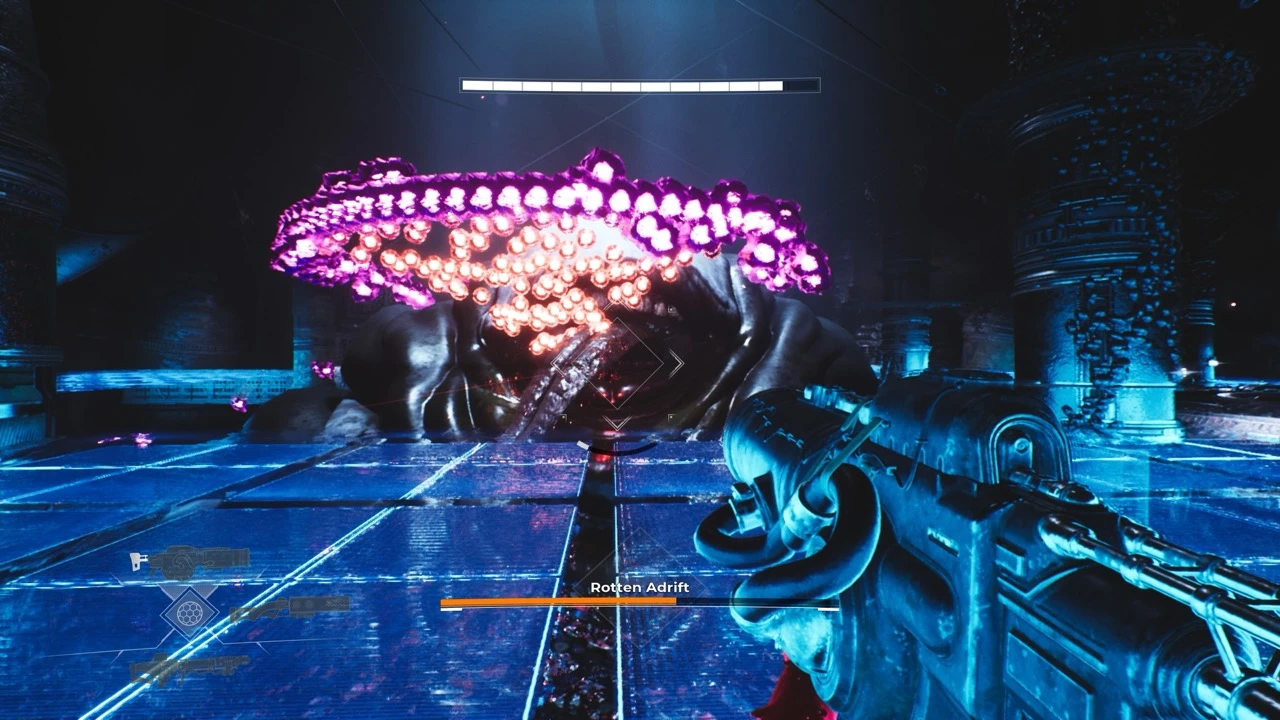
The bosses are another highlight. They usually sit inside huge reactor-like spaces, and the scale of those rooms gives the fights a theatrical quality. The best encounters combine the game's strengths: readable bullet patterns, aggressive movement, lock-on damage windows, and just enough spectacle to make the whole thing feel grand without becoming messy. Even when I failed, I usually knew why. I mistimed a dash, stood still too long, or got greedy with damage.
Visually, Luna Abyss is striking. It has that sharp, surreal sci-fi look where the world feels both ancient and synthetic. The color choices are bold, the spaces are huge, and the creature designs are strange in a way that actually sticks in your head. The other Wardens you meet and later get to control for brief moments, look odd and memorable too, like they belong to a completely different kind of prison mythology. It all feels cohesive even when the game is throwing wildly different imagery at you.
On PS5, performance is mostly smooth, but not perfect. When arenas get packed with enemies, bullets, explosions, and effects, the frame rate can stumble a little. It never ruined the game for me, and most of the time it runs well, but you do feel those dips because the combat is so movement-heavy. In a game where dodging through projectile patterns is central to the experience, even small drops are noticeable.
That is really my main complaint. Luna Abyss is so focused and so tactile that the occasional performance stumble stands out more than it might in a slower game. I also would not have said no to one or two more weapons, even though the four included are well designed. Speaking on weapons, I would have loved the ability to quickly swipe on the touchpad on the DualSense to quickly swap weapons as using the d-pad mid battle didn't feel all that good. Still, these are minor issues in a game that gets so much right.
Luna Abyss surprised me in the best way. It looks familiar for about five seconds, then reveals itself as something much stranger, smarter, and more exciting. The combat has a brilliant rhythm, the movement feels phenomenal, the world is wonderfully bizarre, and the level design constantly rewards curiosity and confidence. It is one of those games where the phrase "FPS with a twist" actually means something.
If you are coming in expecting a standard retro shooter, you may need a little time to adjust. If you are open to a bullet hell FPS built around dodging, lock-on shooting, and fast traversal through massive alien architecture, Luna Abyss is fantastic. I adored it, and I strongly recommend it. Thanks for reading!
See where Luna Abyss ranks among the best PS5 games of 2026.
If you enjoyed this one, read our Battlefield 6 review next.