CloverPit has a brilliant hook and incredible moment-to-moment tension, but it struggles to deliver the consistent power fantasy that makes this genre so replayable
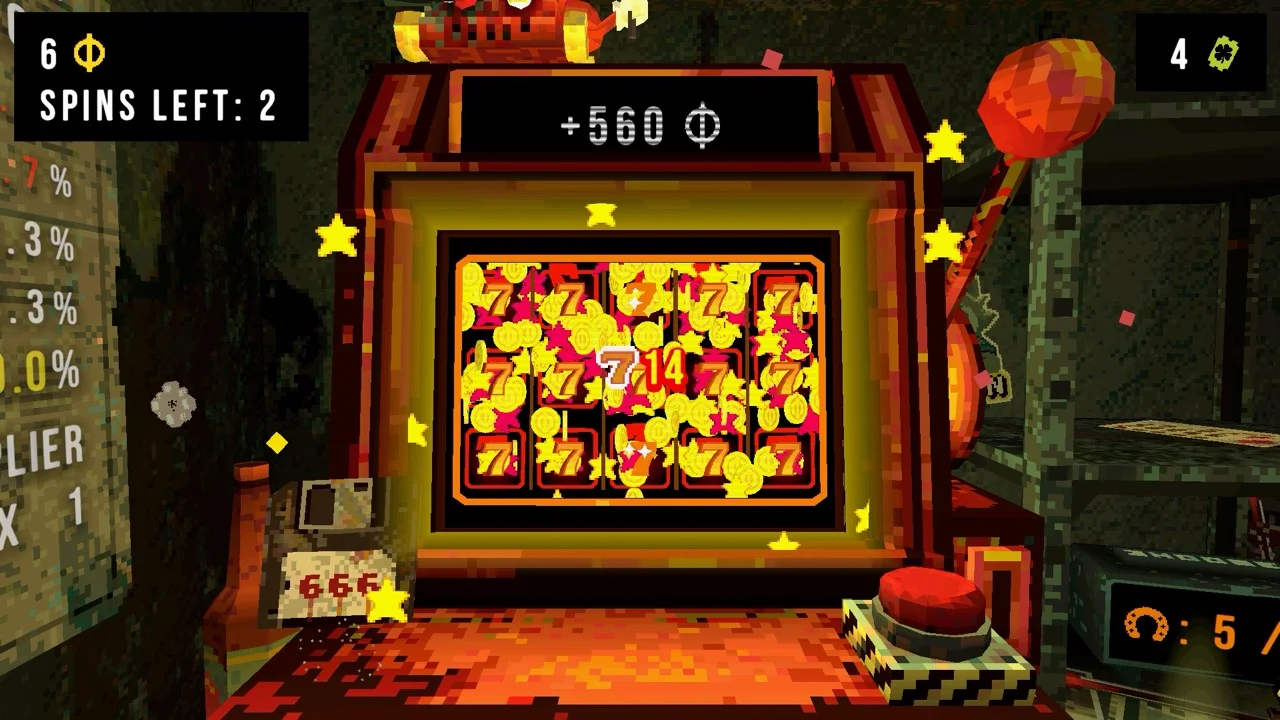
CloverPit grabbed me in the first run. The setup is simple and immediately strong: you are trapped in a grim, satanic-looking cell, staring down a slot machine while a debt timer closes in. Pulls can generate coins based on symbol patterns, and those coins go straight into an ATM to pay what you owe before the deadline hits. Miss the target and your run is over. That pressure gives every spin weight, and early on it feels like exactly the kind of demonic arcade loop that can eat entire weekends.
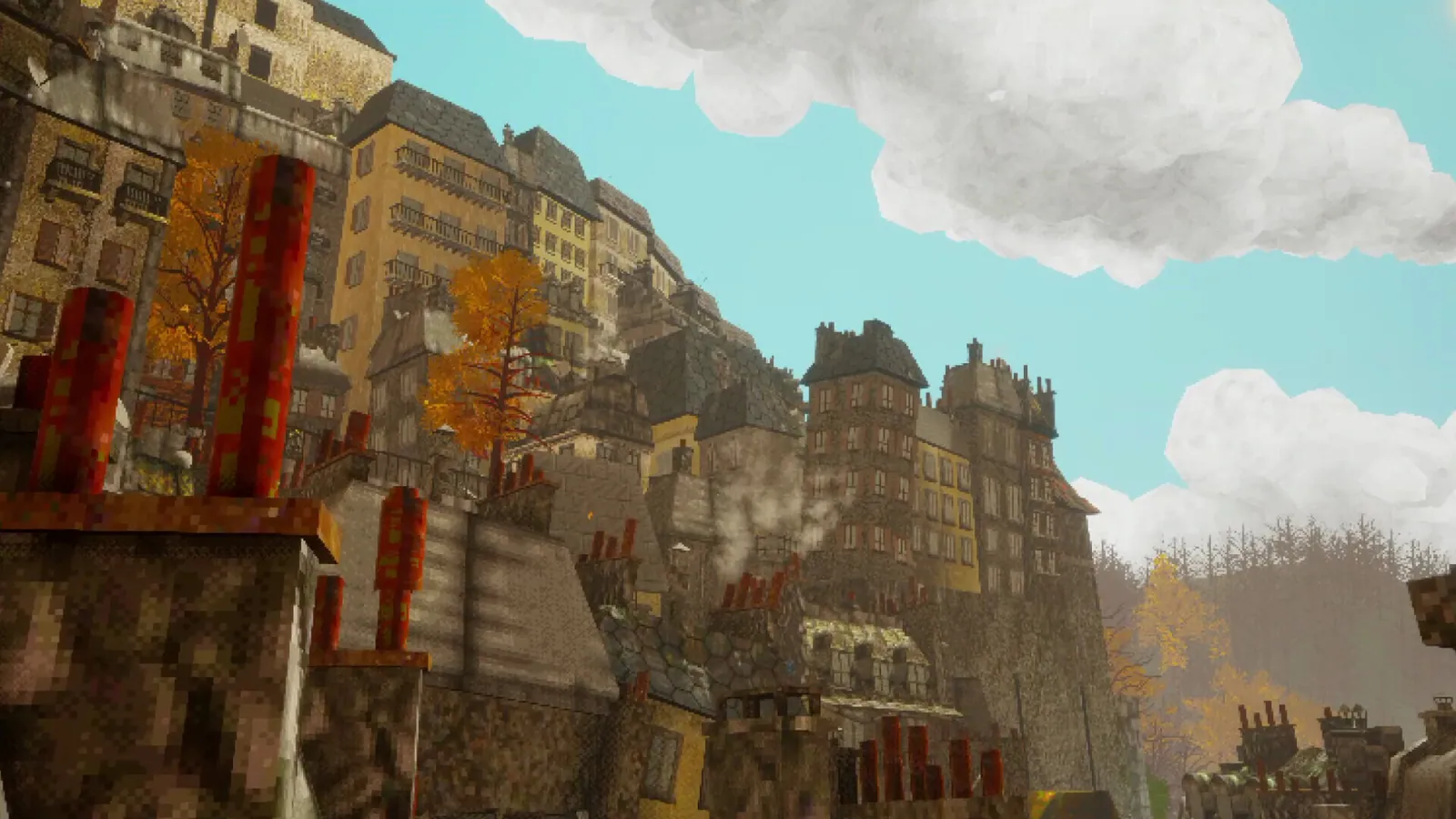
On my ROG Xbox Ally X, it also feels great to play at a technical level. Inputs are responsive, performance is smooth, and the presentation lands hard. CloverPit leans into a dirty PS1-coded aesthetic that fits the tone perfectly. It looks rough in an intentional way, not a cheap way. The room feels oppressive, the UI elements feel mechanical and hostile, and the whole game has that "just one more spin" rhythm that makes you ignore the clock.
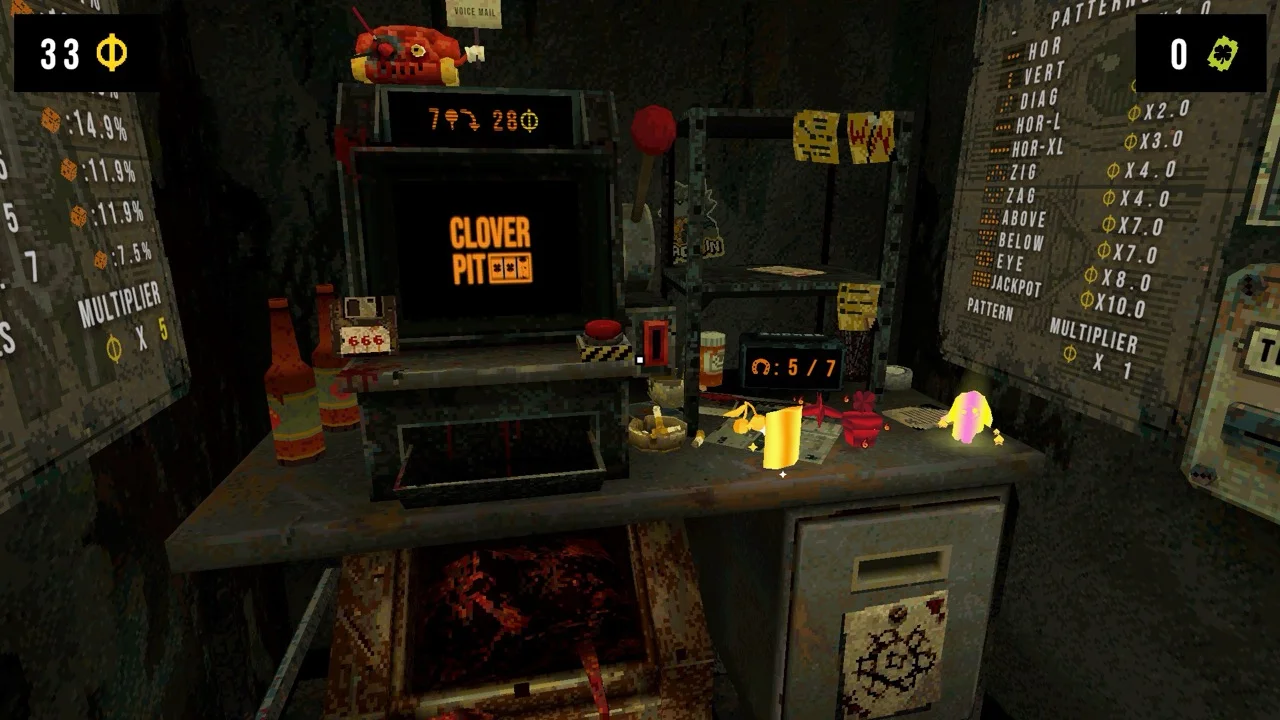
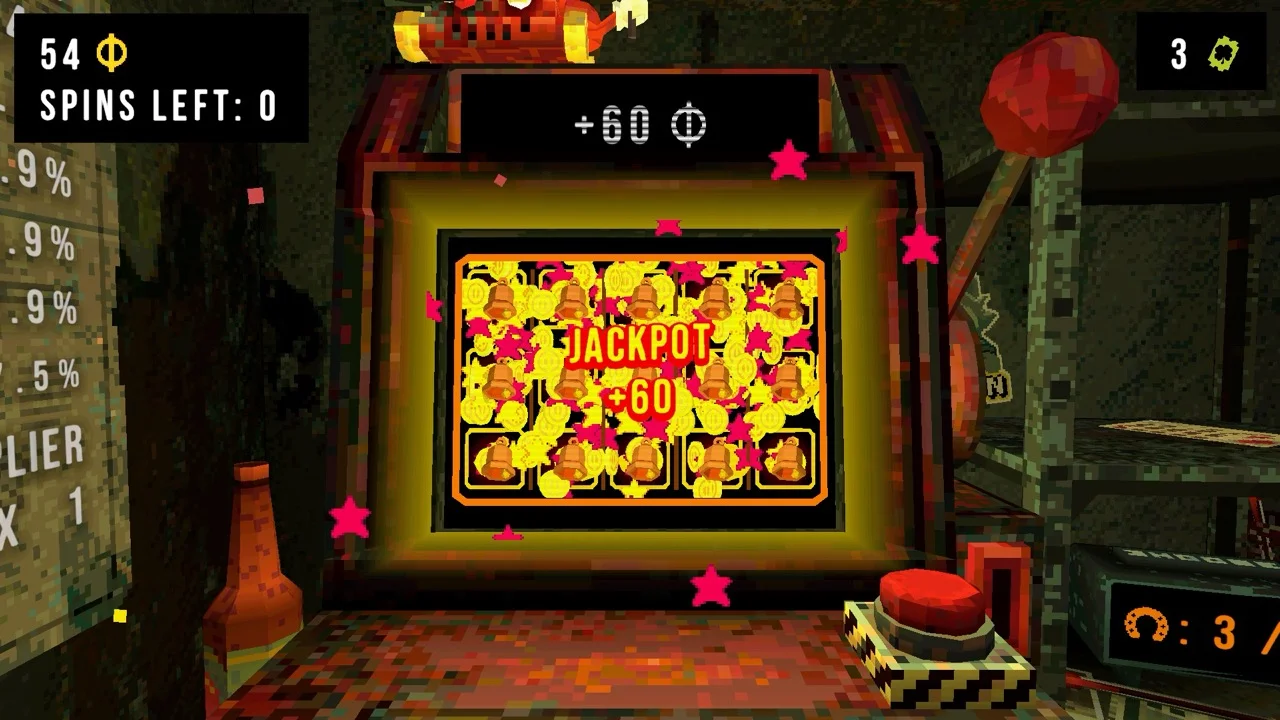
The sound design is one of the best things in the game. The clinks, clanks, jingles, and coin bursts all hit the same pleasure center these games depend on. When you land a big result and the machine explodes with color and noise, CloverPit feels amazing. Those moments are not subtle, and they should not be. This is a game about risk, reward, and short spikes of euphoria, and the audio-visual payoff is consistently excellent when a run finally breaks your way.
The problem is consistency. Games in this lane live or die by how often they let you feel clever and overpowered. You need that sense that your build is coming together and you are bending randomness to your plan. CloverPit has the systems for that, but not the frequency. Too many runs end before they become interesting, and that starts to wear you down. I had several sessions where I spent more time resetting than actually experimenting, which is the opposite of what I want from this kind of design.
Multiplier scaling is the core issue for me. Like any score-driven run game, the multiplier is everything, but getting it to climb reliably feels much harder than it should. In theory, that difficulty creates tension. In practice, it often creates flat runs where you can see the ceiling but cannot reach it. That leaves the mid-game feeling narrower than it needs to be, especially compared to other run-based games that hand you enough tools to create strong momentum earlier.
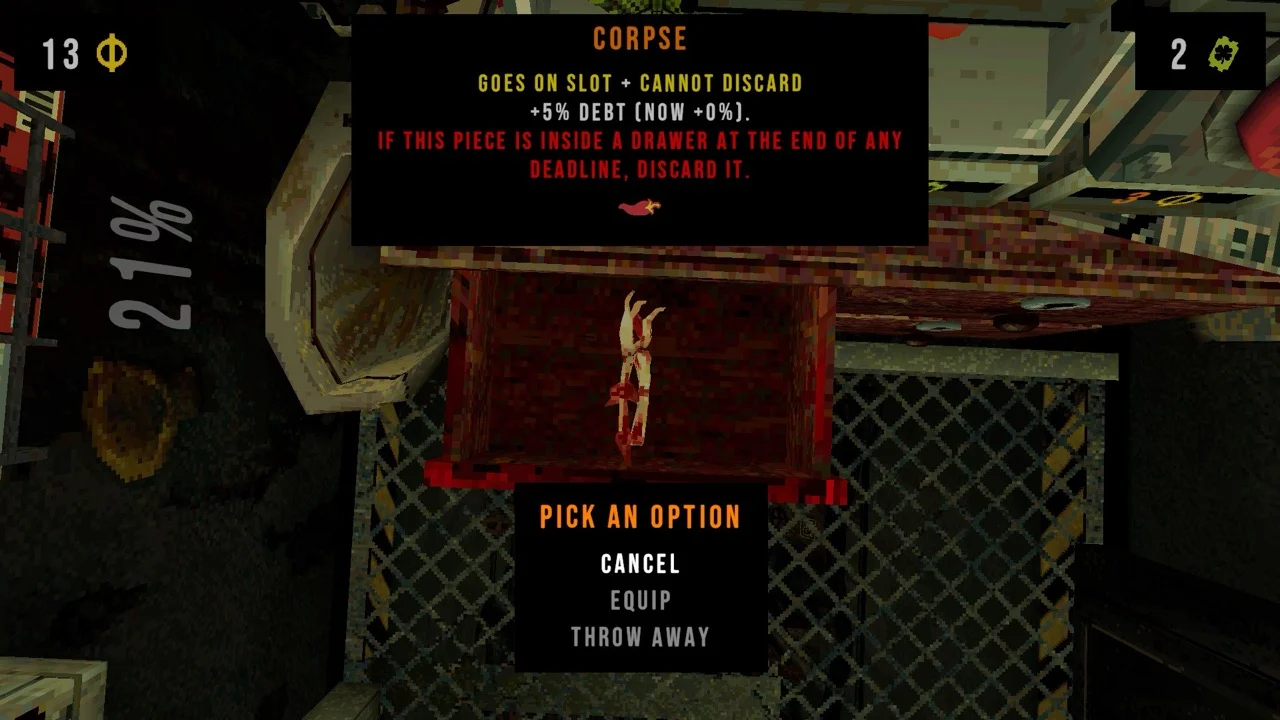
Charms add build variety and are a good idea on paper. You buy and equip them to alter the machine rules, economy flow, and symbol behavior in ways that can swing a run. Some are genuinely cool. The issue is clarity. A few charm descriptions are harder to parse than they should be in a high-pressure game where decisions are made fast. I like complexity, but I still want immediate readability. If I need to mentally decode wording every time, that friction interrupts the run loop.
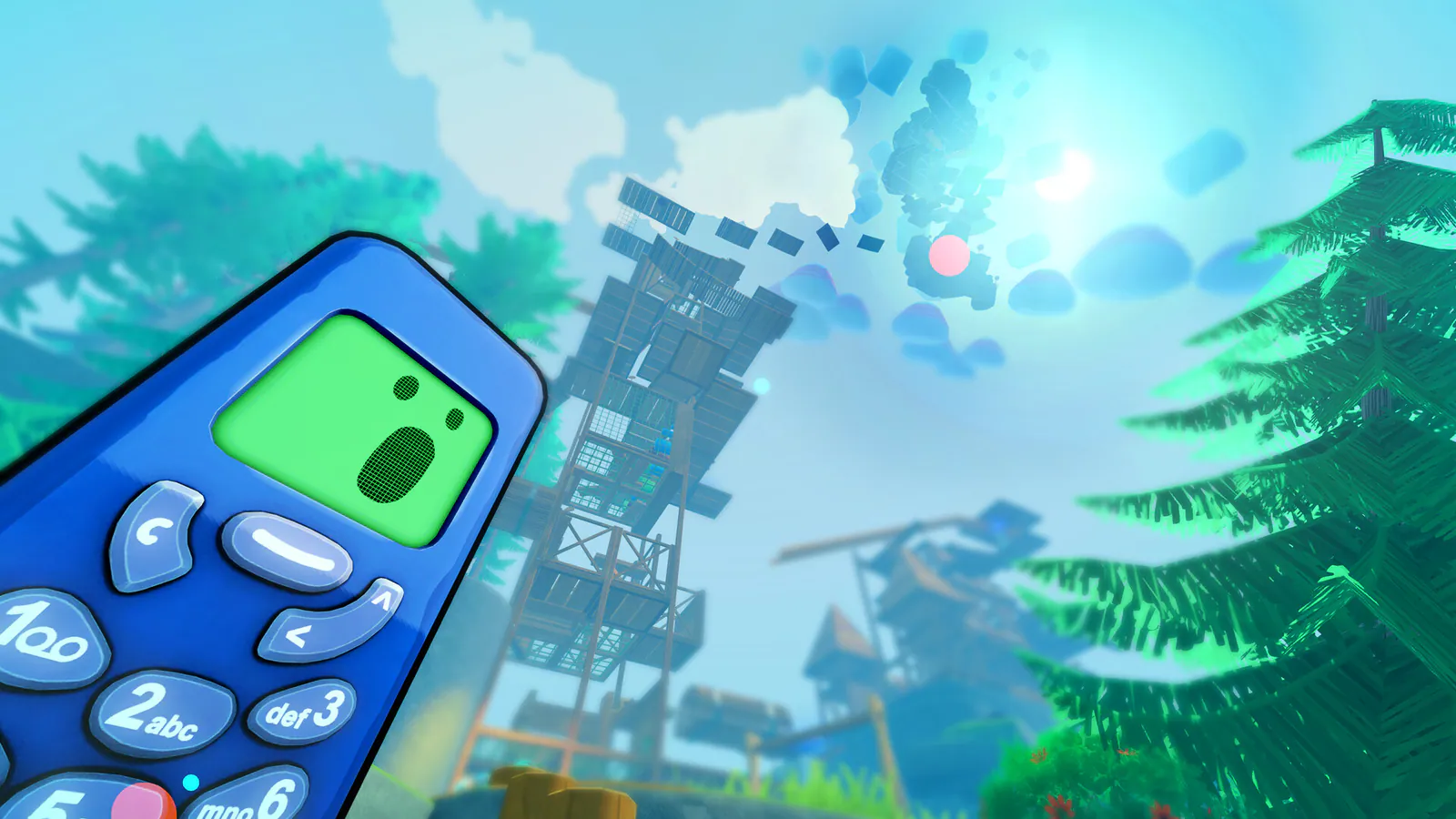
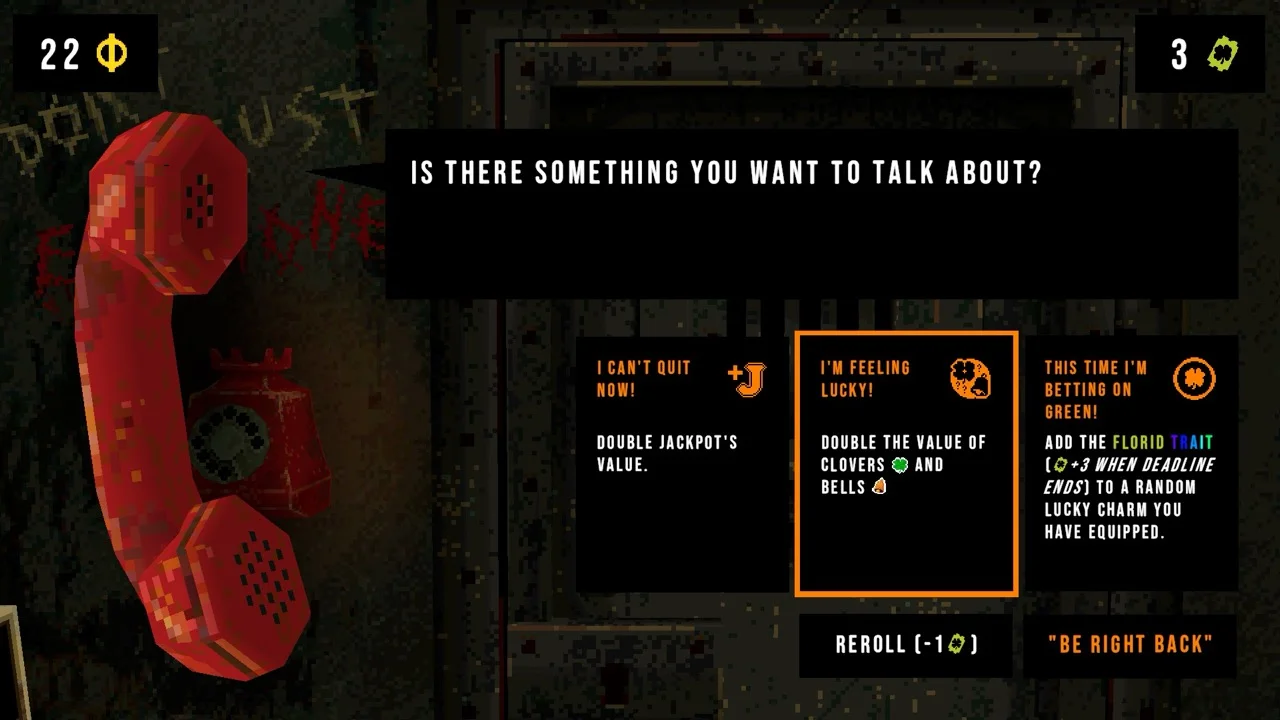
The phone call perk system is similarly mixed. After each deadline cycle, usually around three rounds, the phone rings and offers choices that can help or hurt. This is one of CloverPit's best tension devices because it forces risk management instead of pure optimization. But again, the downside is that the "bad with edge-case upside" options can feel punishing when a run is already barely alive. That makes some choices feel less strategic and more like gambling on whether the game lets you survive long enough to see the benefit.
Recent DLC additions push the buildcraft in the right direction. The Surgery Machine lets you fuse charms into one stronger trinket, and the extra pool of Fusion Charms, new base charms, symbol modifiers, and memory cards adds more room for weird strategies. I appreciate what this content is trying to do. It clearly targets the exact complaint many players will have: not enough consistent build-breaking power. In my time with it, the new tools helped, but they did not fully solve the early-run drag that still shows up too often.
Progress pacing is where personal taste matters most. If you like long mastery arcs and do not mind spending many runs learning subtle interactions, CloverPit will reward that patience. If you want quicker highs, it can feel stubborn. For me, asking roughly 20 to 30 hours to reach what feels like a true "I have broken the system" state is a big ask for a game built on short-session compulsion. I kept waiting for that regular surge of run dominance, and it came less often than I wanted.
None of that means CloverPit is bad. Far from it. It has style, identity, and a very strong core concept. The machine itself is tactile and satisfying, the atmosphere is memorable, and the tension curve in good runs is excellent. But it sits in an awkward middle where the ingredients are right and the payoff cadence is uneven. The game absolutely has moments where everything clicks. I just wanted those moments to arrive sooner and more often.
If you are into run-based games and can tolerate a slower climb to consistency, CloverPit is worth playing, especially now that extra systems are expanding build possibilities. If you need frequent power spikes and fast run escalation, be ready for more friction and more dead-end attempts than expected. I enjoyed my time with it overall, but I also felt that it kept me at arm's length from its best version for too long. Thanks for reading!